A realistic estimate for a six-wing serving of plain, skin-on air fryer chicken wings is roughly 400 to 550 calories. That range assumes unbreaded wings of moderate size, no sugary glaze and only a light coating of oil if any. The exact number depends on the raw weight of each piece, how much editable meat and skin it carries, and what you add after cooking.
If you are tracking your intake, the total shifts with wing size, whether you use flats or drumettes, and the sauce you toss them in. This article breaks down the math behind the numbers, shows how different sauces change the final count, and explains where extra calories hide.
For method, timing and temperatures, see the main air fryer chicken wings guide.
Why Cooking Wings in an Air Fryer Changes the Calorie Count
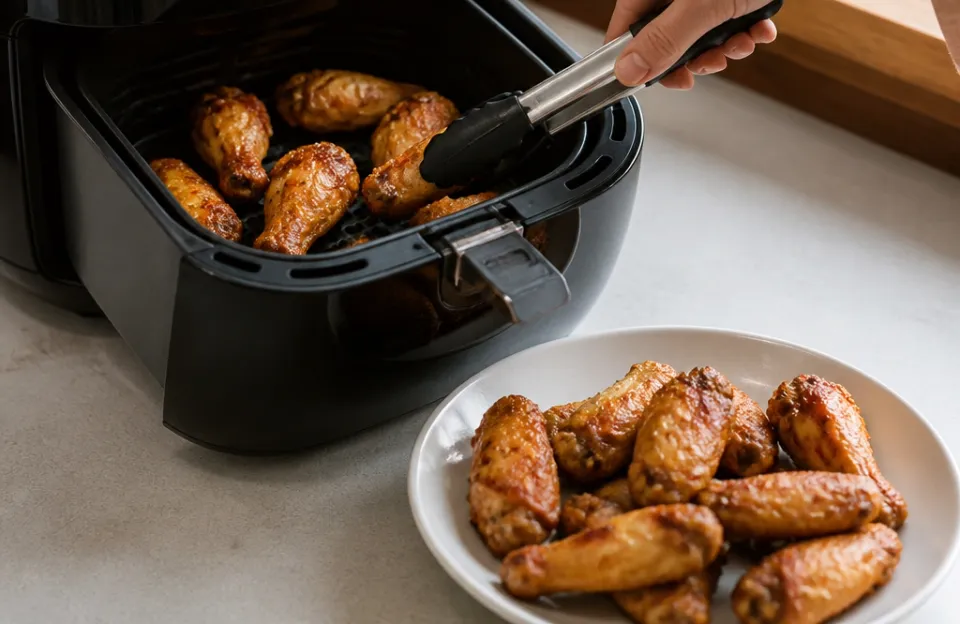
Chicken wings naturally contain a lot of fat, and most of it sits right under the skin. An air fryer is essentially a countertop convection oven that cooks food faster and uses less energy than a larger oven. It cooks without submerging food in oil, and crispness comes from rapid circulation of hot air.
That circulating heat renders some of the subcutaneous fat, which drips through the perforated basket and collects in the bottom drawer. You cook part of the fat away from the meat.
Deep frying works differently. Submerging wings in hot oil surrounds the surface, and breading can absorb oil during cooking. An estimated 8% to 25% of total oil is absorbed by foods deep-fried at typical temperatures of 325°F to 375°F. A breaded, deep-fried wing carries significantly more fat grams than a naked, air-fried wing. Since every gram of fat contains nine calories, that absorbed oil adds up fast.
One third-party nutrition page lists raw chicken wing meat and skin at 168 calories per 100 g, with 18.4 g protein and 10.6 g fat, citing a USDA analytical record. Cooking reduces water weight, which concentrates the calories slightly per ounce of finished product. Because the air fryer drains away some rendered fat, the final edible portion tends to be lighter in calories than a deep-fried equivalent.
You get the crispy texture without the added cooking oil.
How Rendered Fat Lowers Your Total Intake
Fat rendering is the main reason air fryer chicken wings calories stay below deep-fried versions. A batch of whole wings can release a tablespoon or more of liquid fat into the drip tray. That single tablespoon represents about 120 calories and 14 grams of fat that you do not eat, based on the roughly 120 calories per tablespoon of cooking oil.
This only works if you leave the wings mostly bare. If you coat them in flour or breadcrumbs before air frying, the dry coating can catch some of that dripping fat and hold it against the skin. For the lowest calorie count, skip the breading entirely.
A light dusting of baking powder mixed with salt can help produce a blistered, crunchy skin without adding meaningful calories or trapping grease.
Protein Density Compared to Deep Frying
When you remove excess fat, the percentage of protein per bite goes up. Six air-fried wings deliver roughly 30 to 36 grams of protein, though the exact figure depends on the size and cut of each piece. The same six deep-fried wings might deliver similar protein, but they come packaged with extra fat from the fryer oil.
For anyone managing macros, this ratio matters. You get the satiating effect of high protein without blowing past your daily fat limit. Checking internal temperatures with a fast-reading digital probe helps confirm the meat cooks through safely while the exterior crisps enough to render fat.
Breaking Down the Numbers by Wing Size and Cut
Not all wings weigh the same. Restaurants often serve large wings that skew the math. At home, you control the size, which means you control the calories.
Understanding the difference between whole wings, drumettes and flats helps you log meals accurately. One nutrition calculator estimates a raw whole wing typically weighs 80 to 100 g, with roughly 30 to 42 g of edible meat and skin and about 21 g of pure meat without skin. That same source puts bone and cartilage at roughly 55% to 60% of a raw whole wing’s weight.
| Wing Type | Average Raw Weight (per piece) | Estimated Calories (Air Fried, Plain) |
|---|---|---|
| Small Flat | 1 oz (28 g) | 45 to 55 |
| Medium Flat | 1.5 oz (42 g) | 65 to 80 |
| Large Flat | 2 oz (56 g) | 90 to 110 |
| Drumette | 1.5 oz (42 g) | 70 to 85 |
| Whole Wing | 3 to 3.5 oz (85 to 100 g) | 150 to 180 |
These estimates assume no breading and no sauce. They are derived from the raw-weight baseline above, adjusted for typical fat loss during air circulation cooking. Weighing raw pieces on a kitchen scale before cooking is the most accurate way to track air fryer chicken wings calories. Cooked weights vary too much depending on how long you leave them in the heat.
Flats Versus Drumettes: Which Packs More Calories?
One nutrition calculator states that drumettes and flats are nutritionally identical per gram, with differences driven by anatomy and yield. The same source estimates a drumette yields roughly 12 to 14 g of meat and a flat roughly 8 to 10 g. Because flats have less meat per piece, they may carry less total calories per piece even if the per-gram profile is similar.
In practice, the calorie difference between one flat and one drumette of the exact same weight is minimal. The real variable is size. People tend to eat more flats because they are smaller and easier to eat quickly. If you are counting, track by total ounces consumed rather than by the number of pieces. Ten small flats will usually cost you fewer calories than five jumbo drumettes.
Bone-in Versus Boneless “Wings”
Boneless wings are chunks of chicken breast shaped to look like wings. Chicken breast is leaner than dark meat, so you might assume boneless options have fewer calories. That logic often fails once preparation enters the picture.
Boneless wings are frequently breaded and may be par-fried before you reheat them in the air fryer. A standard serving of boneless wings usually runs higher in calories than the same weight of bone-in, air-fried wings, because the breading adds carbohydrates and can trap oil. True bone-in wings cooked naked in the air fryer remain the better option for keeping air fryer chicken wings calories low.
How Sauces and Seasonings Shift the Final Count
Plain wings get boring fast. Sauce is where the flavor lives, and it is also where hidden calories hide. Tossing finished wings in a bowl of sauce can substantially raise the calorie count of your snack if you choose the wrong one.
Dry rubs are your best friend for flavor without bulk. A mix of smoked paprika, garlic powder, onion powder, cayenne, salt and black pepper adds negligible calories. You coat the raw wings before cooking, and the spices toast in the heat. No oil required.
Wet sauces rely on fats or sugars as a base. Butter-based sauces, sweet chili glazes and honey BBQ coatings all add significant energy density. Even pouring olive oil over the wings before seasoning adds roughly 120 calories per tablespoon.
If you want wet sauce, measure it. Do not just pour from the bottle.
Buffalo Sauce and the Hidden Butter Trap
Traditional Buffalo sauce is often equal parts hot sauce and melted butter. Many hot sauces contain almost no calories, but butter is calorie-dense. If you toss six wings in two tablespoons of butter mixed with hot sauce, you have added roughly 200 calories to your plate based on the ~120 calories per tablespoon of cooking oil.
You can cut this substantially. Use a light spray of oil instead of melted butter, or use a bottled Buffalo sauce that lists its nutrition facts and measure the serving carefully. Many commercial “Buffalo” wing sauces sold in bottles use soybean oil or margarine instead of butter, which changes the macro profile.
Always read the nutrition label on bottled sauces. Tracking these additions is the only way to know your true air fryer chicken wings calories.
Sweet Glazes: Teriyaki, Honey Garlic, and BBQ
Sugar-heavy sauces are dense. A standard serving of honey garlic glaze can easily add 150 to 200 calories per six wings, though the exact figure varies by recipe. Barbecue sauce varies wildly by brand, but many pack about 40 to 50 calories per two-tablespoon serving, mostly from sugar. Teriyaki sauce follows a similar pattern.
If you crave sweet wings, brush the glaze on during the last few minutes of cooking. This lets it caramelize and stick without needing a heavy drench. Alternatively, serve the sweet sauce on the side for dipping. Dipping uses a fraction of the volume compared to tossing.
Dry Rubs and Low-Calorie Flavor Options
Sticking to dry seasonings keeps your meal focused on the protein and natural fat of the chicken. Lemon pepper, Cajun seasoning, ranch powder and jerk spice all work well in an air fryer. Just avoid pre-mixed rubs that list sugar or maltodextrin as the first ingredient. Those sneak in carbs you may not need.
Applying a dry rub requires the surface to be slightly tacky. Pat the raw wings completely dry with paper towels first. If the rub will not stick, a very light mist of cooking spray provides enough moisture for adhesion without adding more than a handful of calories to the whole batch.
Practical Steps for Keeping Calories in Check
Knowing the math is one thing. Executing it on a Tuesday night when you are hungry is another. A few specific habits keep your portions controlled and your prep consistent.
- Weigh the raw wings. Place uncooked wings on a food scale. Log the total ounces. This removes the guesswork of counting individual pieces of varying sizes.
- Pat them completely dry. Moisture creates steam. Steam prevents crisping. If the skin does not crisp, the fat does not render efficiently. Use paper towels to dry every crevice.
- Skip the oil drizzle. Air fryers do not need added oil to brown naked chicken skin. The natural fat is enough. Save the oil spray for vegetables or breaded items.
- Leave space in the basket. Overcrowding the basket can prevent enough air circulation to properly cook the food, so large batches may need to be cooked in batches.
- Measure your sauce. Pour wet sauce into a measuring spoon or small cup before tossing. Never pour straight from the bottle over the wings.
- Verify the internal temperature. All poultry, including wings, should reach a safe minimum internal temperature of 165°F (73.9°C). USDA advises checking that air-fried food has reached this temperature with a food thermometer. Using a reliable wireless thermometer lets you monitor the heat without opening the basket and losing temperature.
Prepping Ahead for Consistent Portions
If you eat wings regularly for meal prep, portion them into zip-top bags by weight before freezing. Grabbing a pre-weighed 6-ounce bag takes the thinking out of tracking. Thaw them in the fridge overnight, pat dry and air fry.
Consistency matters when you monitor air fryer chicken wings calories over weeks. If one day you eyeball a “small handful” and the next day you weigh exactly 150 grams, your tracking data becomes unreliable. Standardize your raw input.
Factors That Change the Math
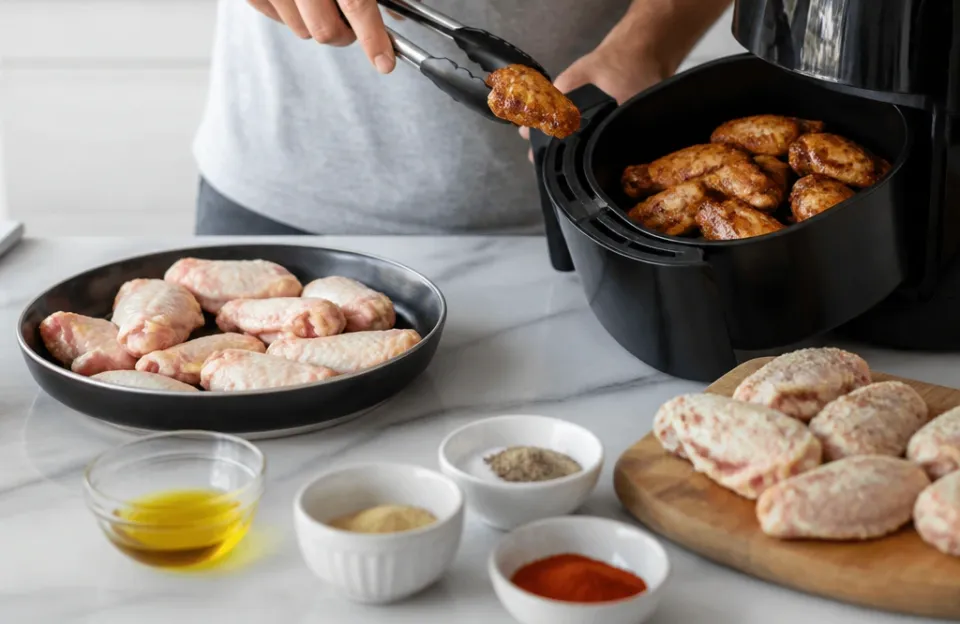
Standard estimates give you a baseline. Real life introduces variables that push the numbers up or down. Being aware of these edge cases prevents you from accidentally underestimating your intake.
Skin removal. Some people peel the skin off after cooking to save calories. While this removes a large chunk of fat, it also removes the crispiness that makes air-fried wings enjoyable. Skin-on wings cooked in an air fryer are still significantly lower in calories than deep-fried wings. Peeling the skin defeats the purpose of using the appliance for texture.
Marinades versus dry brines. Marinating wings in oil-based dressings or yogurt adds calories before cooking even starts. A dry brine (salting the wings and leaving them uncovered in the fridge overnight) dries out the skin for better crunch without adding caloric value.
Basket type and fat pooling. Some air fryer models have fine mesh baskets; others have wide-spaced wire racks. Fine mesh can trap rendered fat against the bottom of the wings, causing them to sit in a shallow pool of grease. If your model does this, pause halfway through cooking and drain the bottom drawer. Leaving the wings sitting in pooled fat increases the final calorie count.
Carryover cooking. Pulling the wings exactly at 165°F means they will rise a few degrees while resting. If you wait until the dial reads 175°F inside the basket, they will overcook and dry out. Knowing how your specific machine handles heat retention saves both texture and predictable weight loss. A dual-probe setup tracks both the meat and the ambient air temperature simultaneously.
Common Mistakes When Tracking Wing Macros
People make the same errors repeatedly when logging poultry. Fixing these keeps your daily totals accurate.
- Counting cooked weight instead of raw weight. Meat loses water and fat during cooking, so cooked weight is lower than raw. If you log cooked wing meat using a database entry meant for raw chicken, you will underestimate your calories. Always log raw weight.
- Forgetting the sauce. Logging plain wings but eating them drenched in ranch dressing is a common oversight. Ranch packs about 140 calories per two tablespoons. Track everything that touches the food.
- Assuming all air fryers cook identically. Wattage varies widely. Higher wattage renders fat faster. A recipe that takes 25 minutes in a small unit might take 18 in a more powerful one. Adjust times based on visual cues and internal temperature, not just the clock.
- Ignoring the breading on frozen wings. Bagged frozen wings from the grocery store are often pre-breaded and par-fried in oil before freezing. Putting them in an air fryer crisps them up, but it does not remove the oil they were already cooked in. Their calorie count matches deep-fried wings much closer than raw, naked wings.
- Skipping the cleaning step. Grease buildup from previous cooks alters how heat distributes. If your heating element is coated in old carbonized fat, your new batch will not crisp evenly. Learning how to clean the interior properly keeps the appliance running at peak efficiency.
Frequently Asked Questions
Do Air Fryer Chicken Wings Have Fewer Calories Than Baked Wings?
Generally, yes. Baking wings on a flat sheet pan leaves them sitting in their own rendered fat unless you use a wire rack. An air fryer circulates hot air aggressively and allows fat to drip away into a separate chamber. This can result in somewhat less fat retention and marginally fewer calories per serving compared to standard oven baking, though the exact difference depends on your setup.
How Many Calories Are in 10 Air Fried Chicken Wings?
Ten medium-sized, plain, unbreaded air-fried wings typically contain between 600 and 750 calories, assuming the skin is left on. If you add a butter-based Buffalo sauce, expect that number to rise depending on how heavily you toss them.
Are Air Fried Wings Good for a Low-Carb Diet?
They can fit well into low-carb or ketogenic diets, provided you skip the breading and sweet glazes. Naked chicken wings contain virtually no carbohydrates. The calories come almost entirely from protein and fat. Avoid teriyaki, honey mustard or BBQ sauces, which are primarily sugar. Stick to hot sauce, dry rubs or garlic butter.
Does Removing the Skin Save a Lot of Calories?
Removing the skin eliminates a large share of the total calories in a wing, because that is where most of the fat resides. However, the skin is also what crisps up in the air fryer. Eating skinless air-fried wings leaves you with drier meat. It is often more satisfying to eat the skin and simply reduce your portion size by one or two pieces.
Can I Use Frozen Wings Straight from the Bag?
You can, but check the ingredients. Frozen naked wings are fine and will yield the expected air fryer chicken wings calories. Frozen breaded or seasoned wings from a bag contain added oils, flours and starches. They will always be higher in calories and carbohydrates than buying raw wings and seasoning them yourself.
What Temperature Should I Cook Wings at for the Best Fat Rendering?
USDA notes that air fryers generally cook food in about 5 to 25 minutes at 350°F to 400°F. A common approach is to start at a moderate temperature to gently render the subcutaneous fat, then increase the heat at the end to crisp the exterior. However, timing and temperature settings vary by appliance, so use visual cues and a thermometer as your guide. Verify the center reaches 165°F using a quick-read thermometer before serving.
A Simple Rule to Remember
Tracking air fryer chicken wings calories comes down to three things: starting with raw, unbreaded meat, letting the appliance drain the rendered fat, and measuring whatever sauce you add at the end. The air fryer does the heavy lifting by changing how the fat behaves during cooking. You just have to avoid undoing that work with heavy glazes or inaccurate logging.
Weigh your raw portions, keep your seasonings simple, and pull them when the internal temperature hits 165°F. Here is the rule: weigh raw, subtract the bone, measure your sauce, and log the total. That is the reliable path to crispy wings that fit your daily numbers.