Yes, you can cook frozen chicken wings directly in an air fryer without thawing them first. Arrange them in a single layer, cook at roughly 350°F to 400°F, flip them partway through, and confirm doneness with a food thermometer reading at least 165°F in the thickest part of the meat, away from the bone.
The exact time depends on wing size, coating, and your machine, so treat any range here as a starting point and let the thermometer make the final call.
Why Frozen Wings Work Perfectly in an Air Fryer
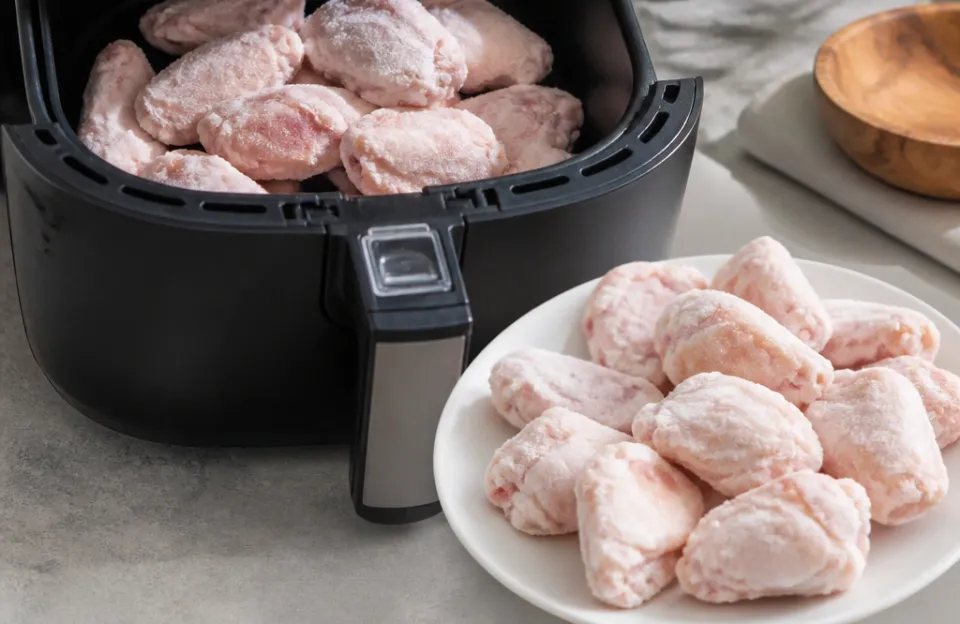
An air fryer is essentially a countertop convection oven, and it cooks food faster than a larger oven while using less energy. The moving hot air cooks the meat through and dries the surface moisture fast enough to crisp the skin.
Starting from frozen is possible, particularly with air frying, but it requires a longer cooking time and careful monitoring to make sure the pieces cook through evenly. You skip the overnight fridge thaw: open the package, set up the basket, and load it.
Frozen storage also buys you flexibility. Raw poultry held at 0°F or below must be labeled frozen or previously frozen, and foods kept frozen continuously are safe indefinitely, though quality may diminish over time.
Getting Your Air Fryer Ready for Frozen Chicken
Preheat guidance for frozen foods varies between sources, so treat preheating as optional and check what your model’s manual recommends. If you do preheat, a few minutes empty at your target temperature is enough.
Basket capacity matters more than preheating. Overcrowding the appliance can prevent enough air circulation to properly cook the food, so when air frying a large amount, it may be best to do so in batches.
If you want to track internal temperature without opening the drawer constantly, a fast-reading kitchen probe saves time. Every time you open the basket, heat escapes.
Cooking Air Fryer Chicken Wings from Frozen Step by Step
Follow these steps for plain, uncooked frozen wings. Breaded and pre-sauced products need adjustments, covered later.
- Set your temperature. Choose a setting within the 350°F to 400°F range, which is where most air fryer foods cook in 5 to 25 minutes. Package instructions take priority when the manufacturer provides them.
- Arrange the frozen wings. Take them directly from the freezer and place them in a single layer. Don’t stack them, and leave a little room around each piece so air can circulate.
- Cook the first half. Set the timer for about 12 to 15 minutes, close the drawer, and let the machine run.
- Flip and separate. Pull the basket out at the halfway point. Use tongs to flip every wing. If any pieces froze together in a clump, gently pull them apart now.
- Finish cooking. Return the basket and cook for another 10 to 15 minutes. Cooking times vary between air fryers because of differences in appliance size and power, but the safe internal temperature is always the same.
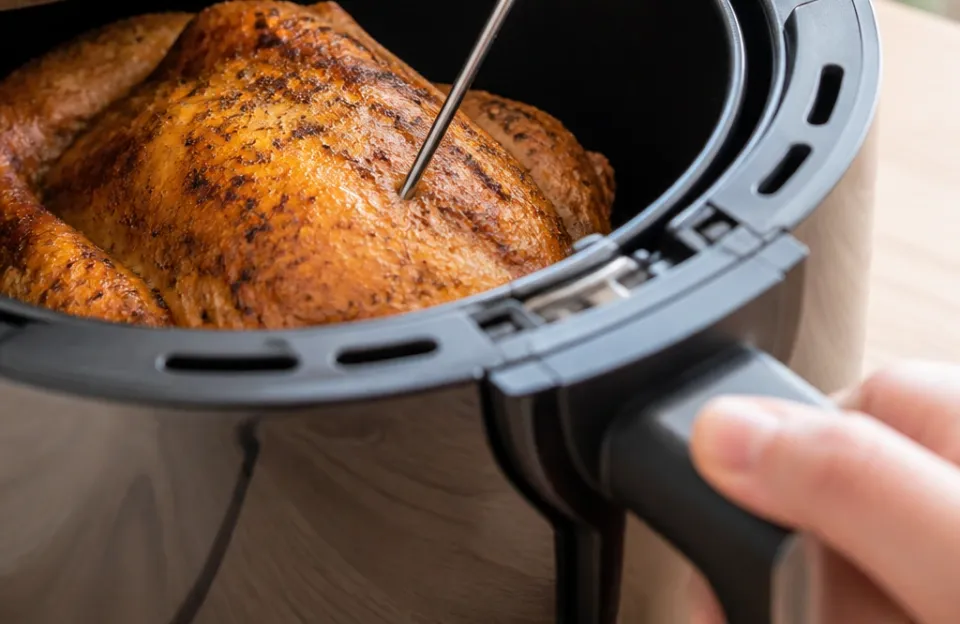
- Verify the temperature. Always use a food thermometer to check whether meat has reached a safe minimum internal temperature. Insert it into the thickest part of a large wing, avoiding the bone. All poultry, including wings, should reach 165°F (74°C).
- Keep cooking if needed. If the reading is below 165°F, return the wings to the basket and check again every few minutes. Poultry is safe to eat once it reaches an internal temperature of 165°F.
- Rest briefly. Move the wings to a clean plate or wire rack for a couple of minutes before saucing. Never place cooked food on the same plate that previously held raw food.
For best quality, some manufacturers recommend cooking their specific wing products to a higher temperature at the thickest point, measured with a meat thermometer. That is a quality preference for that product, not a safety rule, and it does not replace the 165°F minimum.
| Wing Type | Starting Temperature | Approximate Total Time | Flip Point |
|---|---|---|---|
| Plain frozen (small) | 400°F | About 25 minutes | Halfway |
| Plain frozen (large) | 400°F | About 30 minutes | Halfway |
| Breaded frozen | 380°F (check package) | Follow package guidance | Halfway |
| Pre-sauced frozen | 370°F (check package) | Follow package guidance | Check early |
The times above are starting points rather than fixed rules, because appliance power and wing size both shift the result. For breaded and pre-sauced products, the package instructions and a thermometer reading decide when they are done.
Checking Doneness Safely with a Thermometer
Visual color is unreliable for frozen poultry, which can brown unevenly while the center lags behind. A food thermometer is the check that matters.
Insert the probe into the thickest part of the meat, away from the bone, and wait for a stable reading. All poultry, including wings, needs to reach 165°F (74°C).
If the reading falls short, keep cooking and recheck rather than relying on the clock. The safe internal temperature is the same across appliances, even though times differ.
A reliable digital thermometer makes repeat checks quick, especially when you are testing several pieces.
Seasoning and Saucing Without Losing the Crunch
Plain frozen wings usually carry little seasoning, and dry rub sprinkled on rock-hard frozen skin slides straight off. Wait until the first flip, when the surface is warm and slightly tacky, then add a light coating of oil and your dry rub.
Salt, pepper, garlic powder, smoked paprika, or a store-bought BBQ rub all work at this stage. Return the basket and finish the cook time.
Wet sauces need different handling. For sauced wings, wait until the last 10 to 15 minutes of cooking to add the sauce, which prevents it from burning.
If you prefer a baked-on glaze, brush a thin layer on during the final few minutes and watch closely so it caramelizes instead of charring. Otherwise, toss the fully cooked wings in warmed sauce after they leave the basket.
Adjusting Times for Different Sizes and Brands
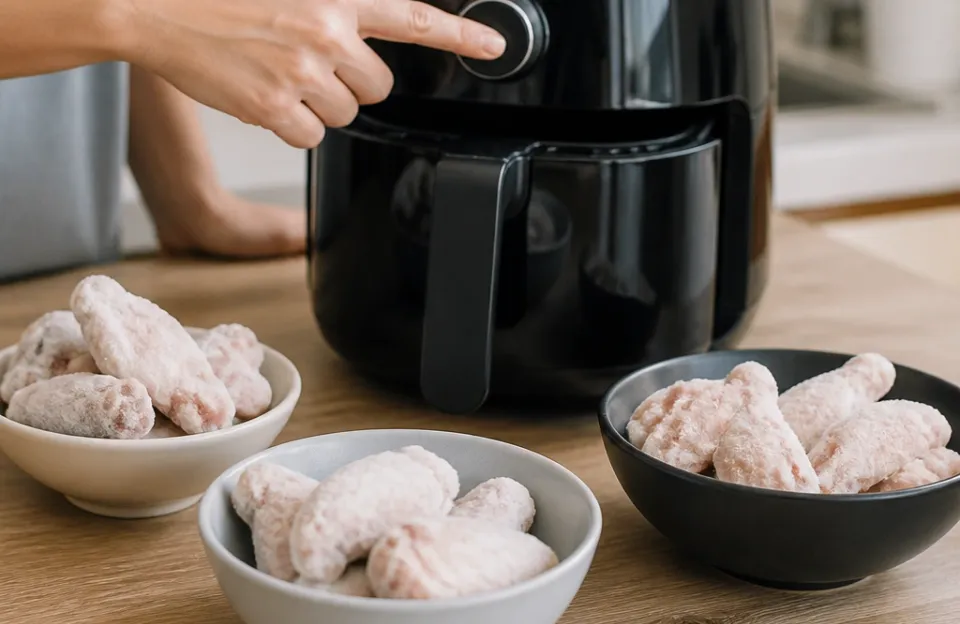
Not all frozen wings weigh the same. Party wings, separated into flats and drumettes, cook faster than whole wings because the pieces are smaller. Whole wings need more time and a slightly lower temperature so the outside does not burn before the thick joint near the bone cooks through.
Brands also vary in how much ice and solution they carry. Some frozen wing products contain added solution: one manufacturer’s wing sections include up to a 15% solution of water, salt and sodium phosphates. Shake off loose ice crystals before cooking, since excess ice melts into water that pools and steams.
Package directions come first. When available, consumers should follow the manufacturer’s instructions on food packages to ensure food is safely cooked. As one reference point for oven cooking, a specific brand’s individually frozen wing sections are baked from frozen at 400°F for 35 to 45 minutes in a conventional oven, which is not an air fryer time.
For larger batches, knowing how to clean the heating area helps prevent old grease from smoking during long high-heat runs.
Handling Breaded and Pre-Sauced Frozen Wings
Store-bought frozen wings may be raw or pre-cooked, and the packaging should indicate which. That distinction matters because the two types need different handling.
Breaded frozen wings brown quickly at high heat. Lower the temperature and follow the package instructions, then verify doneness with a thermometer. The coating does not guarantee the meat inside is cooked, so check the center rather than trusting the crust color.
If your product is raw, stuffed, and breaded chicken, do not cook it in the air fryer; follow the manufacturer cooking instructions instead.
Pre-sauced frozen wings are even more sensitive, because the sugar in the glaze darkens fast. Cook them at a lower setting, check them early to flip, and use a quick-read probe to confirm the center, since dark sauce makes visual cues unreliable.
Troubleshooting Soggy Skin, Uneven Cooking and Smoke
Soggy skin almost always traces back to overcrowding. When wings touch each other, air cannot circulate, and the trapped moisture steams the skin instead of roasting it. Cook in smaller batches.
If the outside browns before the center is done, your temperature was too high. Lower the heat slightly and extend the time, then recheck with a thermometer.
Smoke usually comes from fat dripping onto hot surfaces. Keep the drip tray and heating area clean, avoid overloading the basket, and stay within your manufacturer’s guidance. Water can damage an air fryer if it reaches the electrical components, heating element, fan or control panel, so avoid improvising water tricks inside the unit.
If your machine only reaches 390°F, that is fine. Add a few minutes and rely on the thermometer reading of 165°F rather than the clock, since appliance power changes the timing.
Frequently Asked Questions
Do I Need to Thaw Frozen Wings Before Air Frying?
No. You can cook air fryer chicken wings from frozen directly, though the process needs a longer cooking time and careful monitoring for even results. Thawing is optional, not a requirement.
How Do I Know When Frozen Wings Are Fully Cooked?
Use a food thermometer inserted into the thickest part of the meat, away from the bone. All poultry, including wings, should reach 165°F (74°C) to be safe. Color alone is not a reliable check.
Can I Stack Frozen Wings in the Air Fryer Basket?
You shouldn’t. Overcrowding prevents enough air circulation to properly cook the food, so arrange wings in a single layer and cook large amounts in batches.
Why Did My Frozen Wings Smoke So Much?
Fat rendering from the wings drips onto hot surfaces and can smoke. Keep the basket and heating area clean, and don’t overload the unit. Avoid adding water to the appliance, since water can damage electrical components, the heating element, the fan or the control panel.
Are Air Fried Frozen Wings Healthier Than Deep Fried?
Air frying uses less added oil than submerging wings in a deep fryer, and air fryers consume less energy than larger ovens. How much fat the finished wings contain still depends on the product and whether you add oil or sauce, so compare brands rather than assuming.
What If My Air Fryer Only Goes Up to 390°F?
That works. Add a few minutes to the cook time and rely on the thermometer reading of 165°F rather than the clock, since timing varies by appliance size and power.
Should I Follow the Package or a General Recipe?
Follow the package. When available, consumers should follow the manufacturer’s instructions on food packages to ensure food is safely cooked. Use general timing as a fallback and verify with a thermometer.
Worth Remembering
Cooking air fryer chicken wings from frozen skips the thaw and takes roughly half an hour, depending on your machine. Keep the pieces in a single layer, preheat only if your manual suggests it, and add wet sauces near the end so the skin stays crunchy.
The one step you cannot skip is the thermometer: 165°F in the thickest part, away from the bone, decides when any poultry is done. Refrigerate leftovers within 2 hours to stay out of the temperature danger zone between 40°F and 140°F.
Once you know your machine’s timing, frozen wings become a reliable option for fast meals or last-minute snacks.


2 thoughts on “Crispy Frozen Chicken Wings in the Air Fryer”