A wireless thermometer range test in real-world conditions almost always shows distances far shorter than the numbers printed on the box. Manufacturers typically advertise 300 to 500 feet for standard radio frequency models and up to 165 feet for Bluetooth versions. In practice, walls, metal appliances, and human bodies cut those distances by half or more.
Running a wireless thermometer range test yourself is the only way to know exactly how far you can walk away from your grill or smoker before the signal drops. This guide explains what causes signal loss, how different connection types hold up outside, and how to run your own distance check at home.
Why Box Ratings Don't Match Your Backyard
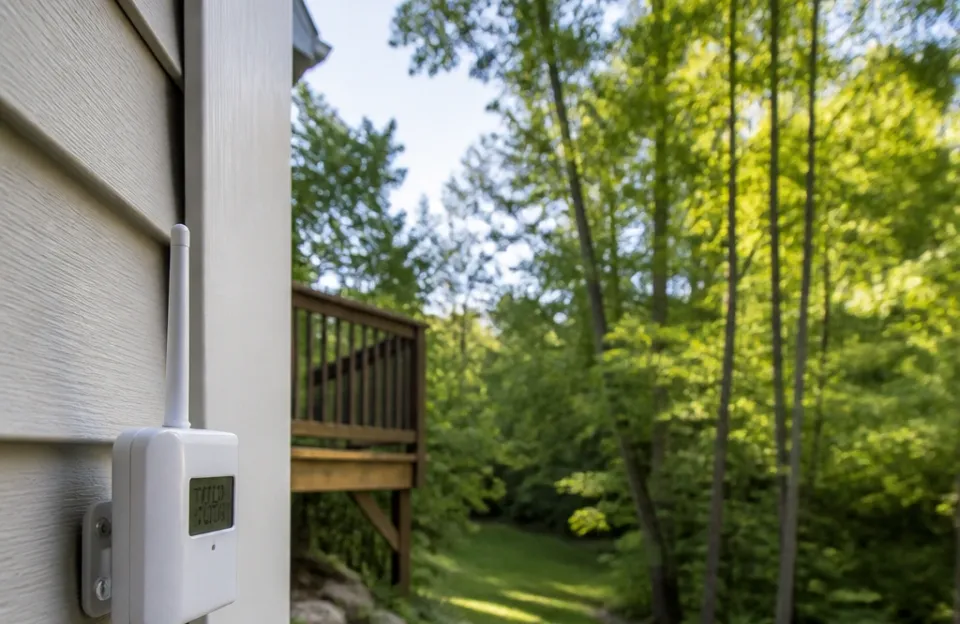
The range printed on packaging comes from open-field testing with zero obstructions. The FCC regulates these devices under Part 15 rules, which limit transmission power to avoid interfering with other electronics. Those strict power limits mean the signal has very little energy to push through physical barriers.
You can read more about FCC radio frequency regulations directly from the commission.
Your yard is full of barriers. Brick walls absorb radio waves. Metal siding reflects them.
Even standing between the transmitter and receiver blocks some of the signal because the human body is mostly water, and water absorbs RF energy. A model claiming 300 feet might drop out at 75 feet once you step inside a house with double-pane windows and drywall. If you've noticed your wireless probe dropping out randomly, distance and obstacles are usually the first things to check.
How Different Signal Types Hold Up Outside
Not all wireless thermometers use the same technology. The type of connection dictates how it behaves around corners and through walls.
Standard Radio Frequency (433 MHz or 915 MHz)
These are the most common for dedicated BBQ tools. Lower frequencies like 433 MHz penetrate solid objects better than higher ones. A 433 MHz transmitter will push through a brick wall much easier than a Bluetooth signal.
You'll see this tech in setups designed for long smoking sessions where you want to monitor temperatures from another room using a reliable dual-sensor setup. Expect 100 to 200 feet of usable range through one or two exterior walls.
Bluetooth Low Energy (BLE)
Bluetooth operates at 2.4 GHz. That high frequency struggles with solid mass. It bounces off metal and gets absorbed by wood and concrete.
Bluetooth models are great if you stay on the patio near the grill, but walking into the kitchen often breaks the link. Usable range usually tops out around 50 to 80 feet outdoors with no walls, and drops to 30 feet or less once you go inside.
Wi-Fi Connected Transmitters
Wi-Fi models connect to your home router instead of talking directly to a phone or base station. The range depends entirely on your router's placement and strength. If your router sits deep inside the house, the signal reaching the backyard grill might be weak.
These units give you unlimited range once connected to the internet, letting you check temps from work, but the initial handshake between the device and your network needs a strong local signal. Some premium systems rely on this network approach to keep you tied in without hovering over the pit.
Running Your Own Wireless Thermometer Range Test
You don't need special equipment to find your actual working distance. Just follow a consistent path and watch the screen.
- Start close. Place the transmitter next to the heat source with the probe inserted into a piece of meat or a glass of ice water so it registers a live reading.
- Walk slowly. Move away from the transmitter holding the receiver or phone. Walk at a normal pace.
- Watch the display. Note the exact spot where the temperature reading stops updating or the connection icon flashes.
- Measure the distance. Use a tape measure or count your steps to figure out how far you walked.
- Test behind walls. Repeat the walk, but this time go inside the house. Close the door behind you. Check when the signal fails.
- Test with interference. Turn on your microwave or stand directly between the units. See how much closer you have to get for the signal to return.
Write these numbers down. They are your actual working limits for that specific spot in your yard. Moving the grill ten feet to the left can change the results completely if a metal shed or thick tree is now in the way.
What Blocks the Signal the Most
Knowing what kills your range helps you position the gear better. Here is how common materials affect RF signals during a wireless thermometer range test:
| Obstacle Material | Impact on Signal | Typical Range Loss |
|---|---|---|
| Clear air / line of sight | None | 0% |
| Wood framing / drywall | Low | 10% to 20% |
| Glass window (single pane) | Low | 10% to 15% |
| Double-pane insulated glass | Medium | 20% to 40% |
| Brick or concrete block | High | 40% to 60% |
| Metal siding / foil insulation | Severe | 70% to 100% |
| Human body | Medium | 20% to 30% |
Metal is the biggest enemy. If your smoker has a thick steel lid, the transmitter needs to sit outside that metal shell. Putting the base unit inside a metal cabinet guarantees failure.
Even heavy-duty foil used to wrap a brisket can reflect enough signal to cause brief dropouts. When shopping for a new unit, picking a durable build meant for outdoor cooking means the antenna housing is usually better protected against heat and weather, though it doesn't magically bypass physics.
Placement Tricks to Add Extra Feet
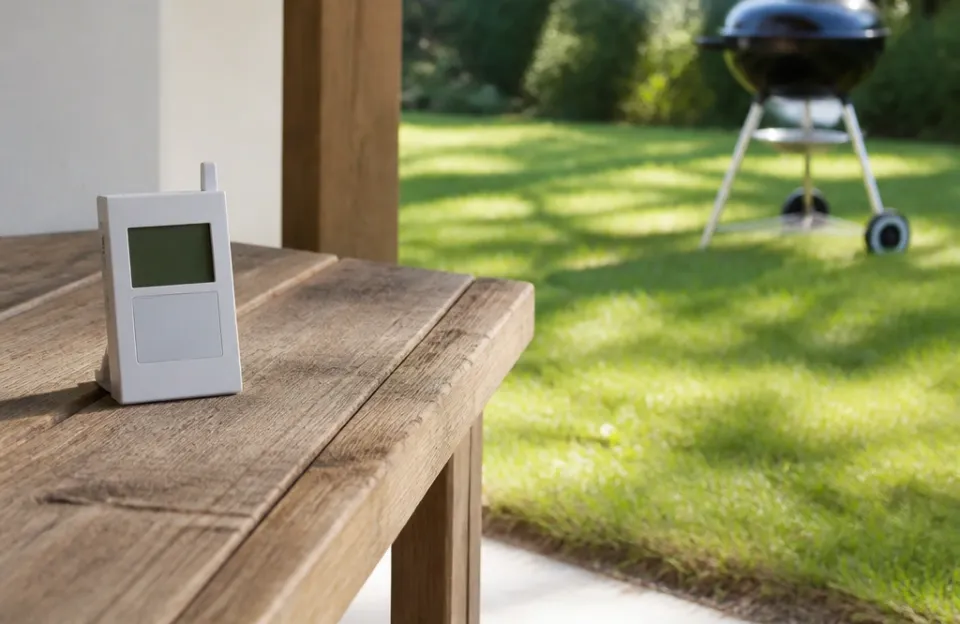
You can stretch your working distance without buying a new system just by changing where things sit.
Keep the transmitter elevated. Sitting it on the ground puts it behind grass, patio furniture, and the bottom edge of the grill. Mounting it on the side shelf gives the signal a clearer path.
Point any visible antennas toward the house rather than straight up at the sky.
Avoid clustering electronics. If your Wi-Fi router, baby monitor, and cordless phone base all sit on the same counter near the back door, they create a noisy environment. A 2.4 GHz Bluetooth thermometer has to shout over all that noise.
Moving the receiver even a few feet away from other electronics can stabilize the connection.
If you use a Wi-Fi model, consider a mesh network node placed near the back of the house. Bringing the access point closer to the patio gives the thermometer a stronger network link. This matters especially if you're pairing it with a smart hub or checking readings remotely while running errands.
When Distance Matters More Than Specs
Long-range capability becomes a priority depending on your setup. If you smoke overnight and sleep in a bedroom on the opposite side of the house, a 50-foot Bluetooth model won't work. You need a 433 MHz RF system or a Wi-Fi unit that pushes alerts to your phone anywhere.
For quick grilling where you stay on the deck, range barely matters. A fast-reading tool paired with a quick-response digital probe lets you check steaks right at the grate without worrying about walking away at all. But low-and-slow barbecue demands reliable remote monitoring, making your personal range test the most important setup step before putting a twelve-hour brisket on the grates.
Frequently Asked Questions
Does rain or snow reduce wireless thermometer range?
Yes. Water absorbs radio frequency energy. Heavy rain or wet snow in the air between the transmitter and receiver adds moisture that weakens the signal.
You might lose 10 to 20 percent of your clear-day range during a storm.
Can I extend the range with an external antenna?
Some high-end RF models allow you to screw on a larger aftermarket antenna. This works well for 433 MHz systems. Bluetooth and Wi-Fi models generally have internal antennas soldered to the board, making upgrades impossible without voiding the warranty.
Why does my connection drop only when I turn around?
Your body blocks the signal. When you face the receiver, your chest acts as a shield between the two devices. Turning sideways or holding the receiver higher above your head often restores the link immediately.
Do multiple wireless thermometers interfere with each other?
They can if they operate on the same frequency without separate channels. Most modern units let you pair a specific transmitter to a specific receiver to avoid cross-talk. If you run two smokers side by side, make sure both systems are fully paired before cooking.
Is a Wi-Fi thermometer better than RF for long distances?
Wi-Fi offers unlimited distance once connected to your home network, allowing you to leave the property entirely. However, the initial connection from the grill to your router must be stable. RF works independently of your home network, making it more reliable in yards with poor Wi-Fi coverage.
Getting the Most From Your Setup
Box ratings assume perfect conditions that don't exist outside a testing lab. Running a wireless thermometer range test in your own yard takes five minutes and saves you from missing alarms during a long cook. Map out your dead zones, elevate the transmitter, and pick the right signal type for your layout.
Knowing your actual limits means you can walk inside confidently without losing track of your food.