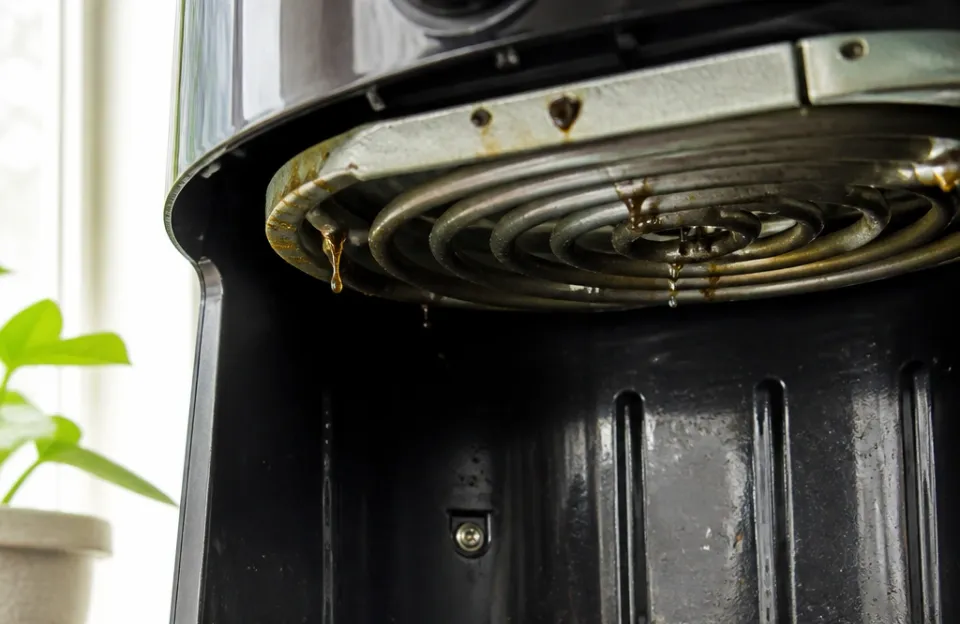
An air fryer usually smokes because fat, oil or food residue has built up on the heating element or inside the cooking chamber and is burning. The fix is to stop the cycle, unplug the unit, let it cool, then clean the element and cavity and adjust how you cook fatty foods. Smoke that smells electrical or like burning plastic is a different problem entirely, and it means you should stop using the appliance.
Why Is My Air Fryer Smoking? the Direct Answer
Cooking is the leading cause of home fires and home fire injuries in the United States, and unattended equipment is a leading factor in nonconfined home cooking fires. An air fryer is a small countertop convection oven, and in most models the heating element sits above the food, so grease or food particles that reach it can burn and produce smoke.
In practice, smoke usually traces back to cleaning and technique rather than a fault, though that is a general pattern rather than a guarantee for every model. The clear exception is smoke that smells like plastic or hot wiring, which points to an electrical problem.
How Grease and Food Particles Reach the Heating Coil
Air fryers work by circulating very hot air at high speed. That airflow is what makes food crisp, and it can also carry tiny droplets of oil and loose crumbs toward the fan and the heating element.
Grease and food residue that collect on or near the heating element can burn when the element heats up, producing smoke and an acrid smell. A thin film you cannot see clearly from below the basket can be enough to smoke once the element is hot.
Timing can offer a clue, though it is not a diagnosis. Smoke early in a run is more consistent with old residue somewhere you have not wiped, while smoke later in a run is more consistent with the current food rendering fat.
Foods and Habits That Increase Smoke Risk
Some foods and habits make smoke far more likely. The table below pairs common smoke triggers with practical prevention.
| Smoke trigger | Why it happens | What to do |
|---|---|---|
| Fatty proteins (chicken wings, drumettes, sausage) | Fat renders and drips onto hot surfaces, then vaporizes | Pour off pooled fat partway through cooking, and cook in smaller batches |
| Wet or marinated foods | Excess liquid drips and burns on the element | Pat food dry and drain marinade before cooking |
| Overcrowded basket | Air cannot circulate, so food steams and grease pools | Cook in a single layer with space between pieces |
| Loose crumbs and coatings | Small particles get lifted into the coil | Shake off loose coating and clean the basket after each use |
| Leftover residue from previous cooks | Old grease reheats and smokes before the food even starts | Wipe the cavity after each session |
Rendered Fat from High-Fat Proteins
Chicken wings are a classic trigger because the skin releases a lot of fat. If you cook crispy skin-on drumettes crispy skin-on drumettes or breakfast sausage links breakfast sausage links, expect some fat to collect in the drawer. Pour that fat out carefully during cooking rather than letting it sit and keep smoking.
Overcrowding the Basket
Packing the basket is one of the most common causes of smoke that has nothing to do with the element being dirty. When hot air cannot move around each piece, the food releases moisture into the basket instead of crisping, and that moisture mixes with fat to create a greasy pool that eventually splatters upward. Cooking golden brown potato pieces golden brown potato pieces in a single layer with a little room between them gives you a better result and far less smoke than a packed basket.
If you are cooking a big batch for meal prep a big batch for meal prep, it is safer to run two smaller cycles than to fill the basket once.
Stopping the Smoke Mid-Cycle: Safe Steps
When smoke appears, act quickly but calmly. The U.S. Fire Administration advises turning off the heat source if you see smoke or the grease starts to boil.
- Press stop, then unplug the unit from the wall. Unplugging small appliances when they are not in use is basic appliance safety, and cutting power also stops the fan.
- Move the air fryer away from anything flammable. Do not open the drawer immediately. Hot grease exposed to a rush of air can flare.
- Let it cool with the drawer closed. Resist the urge to peek for a few minutes.
- Ventilate the room. Open a window or turn on an extractor fan.
- Once cool, open the drawer and inspect. Look for pooled grease, loose crumbs and visible residue on the element.
- Pour pooled fat into a heatproof container. Do not tip the unit or pour fat down the sink.
- Wipe out crumbs and residue with a damp cloth once the unit is cool. Then restart with a clean basket and a lower temperature if needed.
If a pan or basket does catch fire, keep a lid or baking sheet nearby and use it to cover the fire and smother it. Never throw water on a grease fire. If the fire does not go out immediately, leave the room, close the door behind you if you can do so safely, and call the fire service.
Cleaning the Element and Fan Guard
Cleaning is where most smoke problems are solved permanently, and it is also where the most damage can be done if you use the wrong method.
A practical sequence that works for most air fryers:
- Unplug and let the unit cool fully. The element stays hot long after the shell feels cool, so give it plenty of time before you put your hand near it.
- Dry brush the element and the roof area first. A soft brush or clean toothbrush lifts carbon flakes and crumbs, and dry brushing matters because wet crumbs turn into a paste that is harder to remove.
- Wipe only with a barely damp cloth. The heating element area, interior walls and fan housing should be wiped, never submerged.
- Keep the electronics dry. The main body, fan motor, control panel and electrical connections must stay dry during cleaning.
- Wash the basket and drawer in warm soapy water, then dry fully before reassembly.
Exact cleaning and water-use instructions vary by air fryer model and should be checked in the relevant manual.
Avoid turning the unit upside down to reach the element, and avoid applying pastes or sprays directly to the coil unless your manual specifically says to. For broader kitchen fire safety context, the U.S. Fire Administration publishes home cooking fire safety guidance at Cooking Fire Safety.
A Post-Cook Routine That Prevents Buildup
Once the machine has cooled to barely warm, tip the crumbs out, wipe the drawer cavity with a damp soapy cloth while drips are still soft, wash the basket and leave the drawer open to dry. That short routine helps keep residue from building into the baked-on layer that smokes on the next run.
A deeper clean of the whole interior every 2 to 4 weeks, depending on how often you cook, is a reasonable general guideline rather than a manufacturer standard. Your manual’s cleaning schedule takes priority over any general interval.
Liners, Baffles and Water: What Is Safe
Accessories can help or hurt, depending on how you use them.
- Parchment and silicone liners. Use a liner only within the temperature range its maker rates it for, and keep food on top of it so it stays flat. A loose liner can lift into the heating element, which is why liner makers and air fryer manufacturers warn against preheating with a liner in the basket and against running a liner with nothing on top of it. A liner that touches the heating element, went in during preheat, or is not held down can catch fire even at a modest dial setting. Check the temperature rating printed on your specific liner before use.
- Aluminum foil. Keep foil off the heating element and interior walls, skip it with acidic foods such as tomato sauce or citrus marinades, and make sure food weighs it down, because high-velocity convection currents can lift a light sheet toward the hot coils.
- Water in the drawer. Only add water if your manual explicitly permits it, and follow the model-specific guidelines strictly. Some manuals describe a small amount of water in a removable drawer below the basket as a way to reduce smoke from fatty foods. Never pour water directly into the cooking chamber, heating element or electrical parts. Adding water beyond manufacturer instructions can cause short circuits, corrosion, fire risks and void warranties.
If you are unsure whether your model allows any water in the drawer, leave it out. That is the safe default.
Electrical Faults and Plastic Smells: When to Stop Using the Air Fryer
Not all smoke is a cleaning problem. Learn to tell the difference, because the response is completely different.
Food smoke is usually white or grey, smells like burnt oil or roasted food, and appears during or shortly after cooking fatty items.
Electrical or plastic smoke is the warning sign. If the smoke smells like burning plastic, ozone or chemicals, unplug the unit immediately, because this can indicate an electrical failure. A melting power cord, a failing internal wire or a damaged circuit board can produce black or grey smoke that should not be ignored. Stop using the appliance and have it inspected or replaced.
Basic appliance safety supports this caution. Major appliances should be plugged directly into a wall outlet, never into an extension cord, because the cord can overheat and start a fire. An appliance with a cracked, damaged or loose cord should be replaced.
If you do decide to replace the unit, our Ninja AF101 air fryer review covers one model in detail, though that is a separate decision from fixing the one you own.
Adjusting Temperature and Technique for Fatty Foods
Temperature settings are not always what they appear to be. In independent testing of domestic air fryers, a dial setting of 160°C produced actual air temperatures ranging from 17°C too low to 8°C too high across the units tested. That variation means two identical recipes can behave differently in two different machines.
General cooking guidance for air fryer foods is 5 to 25 minutes at 350°F to 400°F, and you should follow manufacturer instructions on food packaging where available.
For fatty foods, a few technique changes reduce smoke without sacrificing results:
- Lower the temperature slightly and extend the time. Less intense heat means less fat vaporizing at once.
- Pat food dry and drain marinades. Surface moisture drives splatter and smoke.
- Cook in smaller batches. Give hot air room to move.
- Empty the drawer partway through. Removing rendered fat early stops it from reheating for the rest of the cycle.
- Use the basket, not a solid liner, for very fatty items. Airflow underneath matters.
Adjusting Technique When Smoke Keeps Returning
Keeping the Kitchen Clear
Cooking smoke needs somewhere to go. A few kitchen-level habits make a noticeable difference.
- Run your extractor fan or open a window whenever you air fry fatty food.
- Give the air fryer clearance on all sides. Do not push it against a wall or tuck it under a low cabinet.
- Keep the unit away from curtains, paper towels and recipe cards.
- Never leave the room during a fatty cook. Unattended cooking is the leading factor in nonconfined home cooking fires.
- Unplug the air fryer when you are finished.
When to Repair or Replace the Air Fryer
There is no single rule for every situation, but a few clear stop conditions apply.
- Electrical or plastic smoke appears. Unplug it and stop using it.
- The cord is cracked, damaged or loose. Replace the appliance.
- Smoke continues after a thorough clean and technique adjustment. Something inside the unit is failing rather than dirty.
- You see scorching, melted plastic or a burning smell that does not clear after ventilation.
- The manufacturer’s own guidance tells you to stop using it. Always defer to your manual for model-specific instructions.
For anything that involves the cord, plug, wiring or internal components, contact the manufacturer or a qualified repair technician rather than attempting a fix yourself.
FAQ
Why does my air fryer smoke only sometimes? Smoke usually depends on what you cooked last and how much fat collected. A run that left grease on the element will smoke on the next use, even if the current food is low in fat.
Is white smoke from an air fryer dangerous? White or grey smoke from burning food residue is unpleasant but is not the same as an electrical fault. Turn the unit off, unplug it, ventilate the room and clean the interior before the next use.
Can I put water in the air fryer drawer to stop smoke? Only if your manual explicitly permits it. Never pour water onto the heating element or into electrical parts. If your manual is silent on water in the drawer, do not add any.
Why did my parchment liner catch fire? Parchment and foil liners can be lifted by the fan into the hot coil if nothing holds them down or if they are placed in during preheat. Always put the liner in with food on top, and never preheat with a loose liner inside. Check the liner’s own temperature rating before use.
Should I unplug the air fryer every time? Yes. Unplugging small appliances when not in use is a basic safety step, and it ensures no part of the unit stays energized after cooking.
Can I clean the heating coil with baking soda paste? Not unless your manual specifically says so. Dry brushing and a barely damp cloth are the usual methods for the element area; pastes and sprays can leave residue on a component that will later burn.