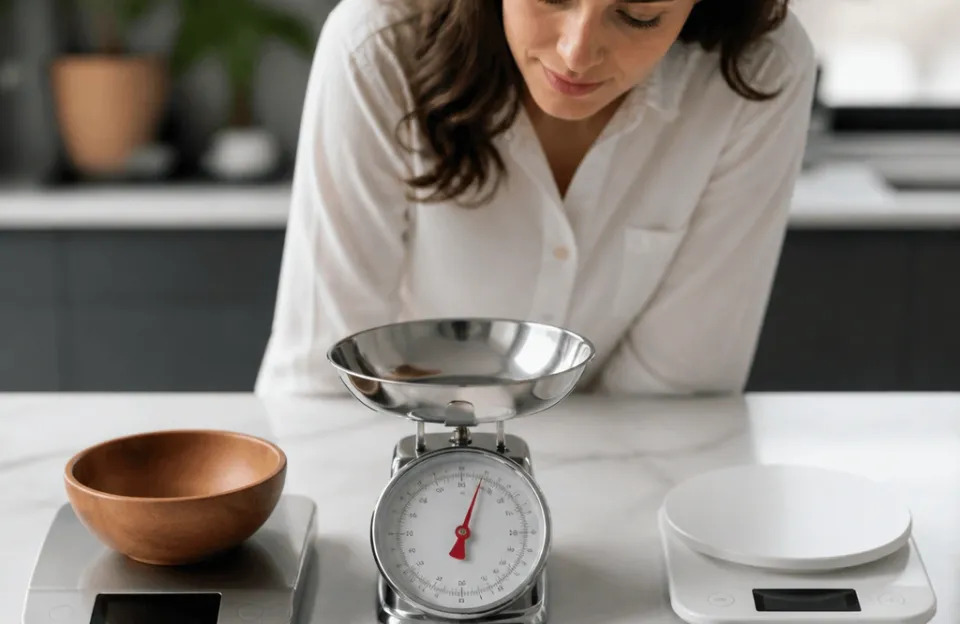
The four main types of food scales are digital, mechanical, smart, and precision. Each one uses a different mechanism to measure weight, and each fits specific cooking or baking needs. Digital scales use electronic load cells for fast readings.
Mechanical scales rely on springs and dials. Smart scales connect to phones or tablets to track nutrition. Precision scales measure tiny amounts down to fractions of a gram.
Understanding the differences between these types of food scales: digital, mechanical, smart & precision helps you pick the right tool for your kitchen. A baker measuring flour needs something different from someone tracking macros or weighing saffron threads. This article breaks down how each type works, where it performs best, and what limitations you should know before buying one.
How Kitchen Scales Measure Weight Differently
Every food scale converts physical force into a readable number. The method used to do that conversion defines the scale's category. When you place an apple on a platform, gravity pulls it down.
The scale resists that pull and translates the resistance into grams or ounces.
Digital scales handle this with strain gauge load cells. A load cell is a small metal piece that bends slightly under pressure. As it bends, its electrical resistance changes.
A microchip reads that change and calculates the exact weight. This process happens in milliseconds. That speed is why digital models dominate home kitchens today.
Mechanical scales skip the electronics entirely. They use a coiled spring inside a housing. The heavier the item, the more the spring compresses.
A gear system connects the spring to a needle on a dial face. You read the weight by looking at where the needle points. No batteries are needed, which makes them reliable in environments where power is scarce.
Smart scales use the same load cell technology as standard digital models. The difference is the internal processor and wireless radio. A Bluetooth or Wi-Fi chip sends the weight data to a mobile app.
The app then cross-references the weight against a food database to calculate calories, protein, fat, and carbohydrates.
Precision scales take the load cell concept further. They use highly sensitive electromagnetic force compensation sensors or specialized high-resolution strain gauges. These components detect weight changes as small as 0.01 grams or even 0.001 grams.
They often include draft shields because a slight breeze can alter the reading at that level of sensitivity.
| Scale Type | Measuring Mechanism | Power Source | Typical Readability | Best Environment |
|---|---|---|---|---|
| Digital | Strain gauge load cell | Batteries or AC adapter | 1 gram / 0.1 oz | Everyday home cooking |
| Mechanical | Spring compression and gears | None required | 5 to 25 grams | Wet or messy prep areas |
| Smart | Load cell plus wireless chip | Rechargeable battery | 1 gram / 0.1 oz | Diet tracking and logging |
| Precision | High-resolution sensor | AC adapter usually | 0.1g to 0.001g | Baking, coffee, supplements |
Digital Food Scales for Daily Cooking
Digital food scales are the most common type found in modern kitchens. They provide a clear LCD screen, a flat weighing platform, and a set of buttons for power, tare, and unit conversion. Most home cooks reach for a digital model because it removes the guesswork from recipes.
The primary advantage of a digital scale is accuracy combined with ease of use. You press a button to turn it on. You place a bowl on the platform.
You press the tare button to zero out the bowl's weight. Then you add your ingredient until the screen shows the target number. This workflow takes seconds.
Tare functionality is what makes digital scales so practical for cooking. Taring resets the display to zero while leaving the physical weight on the platform. This means you can weigh multiple ingredients into the same bowl sequentially.
Add flour, tare. Add sugar, tare. Add salt, tare.
You avoid washing five different measuring cups.
Most digital scales allow you to switch between metric and imperial units with a single button press. You can toggle between grams, ounces, pounds, and sometimes milliliters for water-based liquids. This flexibility matters when you follow recipes from international cookbooks or websites.
Capacity varies widely among digital models. Small ones top out at 3 kilograms or about 6.6 pounds. Larger ones handle up to 10 or 15 kilograms.
If you bake large batches of bread or meal prep for a family, you need a higher capacity. Check the maximum limit before purchasing. A scale overloaded beyond its rating will give inaccurate readings or permanently damage the load cell.
Battery life is generally long. Many digital scales run on two AAA or CR2032 coin batteries for months of regular use. Some newer models charge via USB, eliminating the need to buy replacements.
Auto-shutoff timers save power by turning the screen off after two to five minutes of inactivity.
One limitation of digital scales is their vulnerability to moisture. Water seeping into the seams around the buttons or the display can short-circuit the electronics. If you spill liquid on a digital scale, wipe it immediately.
Avoid submerging them in the sink. For heavy-duty wet prep, a mechanical option might survive longer.
When you pair accurate weighing with proper temperature monitoring, your cooking results improve significantly. Knowing the exact mass of a roast helps calculate cook time, and verifying doneness requires good tools. Using a fast-reading probe alongside your scale prevents overcooking expensive cuts of meat.
Mechanical Scales Built for Durability
Mechanical food scales have been around for over a century. Before affordable microchips existed, springs and gears were the only way to measure weight in a kitchen. Today, they remain popular for specific reasons that digital models cannot match.
The defining trait of a mechanical scale is that it requires no electricity. There are no batteries to die in the middle of a recipe. There is no circuit board to fry if you accidentally splash water on it.
This independence from power makes them ideal for outdoor cooking, camping, or commercial kitchens where outlets are limited.
Reading a mechanical scale involves looking at a dial face. The face has printed numbers and hash marks. A needle sweeps across the dial as weight increases.
Lower-end models might only mark every 25 grams. Higher-quality mechanical scales divide the dial into 5-gram or even 2-gram increments. You have to estimate between the lines for weights that fall in the gaps.
Durability is the main reason people buy mechanical scales. The housing is often made of stainless steel or heavy cast iron. The platform is solid metal.
You can drop a heavy pot on it without cracking a glass screen. In professional environments like butcher shops or fish markets, mechanical scales take daily abuse that would destroy a plastic digital unit.
Cleaning a mechanical scale is straightforward. Because there are no electronic crevices, you can wipe down the entire body with a damp cloth or rinse the removable platform under running water. Some vintage-style models have bowls that detach completely for dishwasher cleaning.
The tradeoff for this ruggedness is lower precision. Springs lose tension over time. Temperature changes cause the metal coil to expand or contract slightly, altering the calibration.
A mechanical scale that was perfectly accurate last year might drift by 10 or 20 grams today. You can recalibrate some models using a screw on the back, but it requires manual effort.
Mechanical scales also take up more counter space. The internal spring mechanism and gear train require a larger housing than a thin digital slab. If your kitchen is small, a bulky dial scale might get in the way.
Many bakers who prefer traditional methods still rely on mechanical scales for bulk ingredients like flour and sugar, where being off by a few grams won't ruin a loaf. However, they keep a digital scale nearby for yeast and salt. Maintaining a clean workspace around these tools matters too, especially when flour dust settles everywhere.
Regular upkeep of your appliances, such as knowing how to clear baked-on grease, keeps your entire station sanitary.
Smart Food Scales for Nutrition Tracking
Smart food scales bridge the gap between kitchen hardware and software. They look similar to standard digital scales, but they contain wireless communication modules. Their purpose goes beyond simply displaying a weight; they analyze what that weight means for your diet.
A smart scale connects to a smartphone or tablet application via Bluetooth Low Energy or Wi-Fi. Once paired, the app controls the scale or receives live data from it. When you place an item on the platform, the app registers the weight instantly.
The core function of a smart scale is nutritional calculation. After the scale records the weight, you select the food item in the companion app. The app multiplies the weight by its internal database values to output calories, macronutrients, vitamins, and minerals.
If you weigh 150 grams of chicken breast, the app tells you exactly how much protein and fat is in that specific portion.
This automation saves significant time for people managing dietary restrictions, tracking macros for fitness goals, or managing conditions like diabetes. Manually entering weights into a calorie tracker introduces errors and friction. A smart scale removes the typing step.
Some advanced smart scales attempt to identify foods automatically using built-in cameras or barcode scanners. Others rely on voice input through your phone's assistant. You say "banana," place it on the scale, and the app logs the weight and nutrition simultaneously.
Data synchronization is another major benefit. The app stores your history in the cloud. You can view weekly trends, export reports for a dietitian, or sync the data directly into third-party health platforms.
This creates a continuous record of your intake without maintaining a paper journal.
The limitations of smart scales center on software dependency. The hardware is useless without the app. If the manufacturer stops updating the app or shuts down their servers, the scale loses its smart functions and becomes a basic digital scale.
You are tied to the company's ecosystem.
Database accuracy is another concern. The app's nutritional data is only as good as the source it pulls from. Generic entries for "apple" might not account for the specific variety or ripeness, leading to slight caloric discrepancies.
Users often have to manually verify or create custom entries for branded packaged foods.
Battery management differs from standard digital scales. Because the Bluetooth radio draws more power, smart scales usually have built-in lithium-ion batteries that require periodic recharging via USB. Forgetting to charge it means you cannot weigh anything until it powers back on.
People who monitor their diets closely often monitor their cooking temperatures just as strictly. Pairing a smart scale for portion control with a wireless dual-probe setup allows you to track both the mass and the internal heat of your meals from a single device in your hand.
Precision Scales for Exact Measurements
Precision food scales operate at a level of sensitivity far beyond standard kitchen equipment. While a normal digital scale measures in whole grams, a precision scale measures in tenths, hundredths, or thousandths of a gram. They are specialized instruments designed for tasks where tiny variations matter.
These scales are essential in molecular gastronomy, artisan coffee brewing, supplement formulation, and professional baking. When a recipe calls for 0.5 grams of xanthan gum or 0.02 grams of saffron, a standard kitchen scale cannot register the weight. It will either read zero or jump erratically.
A precision scale captures it perfectly.
The engineering behind precision scales involves highly calibrated sensors and strict environmental controls. Many models come with a draft shield. This is a glass or plastic enclosure that surrounds the weighing pan.
Air currents from breathing, walking past the scale, or HVAC vents exert enough force to alter a 0.01g reading. The shield blocks that interference.
Calibration is mandatory for precision scales. They typically ship with a certified calibration weight. You must run the calibration routine regularly to confirm the sensor hasn't drifted.
Temperature fluctuations affect the metal components inside the sensor, so precision scales perform best in climate-controlled rooms.
Readability refers to the smallest increment the scale can display. A scale with 0.1g readability shows one decimal place. A scale with 0.001g readability shows three.
Higher readability usually means a lower maximum capacity. A scale that reads to 0.001g might max out at 50 grams total. You cannot weigh a bag of flour on it.
Response time on precision scales can be slightly slower than cheap digital scales. The processor takes extra time to average out microscopic vibrations and settle on a stable number. You have to wait a second or two for the display to lock.
Placing items roughly on the pan causes the numbers to bounce wildly.
Handling precision scales requires care. Pressing too hard on the pan can damage the delicate suspension system. Spilling sticky liquids into the sensor housing ruins the unit.
They are laboratory-grade tools adapted for culinary use, and they demand respect.
Coffee enthusiasts frequently use precision scales to measure beans and water ratios for pour-over methods. A difference of half a gram of coffee changes the extraction yield noticeably. Similarly, bakers working with potent leavening agents or hydrocolloids rely on exact masses.
If you work with sugar syrups or temper chocolate, precise weight measurements go hand in hand with precise temperature control. Checking your syrup stages accurately requires dependable tools, much like verifying if candy thermometers work for savory tasks depends on understanding their specific calibration ranges.
Comparing Accuracy and Resolution Across Types
Accuracy and resolution are distinct concepts that buyers frequently confuse. Understanding the difference determines which scale type fits your actual needs.
Resolution is the smallest change in weight the scale can display. If a digital scale jumps from 10g to 11g, its resolution is 1 gram. If it moves from 10.0g to 10.1g, its resolution is 0.1 grams.
Resolution dictates how finely you can divide your measurements.
Accuracy is how close the displayed number is to the true physical weight. A scale might have a 1-gram resolution but be 3 grams off from reality due to poor calibration or a damaged sensor. High resolution does not guarantee high accuracy.
Mechanical scales have the lowest resolution of the four types. The spacing between printed lines on the dial limits how precisely you can read the needle. Even a well-made mechanical scale rarely offers better than 5-gram resolution.
Their accuracy degrades as the spring ages and fatigues.
Standard digital scales offer excellent resolution for home cooking, typically 1 gram. Their accuracy is generally within plus or minus 1 to 2 grams when new. This margin of error is invisible when weighing 500 grams of flour, making them perfectly suited for general recipes.
Smart scales inherit the resolution and accuracy specs of their underlying digital hardware. Adding Bluetooth connectivity does not change the physics of the load cell. You get the same 1-gram resolution as a non-smart digital scale, with the added software layer handling the data.
Precision scales maximize both metrics. They provide resolutions of 0.1g, 0.01g, or better, and their factory calibration maintains tight accuracy tolerances at those tiny increments. However, their absolute accuracy drops if you try to weigh near their maximum capacity.
A 100g precision scale is less accurate at 99g than it is at 10g.
To maintain accuracy across any scale type, you must place it on a hard, flat surface. Weighing items on a soft silicone mat, a tilted counter, or a wooden cutting board that flexes introduces false readings. The load cell needs a rigid base to push against.
Environmental factors also play a role. Humidity can cause dry ingredients like flour to absorb moisture and gain weight while sitting on the scale. Static electricity generated by plastic containers can pull on the weighing pan, causing digital displays to drift upward.
Grounding yourself or using glass bowls minimizes static issues.
For professionals who need documented proof of their measurements, scales certified by organizations following NIST standards provide legal metrology compliance. Home cooks rarely need this certification, but commercial kitchens selling pre-packaged goods by weight must adhere to local trade laws regarding scale accuracy.
Capacity Limits and Platform Sizes
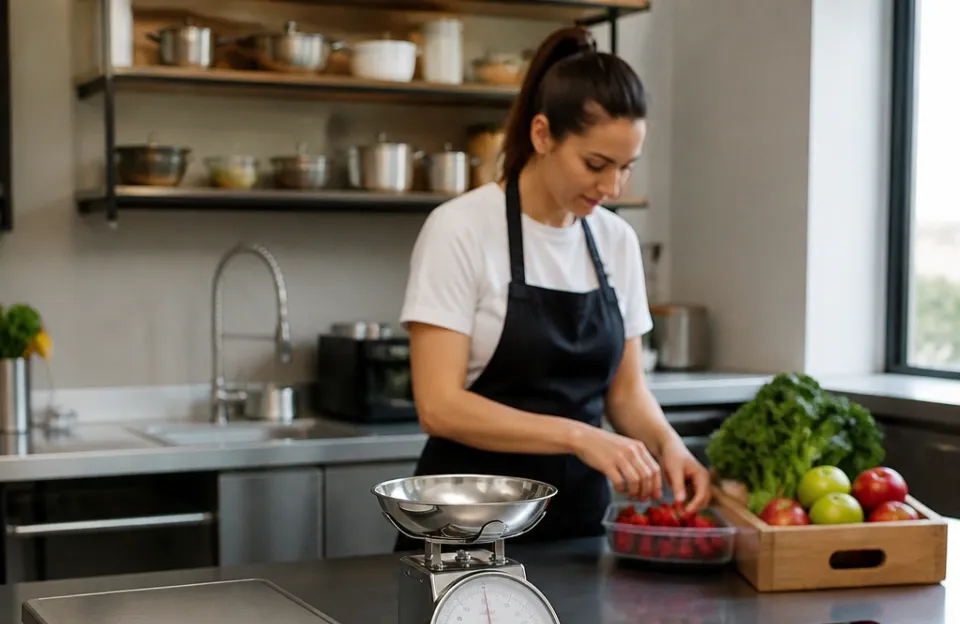
The physical dimensions of a food scale dictate what you can actually put on it. A scale might be incredibly accurate, but if the platform is smaller than your mixing bowl, it is useless for that task.
Digital scales usually feature flat, rectangular or circular platforms ranging from 15 to 23 centimeters across. This size accommodates standard mixing bowls, dinner plates, and storage containers. The low profile makes them easy to slide into a drawer when not in use.
Mechanical scales often come with integrated bowls rather than flat platforms. The bowl sits directly on the spring mechanism. These bowls range from 1 liter to 5 liters in volume.
The advantage is that you always have a vessel ready. The disadvantage is that you cannot easily weigh oversized items like a whole watermelon or a large roasting pan.
Smart scales mirror the form factor of digital scales. Their platforms are flat and sized for typical meal-prep containers. Some models have slightly thicker bases to house the rechargeable battery and Bluetooth antenna, but the usable surface area remains comparable to standard digital versions.
Precision scales have the smallest platforms. The weighing pan is often a tiny circular disc, sometimes only 5 to 8 centimeters in diameter. This small size is intentional.
It reduces the surface area where air currents can act upon the pan. You weigh ingredients in small boats, weighing paper, or miniature glass vials.
Maximum capacity is the heaviest weight the scale can measure before it errors out or sustains damage. Exceeding the capacity risks permanently bending the load cell or snapping the mechanical spring. Always check the rated limit.
Small digital pocket scales max out around 500 grams to 1 kilogram. Standard kitchen digitals handle 5 to 10 kilograms. Heavy-duty commercial digitals go up to 30 kilograms or more.
Mechanical scales span a similar range depending on the stiffness of the installed spring.
Precision scales sacrifice capacity for sensitivity. A scale capable of reading 0.001 grams might have a maximum capacity of only 20 grams. If you need to weigh 100 grams of powder with 0.01g precision, you need a larger, more expensive precision model rated for that specific combination of capacity and readability.
Platform material matters for hygiene. Stainless steel platforms resist staining and tolerate harsh cleaning chemicals. Plastic platforms scratch easily and can retain odors from strong spices like turmeric or garlic.
Glass platforms look clean but risk shattering if a heavy cast-iron skillet is dropped on them.
When organizing your kitchen layout, consider where the scale will live. If you store it inside a cabinet, measure the shelf height. Some mechanical scales with tall domed covers require significant vertical clearance compared to slim digital profiles.
Calibration and Long-Term Maintenance
All scales drift over time. The materials inside them respond to temperature changes, physical shocks, and repeated stress. Calibration is the process of correcting that drift so the scale reads true again.
Digital scales often have a hidden or menu-driven calibration mode. You enter the mode, place a known weight on the platform, and the processor adjusts its internal math to match that weight. If you don't own a certified calibration weight, you can use coins.
A freshly minted US nickel weighs exactly 5.00 grams. Ten nickels equal 50 grams. This provides a rough field check for home digital scales.
Mechanical scales require physical adjustment. Most have a thumbwheel or slotted screw on the back or bottom. With the platform empty, you turn the screw until the needle rests exactly on the zero line.
If the scale is consistently wrong across the entire dial, the spring itself may be permanently stretched, requiring replacement or retirement of the unit.
Smart scales rely on the hardware calibration of their digital components. The app does not change the physical accuracy of the load cell. You calibrate a smart scale the same way you calibrate a standard digital one.
Some apps prompt you to perform a zero-reset periodically to account for minor sensor drift.
Precision scales demand rigorous calibration routines. They must be calibrated in the environment where they are used. Moving a precision scale from a cold storage room to a warm kitchen changes the sensor's behavior.
Professional labs calibrate daily. Home users doing serious baking or coffee work should calibrate monthly or whenever the scale is moved.
Maintenance extends beyond calibration. Keeping the scale clean prevents debris from interfering with the mechanism. Flour dust accumulating under the weighing platform of a digital scale adds phantom weight.
Sticky syrup dripping into the seams corrodes contacts.
Wipe down platforms after every use. Remove batteries from digital scales if you plan to store them for several months. Leaking alkaline batteries destroy circuit boards.
Store precision scales in their protective cases with the draft shield closed to prevent dust settling on the sensor pan.
Springs in mechanical scales suffer from metal fatigue. Leaving a heavy object sitting on a mechanical scale for days keeps the spring compressed, accelerating wear. Always unload the platform when the scale is not actively in use.
Moisture is the enemy of electronics. If you wash ingredients near your digital scale, position it away from the splash zone. If condensation forms on the screen, move the scale to a drier area and let it acclimate before turning it on.
Powering up a wet circuit board causes immediate shorts.
Proper maintenance of your weighing tools parallels the care needed for other kitchen instruments. Keeping your probes clean and stored safely, perhaps in a protective travel case, prevents physical damage that compromises future readings.
Which Scale Fits Specific Kitchen Tasks
Choosing the right scale depends entirely on what you cook and how you work. No single scale type excels at everything. Matching the tool to the task prevents frustration and wasted money.
Bread Baking: Bread recipes rely heavily on baker's percentages, where hydration levels shift by single digits. A standard digital scale with 1-gram resolution handles the flour and water. However, if you are scaling down a recipe to make a single test loaf, or working with instant yeast where 0.5 grams makes a difference, keeping a precision scale next to your main digital one solves the problem.
Meal Prepping and Macros: If your goal is tracking protein, fats, and carbohydrates for fitness or medical reasons, a smart scale eliminates the tedious manual entry process. The time saved logging dozens of ingredients over a week justifies the higher cost and software dependency.
Commercial Butcher Shops and Fish Markets: Environments involving raw meat, blood, ice, and constant hose-downs destroy electronics quickly. Heavy-duty mechanical scales with stainless steel housings and sealed dials survive these conditions for decades. They are easy to sanitize and never run out of battery during a rush.
Specialty Coffee Brewing: Pour-over and espresso workflows demand consistency down to the tenth of a gram. Baristas use precision scales, often specifically designed with built-in timers and water-resistant coatings to handle the steam and spills inherent to coffee bars.
Canning and Preserving: Making jams, jellies, or pickles in large batches requires weighing kilos of fruit, sugar, and vegetables. A high-capacity digital scale or a large-bowl mechanical scale works best here. Precision is less important than volume handling.
Molecular Gastronomy and Modernist Cooking: Techniques involving agar, sodium alginate, or transglutaminase require exact dosages. A precision scale with 0.01g readability is mandatory. Guessing these measurements leads to failed gels or unsafe textures.
General Weeknight Dinners: For portioning chicken breasts, measuring rice, or dividing cookie dough, a basic digital scale is sufficient. It is inexpensive, fast, and easy to store. You don't need app connectivity or laboratory sensitivity to make a standard Tuesday night dinner.
Consider your workflow. Do you weigh ingredients directly into the cooking vessel? If so, you need a scale with a tall enough clearance so the rim of the pot doesn't block your view of the screen.
Digital scales with rear-mounted displays or smart scales that show the weight on your phone screen solve visibility issues caused by large bowls.
Do you travel with your cooking gear? Pocket-sized digital scales fold up for transport. Mechanical scales are too heavy and fragile for travel bags.
Smart scales require you to carry your phone and ensure the app works offline if you are in an area without cellular service.
Common Mistakes When Using Kitchen Scales
Even with the correct scale type, user errors lead to bad recipes. Several habits consistently ruin measurements.
- Weighing on uneven surfaces. Placing a scale on a flexible cutting board, a folded towel, or the edge of a sink where it wobbles prevents the load cell from registering force correctly. The scale must sit perfectly flat on a rigid countertop.
- Ignoring the tare function. Adding ingredients to a bowl without zeroing out the bowl's weight first throws off the entire recipe. Every time you add a new ingredient to the same container, press tare.
- Exceeding maximum capacity. Piling items onto a scale past its rated limit damages the internal sensor. If the screen flashes "ERR" or "O-Ld," remove weight immediately. Repeated overloads permanently bend the metal elements inside.
- Mixing up units mid-recipe. Starting a recipe in grams and accidentally bumping the unit button to ounces halfway through causes massive ratio errors. Confirm the unit indicator on the display before adding every ingredient.
- Leaving batteries in during long storage. Alkaline batteries leak corrosive acid when left unattended for months. Remove them if you won't use the scale for an extended period.
- Assuming mechanical scales stay calibrated. Unlike digital models that self-check on startup, mechanical springs stretch. Failing to check the zero point before weighing leads to compounding errors throughout a recipe.
- Trusting smart app databases blindly. Nutritional apps contain user-submitted data that is sometimes incorrect. Verify the macro counts for unusual or branded items rather than assuming the app's default entry matches the exact product in your hand.
Avoiding these mistakes requires building a brief mental checklist before you start cooking. Check the surface. Check the battery.
Check the unit. Zero the scale. Then begin adding ingredients.
Frequently asked questions
Can I use a food scale to measure liquids in milliliters?
Many digital and smart scales include a milliliter setting. This function assumes the liquid has the same density as water, where 1 gram equals 1 milliliter. It works accurately for water, broth, and milk.
For dense liquids like honey or oil, the volume conversion will be incorrect unless the scale allows you to input the specific gravity.
Why does my digital scale reading keep jumping around?
Fluctuating numbers usually indicate interference. Drafts from open windows or fans push against the platform. Vibrations from a running dishwasher or blender on the same counter transfer through the surface.
Low batteries also cause unstable processors. Move the scale to a solid, quiet surface away from airflow and replace the batteries.
Are mechanical food scales more accurate than digital ones?
No. Digital scales provide superior accuracy and resolution for modern cooking. Mechanical scales are valued for their durability, lack of electronic parts, and independence from batteries.
A high-quality digital scale will consistently outperform a mechanical dial scale in exactness, especially at lower weights.
Do smart food scales work without a phone connection?
Most smart scales display the raw weight on their built-in screen even if Bluetooth is disconnected. You can use them as standard digital scales without the app. However, the nutritional tracking, food identification, and data logging functions require an active connection to the companion app on your phone or tablet.
How often should I calibrate my precision scale?
For professional or commercial use, calibrate daily before starting work. For home bakers or coffee enthusiasts, calibrate once a month or anytime you move the scale to a different room or location. Always use the certified weight provided by the manufacturer rather than random household objects.
Is a precision scale necessary for regular baking?
Standard baking recipes calling for cups of flour or teaspoons of baking powder do not require a precision scale. A standard digital scale measuring in whole grams is sufficient. Precision scales become necessary only when working with potent hydrocolloids, scaling recipes down to single servings, or brewing specialty coffee where tenths of a gram alter the flavor.
Choosing Your Primary Weighing Tool
The right scale depends entirely on what you cook and how you manage your kitchen. Digital scales cover ninety percent of home cooking needs with fast, readable measurements. Mechanical scales survive harsh environments where electronics fail.
Smart scales automate the tedious work of dietary tracking for health-conscious cooks. Precision scales unlock exact formulations for bakers and baristas who deal in fractions of a gram.
Evaluate your most frequent tasks before spending money. If you bake sourdough every weekend, prioritize a reliable digital scale with a high weight limit and a clear display. If you track macros for training, the software integration of a smart scale saves hours of manual logging each week.
If you run a messy prep station, the waterproof nature of a mechanical dial keeps you working without worrying about short circuits.
Keep your weighing tools clean, store them flat, and check their calibration periodically. A scale is only as good as its last verification. Pairing accurate weight measurements with reliable temperature monitoring gives you complete control over your cooking process.
Whether you are checking the internal heat of thick pork cuts or weighing curing salts, precision in both metrics separates consistent results from lucky guesses. Choose the mechanism that fits your workflow, respect its capacity limits, and let the math handle the rest.