A food scale is a measuring instrument that determines the mass of ingredients or prepared dishes. Unlike volume-based cups and spoons, which measure space occupied by an item, a scale measures gravity’s pull on matter. This distinction matters because density varies between substances; one cup of flour weighs differently depending on how tightly it is packed, whereas 100 grams of flour always equals 100 grams regardless of humidity or compression. For consistent baking, precise portion control, and reliable cooking results, weight measurement eliminates the variables inherent in volumetric tools.
The Basic Mechanics Behind a Food Scale
Food scales operate through two primary mechanisms: mechanical springs and digital load cells. Understanding these systems explains why digital models generally offer superior repeatability for home use.
Mechanical scales rely on a spring-loaded system. When you place an item on the platform, the weight compresses a coil spring. A pointer attached to the spring moves along a calibrated dial to indicate the mass. These devices require no batteries and are durable, but they suffer from hysteresis, meaning the spring may not return perfectly to zero after repeated use. They also lack fine resolution, making them difficult to read for small increments like five grams of yeast.
Digital scales use electronic sensors known as load cells. Inside the housing, a strain gauge, a thin metal foil bonded to a flexible beam, deforms slightly under pressure. This deformation changes the electrical resistance within the circuit. Microprocessors convert this signal into a numerical display. Because the sensor returns to its neutral state immediately upon removal of weight, digital scales provide faster stabilization and higher precision. However, they depend entirely on battery life and internal electronics, introducing potential failure points that mechanical units do not have.
Different Types of Food Scales and Where They Belong
Scales vary by capacity, resolution, and intended application. Selecting the right type depends on whether you need to weigh a whole turkey or a pinch of saffron.
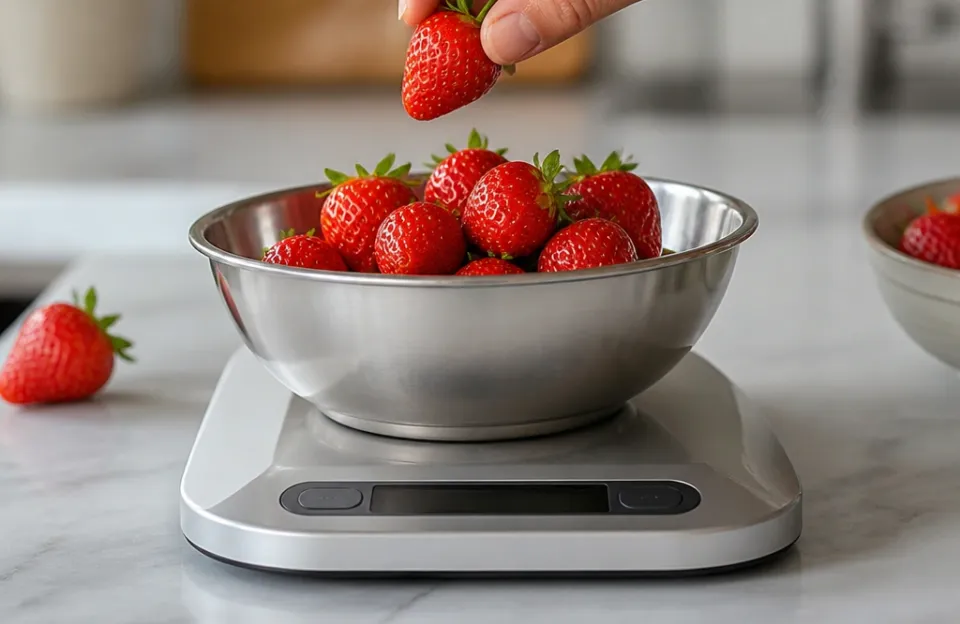
Standard kitchen scales typically handle loads up to 5 kilograms (11 pounds) with a resolution of 1 to 5 grams. They suit most daily cooking tasks, such as weighing pasta, rice, or meat portions. Their platforms are large enough to accommodate mixing bowls, allowing users to add multiple ingredients sequentially without transferring items.
Pocket travel scales are compact units designed for portability. They usually support lower capacities, often around 1 kilogram, and prioritize size over platform stability. These are useful for travelers adhering to strict dietary macros or campers who need lightweight gear. However, their smaller surface area makes balancing larger containers difficult.
Postal and shipping scales extend the range beyond typical kitchen needs, handling packages up to 30 kilograms or more. While technically capable of weighing food bulk items like sacks of grain, they often sacrifice the fine-grained accuracy required for recipe formulation. Home bakers rarely need this capacity unless dealing with commercial batch sizes.
Precision laboratory-style scales represent the high end of consumer availability. Designed for jewelry or chemical analysis, some models resolve down to 0.1 grams or less. In culinary contexts, these serve specific niches, such as weighing expensive spices, caffeine powder, or active dry yeast where slight deviations significantly alter outcomes. Note that extremely sensitive scales react to air currents and vibrations, requiring careful placement away from fans or busy countertops.
| Type | Typical Capacity | Resolution | Best Use Case |
|---|---|---|---|
| Standard Kitchen | Up to 5 kg | 1–5 g | Daily cooking, baking batches |
| Pocket Travel | Up to 1 kg | 1–2 g | Portion control on the go |
| Postal/Shipping | Up to 30+ kg | 10–50 g | Bulk goods, package mailing |
| Precision Lab | Under 2 kg | 0.1–1 g | Spices, leavening agents, chemicals |
Essential Functions Explained: Tare, Zero, and Unit Conversion
Modern digital interfaces include three critical functions that streamline workflow and reduce calculation errors.
The tare function resets the displayed weight to zero while leaving the container on the platform. This allows you to place an empty bowl on the scale, press tare, and then add ingredients directly into that same bowl. Each addition registers only its own mass, excluding the bowl’s weight. This method minimizes cleanup and prevents cumulative rounding errors associated with transferring ingredients between vessels.
Zeroing differs subtly from taring on some advanced models. While tare subtracts the current load, zeroing adjusts the baseline calibration if the scale displays residual weight when completely empty. Most consumer kitchen scales combine these operations into a single button labeled “Tare/Zero.” If your scale shows a small positive value with nothing on it, pressing this button corrects the offset so subsequent measurements start accurately from true zero.
Unit conversion buttons toggle between metric and imperial systems, commonly switching among grams, ounces, pounds, and milliliters. Grams remain the preferred unit for baking because decimal arithmetic simplifies scaling recipes up or down. Converting fractions of ounces mentally introduces friction and potential mistakes. Additionally, many scales allow liquid mode settings that approximate volume based on water density, though this feature assumes the substance matches water’s properties exactly.
Setup and Accuracy: Placement, Leveling, and Environmental Factors
Accuracy begins before you place any ingredient on the pan. Proper setup ensures the sensor operates within its designed parameters.
Place the scale on a hard, flat surface rather than a soft mat, wooden board, or carpet. Soft surfaces absorb part of the downward force, leading to underestimated readings. Hard floors transmit full weight to the load cell. Ensure the location avoids direct sunlight, which can heat the plastic casing and expand internal components, altering calibration temporarily.
Leveling affects stability. Many premium scales include bubble levels or adjustable feet. If the device tilts, lateral forces engage alongside vertical ones, causing inconsistent results. Even minor wobbles disrupt the strain gauge’s alignment. Check that all four corners contact the table firmly.
Environmental interference plays a significant role in precision. Air conditioning vents, open windows, or ceiling fans create drafts that exert micro-forces on light objects. Vibrations from nearby appliances, such as refrigerators compressors starting up, introduce noise into the electrical signal. Wait for the reading to stabilize fully before recording data. On highly sensitive models, cover the scale with a draft shield during delicate weighings.
Calibration Reality Check: Certified Weights vs. Household Myths
Calibration verifies that the scale reads correctly against known standards. Over time, load cells drift due to thermal cycling, overload events, or age. Regular checks maintain trustworthiness.
Certified reference weights provide the gold standard for verification. These masses undergo metrological testing to ensure they meet specified tolerances. Using a set of stainless steel weights ranging from 10g to 500g allows users to test linearity across the operating range. Manufacturers often supply procedures for entering calibration modes using these exact values. Without certified weights, definitive correction remains impossible for most consumer devices.
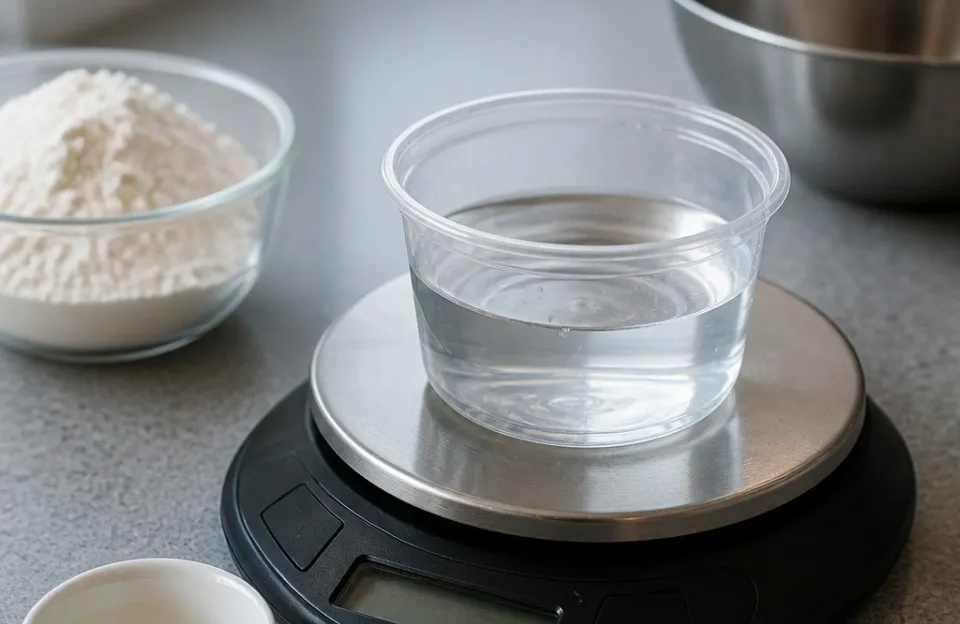
Household items frequently appear in online tutorials as makeshift calibration tools, but they carry significant risks. Coins vary by mint year, wear level, and composition. Circulated examples lose mass through abrasion, so relying on worn currency masks underlying scale drift. Similarly, water offers unreliable benchmarks due to temperature-dependent density fluctuations. Water density is highest at approximately 4°C and decreases as temperature rises or falls toward freezing. Assuming 1 mL equals exactly 1 gram ignores these variances, introducing systematic errors exceeding acceptable limits for precise work.
If certified weights are unavailable, perform comparative checks instead of absolute calibration. Weigh the same object on two different trusted scales. Discrepancies highlight faults without enabling self-correction. Some digital scales permit user-adjustable offsets via hidden menu sequences documented in manuals. Follow manufacturer instructions strictly; improvising code combinations voids warranties and corrupts firmware.
Cleaning and Long-Term Maintenance Guidelines
Protecting the sensor extends service life. Avoid submerging digital units unless explicitly rated waterproof. Moisture ingress corrodes circuits and degrades adhesive bonds holding strain gauges.
Wipe spills immediately with a damp cloth followed by drying. Harsh solvents damage plastic housings and obscure printed labels. For sticky residues like honey or syrup, warm water loosens solids gently. Never scrape debris off the platform with sharp tools, as scratches compromise smooth movement and aesthetic integrity.
Battery management influences performance. Low voltage causes erratic behavior before total shutdown. Replace batteries promptly when low-power indicators activate. Remove batteries during extended storage periods to prevent leakage corrosion inside terminals. Store scales upright in cool, dry places to avoid warping bases or trapping moisture beneath rubber feet.
When a Scale Fails: Signs of Drift and Replacement Criteria
Recognize degradation early to prevent compromised outputs. Common symptoms include fluctuating numbers despite stationary loads, inability to reach zero consistently, or delayed response times exceeding several seconds. Persistent non-linearity, where heavy items register disproportionately lighter than expected, indicates permanent sensor fatigue.
Replacement becomes necessary when repair costs exceed new purchase prices or when parts become obsolete. Consumer-grade electronics rarely justify professional servicing. If troubleshooting steps like resetting power sources, cleaning contacts, and verifying level placement fail to restore consistency, retire the unit responsibly according to local e-waste regulations. Invest in models offering warranty coverage for sensor defects to mitigate future expenses.
For ongoing reference regarding connectivity features, explore resources detailing integration capabilities such as syncing with health apps or managing battery types efficiently. These supplementary guides address peripheral concerns outside fundamental mechanics but enhance overall utility awareness.