You've just pulled a beautifully seared steak or a slow-smoked brisket off the heat, but the ultimate success hinges on one critical factor: reaching the perfect internal temperature. For home cooks and aspiring pitmasters, finding a reliable meat thermometer that doesn't break the bank is essential for both food safety and culinary excellence. This is precisely where ThermoPro has carved out its reputation.
Yes. ThermoPro, now sold as TempPro on the manufacturer’s store, is a good choice for home cooks who want an affordable thermometer for a specific job. Pick the TP19H for quick spot checks, the TP20B for watching an oven or smoker without a phone, or the TP25 if you want four wired probes and app alerts. If you need a probe with no cable running out of the cooker, look at the TempSpike TP960.
This guide compares published manufacturer specifications, warranty terms, and practical trade-offs. Response time, water resistance, and connectivity depend on the model.
What Makes a Thermometer Brand "Good" in 2026?
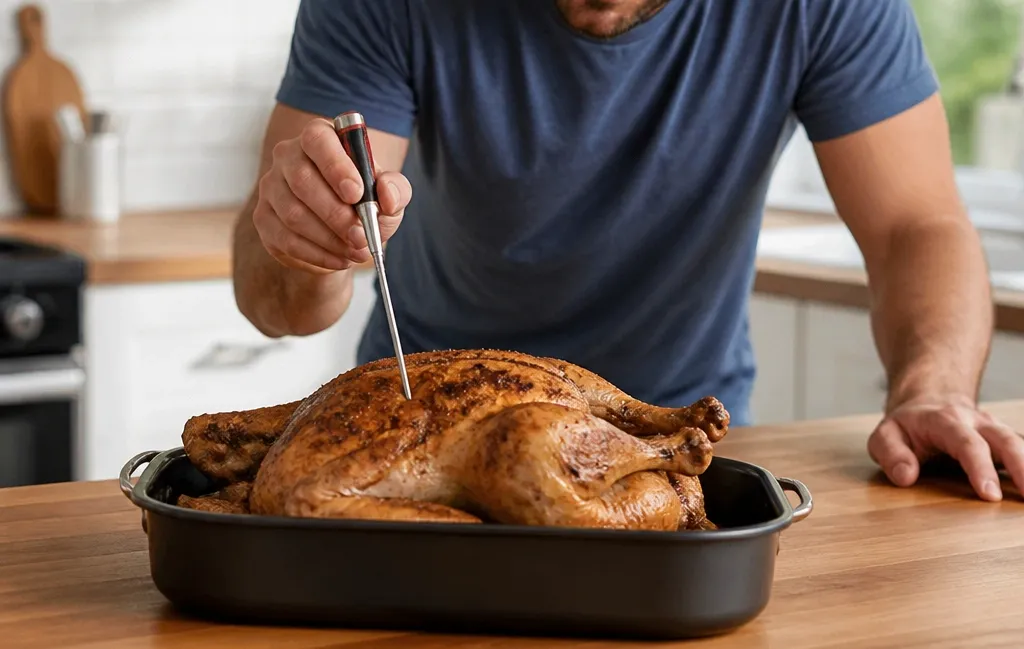
Before evaluating ThermoPro, it's helpful to establish the criteria for what defines a "good" thermometer brand today. In the competitive landscape of 2026, consumers look beyond just basic temperature readings. Key factors include:
- Accuracy: Consistent readings within a tight tolerance (e.g., ±1°F or less).
- Speed: How quickly the thermometer displays a stable temperature. For instant-read models, 2-5 seconds is ideal.
- Durability: Build quality, material robustness, and resistance to common kitchen hazards like heat, splashes, and drops.
- Features: Backlit displays, magnetic backs, auto-off, temperature alarms, connectivity (Bluetooth/RF), and multi-probe capabilities.
- Ease of Use: Intuitive controls, clear displays, and straightforward operation.
- Value: The balance between performance, features, and price.
- Customer Support & Warranty: Accessible support, clear warranty policies, and readily available replacement parts.
Prioritize the features you will use. For weeknight spot checks, a readable display and a fast response matter more than an app. For long cooks, start with the number of probes and how you want to receive alarms.
ThermoPro's Pillars of Performance and Value
Precision and Speed for Home Kitchens
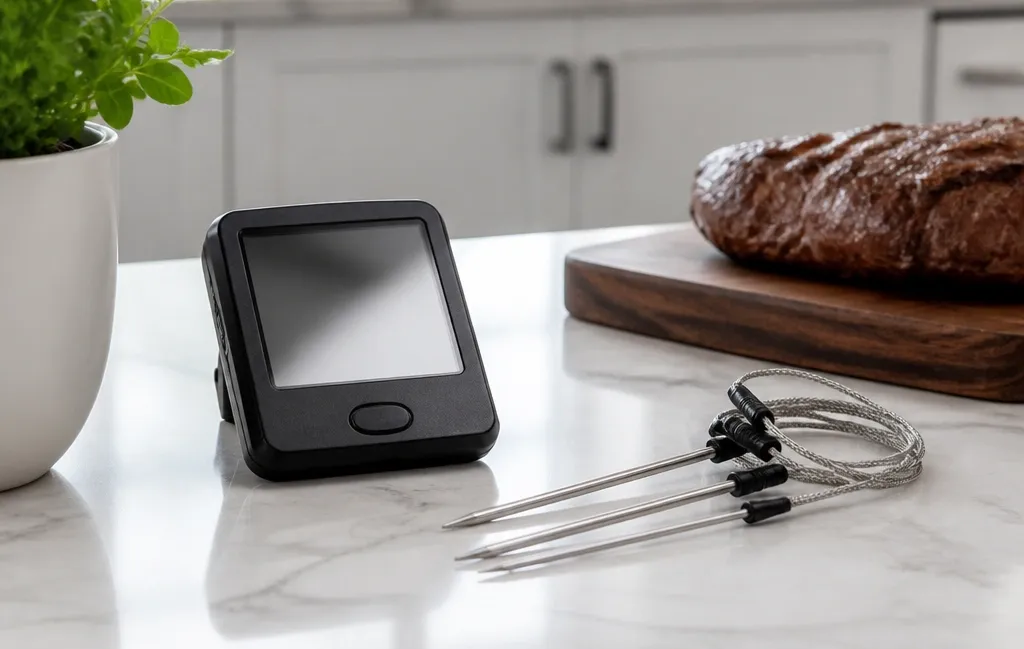
TempPro lists a one-second response time for the TP19H and quotes ±0.9°F from 14°F to 212°F. The TP20B and TP25 are leave-in models listed at ±1.8°F. Compare the accuracy spec at the temperatures you cook at, then use a probe and the safe minimum internal temperature chart to check that the food has reached a safe temperature.
Which ThermoPro Model Should You Buy?
| Model | Choose it for | Trade-off |
|---|---|---|
| TP19H | Steaks, burgers, and other quick spot checks. The display rotates 180° and the body is rated IP65. | Remove it after each reading. It is an instant-read model. |
| TP20B | No-phone monitoring for long cooks. Two wired probes connect to a transmitter that sends readings to a handheld RF receiver. | Route the probe cables out of the cooker. |
| TP25 | Up to four readings at once from wired probes, with Bluetooth app alerts and temperature graphs. | The probes still have cables. Check Bluetooth reception where you plan to monitor. |
| TempSpike TP960 | A cable-free probe for roasts and rotisserie cooks, with separate food and ambient sensors and a Bluetooth booster. | Requires a compatible phone for live app monitoring. Check minimum insertion depth for smaller cuts. |
For more detail on leave-in options, compare the TP25 with Inkbird’s Bluetooth thermometer or the TempSpike with MEATER’s wireless probes.
Customer Support and Warranty
The published warranty policy lists a standard one-year warranty and an extension to three years with product registration. The policy lists the TP622 Lightning separately, with ten years of coverage after registration. Check the policy for your exact model and keep the order number for registration.
Exploring ThermoPro's Diverse Product Portfolio
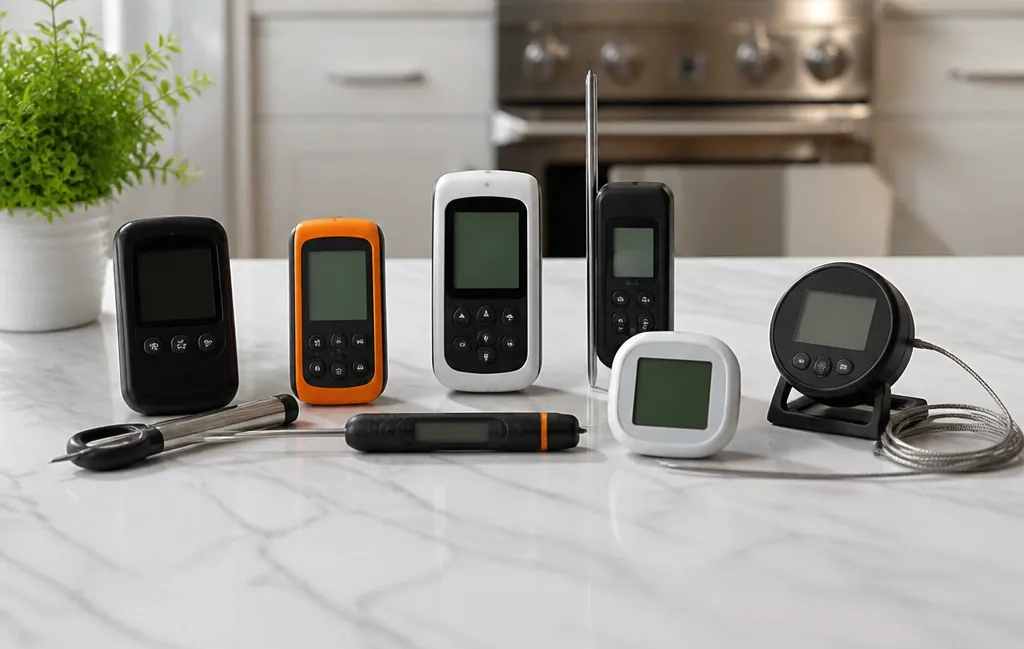
ThermoPro categorizes its offerings to meet specific culinary demands, with each line designed for distinct applications.
Instant-Read Thermometers (e.g., TP03, TP19)
These are arguably ThermoPro's most popular products, designed for quick spot checks of food temperature.
- Purpose: Ideal for testing steaks, burgers, chicken breasts, fish, baked goods, and liquids.
- Typical Features: Folding stainless steel probe, large backlit LCD display, magnetic back for easy storage on appliance surfaces, auto-off function, and occasionally splash-proof design.
- Best Use Cases: Perfect for grilling, pan-frying, and any situation where you need a rapid, accurate reading before removing food from heat. When choosing between specific models, a detailed TP03 vs. TP19 comparison can highlight the nuances that matter most.
- How to use it: Insert the probe, wait for a stable reading, and remove the thermometer before closing the oven or grill.
Leave-In & Wireless Systems (e.g., TP20, TP25, TP826)
For longer cooking processes like roasting, smoking, or slow-grilling, ThermoPro's leave-in and wireless probe systems are indispensable.
- Purpose: Continuously monitor internal food temperature and/or ambient oven/grill temperature without opening the cooking vessel.
- Typical Features: Multiple probe inputs, stainless steel wired probes, a base unit with a display, Bluetooth or radio-frequency connectivity, and customizable alarms. Use verified safe cooking temperatures when setting alerts.
- Best Use Cases: Essential for smoking briskets or pork shoulders, roasting whole chickens or turkeys, and deep-frying where maintaining a consistent oil temperature is crucial. For serious backyard chefs, a reliable meat thermometer for grilling is a game-changer.
- Connectivity: With the TP20B, the handheld RF receiver handles alerts. With the TP25, the phone app adds alerts and temperature graphs. Test your setup from the room where you will use it. Walls and a closed cooker can reduce the effective range.
Honest Assessment: Where ThermoPro Could Improve
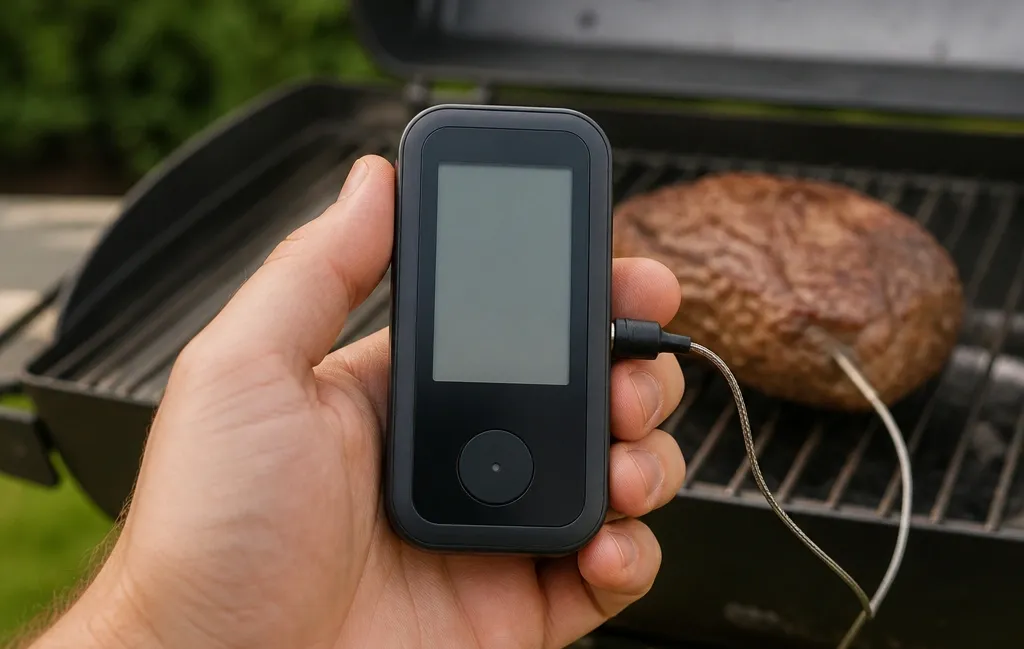
The trade-offs to check are the probe design, cleaning instructions, and what the manufacturer covers under warranty.
Probe and Wire Care
On wired models, avoid pinching the cable in a heavy lid or running it through direct flame. TempPro’s probe care instructions recommend washing the metal tip with hot soapy water and drying it thoroughly. Keep the connector and cable out of the water. If you need a spare, match the connector to your model before ordering. See our meat thermometer probe replacement guide.
Varying Water Resistance Ratings
Check the rating and cleaning instructions for the exact model. The TP19H body is rated IP65, and TempPro says it can be rinsed under running water. Avoid submerging it or putting it in the dishwasher. Wireless probes have separate care instructions for the probe and its charger or booster.
ThermoPro Against Competitors: A Comparative Look
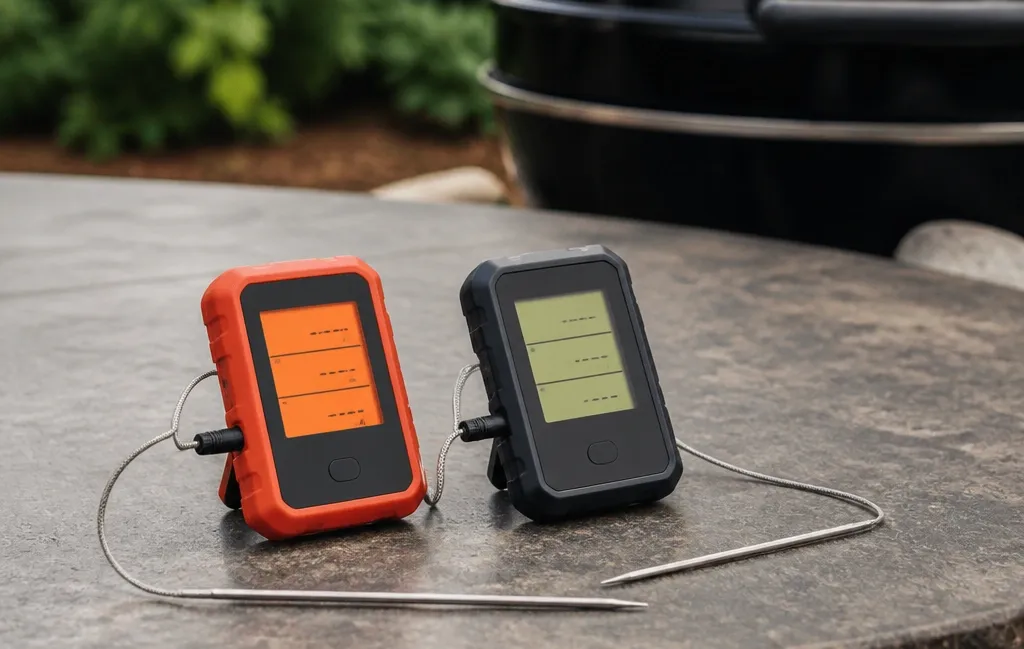
For a like-for-like comparison, here is how two folding instant-read thermometers differ on their published specs.
| Feature | TempPro TP19H | ThermoWorks Thermapen ONE |
|---|---|---|
| Published response time | 1 second | 1 second |
| Published accuracy | ±0.9°F from 14°F to 212°F | ±0.5°F from −4°F to 248°F |
| Water resistance | IP65 | IP67 |
| Warranty | 1 year, extended to 3 years with registration | 5 years |
The TP19H is the lower-cost option for spot checking meat at home. The Thermapen ONE adds a tighter stated accuracy tolerance in the ranges above, a NIST-traceable calibration certificate, and a higher water resistance rating. Published response times can reflect different test conditions. Compare current prices before choosing.
Essential Tips for ThermoPro Owners in 2026
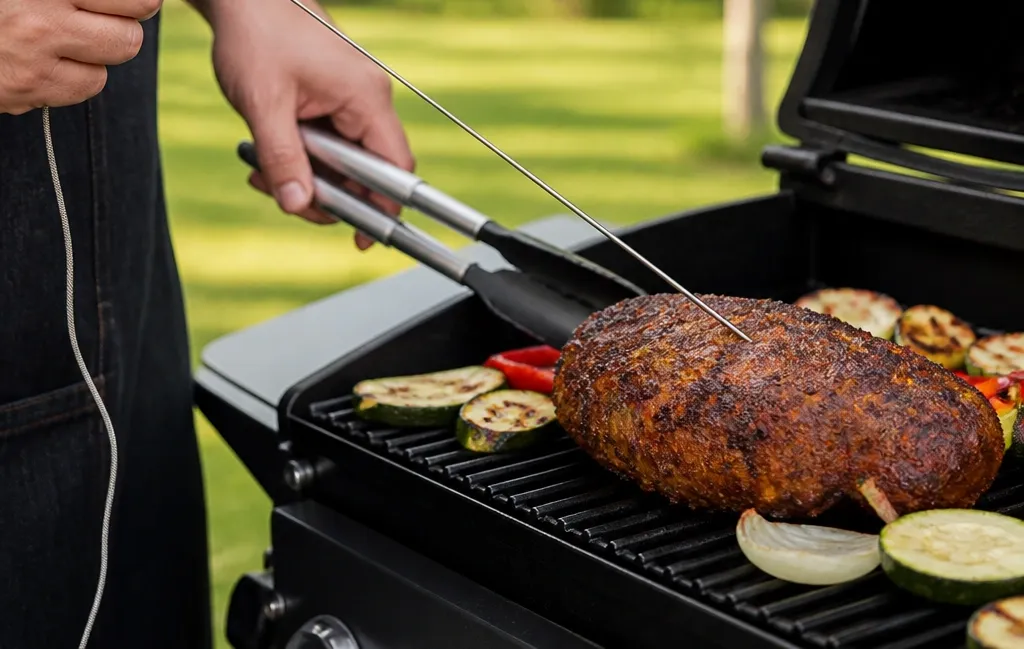
A few quick checks can help resolve unexpected readings and protect your probe.
Calibration Best Practices
An ice-water accuracy check gives you a known reference around 32°F (0°C). Check the manual for adjustment instructions before trying to change the reading. TempPro publishes separate calibration steps for the TP19.
Ice-Water Bath Method:
- Fill a glass with crushed ice and add a small amount of cold water (enough to fill gaps, not float the ice).
- Stir for 30 seconds and let it sit for another 30 seconds.
- Insert your thermometer probe into the center of the ice bath, avoiding touching the glass.
- Wait for the reading to stabilize near 32°F (0°C). If it is outside the model’s stated tolerance at that temperature, follow the manual’s adjustment instructions or contact support.
Understanding Error Codes (HHH/LLL)
On a wired model, first reseat the plug if the display shows HHH or LLL at a normal cooking temperature. TempPro’s troubleshooting page also recommends reseating the batteries on applicable models. If the error persists, check the model manual or contact support to see whether the probe needs replacing.
Battery Care and Lifespan
Digital thermometers rely on good battery health for accurate readings.
- Check Battery Level: If your readings seem inconsistent or the display is dim, a low battery could be the culprit. Knowing how to tell if your thermometer battery is low can save you troubleshooting headaches.
- Storage: Remove batteries if storing the thermometer for extended periods (several months) to prevent leakage.
- Replacement: Replace batteries with good quality equivalents as soon as the low battery indicator appears.
Probe Longevity and Maintenance
Proper care of your probes, especially wired models, is crucial for their lifespan:
- Cleaning: Wipe probes with a damp, soapy cloth after use. Avoid soaking the entire probe assembly, especially the wire-to-probe junction and the connector.
- Handling: Never bend or kink the probe wires sharply, as this can break the internal conductors. Avoid pinching wires in oven or grill doors.
- Storage: Store probes neatly, ideally coiled loosely, to prevent wire damage.
Frequently Asked Questions About ThermoPro (2026 Edition)
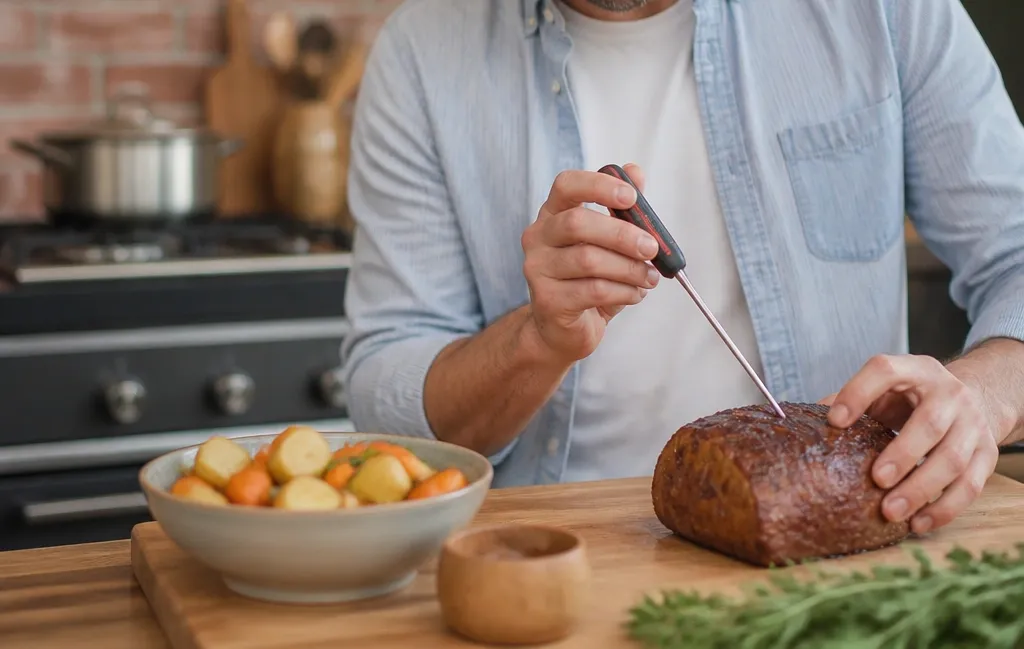
Do I need to calibrate my ThermoPro?
Check a suspect reading in a well-mixed ice bath, which should be near 32°F (0°C). Compare the result with your model’s accuracy tolerance. Follow your model manual if it supports adjustment. See TempPro’s ice-bath guide.
Can I leave the probe in the meat while it's in the oven?
Use a probe the manufacturer rates for leave-in cooking, within that model’s heat limits. On a wired model, keep the transmitter outside the cooker. Use a folding instant-read model for brief checks and remove it after each reading.
Is ThermoPro better than a generic brand?
Compare two specific models. ThermoPro’s published specifications, warranty terms, and support are useful when a cheaper listing leaves out the accuracy range, cleaning instructions, or replacement probe compatibility.
Why is my thermometer showing an "HHH" or "LLL" error?
On a wired model, try reseating the plug. If the error continues at a normal cooking temperature, use the TempPro troubleshooting guide or ask support whether the probe needs replacing.
What's the difference between an infrared and a probe thermometer?
An infrared thermometer reads the surface of a pan or griddle. A probe measures temperature inside the food and is the right choice for checking meat doneness. TempPro sells infrared models as well as probe thermometers. See our infrared vs. probe guide.
Conclusion: The Final Verdict on ThermoPro in 2026
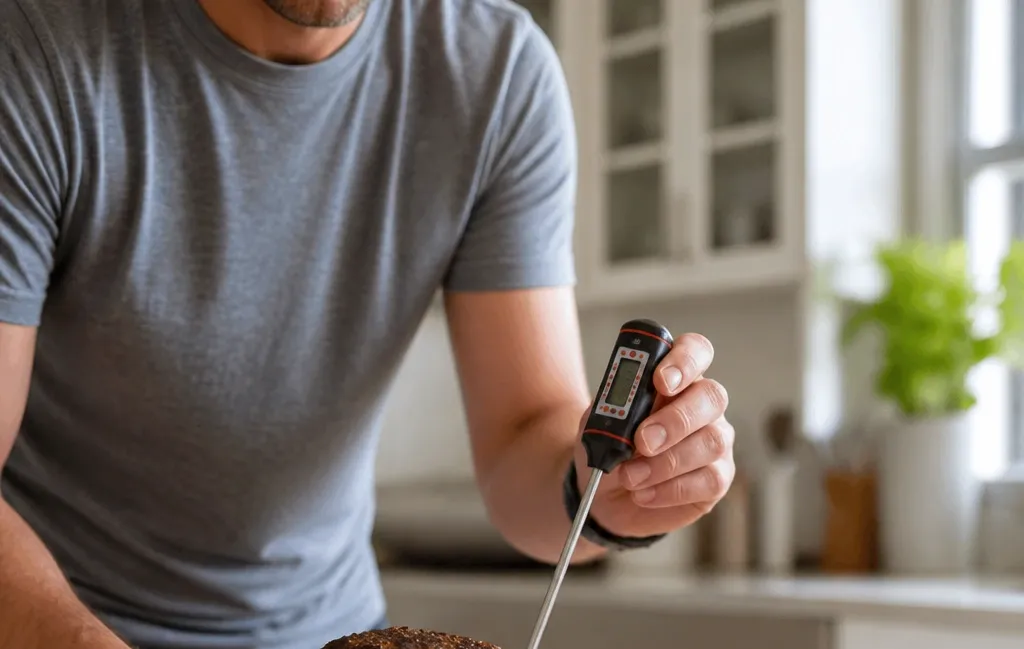
For everyday spot checks, start with the TP19H. Pick the TP20B if you want to track a longer cook without a phone, the TP25 if you need four wired readings with app alerts, or the TempSpike TP960 if you need a cable-free probe. Buy by model number so the probe type, temperature limits, and warranty match how you cook.