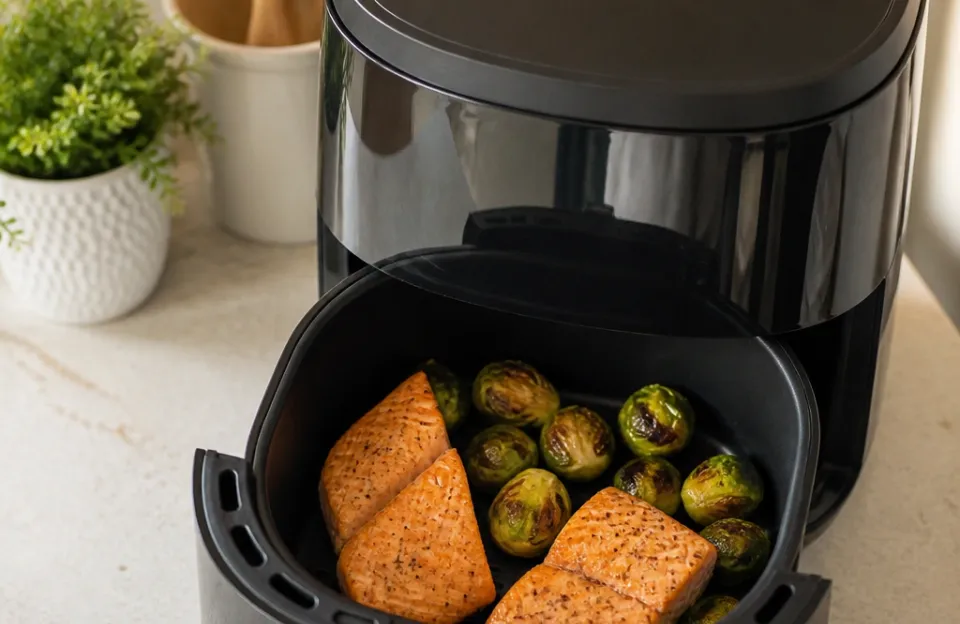
"Dishwasher safe" on an air fryer box rarely means the whole machine goes in the dishwasher. It almost always refers to specific removable parts, like the basket or crisper plate. Even then, the type of nonstick coating, the material of the handle, and the heating method used by your dishwasher all affect whether those parts survive a wash cycle without peeling or warping.
When shopping for dishwasher-safe air fryers: what to check first is the fine print in the manual. Manufacturers specify exactly which components can handle a dishwasher and which need hand washing. Skipping that detail is the fastest way to ruin a nonstick surface.
This guide covers how to read those labels, which materials hold up to dishwasher heat, and what happens when you put the wrong part in the rack.
What "Dishwasher Safe" Actually Means for Air Fryer Parts
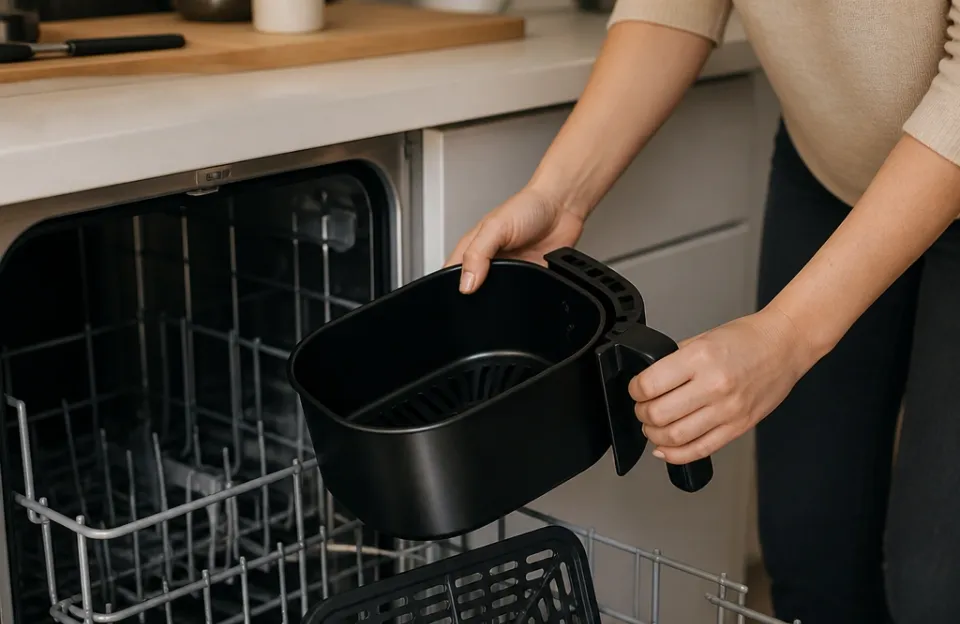
The phrase "dishwasher safe" applies only to detachable components. The main housing unit contains the fan, heating coil, and electrical wiring. Submerging that base in water destroys it and creates a shock hazard.
You wipe the exterior with a damp cloth. Only the pieces that touch your food go near the dishwasher.
Most brands design their baskets, crisper plates, and drip trays to handle standard residential dishwashers. But "standard" varies. A heavy-duty sanitize cycle reaches temperatures well above a normal wash.
That extra heat degrades nonstick coatings faster than regular cycles do. If your machine has a high-heat setting, you might need to avoid it for these parts.
Another detail people miss is placement. Top racks get less direct heat from the bottom heating element. Many manuals recommend placing smaller air fryer accessories on the top rack only.
Putting a thin metal tray on the bottom rack exposes it to intense heat that causes warping. Warped trays don't sit flat inside the cooking chamber anymore, which blocks airflow and leads to uneven cooking.
Coating Types That Survive Dishwasher Detergent
Nonstick coatings are the most vulnerable part of any air fryer basket. Traditional polytetrafluoroethylene (PTFE) coatings give food that easy release, but they wear down over time. Dishwasher detergents contain harsh alkaline chemicals and enzymes designed to break down baked-on grease.
Those same chemicals slowly strip PTFE away. After dozens of cycles, the coating thins out and food starts sticking.
Ceramic-based nonstick coatings handle dishwasher detergent better than PTFE. They don't rely on the same chemical structure, so the alkaline soap doesn't eat through them as quickly. Ceramic coatings still have limits.
Abrasive water jets hitting the same spot repeatedly will eventually wear them down. And ceramic loses its nonstick properties if exposed to extreme thermal shock, like going from a 400-degree oven straight into cold rinse water.
Some premium models use stainless steel baskets with no coating at all. Stainless steel is completely immune to detergent damage. Food sticks to bare steel more easily, so you need to use oil or parchment liners.
But if your main goal is zero maintenance and unlimited dishwasher runs, uncoated steel is the safest material.
| Coating Type | Dishwasher Durability | Heat Tolerance | Food Release |
|---|---|---|---|
| PTFE (Traditional Nonstick) | Low to Medium | Up to 500°F | Excellent |
| Ceramic Nonstick | Medium to High | Up to 600°F | Good (degrades over time) |
| Uncoated Stainless Steel | Very High | No practical limit | Poor (requires oil) |
Materials Used for Baskets, Trays, and Racks
Beyond the coating, the base material matters. Most air fryer baskets are stamped aluminum or steel covered in nonstick paint. Aluminum conducts heat well and stays light.
But bare aluminum reacts with dishwasher detergent. It oxidizes, turning dark and chalky. That's why every aluminum basket needs a protective coating.
If that coating chips, the exposed aluminum corrodes in the dishwasher.
Stainless steel bases don't have this problem. They stay shiny through hundreds of washes. The tradeoff is weight.
A solid stainless steel basket is noticeably heavier than an aluminum one. If you cook large batches, lifting a heavy, hot steel basket gets tiring.
Plastic handles are another weak point. The basket itself might be metal, but the grip is often hard plastic or silicone. Cheap plastics turn brittle under repeated dishwasher heat.
Silicone holds up much better, but it absorbs odors. Washing a silicone grip next to heavily soiled pots can leave it smelling like garlic for days. Check if the handle detaches before washing.
Removing it lets you hand wash the plastic while running the metal basket through the machine.
If you frequently cook messy foods, like prepping chicken wings for the week, grease builds up fast in the crevices. Knowing which materials tolerate daily scrubbing versus gentle washing saves you from buying replacement parts constantly.
How Heating Elements Change the Cleaning Rules
Air fryers come in two main styles: basket models and toaster-oven models. Basket models pull out like a drawer. Toaster-oven styles open with a front door and use wire racks.
This physical difference changes how you clean them.
Basket models usually have a removable inner pot and a crisper plate. Both drop right into the dishwasher. The enclosed shape means grease splatters stay contained inside the pot.
You rarely have to scrub the outer housing.
Toaster-oven air fryers use wire mesh racks and flat baking pans. The racks fit in the dishwasher, but their thin wires bend easily if heavy pots press against them during the wash cycle. The interior walls of a toaster-oven style also collect grease splatter because the space is larger and more open.
Those walls never go in the dishwasher. You have to wipe them down manually after cooking greasy items. If you want a model where almost everything detaches, basket-style designs require less manual wiping overall.
Checking how a specific model circulates hot air helps predict where grease lands. Units with rear-mounted fans blow grease toward the back wall. Models with top-mounted fans push it downward onto the drip tray.
Understanding this flow tells you which part gets the dirtiest and needs the most frequent dishwasher trips.
Reading the Manufacturer Manual Before the First Wash
Every brand defines "dishwasher safe" slightly differently. One company might mean the basket survives occasional washing. Another might test their parts for 500 consecutive cycles.
The manual is the only place that spells out the exact rules for your specific model.
Look for the section on care and maintenance. It usually lists each removable part and states whether it belongs in the dishwasher or requires hand washing. Some manuals specify the type of detergent to use.
Powder detergents tend to be more abrasive than liquid pods. If the manual says "use mild liquid detergent," ignore that advice at your own risk.
Warranty coverage is tied directly to these instructions. If you put a part in the dishwasher that the manual says to hand wash, and the coating peels off, the manufacturer will deny your warranty claim. They can tell the difference between normal wear and chemical stripping caused by detergent.
Taking two minutes to read the cleaning page prevents expensive mistakes.
For example, if you own a popular countertop model, the included booklet outlines exactly which trays belong on the top rack. Ignoring those specific directions voids the protection you paid for. Always match the manual to the exact model number printed on the back of the unit, not just the general brand name.
Dishwasher Cycles That Damage Nonstick Surfaces
Not all dishwasher buttons do the same thing. The cycle you pick determines how much punishment your air fryer parts take.
Normal cycles run around 130 to 140 degrees Fahrenheit. This temperature cleans everyday dishes without stressing most nonstick coatings. Heavy or pots-and-pans cycles push the water temperature higher and extend the wash time.
That prolonged exposure to hot, soapy water breaks down PTFE bonds much faster.
Sanitize cycles are the harshest. They heat the final rinse to 150 degrees or more to kill bacteria. While great for baby bottles or cutting boards, this extreme heat accelerates the aging of any coated surface.
Avoid sanitize cycles entirely for air fryer baskets.
Heated dry settings also cause problems. Leaving coated metal sitting in a closed, hot, humid environment after the wash finishes bakes residual detergent into the surface. Switching to air dry or opening the dishwasher door immediately after the final rinse stops this from happening.
Letting moisture evaporate naturally preserves the coating significantly longer.
If you regularly cook foods that splatter heavily, like getting bacon perfectly crisp, the grease traps in the basket need thorough cleaning. A normal cycle handles rendered fat fine without needing the destructive heavy-duty settings.
Hand Washing vs Machine Washing Tradeoffs
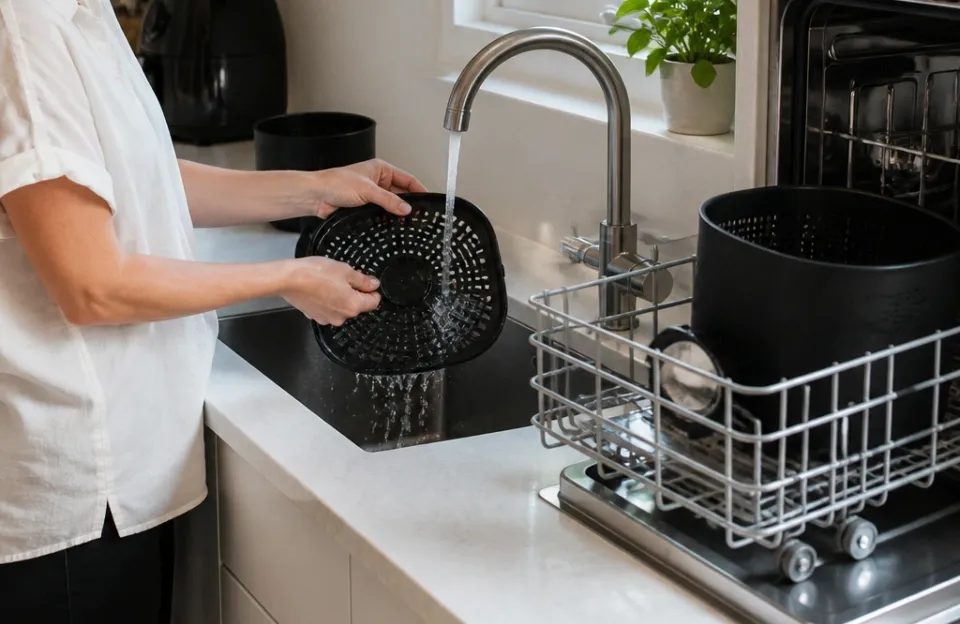
Hand washing takes more effort, but it extends the life of nonstick coatings by years. Warm water, a soft sponge, and basic dish soap remove 99% of food residue without attacking the surface chemistry. You control the pressure and the temperature.
Machine washing offers convenience. When you finish cooking dinner, tossing the basket in the dishwasher saves ten minutes of standing at the sink. For households cooking multiple meals a day, that time adds up.
The tradeoff is a shorter lifespan for the basket. A hand-washed PTFE basket might last three years before food starts sticking. A machine-washed one might show wear in six months.
A middle ground works well for many people. Run the basket through the dishwasher on busy weeknights using a gentle cycle. On weekends, or when cooking something that didn't leave much grease, wash it by hand.
This mixed approach balances convenience with longevity.
Also consider what else shares the load. If you wash your air fryer basket alongside cast iron skillets or heavily soiled baking sheets, cross-contamination happens. Grit from other pans scratches the air fryer coating during the spray cycle.
Running the air fryer parts in a lighter, separate load protects them from physical abrasion.
Loose Rivets, Screws, and Handles Inside the Machine
Vibration is a hidden enemy in the dishwasher. The water jets spin the spray arms at high speeds, shaking everything in the racks. If your air fryer basket uses rivets or screws to attach the handle, those fasteners loosen over time.
Check the connection points before every wash. Wiggle the handle. If it moves even slightly, tighten the screw or skip the dishwasher entirely.
A loose handle can snap off mid-cycle, leaving you with a heavy metal basket stuck at the bottom of the machine. Worse, detached screws fall into the dishwasher drain and jam the pump.
Silicone grips sometimes slide off metal handles when exposed to hot water. If yours slides easily when dry, it will definitely slide off when wet and vibrating. Remove slip-on grips before loading the basket.
Wash them separately in warm soapy water.
Riveted joints also trap food particles. Dishwashers struggle to blast water into tight crevices where metal folds over metal. Grease accumulates there, eventually smoking the next time you turn the appliance on.
If your basket has deep rivet holes, inspect them after the wash cycle. You might need to poke a toothpick through them to clear trapped debris that the water jets missed.
Checking Replacement Part Availability Before Buying
Even with perfect care, nonstick coatings eventually fail. Before buying a new machine, check if the manufacturer sells replacement baskets or crisper plates. Some brands treat the basket as a permanent component.
When it wears out, you have to buy a whole new unit. Others sell individual replacements for a fraction of the cost.
Search the brand's website for spare parts. Look up your specific model number and see if a replacement basket appears in the store section. If it does, note the price.
Paying twenty dollars for a new basket every year is cheaper than replacing a hundred-dollar appliance.
This matters especially for dishwasher-safe air fryers because frequent washing accelerates wear. Knowing you can easily swap out the cooking chamber removes the anxiety of ruining it. Brands that support their products with long-term spare parts availability generally build better initial quality too.
If you recently upgraded to a glass-basket design, verify whether the glass bowl and its specific lid are sold individually. Glass resists coating wear, but accidental drops during loading remain a real risk.
Why Certain Foods Leave Residue Dishwashers Miss
Dishwashers excel at removing fats and oils. They struggle with melted sugars and starchy proteins. If you cook glazed meats, sweet potato fries, or battered fish, the residue behaves differently.
Sugar caramelizes and bonds to metal at high heat. Standard dishwasher detergent lacks the chemical strength to dissolve baked-on sugar.
Starches from potatoes or flour coatings form a paste when wet. Instead of washing away, this paste spreads across the basket surface during the spray cycle and dries into a hard film. You'll notice a cloudy white layer building up over time.
For these types of foods, pre-soaking is mandatory. Fill the basket with hot water and a little dish soap. Let it sit for fifteen minutes before putting it in the dishwasher.
The soak softens the bonded sugars and dissolves the starch film, allowing the machine's jets to actually wash them away. Skipping this step leaves you pulling a dirty basket out of a supposedly clean cycle.
Understanding this limitation helps when planning meals. If you are testing timing for root vegetables, expect the starch buildup to require soaking before the dishwasher can do its job properly. Similarly, cooking delicate proteins like a quick salmon fillet leaves behind oils that dissolve easily, making cleanup much simpler.
Common Mistakes People Make Loading the Dishwasher
Putting the basket in upside down seems logical to catch falling debris. But inverted baskets trap water. When the cycle ends, a pool of dirty, soapy water sits inside the rim.
As it dries, it leaves spots and residue. Always angle the basket so water drains freely off the surface.
Overcrowding the rack prevents water from reaching the nonstick surface. If plates block the spray arm's rotation, the air fryer basket gets nothing but steam. Load it with enough space around it for the jets to hit every angle.
Using bleach-based detergents or adding bleach to the rinse aid compartment destroys coatings instantly. Chlorine reacts with both PTFE and ceramic surfaces, causing immediate discoloration and pitting. Stick to standard phosphate-free dishwasher detergents.
Finally, letting the basket sit in the closed dishwasher overnight after the cycle finishes invites rust on any exposed metal edges. Moisture hangs in the air inside a sealed tub. Open the door or unload the parts promptly once the cycle completes.
Frequently asked questions
Can I put the entire air fryer in the dishwasher?
No. Only the removable parts like the basket, crisper plate, and drip tray can go in the dishwasher. The main unit houses electrical components and a heating element.
Water destroys these parts and creates a severe shock risk. Wipe the exterior base with a damp cloth instead.
Does dishwasher detergent ruin nonstick coatings?
Yes, over time. Dishwasher detergents contain strong alkaline chemicals meant to dissolve baked-on food. These chemicals slowly break down PTFE and ceramic nonstick layers.
Using mild liquid detergent and avoiding heavy wash cycles slows this process down considerably.
Are stainless steel air fryer baskets truly dishwasher safe?
Uncoated stainless steel handles dishwasher cycles better than any coated material. It won't peel or react with detergent. However, food sticks to bare stainless steel much easier than nonstick surfaces.
You will likely need to soak it or use oil to prevent sticking during cooking.
Should I use the sanitize cycle to kill bacteria on my basket?
Avoid the sanitize cycle. It heats the water to temperatures exceeding 150 degrees Fahrenheit. This extreme heat accelerates the breakdown of nonstick coatings and can warp thinner metal trays.
A normal wash cycle provides sufficient cleaning for everyday cooking residue.
Why is my air fryer basket peeling after a few months?
Premature peeling usually comes from harsh dishwasher cycles, abrasive sponges, or stacking heavy pots on top of the basket inside the machine. Thermal shock, like rinsing a hot basket under cold water before loading it, also causes coatings to crack and flake off.
Do I need to remove the silicone handle before washing?
Check your manual. If the silicone grip slides off easily, remove it before the wash cycle. Dishwasher vibration and heat can cause loose grips to slip off and fall into the drain filter.
Detachable handles also allow you to clean underneath them where grease hides.
Keeping Your Machine Running Longer
Reading the label closely before the first wash dictates how long your appliance lasts. Dishwasher-safe air fryers save time, provided you respect the material limits. Use gentle cycles, skip the heated dry button, and inspect the coating periodically for thin spots.
Treat the basket as a consumable part rather than a permanent fixture. Even with careful washing, coatings degrade. Knowing where to buy a replacement keeps your machine useful long after the original basket gives out.
Match your cleaning habits to the foods you cook, and the convenience of the dishwasher won't cost you the nonstick performance you paid for.