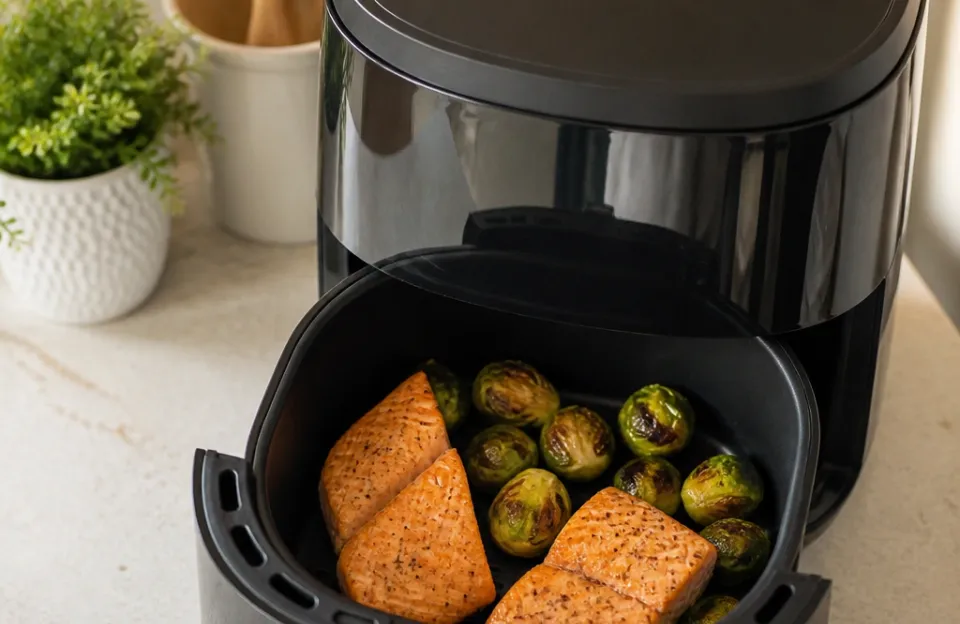
A ceramic air fryer uses a basket or interior coated with a ceramic-based nonstick layer instead of traditional PTFE (Teflon) coatings. The heating mechanism is identical to any standard countertop convection oven. A fan circulates hot air around the food, and the ceramic coating keeps that food from sticking to the metal surface underneath.
People look into ceramic air fryers mainly because they want to avoid synthetic nonstick chemicals. Ceramic coatings are derived from silica (sand) through a sol-gel process. They don't contain PTFE or PFOA.
That distinction drives most of the interest in this category. This guide covers what the coating actually is, how it holds up over time, the tradeoffs you'll face compared to standard models, and how to keep one working properly.
What Makes a Ceramic Air Fryer Different From Standard Models
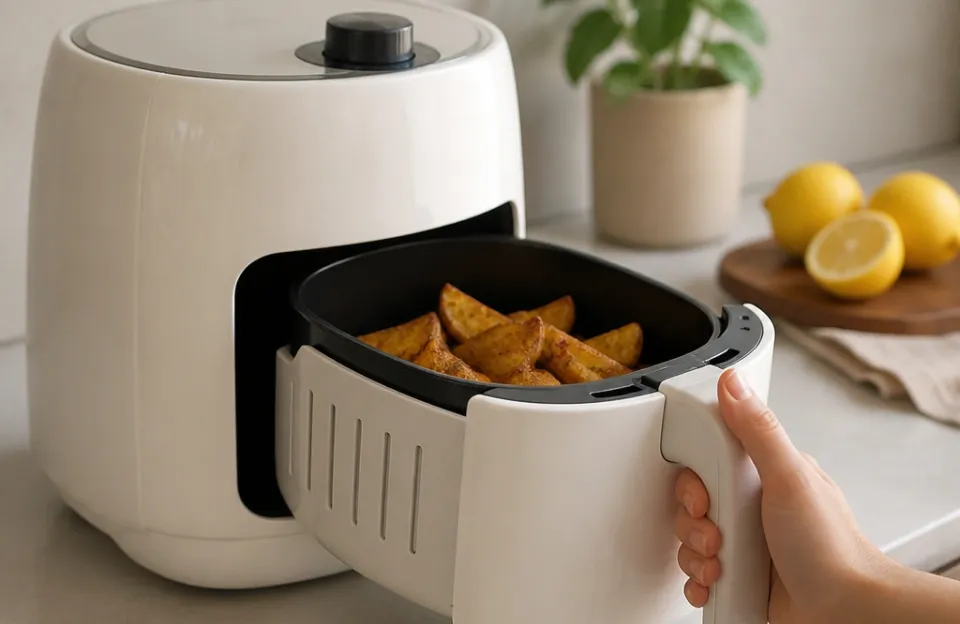
The difference comes down entirely to the coating on the cooking surfaces. Standard air fryers use PTFE-based nonstick coatings. PTFE is a synthetic polymer that creates a very slick surface.
It works well for years if you treat it right. Ceramic air fryers use an inorganic coating made primarily from silicon and oxygen atoms.
Both types cook food exactly the same way. The heating element sits at the top of the unit. A high-speed fan pushes that heat down and around the perforated basket.
You get the same browning, the same crispiness, and the same cooking times regardless of which coating is inside. If you follow the right timing for potatoes, they will turn out identically in either machine. The ceramic material does not change the thermodynamics of the appliance.
The real separation happens in the chemistry of the basket. When manufacturers say "ceramic," they mean a ceramic-derived nonstick layer sprayed onto aluminum or steel. It cures at lower temperatures than industrial ceramics used for tiles or dishes.
This makes it safe for food contact and gives it that slippery quality. But it also means the coating behaves differently under stress than heavy-duty commercial ceramics.
The Chemistry Behind Ceramic Nonstick Coatings
Ceramic nonstick coatings start as a liquid solution. Manufacturers mix silica with other minerals and solvents. They spray this mixture onto the metal basket.
Then they bake it at relatively low temperatures, usually between 400°F and 500°F during production. The solvents evaporate, leaving behind a hard, glass-like film.
This process avoids the fluoropolymers found in PTFE. The FDA regulates food contact surfaces and approves both PTFE and ceramic coatings for kitchen use. Neither is inherently dangerous when used within normal cooking parameters.
The appeal of ceramic is simply the absence of those specific synthetic compounds.
Because the final layer is essentially a thin sheet of hardened minerals, it lacks the flexibility of PTFE. PTFE can bend slightly with the metal pan as it heats and cools. Ceramic cannot flex as easily.
This physical property dictates how long the nonstick quality lasts and how you need to handle the basket daily.
Why People Switch Away From PTFE
Concerns about PTFE usually center on overheating. When PTFE reaches temperatures above 500°F, it begins to degrade and release fumes. Normal air frying rarely hits those temperatures.
Most units max out at 400°F. Still, the worry persists for many home cooks.
Ceramic coatings do not release those same fumes if accidentally overheated. They can withstand higher temperatures before breaking down chemically. For households with pet birds, which have highly sensitive respiratory systems, ceramic coatings provide peace of mind.
Bird owners are frequently warned by avian veterinarians to avoid PTFE-coated cookware entirely.
Some buyers just prefer materials derived from natural minerals rather than lab-created polymers. That preference drives a large portion of the market. Whether you're cooking chicken legs or roasting vegetables, the desire for a mineral-based cooking surface remains the primary reason people choose these units.
How Long the Nonstick Surface Actually Lasts
Durability is the biggest conversation point around ceramic air fryers. The honest truth is that ceramic coatings lose their nonstick properties faster than PTFE coatings. A high-quality PTFE basket can stay slick for three to five years of regular use.
A ceramic basket typically starts showing wear after six months to two years.
The decline isn't sudden. You won't wake up one day to find your food permanently welded to the bottom. It happens gradually.
Eggs might start clinging a little more. Cheese might leave a stubborn residue. You'll find yourself using slightly more oil than you did when the unit was new.
Heat cycling causes this wear. Every time you run the air fryer, the metal basket expands. When it cools, it contracts.
Because the ceramic layer is rigid, this constant expansion and contraction creates microscopic cracks. Over hundreds of cycles, those cracks multiply. Food particles get trapped in them.
The surface loses its slip.
| Attribute | Ceramic Coating | PTFE Coating |
|---|---|---|
| Typical Lifespan | 6 to 24 months | 3 to 5 years |
| Max Safe Temperature | Up to 600°F+ | Degrades above 500°F |
| Flexibility | Rigid, prone to micro-cracking | Flexible, moves with metal |
| Chemical Makeup | Silica-based, inorganic | Fluoropolymer, synthetic |
| Initial Slickness | Very high | Very high |
This table shows why the choice involves a direct tradeoff. You gain higher heat tolerance and different chemistry, but you sacrifice longevity. Understanding this helps set realistic expectations before you buy.
Even a highly rated compact model will follow these same material rules if it uses a ceramic basket.
Cleaning Without Ruining the Coating
How you wash a ceramic air fryer determines how long it stays usable. Aggressive cleaning destroys the surface much faster than normal cooking does. The goal is to remove grease without scratching the mineral layer.
Always let the basket cool completely before washing it. Plunging a hot ceramic-coated basket into cold water causes thermal shock. Thermal shock accelerates the micro-cracking mentioned earlier.
Wait until the metal is room temperature.
Wash the basket by hand using warm water, mild dish soap, and a soft sponge. Never use the abrasive side of a sponge. Never use steel wool, scouring pads, or harsh chemical cleaners like oven spray.
Those products strip the coating directly off the metal.
For stuck-on food, soak the basket in warm soapy water for fifteen to twenty minutes. The moisture softens the residue. After soaking, wipe it away gently with a soft cloth.
If you need something slightly abrasive, make a paste of baking soda and water. Apply it softly, then rinse. Baking soda is alkaline enough to cut grease but soft enough not to scratch silica-based coatings.
Dishwashers are generally a bad idea for ceramic baskets. The detergent used in dishwashers is highly abrasive. The prolonged heat cycle also stresses the coating.
Hand washing takes an extra minute and extends the life of the basket significantly. Proper care matters whether you're prepping wings for the week or just making a quick snack.
Cooking Performance and Heat Tolerance
In terms of actual cooking results, ceramic air fryers perform on par with standard ones. Crispiness comes from rapid air circulation and high heat, not from the basket's coating. You will get the same golden-brown finish on french fries, roasted vegetables, or proteins.
Ceramic coatings handle high heat better than PTFE. While most air fryers only reach 400°F, some specialty recipes or searing functions push higher. If you accidentally leave an empty unit running, a ceramic basket won't off-gas harmful fumes the way a PTFE basket would.
This provides a margin of safety for distracted cooks.
One thing to note: ceramic surfaces sometimes require a tiny bit more fat than brand-new PTFE surfaces. Because the coating is less inherently slippery at a molecular level, a light spritz of cooking oil helps. Avoid aerosol cooking sprays that contain propellants or lecithin.
Those additives build up a sticky film on ceramic coatings that is nearly impossible to remove. Use pure oil in a pump mister, or brush a small amount directly onto the food.
When you're timing salmon fillets, the fish releases its own fats, which naturally lubricates the ceramic surface. Leaner foods benefit from that light manual oiling.
Where Ceramic Coatings Fall Short
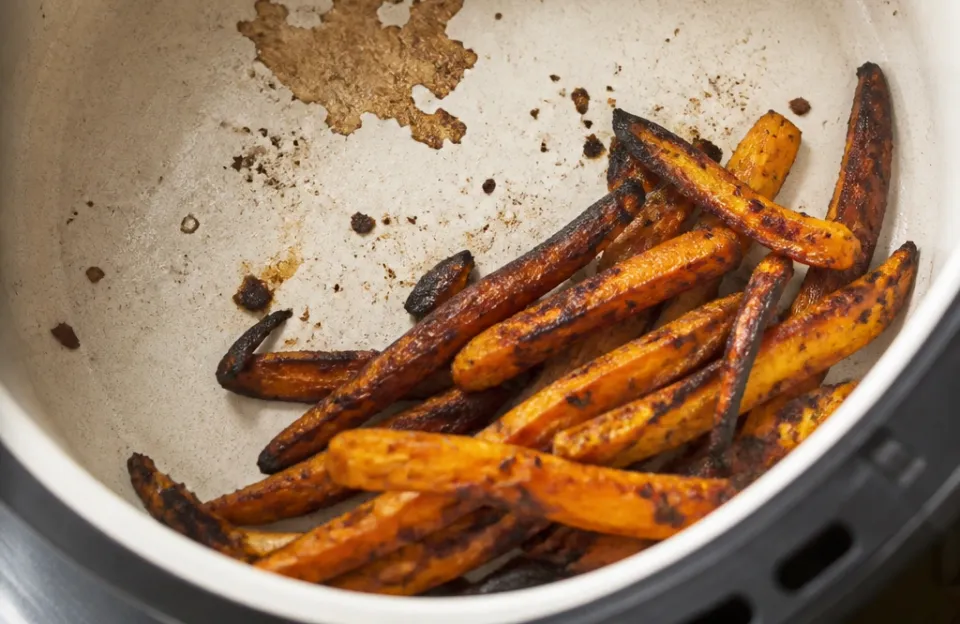
No material is perfect. Knowing the limitations of ceramic air fryers prevents buyer's remorse. The shorter lifespan is the main drawback, but there are others worth considering.
First, replacement baskets can be hard to find. With major brands that use PTFE, you can often order a spare basket easily. Ceramic models are frequently produced by smaller brands or specific product lines.
If the coating wears out after a year, you might have to replace the entire appliance rather than just the basket.
Second, the coating chips if dropped or banged against the sink. Because it is rigid and glass-like, a sharp impact knocks pieces off. Once the ceramic chips, the exposed aluminum underneath can react with acidic foods like tomatoes or citrus.
This doesn't happen with intact coatings, but damage exposes the base metal.
Third, price. Ceramic-coated appliances often carry a slight premium due to the manufacturing process and the marketing appeal of being PTFE-free. You pay more upfront for a surface that degrades faster.
Some buyers accept this tradeoff willingly. Others find it frustrating once the slickness fades.
Finally, availability is narrower. Walk into any big-box store, and the vast majority of air fryers on the shelf use PTFE. Finding a true ceramic model requires more targeted searching, usually online.
Situations Where a Ceramic Model Makes Sense
Despite the drawbacks, specific scenarios strongly favor choosing a ceramic air fryer. Matching the appliance to your household needs is more important than chasing maximum durability.
Households with pet birds should strongly consider ceramic. Avian respiratory systems are incredibly fragile. Fumes released by overheated PTFE can be fatal to parrots, cockatiels, and finches even in adjacent rooms.
Eliminating that risk entirely is worth replacing a basket more frequently.
People who regularly cook at maximum temperatures benefit too. If you constantly run your air fryer at 400°F for extended periods, the higher thermal stability of ceramic provides a buffer against degradation. PTFE gets closer to its breakdown point at sustained high temperatures.
Those who prioritize avoiding synthetic fluoropolymers for personal or environmental reasons will prefer ceramic. The sol-gel process used to create these coatings relies on abundant minerals rather than complex synthetic chemistry. For buyers focused on material sourcing, this aligns better with their values.
If you mostly cook fatty foods like bacon or skin-on poultry, the shorter lifespan is less of an issue. The rendered fat acts as a natural lubricant, reducing the mechanical friction on the ceramic surface during cooking. Lean foods dragged across the bottom cause more wear over time.
Misconceptions About Ceramic Air Fryers
Several myths float around regarding these appliances. Clearing them up helps you make a practical decision.
"Ceramic means the whole basket is solid clay." The basket is still stamped aluminum or stainless steel. Only the outer layer, measured in microns, is the ceramic coating. It feels like metal because it is metal underneath.
"You never need oil with ceramic." Brand new ceramic coatings are very slick. But they aren't magic. Foods prone to sticking, like battered items or melted cheese, still need a barrier.
A light brushing of oil protects both the food and the coating.
"They don't get as hot as regular air fryers." The heating element and fan dictate the temperature. The coating has no impact on how much heat the machine generates. A 1500-watt ceramic air fryer reaches the exact same temperatures as a 1500-watt PTFE model.
"All 'PTFE-free' labels mean ceramic." Some manufacturers use silicone-based coatings or seasoned carbon steel instead. Read the specifications carefully. True ceramic coatings will explicitly mention silica, sol-gel, or ceramic-derived nonstick materials.
"Scratches release toxic chemicals." Unlike older concerns about flaking PTFE, ingesting a tiny flake of inert ceramic coating passes through the body without reacting. It's simply baked sand and minerals. The danger isn't toxicity; it's that the scratch ruins the nonstick function and exposes bare metal.
Frequently asked questions
Are ceramic air fryers safer than Teflon ones?
Both are considered safe for normal cooking by regulatory agencies. Ceramic air fryers eliminate the risk of PTFE fumes if the unit is accidentally overheated above 500°F. For households concerned about synthetic polymers or homes with pet birds, ceramic provides a wider safety margin.
Under standard operating conditions, neither poses a health hazard.
How do I know if my air fryer is actually ceramic?
Check the manufacturer's specifications for terms like "sol-gel," "silica-based," or "ceramic nonstick." Many brands advertise "PFOA-free" or "PTFE-free," which is a strong indicator. However, some PTFE-free models use silicone coatings instead. Look specifically for the word "ceramic" in the materials list to confirm.
Can I put the ceramic basket in the dishwasher?
Hand washing is highly recommended. Dishwasher detergents contain harsh abrasives designed to strip baked-on food from plates. These same abrasives dull and degrade ceramic coatings rapidly.
The intense heat of the drying cycle also stresses the material. Washing with warm water, mild soap, and a soft sponge preserves the nonstick surface much longer.
Why is my ceramic air fryer sticking after a few months?
Micro-cracking from repeated heating and cooling cycles gradually roughens the surface. Using metal utensils, abrasive sponges, or aerosol cooking sprays accelerates this process. Once the smooth mineral layer develops texture, food proteins bond to it.
Lightly oiling your food before cooking helps compensate for this normal wear.
Do ceramic air fryers cook food slower?
No. Cooking speed depends on the wattage of the heating element and the efficiency of the fan. The coating on the basket does not insulate the food or block heat transfer.
A 1700-watt ceramic model cooks just as fast as a 1700-watt standard model. Differences in cooking times come down to the specific appliance design, not the nonstick material.
Is it worth paying more for a ceramic model?
That depends entirely on your priorities. If avoiding PTFE is your main goal, the premium is justified. If you want a basket that stays perfectly slick for five years with minimal effort, a standard PTFE model serves you better.
Buyers who understand the shorter lifespan and adjust their cleaning habits accordingly tend to be satisfied with the purchase.
Keeping Your Expectations Realistic
Choosing a ceramic air fryer means prioritizing material composition over long-term convenience. You get a cooking surface free from fluoropolymers, capable of handling high heat without degrading chemically. You give up the multi-year durability that PTFE provides.
The key is treating the basket gently. Skip the dishwasher. Throw away the metal tongs.
Stop using aerosol cooking sprays. If you adopt those habits, you stretch the usable life of the ceramic coating as far as the material allows. It will eventually wear down.
That is the nature of rigid mineral coatings subjected to daily thermal expansion.
For bird owners, high-heat cooks, and anyone strictly avoiding synthetic nonstick chemicals, these tradeoffs make sense. Just go in knowing exactly what you are buying. It is a standard convection appliance wrapped in a different type of chemistry.
Treat that chemistry with respect, and it handles everything you throw at it.