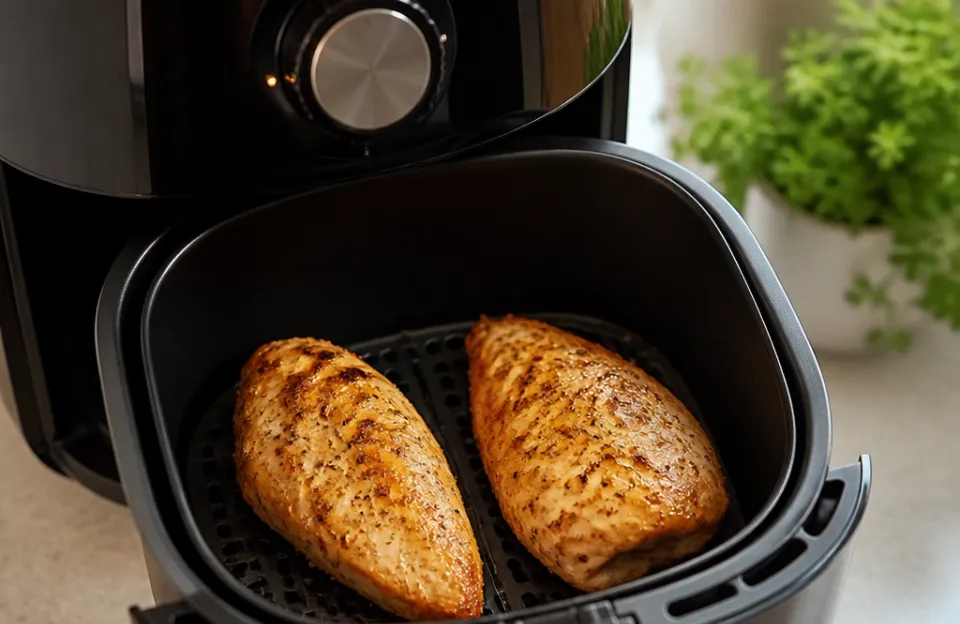
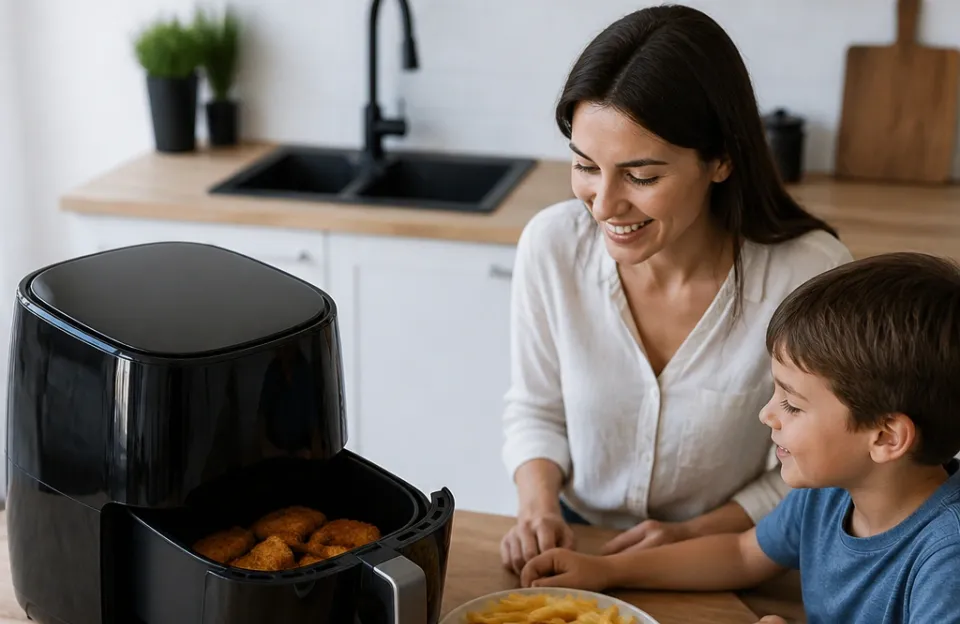
Air fryers with keep-warm functions hold cooked food at a safe, steady temperature after the main cooking cycle ends. The appliance switches to a low-heat mode automatically or manually. This stops your meal from getting cold while you finish side dishes or wait for everyone to sit down.
If you cook for a family or prep meals in batches, this function changes how you use the countertop. You don't need to juggle oven timers or microwave reheats. The food stays ready until you are.
This article explains how the keep-warm setting works on these machines, when it helps, when it hurts your food, and what to watch for if you want one.
How the Keep-Warm Setting Actually Works Inside the Basket
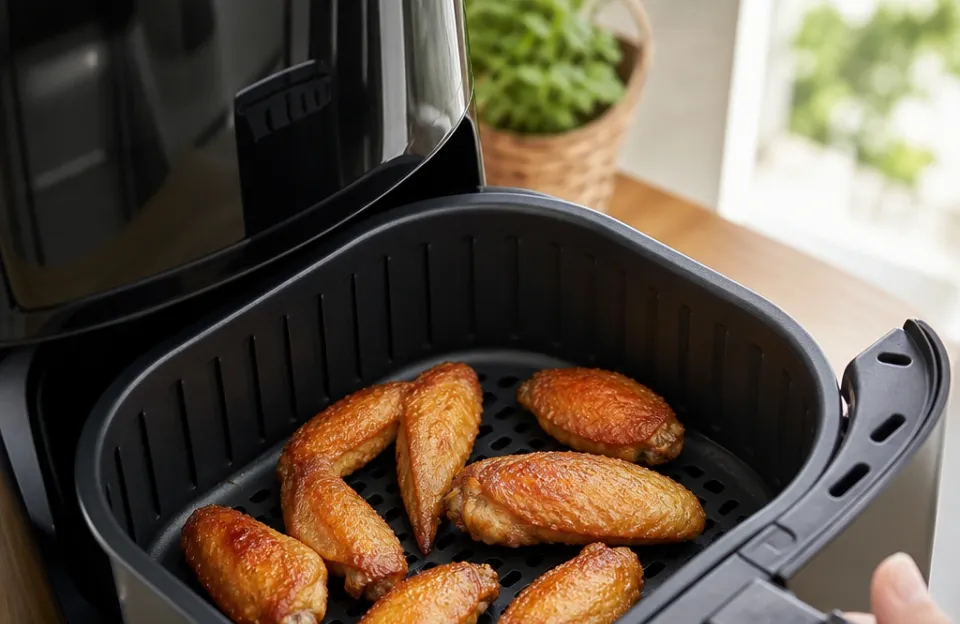
A standard air fryer cooks by pushing hot air rapidly around the food using a heating element and a high-speed fan. When you switch to a keep-warm mode, the machine drops both the target temperature and the fan speed. Most models hold the basket between 150°F and 170°F.
The fan still runs. It has to. Without airflow, the heating element would scorch whatever sits directly beneath it.
The slower fan distributes gentle heat evenly so the bottom layer doesn't burn while the top layer cools down. Some digital models pulse the heater on and off to maintain the exact degree you set. Analog dial models usually just drop to their lowest possible wattage output.
This low-and-slow approach is different from leaving food in a turned-off unit. A powered-down basket loses heat fast because the vented design lets air escape. The keep-warm function actively fights that heat loss.
According to FDA food safety guidelines, hot food must stay above 140°F to prevent rapid bacterial growth. The keep-warm setting on an air fryer is programmed specifically to clear that 140°F threshold safely.
Temperature control versus simple timer extensions
Some cheaper models don't have a true keep-warm mode. They just let you extend the cooking timer at the same high heat. That will dry out chicken wings or burn roasted vegetables.
A real keep-warm function lowers the wattage. If the manual says the unit holds food at "low heat" but doesn't specify a temperature drop, test it with a meat thermometer before trusting it with dinner.
Why Built-In Warming Matters More Than Reheating Later
Reheating fried or roasted food in an air fryer takes three to five minutes. That sounds fast until you realize the outside gets crispier while the inside dries out slightly every time you run a second heat cycle. Breaded items lose their initial crunch texture.
Delicate proteins like fish tighten up.
Holding the food at a steady warm temperature skips that second blast of intense heat. You get the food exactly as it was when the timer first went off. For people doing batch cooking for the week, warming means the first batch is still hot when the second batch finishes.
You eat everything together instead of plating cold food next to fresh food.
It also frees up your attention. You can step away to set the table or help kids without panicking about the main dish cooling down on the counter. If you're timing something specific, like getting potatoes perfectly tender, having the machine hold them while you work on a protein removes a lot of kitchen stress.
Which Foods Hold Up Well Under Low Heat
Not everything survives a 30-minute stay in a warm basket. Moisture content and surface texture dictate what works.
Foods that hold up well:
- Thick cuts of meat like pork chops, steak bites, or meatloaf slices. The residual heat actually helps them rest and redistribute juices.
- Root vegetables. Carrots, sweet potatoes, and parsnips retain their structure under low heat.
- Baked goods made in the fryer, like small muffins or biscuits.
- Dense proteins. If you cook salmon fillets quickly, a brief hold keeps them warm without turning them to rubber, provided you don't leave them in too long.
Foods that degrade quickly:
- Thin, crispy items. French fries turn limp as trapped steam softens the crust.
- Leafy greens or delicate vegetables like zucchini. They turn mushy.
- Anything with a wet batter or glaze. Sugary coatings melt and pool at the bottom of the basket.
- Cheese-heavy toppings. They separate into grease and solids when held at 160°F for extended periods.
Knowing what holds up helps you plan the meal. If you're making something fragile, skip the warming function entirely and plate it immediately.
Air Fryers With Keep-Warm Functions: What Changes Between Models
Manufacturers handle this function differently. Digital screens give you more control than mechanical dials. The capacity of the basket also changes how effective the warming is.
A large 8-quart drawer, like those found in multi-function countertop units, circulates warm air better around a pile of food than a cramped 2-quart basket. In a tiny space, the food on the bottom touches the hot grate directly and overcooks even on a low setting.
| Control Type | Typical Temp Range | Time Limit | Best For |
|---|---|---|---|
| Digital Touchscreen | 150°F to 170°F (adjustable) | Up to 2 hours | Precise holding, delicate meats |
| Mechanical Dial | Lowest dial setting (fixed) | Manual shutoff required | Simple tasks, thick root veggies |
| Auto-Switch | Fixed ~160°F | 30 to 60 minutes | Hands-off cooking, busy evenings |
Digital models often include an auto-switch. When your 400°F cook cycle ends, the screen beeps and drops to 160°F automatically. You don't have to touch anything.
On older or simpler units, you hear the beep, walk over, and manually turn the dial down. If you miss the beep, the machine shuts off completely, and your food starts cooling.
Brands vary widely here. Some popular compact designs include dedicated buttons for this exact purpose, while others require you to manually set a very low temperature and short timer to mimic the effect. Always check the control panel layout before buying if this function is your priority.
The Crispiness Tradeoff You Need to Accept
Air frying works by evaporating surface moisture rapidly. High heat and fast air create a dry, crunchy exterior. Putting food into a warm, enclosed space does the opposite.
Even with the fan running, the lower temperature means moisture escaping from the center of the food has nowhere to go. It settles back onto the crust.
If you use the keep-warm setting on breaded chicken, expect the breading to soften slightly. It won't be soggy like microwaved food, but it won't have that fresh-out-of-the-basket snap either. To minimize this, don't stack the food tightly during the warming phase.
Spread it out in a single layer so air can move between the pieces.
For items where crunch is the entire point, like thin fries or battered onion rings, the warming function defeats the purpose of air frying. Eat those immediately. Save the warming function for things where internal temperature matters more than external shatter.
Safety Limits for Holding Cooked Food
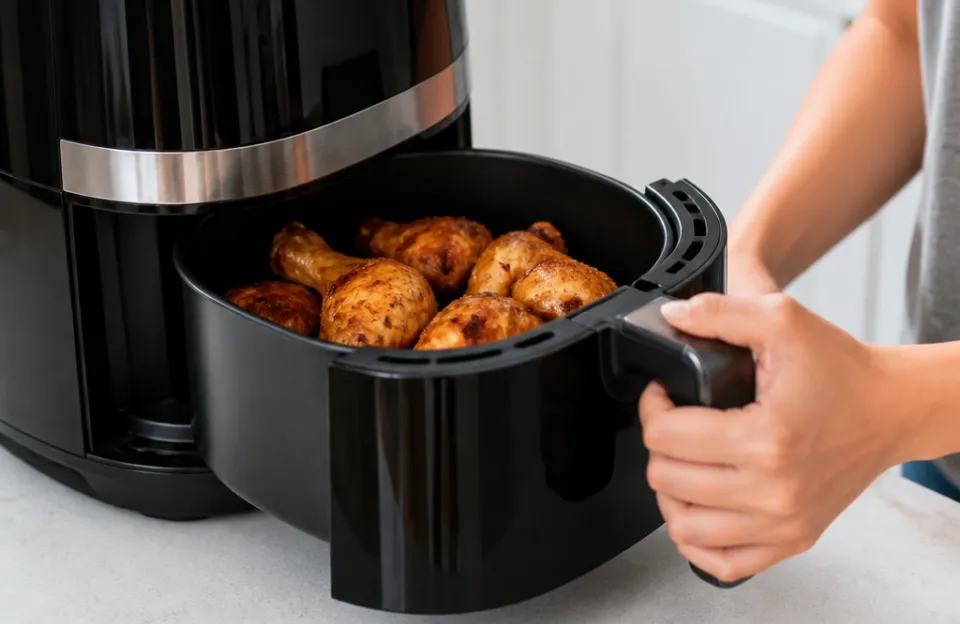
Just because the machine can run for two hours on a warm setting doesn't mean your food should sit there that long. Quality drops sharply after 30 minutes. Safety becomes a concern after two hours.
The USDA recommends discarding perishable food left at room temperature for more than two hours, or one hour if the ambient room is above 90°F. An air fryer on a keep-warm cycle stays above the danger zone, so the clock moves slower. Still, prolonged holding degrades proteins and dries out fats.
Use a probe thermometer if you plan to hold food for more than 30 minutes. Check the thickest piece in the center of the pile. If it reads below 140°F, the warming function isn't penetrating the pile deeply enough.
You either need to spread the food out, raise the hold temperature slightly, or serve it immediately.
Also, never put raw food into a pre-warmed basket expecting it to cook slowly. The keep-warm temperatures are far too low to kill pathogens in raw meat. The function is strictly for food that has already reached its safe internal cooking temperature.
Adjusting Your Cooking Routine Around the Warming Cycle
If you know your machine holds heat well, you can change the order you cook things. Start with the item that holds up best under low heat. Roast your thick potato wedges first.
Transfer them to the keep-warm setting. Then crank the heat back up and cook your faster, more delicate items.
This applies to proteins too. If you're making crispy drumettes for a crowd, cook the first tray, shift the machine to warm, and load the second tray at high heat. By the time the second batch is done, the first is still hot enough to serve alongside it.
You can also use the function to proof dough if your model allows temperatures as low as 100°F, though most dedicated keep-warm settings start higher. Stick to its intended purpose: holding finished food.
One detail people miss is the power draw. Running the heating element on low still uses electricity. It uses less than roasting at 400°F, but it's not zero.
If you're only holding food for five minutes while you pour drinks, it might be easier to just leave it in the turned-off basket. The residual heat of the metal grate and the food itself will hold the temperature fine for a few minutes without drawing power. Reserve the active warming function for delays longer than ten minutes.
Common Mistakes People Make With the Warming Function
Using this setting seems simple, but a few habits ruin the results.
- Leaving the basket overcrowded. Piling food to the brim blocks the slow fan. The top layer gets cold while the bottom layer touching the grate continues to cook and eventually dries out. Spread food flat.
- Ignoring the drip tray. As food sits, fats render and liquids release. If the bottom pan isn't empty, the food sits in a shallow pool of grease. Drain excess fat before switching to the warm cycle.
- Assuming all models auto-switch. Many users walk away thinking the machine will drop the temp automatically. If yours requires manual adjustment, you'll come back to burnt edges or a fully shut-off unit. Read your specific manual.
- Holding food too long. Thirty minutes is the sweet spot for most items. Pushing it past an hour turns roasted vegetables leathery and meats chalky.
- Warming wet-battered foods. Items dipped in liquid batter before frying need immediate serving. Holding them causes the coating to slide off or turn gummy. Dry rubs and flour dredges hold up much better.
Frequently asked questions
Does the keep-warm function use a lot of electricity?
No. The heating element cycles on briefly or runs at a fraction of its maximum wattage. The fan also spins slower.
It draws significantly less power than the active cooking phase, though it still consumes more energy than simply turning the machine off.
Can I use the keep-warm setting to reheat cold leftovers?
You can, but it will take a long time. The temperature is too low to heat cold food quickly. You are better off running the air fryer at 350°F for three to five minutes to reheat leftovers properly, then switching to the warm setting if you aren't ready to eat immediately.
Will my food dry out if I leave it on the warming cycle?
Yes, eventually. Even at low temperatures, moving air pulls moisture from the surface of the food. Most items stay juicy for 20 to 30 minutes.
After an hour, lean meats and uncovered vegetables will noticeably dry out. Adding a light tent of foil over the food inside the basket slows this down.
Do all air fryers have a keep-warm button?
No. Many basic or older models only have a temperature dial and a timer dial. On those machines, you simulate the function by turning the temperature dial to its absolute lowest mark and resetting the timer.
Dedicated digital models are much more likely to have a specific button or automatic transition for this.
Is it safe to leave the house while the air fryer is on the warm setting?
No. Even though the temperature is low, the heating element is still active and the appliance is plugged in. Treat the keep-warm cycle the same way you treat the active cooking cycle.
Stay home and keep the unit on a heat-safe surface away from walls and cabinets.
How do I choose between a digital or dial model for this function?
Pick a digital model if you cook delicate proteins or need precise temperature control. The ability to set an exact degree prevents accidental overcooking. Choose a dial model if you mostly cook sturdy items like root vegetables or thick sausages where a rough low-heat estimate works fine.
Before you buy based on this function alone
Air fryers with keep-warm functions solve a specific problem: timing multiple dishes so they hit the table hot at the same moment. If you cook single items and eat them right away, you won't use this setting often enough to justify paying extra for a premium digital model.
If you feed a family or meal prep in stages, the function pays for itself in convenience. Just remember the tradeoffs. You gain temperature stability at the cost of some surface crispness.
Spread your food out, watch the clock, and don't ask the warming cycle to do the job of a proper reheat. Used correctly, it bridges the gap between the end of cooking and the start of eating without ruining the meal.