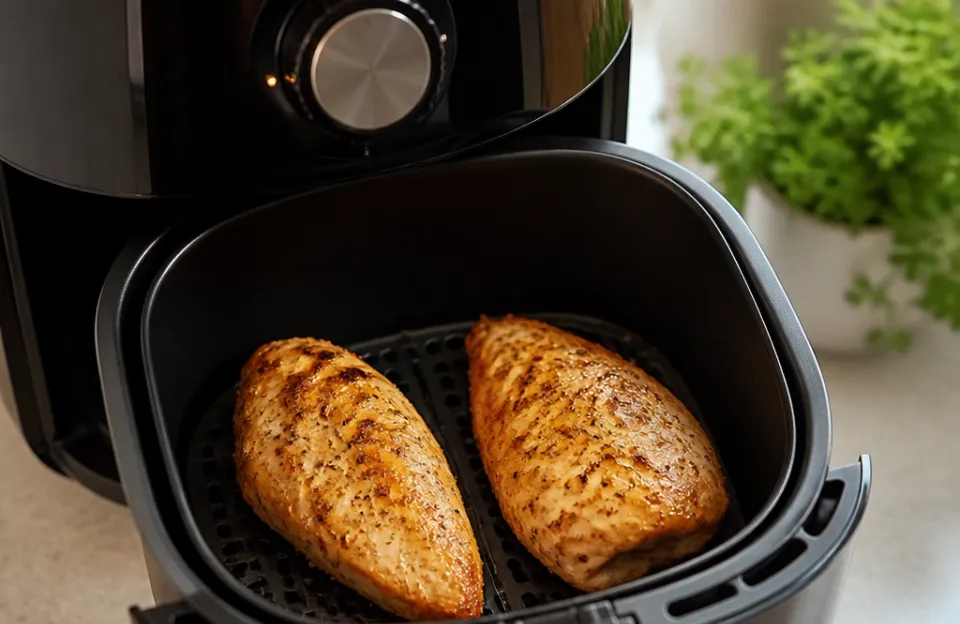
Air fryers with automatic shut-off turn off their heating element and fan when the cooking timer hits zero, or when an internal sensor detects a dangerous temperature spike. This safety function prevents food from burning and stops the appliance from overheating if you leave the kitchen. Nearly every modern air fryer sold today includes some version of this protection, though the exact mechanism varies by brand and price point.
This article explains how that shutoff system works, why it matters for everyday cooking, and what to look for if safety is your top priority. We will also cover the differences between basic timer-based models and advanced units with thermal sensors, plus a few situations where the automatic function might behave differently than you expect.
How the Automatic Shut-Off Mechanism Actually Works
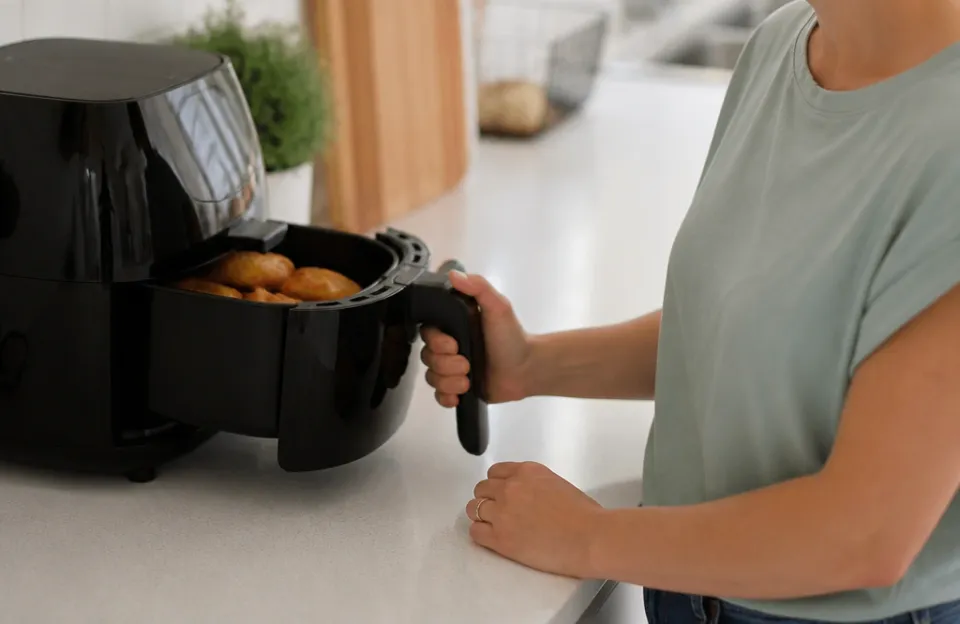
Every air fryer relies on a rapid circulation of hot air to cook food. That process requires a heating coil and a high-speed fan running together inside a compact space. When those components run longer than intended, temperatures climb past safe limits.
The automatic shut-off system exists to break that cycle before plastic melts or electrical wires fail.
In most standard models, the primary trigger is the mechanical or digital timer. You set the dial or press the buttons for 15 minutes. Once that countdown finishes, a switch cuts power to both the heating element and the fan simultaneously.
You hear a click or a beep, and the machine goes quiet. This is the baseline definition of air fryers with automatic shut-off.
Higher-end units add a secondary layer: a thermal fuse or thermistor. This small sensor sits near the heating coil. If the internal air temperature crosses a specific threshold, usually around 400°F to 450°F depending on the manufacturer, the sensor trips a circuit breaker inside the machine.
Power cuts immediately, regardless of what the timer says. This protects against blocked vents or fan failures that a simple timer cannot catch. The UL safety standards for countertop cooking appliances require these types of thermal protections in certified devices.
Timer-Based Shutoff vs. Thermal Sensor Protection
A timer-based shutoff does exactly what you ask it to do. It runs for the set duration and stops. If you accidentally set the timer for 60 minutes instead of 10, the machine will run for the full hour.
The timer does not know the food burned 20 minutes ago. It only tracks time.
A thermal sensor ignores the clock entirely. It monitors heat. If grease splatters onto the heating element and causes a sudden flare-up, the sensor detects the abnormal spike and kills the power.
This makes thermal sensors a much stronger defense against actual fire hazards.
When shopping for air fryers with automatic shut-off, check the specifications for both systems. A unit with only a timer provides basic convenience. A unit with a timer and a thermal cutoff provides genuine safety.
Many product manuals list the thermal cutoff under "safety devices" or "overheat protection."
Mechanical Dials vs. Digital Control Boards
Older or budget-friendly air fryers use a spring-loaded mechanical dial. You twist it clockwise to set the time. As the spring unwinds, it eventually hits a release point that physically breaks the electrical connection.
These are reliable because they don't rely on software, but they lack precision. A dial set to 12 minutes might actually run for 10 or 14.
Digital control boards use a microchip to manage the countdown. They cut power with an electronic relay. Digital timers are accurate down to the second.
They also allow for programmed shutoff sequences, like dropping the temperature for the last two minutes of a cook cycle before turning off completely. However, if the circuit board fails, the relay can sometimes stick in the "on" position, which is why a physical thermal fuse is still required as a backup even on digital models.
Why This Safety Function Matters in a Busy Kitchen
Countertop appliances draw significant wattage. A typical air fryer pulls between 1,400 and 1,800 watts while running. That generates intense, concentrated heat in a very small footprint.
Leaving that kind of energy output unattended without a fail-safe is a documented cause of residential kitchen fires.
The National Fire Protection Association reports that unattended cooking equipment remains the leading factor in home cooking fires. An automatic shutoff directly addresses this risk. If you get distracted by a phone call or a child needing attention, the machine handles the timing.
You don't have to rely solely on your memory to prevent a hazard.
This function also protects the appliance itself. Heating elements degrade faster when exposed to prolonged, unnecessary heat cycles. By cutting power precisely when cooking ends, the shutoff extends the lifespan of the coil and the surrounding wiring.
Running the fan for a few seconds after the heater turns off helps dissipate residual heat, keeping the internal plastic housing from warping over years of use.
If you frequently prepare quick meals like crispy chicken pieces or batch-cook proteins for the week, you likely step away while the machine runs. Knowing the device will power down on its own removes a constant background worry from your routine.
What Happens to the Food When the Machine Stops
One common concern is whether the sudden stop ruins the texture of the meal. Air fryers cook by blasting food with superheated air. When the fan stops, that airflow ceases instantly.
For most foods, this immediate halt is ideal. French fries, roasted vegetables, and breaded proteins stop browning the second the heat drops. If the machine stayed warm without active airflow, the food would continue to steam in its own residual moisture, turning crispy exteriors soggy.
Stopping the timer completely preserves the crunch you worked to build. Getting the timing right on items like perfectly cooked salmon fillets depends heavily on the machine stopping exactly when planned.
There is one exception. Thick, dense items like a whole potato or a large meatloaf retain massive amounts of internal heat. Even after the air fryer shuts off, the center continues to cook through conduction.
This is known as carryover cooking. The automatic shutoff stops the external heat source, but physics keeps working inside the food. You need to account for this by pulling dense items out slightly before they reach your target internal temperature, just as you would with a conventional oven.
Spotting Reliable Overheat Protection Before You Buy
Manufacturers use different marketing terms for the same underlying technology. You might see "auto shutoff," "overheat protection," "thermal cutoff," or "automatic safety switch." They all refer to mechanisms that kill power when conditions exceed safe limits.
To verify what a specific model actually has, skip the promotional bullet points and read the user manual before purchasing. Most brands publish PDF versions of their manuals on their websites. Search the document for "shutoff" or "thermal."
Look for these specific details:
- Dual-system mention: Does the manual describe both a timer ending the cycle and a separate thermal fuse for emergencies?
- Cool-down period: Some models keep the fan running for 20 to 30 seconds after the heater turns off to vent trapped heat. This indicates a more thoughtful thermal design.
- Reset instructions: If a thermal fuse trips, how do you reset it? Some require unplugging the unit for 30 minutes. Others have a physical reset button on the back. A few cheaper models use a one-time fuse that permanently bricks the appliance if it trips, requiring a total replacement.
- Certification marks: Look for UL, ETL, or CSA marks on the appliance or packaging. These indicate independent testing labs verified the safety claims, including the shutoff functions. Checking guidelines from agencies like the Consumer Product Safety Commission can help you understand what these certifications legally require.
| Protection Type | Trigger Mechanism | Primary Purpose | Reset Method |
|---|---|---|---|
| Timer Shutoff | Countdown reaches zero | Prevents overcooking food | Turn dial again or press start |
| Thermal Fuse | Internal temp exceeds limit | Prevents fire or melting | Unplug and wait, or press reset button |
| Tilt Switch | Appliance tips past an angle | Prevents operation if knocked over | Return to flat surface |
Situations Where the Shutoff Might Not Work as Expected
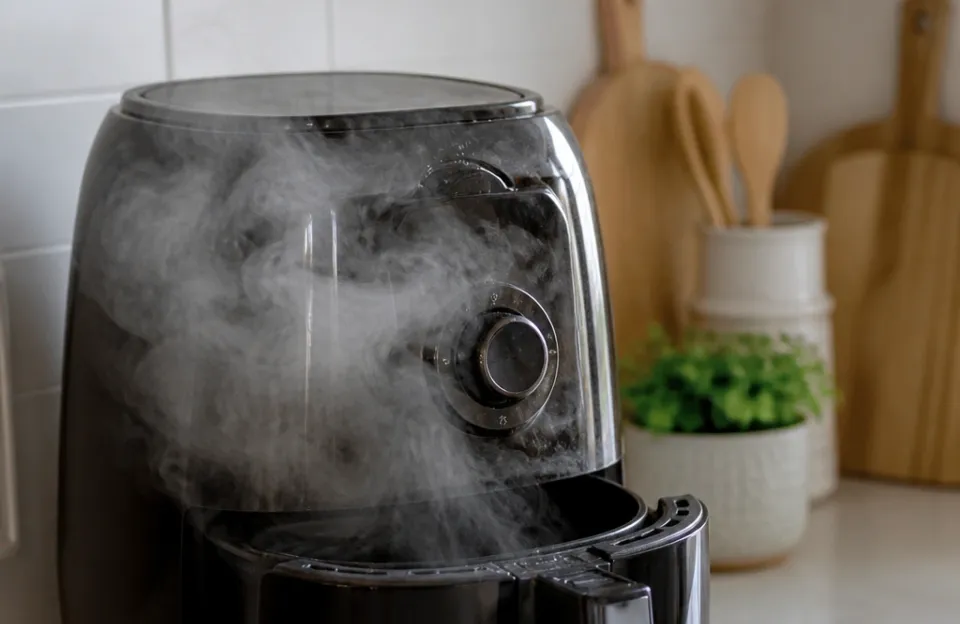
Air fryers with automatic shut-off are highly reliable, but they operate within specific physical constraints. Understanding these edge cases prevents frustration and keeps you safe.
Blocked ventilation. Every air fryer has intake and exhaust vents, usually on the back or top. If you push the appliance flush against a wall or stack items on top of it, the hot air cannot escape. The internal temperature rises much faster than normal.
While the thermal fuse should catch this, repeatedly tripping the fuse degrades it over time. Always leave at least five inches of clearance behind and above the unit.
Excessive oil or grease buildup. If you cook fatty foods regularly without cleaning the basket and drip tray, grease accumulates near the heating element. During a high-heat cycle, that grease can smoke or ignite before the thermal sensor registers the ambient air temperature rising. The shutoff protects against component failure, but it cannot instantly extinguish a grease fire caused by poor maintenance.
Keeping the basket clean is especially important when preparing things like quick sausage links that render heavy fat.
Power fluctuations. A severe voltage drop or surge can confuse digital control boards. In rare cases, a surge might weld the internal relay contacts together, causing the machine to stay on even after the timer expires. Plugging your air fryer into a surge protector or a dedicated outlet reduces this risk.
Never plug a high-wattage air fryer into an extension cord or a power strip shared with other heavy appliances.
Mechanical dial wear. On older analog models, the spring inside the timer dial loses tension over hundreds of uses. You might set it for 15 minutes, but the weakened spring releases early at 12 minutes, or drags late to 18. If your dial feels loose or doesn't tick consistently, the shutoff timing is no longer accurate.
Common Misconceptions About Auto-Shutoff Functions
People often misunderstand what this safety function covers. Clearing up these assumptions prevents careless habits in the kitchen.
- Assuming the outside stays cool. The shutoff stops the heating element. It does not instantly cool the metal basket or the exterior housing. The appliance remains dangerously hot to the touch for several minutes after the power cuts.
- Believing it replaces supervision. The shutoff is a fail-safe, a backup plan for when things go wrong. It does not mean you should leave the house while the machine runs. Grease fires and electrical faults can happen in the first two minutes of a cook cycle, long before any timer expires.
- Thinking all models have thermal fuses. Extremely cheap, unbranded models found on discount marketplaces sometimes omit the secondary thermal fuse to save money, relying solely on the timer. Always verify independent safety certifications.
- Confusing shutoff with a keep-warm mode. Some digital air fryers transition into a low-temperature "keep warm" phase after the main cook cycle ends rather than shutting off completely. Read the manual to know if your specific model powers down fully or maintains a low heat.
- Assuming the fan always stops with the heat. As mentioned earlier, many quality units run the fan briefly after the heater dies to vent the chamber. Hearing the fan spin after the timer beeps does not mean the shutoff failed.
Pairing the Shutoff With Proper Cooking Times
The automatic shutoff only works perfectly if you input the correct time. Setting the timer too long means the food burns before the machine stops. Setting it too short means you open the basket, interrupt the cycle, and have to restart it, which wears out the mechanical or digital switch faster.
Knowing standard cooking durations takes the guesswork out of the equation. For example, getting the right texture on golden potato wedges requires matching the thickness of the cut to the exact minute count so the shutoff triggers right at peak crispness. Similarly, understanding how long thick bacon strips need prevents grease from smoking excessively before the timer finishes its job.
When you trust the timing, you trust the shutoff. You set the dial, walk away to chop vegetables or set the table, and return exactly when the machine clicks off. That seamless workflow is the entire point of buying air fryers with automatic shut-off capability.
If you are exploring different hardware options to find a reliable machine, comparing builds like the popular Ninja AF101 against larger multi-function units helps clarify which safety specs match your household's volume. Larger capacity machines often generate more ambient heat, making robust thermal protection even more critical.
Frequently Asked Questions
Do all air fryers turn off by themselves?
Almost all modern air fryers turn off when the timer reaches zero. However, extremely old or poorly manufactured unbranded units might lack a secondary thermal cutoff switch. Always check for recognized safety certifications like UL or ETL to confirm the appliance meets current electrical standards for automatic shutoff.
Can I manually override the automatic shutoff?
On mechanical dial models, you can turn the dial back to add more time before the original cycle finishes. On digital models, you can usually press a pause or time-adjust button to extend the cycle. You cannot disable the thermal safety fuse, nor should you try, as it exists strictly to prevent electrical fires.
Why did my air fryer shut off in the middle of cooking?
If the machine stopped before the timer finished, the internal thermal fuse likely tripped due to overheating. This happens if the exhaust vent is blocked by a wall, if the basket is severely overloaded restricting airflow, or if excessive grease buildup is insulating the heating chamber. Unplug the unit and let it cool completely for 30 minutes before attempting to use it again.
Does the cooling fan stop immediately when the timer ends?
Usually, no. Many manufacturers program the fan to run for 20 to 60 seconds after the heating element shuts off. This clears the residual hot air from the cooking chamber and protects the internal electronics from heat damage.
The machine is still technically "on" during this brief venting phase.
Is an air fryer with automatic shut-off safe to leave unattended?
The shutoff makes it significantly safer than appliances without one, but leaving any high-wattage cooking device completely unattended carries risk. The shutoff protects against timer errors and overheating. It does not prevent issues caused by grease fires, electrical surges, or tipping.
Stay nearby while it operates.
How do I test if the thermal shutoff is working?
You should never intentionally try to overheat your appliance to test the thermal fuse. Doing so risks permanent damage or fire. Instead, verify the appliance holds a valid certification mark from a testing laboratory.
If the machine randomly shuts off during normal, well-ventilated cooking, the thermal sensor may be faulty and the unit needs professional repair or replacement.
Worth Remembering Before Your Next Cook
Air fryers with automatic shut-off take the anxiety out of high-heat countertop cooking. The combination of a precise timer and a thermal safety net protects your food, your kitchen, and the appliance itself. Pay attention to the type of shutoff your specific model uses, keep the vents clear, and maintain a clean basket.
When the machine handles the clock, you can focus entirely on the recipe.