Most air fryers run between 170°F and 400°F. A few compact models stop at 390°F, while some larger countertop ovens reach 450°F. That span covers almost everything you'd cook in a standard kitchen oven, from reheating leftovers to crisping frozen fries.
Understanding the air fryer temperature range explained here helps you stop guessing. You'll know exactly why a recipe calls for 375°F instead of 400°F, and when dropping the dial by 25 degrees saves your dinner from burning. We'll walk through what each heat zone does, how these machines differ from traditional ovens, and where people usually set the dial wrong.
How Air Fryer Heat Actually Reaches Your Food
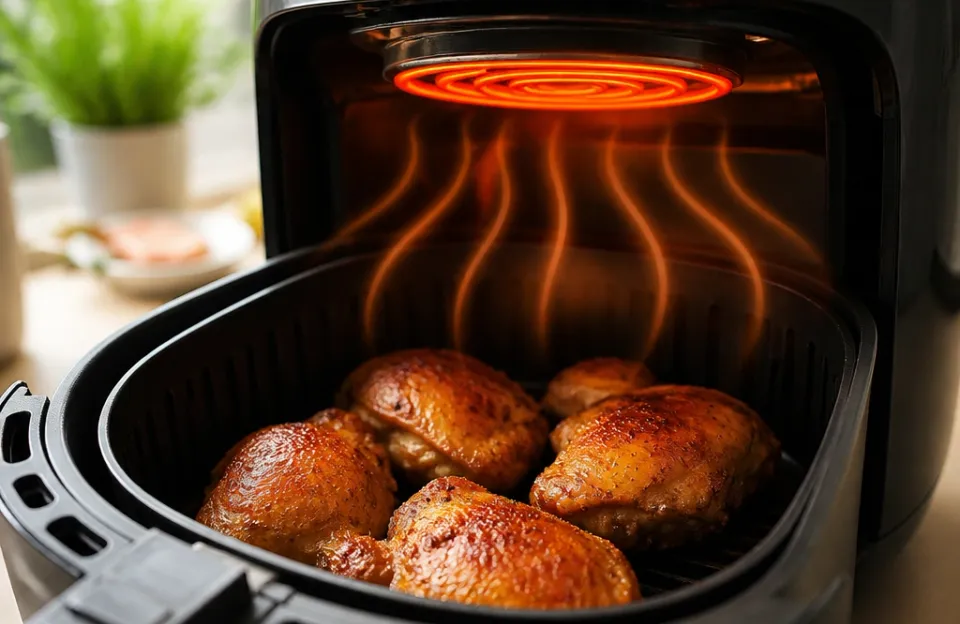
An air fryer is a small convection oven. A heating element sits near the top, usually right above the basket. A fan pushes that hot air down and around the food at high speed.
This constant movement strips away the cool moisture layer that normally surrounds food in a still oven. That's why things brown faster.
Because the cooking chamber is so small, the heat doesn't have far to travel. The air recovers its temperature almost instantly after you open the basket. In a full-size oven, opening the door drops the internal temperature significantly, and the heating elements take several minutes to catch up.
The temperature number on your display measures the air inside that chamber. It doesn't measure the surface of your food. The fan makes the air feel hotter to the food than the same number would in a conventional oven without a fan.
This is why recipes written for regular ovens need adjustment when you move them to an air fryer.
Why the fan changes the effective temperature
Moving air transfers heat faster than still air. If you set your machine to 350°F, the food experiences more aggressive heating than it would at 350°F in a standard bake setting. The USDA confirms that safe poultry cooking requires reaching 165°F internally, regardless of the appliance used.
You can verify this with a meat thermometer rather than relying solely on the air fryer's dial. Checking safe internal temperatures matters because the outside of chicken can look done long before the center reaches that mark.
The role of the heating element placement
Top-mounted elements radiate direct heat downward. Food sitting at the very top of the basket gets hit by both the radiant heat and the blown air. Items buried under a pile of fries only get the blown air.
This physical layout explains why overcrowding ruins texture. The air needs a clear path to circulate. If you're timing out root vegetables, spacing them correctly matters just as much as getting the cooking duration right for potatoes.
Breaking Down the Air Fryer Temperature Range Explained by Heat Zones
Dialing in the right number depends on what you're cooking. We can split the typical 170°F to 400°F spread into four distinct zones. Each one handles specific tasks better than the others.
| Heat Zone | Temperature Range | Best Used For | Typical Foods |
|---|---|---|---|
| Low / Dehydrate | 170°F to 250°F | Drying, gentle warming, slow rendering | Jerky, dried fruit, keeping food warm |
| Medium-Low | 275°F to 325°F | Baking, delicate proteins, thick cuts | Fish fillets, muffins, bone-in chicken |
| Medium-High | 350°F to 375°F | General roasting, reheating, everyday meals | Vegetables, pork chops, leftover pizza |
| High | 390°F to 400°F+ | Fast crisping, searing, frozen foods | French fries, chicken wings, tater tots |
Gentle heat for drying and warming (170°F to 250°F)
This lowest bracket mimics a food dehydrator. At 170°F to 200°F, moisture evaporates slowly without cooking the proteins or sugars too aggressively. You use this for making beef jerky, drying apple slices, or proofing bread dough if your model goes that low.
Pushing toward 250°F works well for rendering fat slowly. If you want crispy bacon without smoking out your kitchen, starting lower allows the fat to melt away before the meat burns. Managing the exact time needed for bacon at this lower temperature prevents the grease from splattering violently against the heating element.
The middle ground for baking and delicate proteins (275°F to 325°F)
Baking requires even, moderate heat. Cakes, muffins, and quick breads burn on top before their centers set if the temperature is too high. Setting the dial to 300°F or 320°F gives the batter time to rise and structure itself.
Delicate seafood lives in this zone too. Salmon dries out quickly under intense blast-frying conditions. Cooking fish at 300°F yields a tender, flaky texture.
Getting the timing right for salmon at this moderate heat keeps the flesh moist while still cooking it through safely. Thick cuts of meat, like a whole chicken breast or a small roast, also benefit from this range so the outside doesn't char before the inside finishes.
The everyday roasting sweet spot (350°F to 375°F)
This is where most people leave their dial. 375°F provides enough energy to trigger the Maillard reaction, which is the chemical process that creates browning and savory flavors. Vegetables roasted at this temperature turn tender inside and slightly crisp outside.
Reheating leftovers happens best here too. Pizza crust crisps back up without turning into charcoal. Casseroles warm evenly.
When you're prepping softer vegetables, sticking to 375°F means you won't accidentally scorch the edges. Timing zucchini properly at this heat stops it from turning into mush while still getting those nice brown spots.
Maximum heat for crunch and frozen foods (390°F to 400°F+)
You want shock-and-awe heat for anything that needs a serious crunch. Frozen french fries, tater tots, and breaded appetizers are already cooked during manufacturing. Your only job is to vaporize the ice crystals and brown the exterior fast. 400°F does this before the inside turns to paste.
Chicken wings demand this top tier. The skin contains a lot of water and fat. Lower temperatures just steam the skin, leaving it rubbery.
Blasting wings at 400°F renders the fat rapidly and blisters the skin into something shatteringly crisp. Pairing that maximum heat with a solid wing prep method guarantees consistent results every week. Some dedicated units, like certain larger capacity models, maintain this peak heat more steadily due to stronger wattage.
Why Air Fryers Run Hotter Than Conventional Ovens
A common mistake is following a standard oven recipe using the exact same temperature. If a casserole calls for 400°F in a wall oven, setting your air fryer to 400°F will likely burn the top layer.
The general rule is to drop the temperature by 25°F to 50°F when converting a recipe. The smaller volume and faster fan speed mean the heat transfer is much more efficient. A 350°F air fryer environment behaves closer to a 375°F or 400°F conventional oven environment.
Preheating also plays a different role. Wall ovens take 10 to 15 minutes to stabilize. An air fryer hits its target temperature in two or three minutes.
Because the chamber is tiny, the walls themselves absorb and radiate heat almost immediately. Putting food into a cold air fryer versus a preheated one creates a noticeable difference in final texture, especially for baked goods or heavily breaded items.
Wattage differences across models
Not all machines generate heat at the same rate. A compact 2-quart model might pull 1,000 watts, while a 6-quart unit pulls 1,700 watts. The higher-wattage machine recovers heat faster when you add cold food.
If you follow a recipe written for a powerful unit but own a lower-wattage one, your food might cook slower or brown less evenly at the same temperature setting. Understanding how different brands handle heat output helps explain why two machines set to 375°F don't always yield identical results.
Adjusting the Dial Based on What You're Cooking
Knowing the zones is the theory. Applying them requires paying attention to the food's physical traits. Thickness, moisture content, and sugar levels dictate the ideal setting.
Thick items need lower temperatures for longer periods. A two-inch pork chop set to 400°F will blacken on the outside while remaining raw near the bone. Dropping to 325°F allows the heat to penetrate to the center before the surface overcooks.
You can always finish it with a two-minute blast at 400°F at the end if you want more color.
Foods high in sugar or honey-based marinades burn easily. Sugar caramelizes around 320°F and burns shortly after 350°F. If you're tossing vegetables in a balsamic glaze or teriyaki sauce, keep the machine at 350°F or lower.
Dry spice rubs tolerate higher heat much better than wet, sugary sauces.
Moisture-heavy foods like zucchini or mushrooms release water as they cook. If the temperature is too low, they boil in their own juices. You need at least 375°F to evaporate that liquid quickly enough for browning to occur.
Tossing them halfway through ensures the released moisture doesn't pool at the bottom of the basket and steam the lower layer.
When working with dense, heavy mixtures like meatloaf, the center takes a long time to heat up. Cranking the dial to 400°F creates a burnt crust over a raw middle. Cooking a large loaf requires patience.
Keeping the heat moderate allows the core to reach a safe temperature without ruining the exterior. This applies whether you're making a smaller portion or scaling up to a heavier batch.
Where People Set the Wrong Temperature
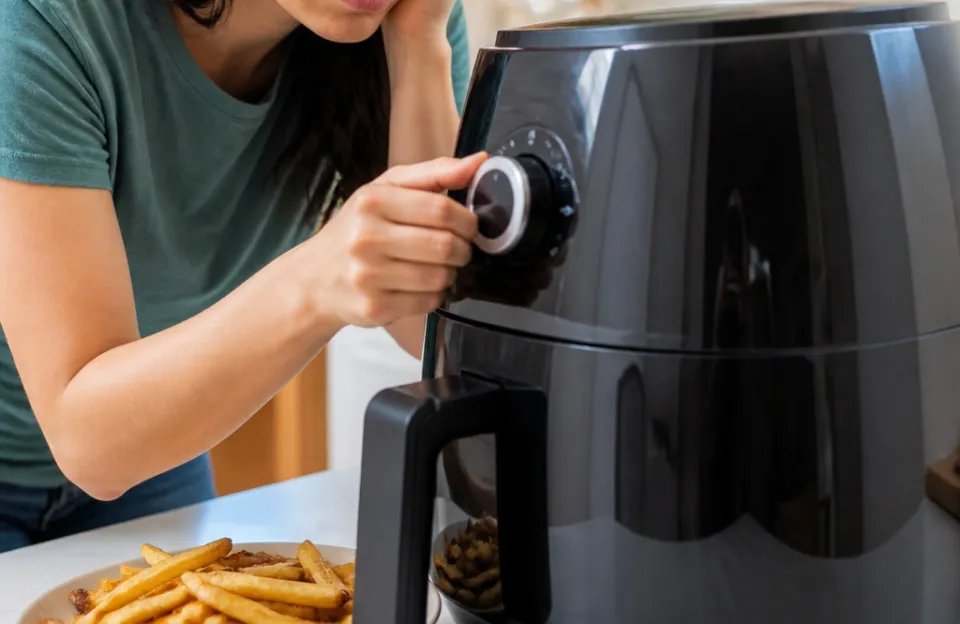
Even experienced cooks misjudge the dial sometimes. These errors usually stem from treating the air fryer exactly like a deep fryer or a standard oven.
- Using maximum heat for everything. Many users set the dial to 400°F out of habit, assuming hotter equals faster and better. This scorches the outside of chicken breasts and leaves the inside underdone. Reserve the top end for thin items, frozen foods, or things that genuinely need hard crisping.
- Ignoring the preheat step. Skipping preheating adds several minutes to the cook time and lowers the initial browning potential. The food sits in gradually warming air instead of hitting immediate heat. This matters most for baked goods and breaded items.
- Overcrowding the basket at low temperatures. Piling food high blocks airflow. If you combine a blocked basket with a low temperature like 300°F, the food steams instead of roasts. Either cook in batches or raise the temperature to compensate for the lost airflow, though batching is always superior for texture.
- Trusting the digital display blindly. The number on the screen is the target air temperature, not a guarantee. Cheaper thermostats fluctuate wildly. The actual air inside might swing 20 degrees above or below the set point. Using an oven-safe thermometer inside the basket for a test run reveals how accurate your specific machine really is.
- Forgetting to adjust for dark pans. If you use silicone liners or dark-colored baking pans inside the basket, they absorb more radiant heat. Food touching those surfaces cooks faster and browns darker. You may need to drop the temperature by 10°F or 15°F when using dark accessories compared to cooking directly on the non-stick basket grate.
How Appliance Size Shifts the Effective Heat
Basket size changes how the temperature behaves. A 2-quart drawer crams the heating element very close to the food. The air cycles rapidly in that tight space.
A 6-quart or 8-quart model has more dead air space. The fan has to work harder to push heat to the bottom corners.
In smaller units, you often need to reduce the temperature slightly compared to what a recipe written for a larger unit suggests. The proximity of the top element means the upper layer of food receives intense radiant heat. Shaking the basket frequently becomes mandatory to prevent localized burning.
Larger countertop oven styles distribute heat more evenly, similar to a traditional convection oven. They often feature multiple rack positions. Placing a tray on the lowest rack moves it further from the top element, effectively lowering the heat exposure even if the dial reads 400°F.
Glass-door models let you monitor browning without opening the door and losing heat, which helps you decide if you need to adjust the dial mid-cook. Evaluating different form factors shows how physical design impacts thermal performance.
Some premium models include dual zones. One side runs at 350°F for roasting vegetables while the other blasts at 400°F for crisping chicken tenders. These independent heating elements and fans allow you to exploit different parts of the air fryer temperature range explained above simultaneously, without compromising either dish.
Frequently asked questions
Can I use an air fryer below 170°F?
Most standard models bottom out at 170°F or 180°F. Going lower risks keeping food in the bacterial danger zone for too long without actually cooking it. Some specialized units offer a "dehydrate" mode that drops to 100°F or 120°F, but you should only use those settings for removing moisture from fruits, herbs, or jerky over many hours.
Does altitude change my air fryer temperature settings?
Yes, slightly. Water boils at a lower temperature at high altitudes, which means moisture evaporates faster from your food. You generally don't need to change the dial setting, but you might need to add a light spray of oil to prevent excessive drying, or check for doneness a minute or two earlier than sea-level recipes suggest.
Why does my food smoke at 400°F?
Smoke at high temperatures usually comes from fat dripping onto the heating element or the hot base plate, or from oils with low smoke points. Extra virgin olive oil smokes around 375°F. Switching to avocado oil or refined peanut oil, which tolerate over 450°F, stops the smoking.
Cleaning old grease buildup off the bottom of the drawer also eliminates this issue.
Should I lower the temperature if I use parchment paper liners?
Parchment paper restricts airflow from underneath the food. Because the hot air can only hit the top and sides efficiently, the cooking dynamics change. You don't necessarily need to lower the temperature, but you should expect slightly less browning on the bottom.
Flipping the food halfway through becomes more important when using liners. Never exceed 400°F with parchment paper, as it can scorch or ignite if it touches the top heating element.
Is 400°F the absolute maximum for all air fryers?
No. While 400°F is the standard ceiling for most basket-style models, some toaster-oven-style air fryers reach 450°F. Always check your specific owner's manual.
Pushing a machine designed for 400°F beyond its limit damages the thermostat and creates a fire hazard.
Getting the most out of your dial
Nailing the right heat setting takes a little practice, mostly because every machine behaves slightly differently. The numbers printed on the bezel give you a reliable starting point, but watching how your specific food reacts teaches you the rest. Start with the zones outlined above.
Drop the heat for thick cuts and sugary glazes. Crank it up for frozen snacks and skin-on poultry. Once you understand how the fan and element work together, you won't need to rely strictly on recipe cards anymore.