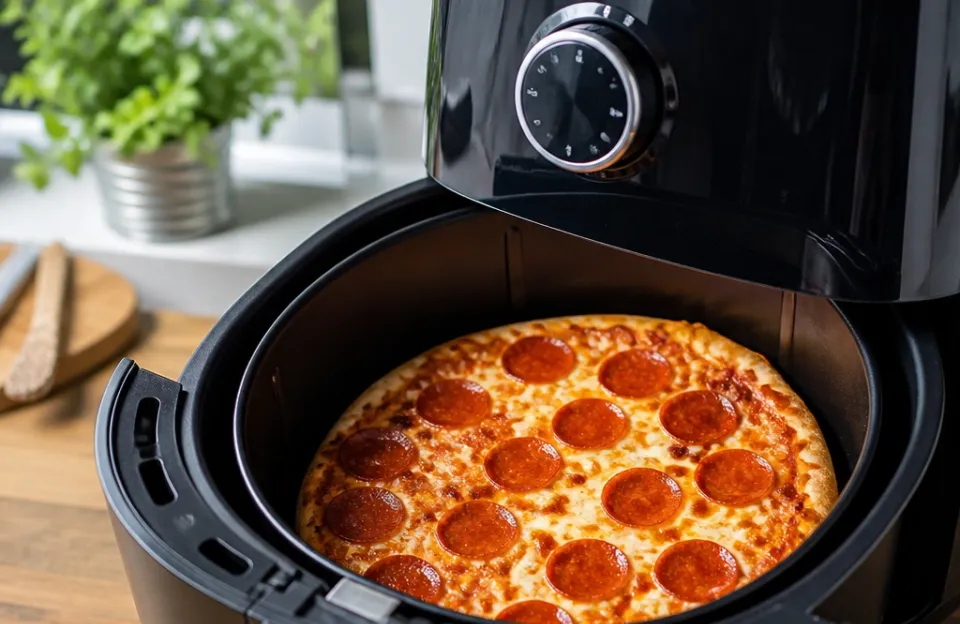
Start most frozen pizzas in an air fryer at about 380°F, then check early: around 6 to 8 minutes for thin crust and 10 to 12 minutes for thicker or rising crust. These are starting points, not fixed rules, because air fryer cooking times vary with appliance size and power. Follow the package directions when they exist, and use a food thermometer whenever the pizza includes raw meat.
How Rapid Air Circulation Changes Frozen Pizza
Air fryers are essentially countertop convection ovens, and they cook food faster than larger ovens by circulating hot air rapidly. In a compact basket, that airflow reaches the top of a frozen pizza almost immediately. The cheese melts quickly while the crust underneath still needs time to thaw and crisp.
That mismatch is why the temperature on the pizza box often overshoots. Packaging directions assume a full-size conventional oven, not a small chamber with a fan blowing hot air directly onto the food. Many independent conversion guides suggest dropping the oven temperature by roughly 45°F, though that figure is a heuristic rather than a verified standard.
The compact chamber also dries surfaces fast. Overcrowding the basket can prevent enough air circulation to cook food properly, so cook large amounts in batches. One pizza per batch gives the hot air room to move.
Why Box Instructions Fail in Smaller Baskets
Packaging directions assume a full-size conventional oven. An air fryer basket sits much closer to the heating element, so the same temperature and time can scorch the top before the dough sets.
Treat the box as a rough starting point. Check the pizza two or three minutes before the suggested finish time, and add a minute if needed. You can always extend the cook, but you cannot undo a charred crust.
Crust Thickness Dictates Your Temperature
Thin crusts need higher heat for a shorter window. Thick or rising crusts need lower heat so the inside bakes through before the outside darkens. Mini pizzas sit in between because their small diameter lets heat reach the center quickly. The temperature and time ranges below are starting points to verify against your machine and your specific product.
| Pizza Type | Starting Temp | Starting Time | Notes |
|---|---|---|---|
| Personal Thin Crust | 380°F | 8 min | Check from 6 min |
| French Bread Half | 360°F | 8–10 min | Place cut side up |
| Rising Crust Personal | 380°F | 12 min | Lower heat if top darkens early |
| Mini Snack Pizzas | 380°F | 4–6 min | Cook fast, check early |
Should You Preheat the Air Fryer?
Preheat guidance varies by machine, so there is no single rule. For many basket-style models, about 3 to 5 minutes is a common starting range, but not a universal one. If your air fryer has a preheat setting or prompts you to add food, follow that prompt instead of running a second manual warm-up.
Preheating crisps the bottom crust faster because the basket is already hot when the pizza lands. If you skip it, add one to two minutes to the cook and check the underside before removing the pizza. For thin crusts, preheating tends to give noticeably better texture.
Fitting the Pizza in the Basket
Not every frozen pizza fits perfectly in a round basket. The shape of the dough determines placement and the problems you might face.
Round personal pizzas are the easiest match. Check that the edges clear the basket walls before cooking. A pizza pressing against the sides can stick and tear when you lift it out.
French bread pizzas are long and rectangular. They lay flat in a square oven-style air fryer but may need angling in a round basket. Never force a long pizza into a round space by bending it: the dough can crack, and sauce can leak onto the heating element below.
Mini pizzas need spacing. Give them at least half an inch between each piece and cook them in a single layer, even if that means running two batches. Stacking blocks airflow entirely.
If you enjoy other quick frozen meals from the same appliance, crispy garlic parmesan wings follow similar timing logic where high heat meets short cook windows.
Preventing Toppings from Hitting the Heating Element
The fan inside an air fryer moves air at high speed. Lightweight items such as shredded cheese, pepperoni slices or loose vegetables can lift off the pizza and fly upward toward the heating element. Factory-applied toppings are usually pressed into the sauce well enough to stay put. Problems arise when you pile extra cheese or fresh vegetables onto a frozen pie before cooking.
Press added toppings firmly into the existing cheese layer so they stay anchored. If a topping keeps lifting, weigh it down with a slightly heavier ingredient or leave it off until the last couple of minutes. Avoid resting racks or mesh screens over the pizza unless your air fryer’s manufacturer specifically approves the accessory for that use, because a barrier can impede the airflow the appliance depends on.
Another approach is to start the cook at a slightly lower temperature for the first two minutes. That gives the cheese time to melt and grip the other ingredients before the heat climbs. Then increase to your target temperature to finish the crust.
Adding Fresh Ingredients Safely
Plain frozen cheese pizza works fine straight from the bag, but many people use it as a blank canvas. Watery vegetables such as onions, bell peppers or mushrooms release moisture as they heat. If you pile them onto a frozen pizza, that moisture seeps into the dough and prevents crisping. Pre-cook watery vegetables in a skillet for two or three minutes before adding them.
Cured meats such as pepperoni or salami can go on frozen. Fresh raw sausage or chicken should be fully cooked before it goes anywhere near the pizza. The short air fryer window is long enough to melt cheese and crisp dough, but it is not a reliable way to cook raw poultry or pork through.
If you do add raw meat, cook it to a safe internal temperature and check with a thermometer: 165°F for poultry, including ground poultry; 160°F for ground meats; 145°F with a 3-minute rest for whole cuts of beef, pork, veal and lamb; and 145°F for fish. Keep raw meat, poultry and seafood away from cooked and ready-to-eat foods to prevent cross-contamination. Color and texture are unreliable indicators of doneness, so rely on the thermometer rather than appearance.
One product-specific caution from the USDA: raw, stuffed breaded chicken breast products should not be cooked in an air fryer.
Extra cheese should be applied sparingly. Too much weight causes the center to sag, especially on thin crust varieties. A light dusting of grated parmesan mixed with mozzarella gives better coverage without the heaviness. Brushing a very thin layer of olive oil on the outer rim before cooking promotes browning.
Adjusting Times Based on Your Machine
Air fryers do not cook identically. Each appliance has its own cooking times based on size and power, which is why the safe internal temperature matters more than any single timer setting. A compact low-wattage unit will likely need a minute or two more than the ranges above; a powerful model may need less. The only way to learn your machine’s behavior is to log results the first few times you cook.
For meat-heavy frozen pizzas, a quick-read thermometer takes the guesswork out of whether the toppings are hot all the way through. I keep a fast digital probe in my kitchen drawer specifically for checking thicker frozen items.
Wattage differences also affect how evenly the bottom browns. Rotating the pizza halfway through the cook, a suggestion from independent conversion guides, helps balance browning on machines that run unevenly.
Troubleshooting Uneven Melting and Soggy Centers
Even with the right time and temperature, things occasionally go wrong. Match the symptom to the cause and the fix.
Cheese burns before the dough cooks. The temperature is too high or the pizza sits too close to the top heating element. Lower the heat and, if your air fryer has adjustable rack positions, move the tray down. Dropping to about 360°F and adding a couple of minutes is one suggested correction when the top browns while the crust stays raw.
The bottom stays pale and soft. Lack of airflow underneath is the usual cause. Use the basket directly or perforated parchment rather than a solid tray so air can flow beneath the crust. Avoid flipping the pizza upside down as a shortcut, since loose toppings can fall and cause burns.
Toppings slide off when you take a bite. The cheese did not melt enough to bind them, or the sauce layer was too wet. A short extension of the cook usually fixes the binding. For overly saucy brands, scrape off excess sauce before cooking.
The crust curls upward at the edges. Rapid heat causes the outer dough to shrink faster than the center. Press the edges down gently before cooking, or weigh them down with a few heavier toppings.
Browning is uneven across the surface. Rotate the pizza 180 degrees at the halfway point. If one side of your basket consistently runs hotter, note that and rotate earlier next time.
Resting, Serving and Storing Leftovers
Let the pizza rest for 1 to 2 minutes before slicing so the cheese sets. That brief pause also makes the slices easier to lift without the toppings sliding.
If you have leftover pizza, refrigerate it within 2 hours to keep it out of the temperature danger zone between 40°F and 140°F. Reheat leftovers to 165°F.
Recording Your Machine’s Ideal Time
Once you dial in the exact minute mark for your machine and your favorite brand, you won’t need to think about it again. Write that number on the box with a marker. Next week, dinner takes minutes and zero guesswork.
Cook in a single layer, check early, and keep the basket uncrowded. Those three habits, plus a thermometer for meat-topped pies, cover almost every variable a conventional oven leaves to chance.
Frequently Asked Questions
Can You Put Cardboard Under the Pizza in the Air Fryer?
No. Remove all packaging, including plastic wrap and the cardboard circle, before cooking. Cardboard can char or ignite near the heating element and it blocks the airflow the pizza needs.
Do I Need to Preheat the Machine for Frozen Pizza?
Preheating is optional but helpful. A preheated basket starts crisping the bottom crust immediately. If you skip it, add one to two minutes to your total cook time and check the underside before removing the pizza. Follow your machine’s own preheat prompt if it has one.
Is It Safe to Cook a Pizza with Raw Meat Toppings from Frozen?
Only if the product was manufactured as a ready-to-cook item with raw meat intended for that use, and you follow the package directions. If you add your own raw ground beef or chicken to a plain cheese pizza, verify the meat reaches its safe internal temperature with a thermometer: 160°F for ground meats and 165°F for poultry. Raw, stuffed breaded chicken breast products should not go in the air fryer at all.
Why Does My Pepperoni Fly Off During Cooking?
The fan speed in most air fryers is strong enough to lift lightweight, greasy slices of cured meat. Press the pepperoni firmly into the cheese before starting. Starting at a slightly lower temperature for the first two minutes lets the cheese melt and act as an adhesive before the fan reaches full intensity.
Can I Stack Two Personal Pizzas to Save Time?
Stacking prevents hot air from reaching the bottom pizza. The top one will over-brown while the bottom one stays undercooked in the center. Cook in a single layer, or use two rack levels only if your machine supports them, and swap positions halfway through.