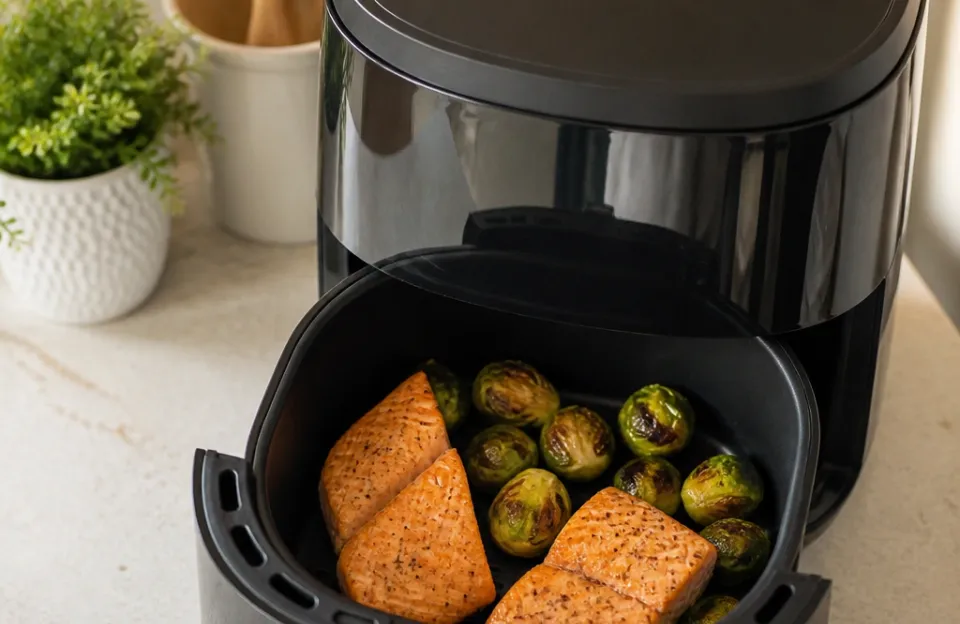
Crispy air fryer zucchini comes down to two numbers and one habit. Set the air fryer to about 400°F and start checking the zucchini at 8 minutes, planning to pull it somewhere between 8 and 12 minutes. The habit is moisture control: dry the cut surfaces, use only a light film of oil, and keep the pieces in a single layer. Air fryer foods generally need 5 to 25 minutes at 350°F to 400°F, and cook times vary with the size and power of the appliance. Treat the range as a starting point, not a guarantee. No supplied source tests this exact time and temperature for zucchini spears, so use your first batch to calibrate. The 400°F setting and the 8-to-12-minute window are practical guidance drawn from general air fryer temperature and timing ranges, not a tested result for this specific vegetable.
Why Moisture Control Determines Texture
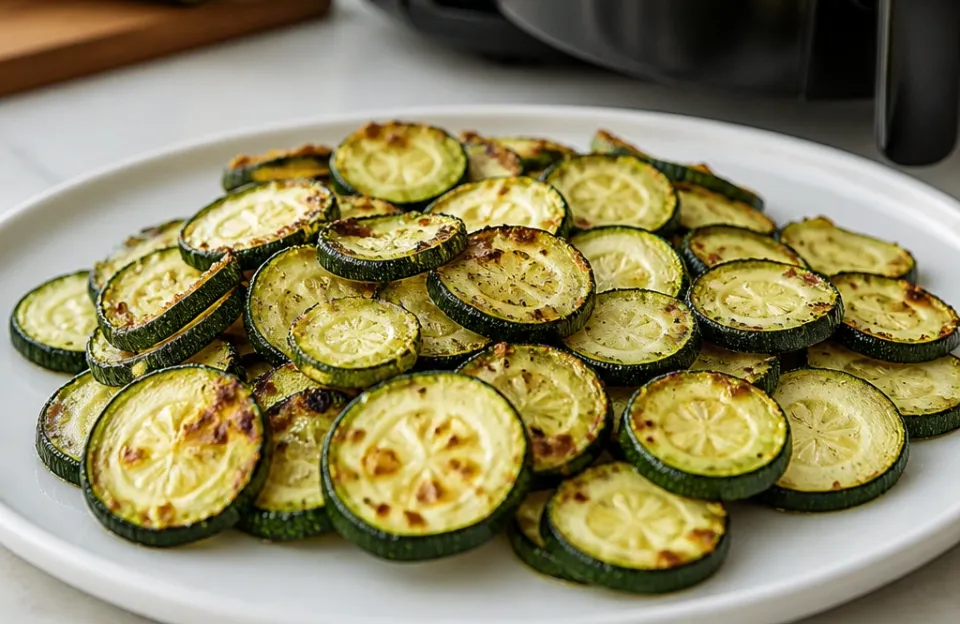
Surface moisture is the main variable that separates crisp zucchini from steamed zucchini, and the explanation below rests on the water content of summer squash and on how air fryers circulate hot air.
Zucchini is mostly water. Summer squash, the category that includes zucchini, is about 95 percent water. An air fryer crisps food through the quick circulation of hot air, and surface moisture is what stands between that air and a browned exterior. Every drop you blot away is a drop that no longer has to steam off before browning can begin.
That is why salting and drying are not optional flourishes. Salt draws moisture to the surface, and blotting removes it. Skip that step and the air fryer spends the first part of the cook time drying the zucchini instead of browning it, which is how you end up with pale, limp spears. The same logic explains why a crowded basket fails: overcrowding prevents enough air circulation to cook food properly, and a large batch is better cooked in batches than piled in at once.
The practical rule is simple. The drier the surface and the more space around each piece, the better the browning. Neither trick needs special equipment, just a clean kitchen towel and a few extra seconds of layout.
Choosing the Right Size and Shape
Start with good zucchini. Look for squash that are firm and heavy for their size, with sound, glossy skins free of nicks, bruises or decay. Heft matters because it signals moisture and freshness rather than a hollow, pithy interior.
Size matters too. Large or over-mature summer squash have very large seeds, tough rinds and stringy, coarse flesh. A very large zucchini will still cook, but the texture will be uneven and the seed cavity watery. Medium zucchini, roughly the size you can hold comfortably in one hand, cut more predictably.
Wash and trim the zucchini before cooking, and peel and seed any older, tougher, oversized squash. For most zucchini, the skin is thin enough to leave on. For oversized ones, peeling and scooping the seeds removes the parts that cook slowest and release the most water.
Cut for uniformity. Spears, half-moons and thick coins all work, but every piece in the basket should be roughly the same thickness. A 1/2-inch thickness is a reasonable default: thick enough to hold structure, thin enough to cook through in the time it takes the exterior to brown. Mixed thicknesses are a common cause of a batch where some pieces are charred and others are still raw in the middle, since cook time depends on food thickness and basket load. The 1/2-inch figure is a practical starting point rather than a tested specification, so adjust it if your first batch browns unevenly.
Oil Amount and Application Method
Air fryers require less oil than traditional frying, but a small amount enhances crisping. The goal is a thin, even film, not a coating. Too much oil pools in the basket, smokes, and leaves the zucchini greasy rather than crisp.
The application method matters as much as the amount. Put the cut zucchini in a bowl, add a small drizzle of oil, and toss with your hands or a spatula until every surface has a faint sheen. This distributes oil more evenly than spraying each piece individually, and it avoids the dry patches that cause uneven browning.
Oil choice is flexible. The recipe works with common cooking oils, and the exact type is less important than using a modest amount and spreading it evenly. If you prefer a particular oil for flavor, use it, but keep the quantity light so the coating does not become heavy.
A light oil film also helps seasoning adhere. Oil provides something for salt, pepper and spices to cling to, so season after oiling rather than before. Seasoning applied to a dry surface slides off in the basket.
Step-by-Step Method for Golden Brown Spears
- Wash and trim. Rinse the zucchini and cut off both ends.
- Cut uniformly. Halve lengthwise, then cut into spears or half-moons of even thickness, about 1/2 inch.
- Salt lightly and rest. Toss with a pinch of salt and let the pieces sit for 10 to 15 minutes while moisture beads on the surface.
- Blot dry. Pat the zucchini thoroughly with a clean towel or paper towels. This is the most important step for crispness.
- Oil and season. Toss with a small drizzle of oil until lightly coated, then add pepper, garlic powder or other seasonings.
- Preheat if your model calls for it. Some recipes benefit from preheating for the best texture, while smaller foods such as frozen fries or vegetables can often go straight into the basket. A 3-minute preheat at the target temperature helps at least one manufacturer’s air fryer deliver consistent browning and accurate cook times.
- Load in a single layer. Arrange the spears with space between them. Cook in batches if needed rather than overcrowding.
- Cook at 400°F, starting at 8 minutes. Shake the basket or flip the pieces partway through so they brown evenly.
- Check and adjust. Begin testing at 8 minutes. Pull the zucchini when the edges are browned and the interior is tender. If browning runs ahead of tenderness, lower the temperature slightly and continue; if the pieces are still pale and firm, add 1 to 2 minutes and check again.
- Serve immediately. Air-fried zucchini is at its crispest straight from the basket.
The 10-to-15-minute salt rest and the 1/2-inch cut are practical defaults rather than tested specifications. The preheat guidance comes from manufacturer and recipe sources, and the single-layer rule follows from how crowding blocks air circulation.
The salt-and-rest step is worth keeping even on a busy night. If you are short on time, blotting thoroughly is the non-negotiable part; the rest is what makes blotting more effective.
Adjusting for Different Air Fryer Models
Recipes transfer imperfectly between air fryers, and that is not a flaw in your technique. Air fryer models vary in preheat time, temperature dial accuracy and cooking time, which affects how reliably cooking instructions transfer between appliances. A recipe written on one machine may run fast or slow on another.
Rather than guessing at a fixed offset, adjust by observation. Cook the first batch at 400°F, start checking at 8 minutes, and note how the zucchini looks at that point. If it is already deeply browned, drop the temperature for the next batch or shorten the cook. If it is barely colored, extend the time in 1-minute increments. Basket load, food thickness, starting temperature and moisture content all influence actual cook time, so the same machine can behave differently from one batch to the next. The 400°F starting point and the 8-minute first check are practical defaults, not a tested result for this vegetable.
Keep batches modest. A single layer with visible gaps gives the hot air a path around each piece, and it makes the timing far more predictable than a full basket.
Seasoning Combinations That Stick
Season after oiling so the seasoning has a surface to grip. Simple salt and black pepper lets the vegetable’s own flavor come through, while garlic powder, onion powder, smoked paprika and dried oregano all cling well to an oiled surface.
For a bolder finish, grated parmesan added in the last minute of cooking melts into a savory crust. A squeeze of lemon after cooking brightens the flavor without adding moisture during the cook. Finishing salts and fresh herbs are best added after the zucchini leaves the basket, since delicate herbs scorch at 400°F. These are culinary suggestions rather than tested results, so adjust the timing to what you see in your own basket.
If you want a wing-style flavor profile, the same garlic parmesan coating used on air fryer chicken wings with garlic parmesan can be adapted for vegetables, though the coating will brown faster on zucchini than on chicken.
Troubleshooting Soggy, Burnt, or Uneven Results
| Symptom | Likely cause | Diagnostic check | Action |
|---|---|---|---|
| Soggy, pale spears | Surface moisture, too much oil, or a crowded basket | Look for steaming and pooling oil in the basket | Blot drier next time, use less oil, cook in a single layer |
| Burnt exterior, raw center | Pieces cut too thick or temperature too high for the load | Check thickness and whether pieces touch | Cut thinner, lower the temperature slightly, extend time |
| Uneven browning | Mixed piece sizes or no shaking | Inspect the batch for size variation | Cut uniformly and shake the basket partway through |
| Smoking | Excess oil dripping onto the heating element | Check the bottom of the basket for pooled oil | Reduce oil, clean the basket between batches |
Stop conditions matter as much as start times. If the edges are dark brown but the center is still firm, lower the temperature rather than adding more time at full heat. If you smell acrid smoke, pause cooking, let the appliance cool briefly, and remove pooled oil before continuing. Burning is not a sign of crispness; it is a sign the surface is cooking faster than the interior.
Uneven results often trace back to piece size rather than the appliance. Because cook time depends on food thickness and basket load, a batch with mixed sizes will always brown unevenly. Sorting pieces by thickness before they go in solves most of it.
Serving Suggestions, Storage, and Freezing Limits
Air-fried zucchini is best eaten right away, while the exterior still has texture. It pairs well with grilled proteins, pasta, grain bowls and dips such as tzatziki or marinara. A cup of raw zucchini contains only about 20 calories, so it works as a light side, but the oil and any parmesan coating add to the final count.
For storage, cool leftovers promptly and refrigerate them within 2 hours. Keep uncooked zucchini separately: store unwashed summer squash in the refrigerator crisper in an open or perforated plastic bag, where it will keep for up to a week from the market.
Refrigeration and Reheating Limits
Cooked air-fried zucchini does not stay crisp in the refrigerator. The exterior softens as it sits, and reheating in the air fryer can restore some texture but will not fully bring back the original crunch. Reheat briefly at a moderate temperature and check often, since already-cooked pieces brown quickly. Expect a softer result and plan portions accordingly rather than cooking more than you will eat.
If you are building meals ahead, note that while batch cooking proteins freezes well, cooked zucchini is better refrigerated and eaten within a few days than frozen and reheated.
Freezing Considerations
Freezing is worthwhile for zucchini destined for baking and cooked dishes, not for crisping. For grated zucchini, steam blanch in small quantities for 1 to 2 minutes until translucent before freezing. If the thawed zucchini is watery, discard the liquid before use.
Blanching matters because it slows or stops enzyme action that can otherwise cause off-colors, off-flavors and toughening during frozen storage. Under-blanching is worse than no blanching at all, because it speeds up enzyme activity rather than stopping it. Follow the blanching time rather than shortening it. The 1-to-2-minute steam blanch above is a practical starting point from extension guidance, so check your own source for the exact time if you are preserving a large batch.
Even properly frozen zucchini will not come out of the air fryer crisp. Its cell structure softens during freezing and thawing, so use frozen zucchini in baking, soups, sauces and sautés where texture is less critical. For crisp air-fried spears, start with fresh zucchini.
Frequently Asked Questions
Do I Have to Salt the Zucchini Before Air Frying?
Salting is the most reliable way to draw out surface moisture, but it is not mandatory. If you skip it, blot the cut surfaces thoroughly with a towel before oiling. The drier the surface, the better the browning.
Can I Air Fry Frozen Zucchini?
Frozen zucchini is best used in baking and cooked dishes after thawing and draining, not for crisp air-fried spears. Freezing softens the structure, so the result will be tender rather than crisp.
How Do I Know When the Zucchini Is Done?
Check at 8 minutes. The zucchini is ready when the edges are browned and the interior is tender when pierced with a fork. If the exterior browns before the center softens, lower the temperature and continue cooking. The 8-minute first check is a practical starting point, not a tested result for this vegetable.
Can I Cook Breaded Zucchini in the Air Fryer?
Breading can work, but it browns quickly at 400°F. A lower temperature and a light oil spray on the coating help it set before the exterior darkens. Watch closely, since breaded pieces give less visual warning before burning. These are practical suggestions rather than tested results, so adjust the temperature and timing to your own appliance.
Why Did My Zucchini Come Out Soggy?
Sogginess usually comes from surface moisture, too much oil, or a crowded basket that traps steam. Blot the zucchini dry, use a light oil coating, and arrange the pieces in a single layer with space between them.