Preventing air fryer rust comes down to one simple rule: keep moisture away from bare metal. Most modern units have nonstick coatings that block oxidation, but scratches, harsh scrubbing, and trapped water wear those layers down over time. Once the coating fails, the steel underneath reacts with oxygen and water.
That reaction creates rust.
Learning how to prevent air fryer rust means building a few habits around cleaning, drying, and storing your machine. You don't need special chemicals or expensive tools. You just need to protect the finish the manufacturer applied at the factory.
This guide covers why the interior corrodes, which daily routines stop it, how to fix early spots, and what happens when the damage goes too far.
Why the metal basket starts corroding
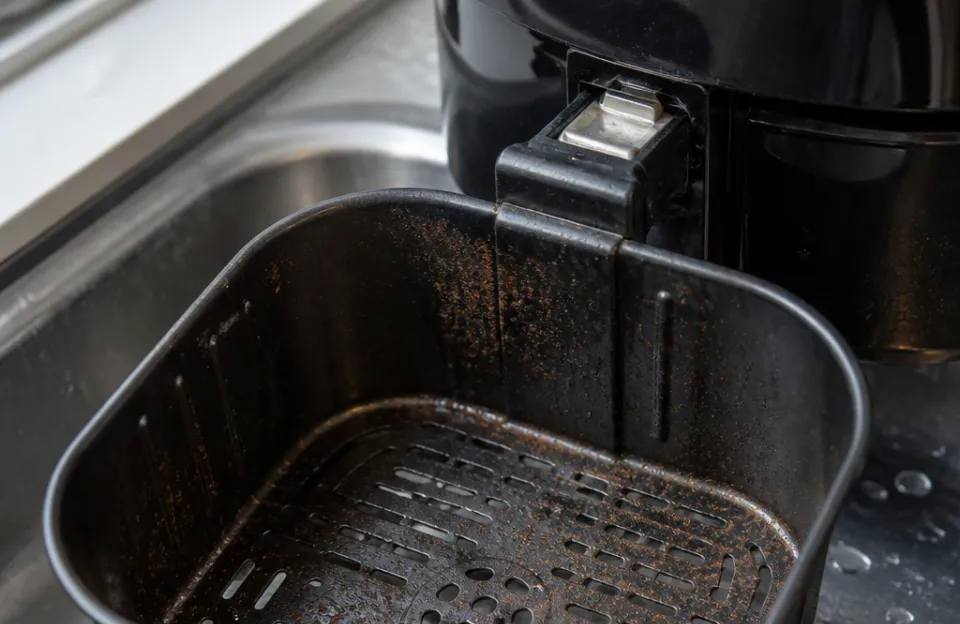
Air fryers cook by pushing superheated air across food at high speed. That process requires a metal heating element, a metal fan, and usually a metal basket or tray. Manufacturers coat these parts with PTFE or ceramic finishes to create a barrier between the steel and whatever you're cooking.
When that barrier stays intact, the metal can't oxidize.
The problem starts when the barrier breaks. Metal utensils scrape it. Abrasive sponges wear it thin.
Acidic marinades eat through weak spots. Once the raw steel is exposed, any leftover water triggers a chemical reaction. Iron bonds with oxygen in the presence of water to form iron oxide.
That's rust.
High humidity makes this happen faster. If you live somewhere damp, or if you store the appliance under a sink where pipes sweat, the ambient moisture alone can start corrosion on an exposed scratch. The heat cycles during cooking also expand and contract the metal slightly.
Over months of use, that movement causes micro-fractures in cheap coatings, exposing tiny patches of steel you can barely see until they turn orange.
Understanding how long these appliances last helps explain why older models show more wear. A unit used daily for three years has endured hundreds of heating cycles. Each one stresses the coating a little more.
Drying the basket completely after every wash
Water left sitting in the drawer is the fastest way to ruin the finish. Even if the coating looks perfect, microscopic pores exist in the surface. Standing water seeps into them.
When you pull the basket out to wash it, don't just towel it off and shove it back inside the housing.
Wash the removable parts with warm water and mild dish soap. Use a soft sponge or a microfiber cloth. Rinse everything thoroughly so no soap residue remains.
Then dry the basket, the crisper plate, and the drawer with a clean towel.
Towel drying isn't enough on its own. After wiping, leave the parts out on the counter for ten to fifteen minutes. Let the air circulate around them.
You can also put the empty basket back into the machine and run it at 350°F for two or three minutes. That bakes off any hidden moisture trapped in the corners or under the rim. This extra step takes almost no time and stops water from pooling while the unit sits in the cabinet.
If you frequently cook foods that release a lot of liquid, like reheating slices of pizza or cooking thicker cuts of meat, pay extra attention to the drip tray. Grease mixed with water creates an acidic sludge that attacks coatings faster than plain water. Empty and dry the drip tray immediately after cooking wet ingredients.
Choosing the right sponge for the nonstick finish
The tool you use to scrub the basket determines how long the coating survives. Steel wool destroys nonstick surfaces instantly. Even the rough green side of a standard kitchen sponge acts like sandpaper on PTFE and ceramic finishes.
Every aggressive scrub removes a microscopic layer of protection.
Use only soft sponges, silicone scrubbers, or microfiber cloths. If baked-on grease won't budge with light pressure, soak the basket in warm soapy water for twenty minutes first. The hot water loosens the carbonized fat.
After soaking, the grime usually wipes away without force.
For stubborn spots, make a paste of baking soda and water. Apply it to the stuck-on area and let it sit for ten minutes. Baking soda is mildly abrasive, much gentler than commercial scouring powders.
Wipe it away with a damp cloth. Never use powdered cleansers designed for stainless steel sinks. They contain pumice or silica that will strip the nonstick layer down to the bare metal.
Protecting the finish applies to the exterior too. If you own a model with a brushed steel outside, like certain multi-function countertop units, wipe it down with a damp cloth rather than spraying harsh all-purpose cleaners directly onto the housing. Chemical overspray can seep into seams and cause hidden corrosion.
Storing the appliance where humidity stays low
Where you keep the machine between uses matters as much as how you wash it. Cabinets directly above the stove collect steam every time you boil pasta or simmer soup. That steam settles on cool surfaces.
If your air fryer sits inside that cabinet, moisture coats the interior basket even when you haven't used it in days.
Store the appliance in a dry cupboard or on a shelf away from the stovetop. If counter space is limited and it must stay out, leave the drawer pulled open about an inch. This allows air to flow through the cooking chamber instead of trapping humid room air inside a closed box.
In very humid climates, consider placing a small silica gel packet inside the empty drawer during storage. Silica absorbs ambient moisture. It's a cheap trick that keeps the internal environment dry.
Just remember to remove the packet before turning the machine on.
Avoid storing the unit near dishwashers either. Dishwashers vent hot, moist air from their top edges during the drying cycle. An appliance sitting right next to that vent gets blasted with humidity multiple times a week.
Keeping sharp tools out of the cooking chamber
Metal tongs, forks, and spatulas are the most common cause of scratched baskets. One hard scrape with a fork trying to flip a piece of chicken exposes the steel underneath. That single scratch becomes the starting point for a rust bloom.
Switch to silicone-tipped tongs or wooden utensils. Silicone withstands typical air frying temperatures up to 450°F without melting or scratching. Wood works well too, though it can absorb grease over time.
Keep a dedicated pair of silicone tongs near the machine so you aren't tempted to grab whatever metal tool is closest.
When shaking the basket to toss fries or vegetables, hold the handle firmly. Don't use a spoon to stir the food inside the drawer. Pull the basket out, grip the handle, and shake it physically.
If the food sticks together, use a silicone spatula to separate it gently.
This same logic applies when removing cooked items. If you're pulling out delicate pieces, like flaky fish fillets, slide a silicone spatula underneath rather than stabbing them with a fork. Dragging metal across the bottom tray ruins the coating fast.
Fixing minor rust spots before they spread
If you catch a small rust spot early, you can stop it from expanding. Don't ignore a tiny orange speck. It will grow.
First, unplug the machine and let it cool completely. Remove the affected basket or tray. Make a thick paste using baking soda and a few drops of water.
Apply the paste directly over the rust spot. Let it sit for thirty minutes.
Take a soft toothbrush or a nylon-bristle brush and gently scrub the paste in small circles. The mild abrasion lifts the surface oxidation without gouging the surrounding healthy coating. Wipe the area clean with a damp cloth.
Inspect the spot. If rust remains, repeat the process once more.
White vinegar also dissolves light rust. Soak a paper towel in distilled white vinegar and press it against the spot for fifteen minutes. The acetic acid breaks down the iron oxide.
Scrub lightly with a nylon brush afterward, then wash the entire basket with soap and water to neutralize the acid. Leaving vinegar residue on the metal accelerates future corrosion.
After treating the spot, dry the basket thoroughly using the heat method mentioned earlier. Run the empty unit at 350°F for three minutes.
Once the rust is gone, the metal underneath is now bare. That specific patch no longer has nonstick protection. You'll need to monitor it closely.
Some people apply a very thin layer of high-smoke-point cooking oil to the treated area after each wash to create a temporary moisture barrier. Wipe it on with a paper towel, leaving only a faint sheen.
| Treatment Method | Best For | Required Time | Risk to Surrounding Coating |
|---|---|---|---|
| Baking soda paste | Surface-level orange spots | 30 minutes plus scrubbing | Very low |
| White vinegar compress | Slightly deeper oxidation | 15 minutes plus scrubbing | Low, requires thorough rinsing |
| Nylon brush only | Loose flaking rust | 5 minutes | Low |
| Sandpaper or steel wool | Never use on nonstick | N/A | Destroys surrounding finish |
Why aerosol cooking sprays damage the finish
Many people spray the basket with aerosol cooking oil before adding food to prevent sticking. Commercial aerosol sprays often contain propellants like soy lecithin or anti-foaming agents. These additives bake onto the nonstick surface at high temperatures.
Over weeks of use, they build up into a sticky, carbonized film.
That film traps moisture against the metal. It also forces you to scrub harder during cleanup, which wears down the coating. Eventually, the nonstick layer fails beneath the buildup, and rust forms invisibly under the crust.
If you need oil to prevent sticking or to help seasonings adhere to vegetables, use a pump-style oil mister filled with pure olive, avocado, or canola oil. Pump sprayers don't use chemical propellants. Alternatively, toss your food in a bowl with a teaspoon of oil before placing it in the basket.
This coats the food instead of the machine.
Aerosol sprays can also affect performance when cooking battered foods. If you're working with recipes that require a specific crunch, like getting the right texture on wings, excess spray buildup alters how the hot air circulates around the food. Keep the basket clean for consistent airflow.
Seasoning the basket to add a protective layer
Seasoning isn't just for cast iron skillets. Applying a thin layer of polymerized oil to your air fryer basket adds a secondary barrier against moisture. This is especially useful for older machines where the factory coating has thinned out but hasn't failed completely.
Wash and dry the basket thoroughly. Pour a half-teaspoon of avocado oil or refined coconut oil onto a paper towel. Wipe the oil over the entire interior surface of the basket and the crisper plate.
You want a barely visible sheen, not a dripping wet surface. Too much oil will smoke heavily and leave a gummy residue.
Place the oiled basket back into the machine. Set the temperature to 400°F and run it empty for ten minutes. The heat causes the oil to bond with the metal and the remaining nonstick coating, creating a hardened protective layer.
Let the unit cool completely before using it.
Repeat this seasoning process once a month if you use the machine daily. If you only cook a few times a week, doing it every couple of months is fine. This routine significantly extends the life of the finish and blocks moisture from reaching the steel.
Always check your owner's manual before seasoning. Some manufacturers advise against adding oil to an empty basket because it can smoke excessively depending on the heating element design. Models with exposed top elements might trigger the smoke detector if seasoned at too high a temperature.
Adjust the heat accordingly.
Checking the heating element for hidden moisture
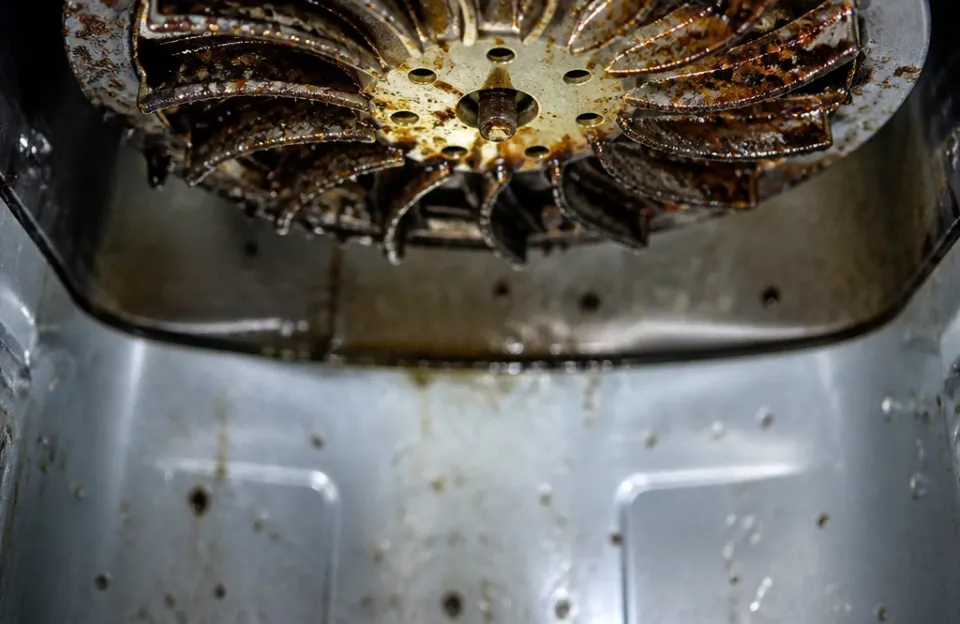
Most people focus entirely on the removable basket and forget the main housing. The heating element sits at the top of the interior chamber. Splattering grease and steam rise during cooking and coat this element.
If the machine cools down with moisture still clinging to the element or the surrounding metal walls, corrosion can start inside the fixed housing.
You can't submerge the main unit in water. Instead, wait until the machine is completely cool and unplugged. Turn it upside down or tilt it back so you can see the element.
Inspect it with a flashlight. Look for dark spots, flaking, or any orange discoloration.
Wipe the element gently with a slightly damp microfiber cloth. Don't use a soaking wet rag. You don't want water dripping into the electrical components behind the element.
Dry it immediately with a separate dry cloth.
Some manuals recommend running the empty appliance for a few minutes after cleaning the interior to evaporate residual dampness. Follow the specific maintenance instructions for your model. Units with glass bowls, such as certain compact designs, avoid metal-element exposure issues altogether, making them naturally resistant to this specific type of rust.
Knowing when the damage is beyond repair
Surface rust on a removable basket can be managed. Deep structural rust cannot. If the metal is flaking away in chunks, or if the bottom of the basket feels thin and brittle, the integrity of the part is compromised.
Cooking food on flaking metal introduces rust particles and degraded coating fragments into your meals.
At that point, replacement is the only safe option. Check if the manufacturer sells replacement baskets or crisper plates for your specific model. Many brands offer spare parts for a fraction of the cost of a new machine.
Using a fresh basket resets the clock on corrosion.
If the rust is inside the main housing, on the heating element itself, or along the internal walls where you can't reach it, the appliance is likely done. Internal corrosion can lead to electrical shorts or fire hazards. Don't attempt to sand or treat rust inside the electrical housing.
Unplug it and replace the unit.
Rust also changes how food cooks. A degraded basket loses its nonstick properties entirely. Food bonds to the rough, oxidized surface.
You'll notice items tearing apart when you try to remove them. If you're trying to achieve a specific result, like crisping up potato wedges evenly, a rusted basket will produce uneven browning because the thermal conductivity of the metal changes when it oxidizes.
Frequently asked questions
Is a rusty air fryer basket safe to cook in?
Light surface rust isn't highly toxic, but it isn't something you want mixing with your food. Ingesting small amounts of iron oxide occasionally won't cause acute harm, according to general food safety principles outlined by agencies like the FDA. However, rust indicates the nonstick coating has failed.
You may also be ingesting flakes of degraded PTFE or ceramic. Treat minor spots immediately and replace heavily rusted baskets.
Can I put my air fryer basket in the dishwasher?
Many manufacturers label their baskets as dishwasher safe, but the harsh detergents and prolonged heat cycles in dishwashers degrade nonstick coatings much faster than hand washing. The high alkalinity of dishwasher pods eats away at the finish. Hand washing with mild soap preserves the coating and delays rust formation significantly.
Does lining the basket with parchment paper stop rust?
Parchment paper prevents food acids and moisture from touching the bottom of the basket directly. It reduces wear on the coating in that specific area. However, it doesn't protect the sides of the basket or the crisper plate.
Steam still circulates around the paper. Use perforated parchment liners meant for air fryers so you don't block the airflow, and still dry the basket fully after use.
Will olive oil cause the basket to rust?
Pure olive oil doesn't cause rust. In fact, a thin layer of oil protects bare metal from moisture. The issue arises when excess oil pools in the corners and burns into a thick, sticky carbon layer.
That burnt residue traps water against the metal during washing. Wipe oil on thinly and evenly rather than pouring it in.
How often should I inspect the basket for scratches?
Check the interior coating once a month if you use the machine several times a week. Look closely at the corners and the areas where the crisper plate rests, as friction between the two metal parts wears down the finish fastest. Catching a scratch early lets you season over it before water reaches the bare steel.
Keeping your machine rust-free long term
Stopping oxidation in an air fryer relies entirely on protecting the factory coating and eliminating standing water. Wash the removable parts gently by hand. Dry them completely with a towel and a short blast of heat.
Store the appliance in a dry location with the drawer cracked open. Avoid metal utensils and aerosol sprays that degrade the finish.
If a scratch does appear, address it quickly with a baking soda treatment and a light seasoning of high-smoke-point oil. Small interventions take minutes and save you from buying a replacement basket later. Consistent care keeps the metal sealed and the machine cooking safely for years.