Food sticks to an air fryer basket when proteins bond directly to hot metal, when starches melt into the mesh before a crust forms, or when moisture pools under the food instead of evaporating. Preventing this comes down to creating a barrier between the food and the basket surface, managing moisture, and giving the hot air enough room to circulate. You can stop food from sticking by applying a thin layer of high-smoke-point oil, preheating the basket, avoiding wet batters, and keeping the mesh clean.
Learning how to prevent food from sticking to an air fryer basket saves you from scraping ruined dinners out of a wire grid with a butter knife. The fixes are simple. Most of them take less than thirty seconds.
This guide covers why the sticking happens in the first place, the exact steps to stop it, and what to do when specific foods like fish or cheese still give you trouble.
Why Proteins and Starches Bond to the Wire Mesh
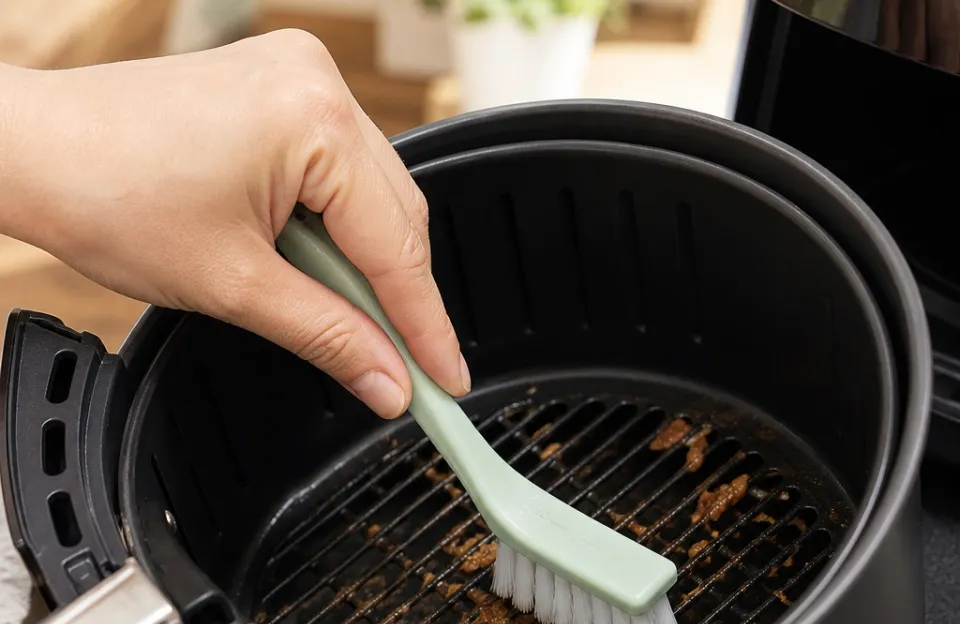
Air fryers cook by blasting food with rapidly circulating hot air, usually between 350°F and 400°F. The basket sits directly in that airflow path. When raw meat, fish, or starchy vegetables hit the bare metal, the intense heat causes a chemical reaction.
Proteins denature and form strong molecular bonds with the metal surface. Starches gelatinize, turning into a sticky paste that dries into cement.
Most air fryer baskets have a non-stick coating applied at the factory. Over time, that coating degrades. Scrubbing with abrasive sponges, using metal utensils, or running the basket through a dishwasher strips the finish away.
Once the bare metal is exposed, sticking becomes inevitable unless you intervene. Even a brand-new basket will grab onto certain foods if they sit too close together or release too much liquid during the first few minutes of cooking.
The shape of the basket matters too. Wire mesh grids have far more surface area than a flat baking sheet. Every intersection of wire is a potential anchor point for melting fat or searing protein.
That extra surface area gives the air fryer its signature crispness, but it also creates hundreds of tiny spots where food can latch on.
Prepping the Basket Before the Food Goes In
Warming Up the Empty Drawer First
Preheating the air fryer changes how food reacts when it hits the basket. If you drop raw chicken into a cold drawer and then turn on the heat, the food warms up slowly alongside the metal. During that slow warm-up, moisture leaks out of the meat and pools in the bottom of the basket.
The food essentially steams in its own juices before it gets hot enough to sear. Steaming promotes sticking.
When you run the empty air fryer at your target temperature for three to five minutes, the metal gets fully heated. Dropping food onto a hot surface immediately starts the Maillard reaction. The outside of the food sears and forms a crust within the first minute or two.
That crust acts as a natural release layer. By the time the inside finishes cooking, the outside has already pulled away from the wires.
This applies whether you are timing potato chunks for dinner or reheating leftovers. A hot basket releases food; a cold basket grabs it.
Applying a Thin Oil Barrier
A light coating of oil prevents direct contact between the food and the metal. You need an oil with a smoke point higher than your cooking temperature. Avocado oil handles temperatures up to 520°F.
Refined olive oil reaches about 465°F. Extra virgin olive oil smokes around 375°F, making it a poor choice for high-heat air frying because burnt oil leaves a sticky residue that makes the sticking problem worse.
Spray the basket lightly before adding food. Hold the can about six inches away and use short bursts. You want a fine mist, not a puddle.
If you don't have spray oil, pour half a teaspoon of liquid oil onto a folded paper towel and wipe the inside of the basket. This leaves just enough fat to break the bond between the protein and the metal without causing excess smoking.
Never use aerosol non-stick cooking sprays that contain lecithin or propellants. According to FDA guidelines on food contact surfaces, these additives are safe for consumption, but they leave a gummy buildup on non-stick coatings over time. That buildup eventually flakes off and causes severe sticking.
Stick to pure oils.
If you are working with breaded items, like when you coat wings in flour, spraying the oil directly onto the breading rather than just the basket helps the exterior set faster.
| Oil Type | Approximate Smoke Point | Best Use Case |
|---|---|---|
| Avocado Oil | 520°F | High-heat roasting, searing meats |
| Refined Olive Oil | 465°F | General air frying, vegetables |
| Canola Oil | 400°F | Mid-temperature baking, fries |
| Extra Virgin Olive Oil | 375°F | Low-heat warming only |
| Coconut Oil | 350°F | Lightly flavored dishes, lower temps |
Managing Moisture and Surface Contact
Drying Ingredients Thoroughly
Water is the enemy of a good sear. Wet food dropped into an air fryer immediately lowers the surface temperature of the basket. Instead of crisping, the water turns to steam.
Steam softens the outer layer of the food, keeping it in a gelatinous state longer. While it stays soft, it sinks into the gaps of the wire mesh and fuses there.
Pat everything dry with paper towels before it goes into the basket. This is especially true for proteins. Chicken breasts, pork chops, and salmon fillets often come out of their packaging sitting in liquid.
Wipe them completely dry. For vegetables, spin them in a salad spinner after washing. When you cook zucchini slices, drying them first stops the high-water-content vegetable from turning into a soggy, stuck-on mess.
Marinated foods present a specific challenge. If you pull meat out of a marinade and put it straight into the basket, the sugary or acidic liquid drips down and caramelizes directly onto the heating element and the mesh. Let the excess drip off, pat the surface lightly, and apply a fresh, very thin coat of oil before cooking.
Giving Each Piece Its Own Space
Overcrowding forces food to steam instead of roast. When pieces touch each other, the air cannot circulate between them. The trapped moisture has nowhere to go.
It drips down and creates a humid microclimate right above the basket floor. Food sitting in that humidity will stick.
Leave at least a quarter inch of space between individual pieces. Cook in batches if necessary. A single layer of food allows the fan to push hot air under, over, and around every piece.
This rapid circulation pulls moisture away from the surface instantly, encouraging that protective crust to form before the food can bond to the metal.
If you are preparing large batches for the week, spacing is even more critical. Proper airflow means you won't spend twenty minutes scrubbing the drawer after finishing your weekly chicken prep.
Coatings and Liners That Stop Sticking
Sometimes oil and preheating aren't enough, particularly for delicate items. Physical barriers solve the problem entirely.
Parchment paper liners designed for air fryers have perforated holes punched through them. These holes allow the hot air to pass through while keeping the food off the metal. Cut the parchment to fit the bottom of the basket.
Never let the paper hang over the edges. Loose paper can get sucked up into the heating element by the fan and catch fire. Always weigh the parchment down with food before turning the machine on so the fan doesn't blow it upward.
Silicone mats made specifically for air fryers work similarly. They are reusable, heat-resistant, and naturally non-stick. Like parchment, they must have holes or a raised grid pattern to allow airflow.
A solid silicone mat blocks the air circulation that makes the appliance work, resulting in uneven cooking and a soggy bottom.
For battered foods, avoid wet batters entirely. Traditional deep-fryer batters made of flour and milk or beer are too liquid. They drip through the mesh before they can set, gluing the food to the basket.
Use a dry dredge instead. Coat the food in flour, dip it in beaten egg, and then roll it in breadcrumbs or panko. This three-step breading process creates a dry outer layer that crisps quickly without dripping.
Dealing With Stubborn Foods That Love to Stick
Certain ingredients are notorious for fusing to the basket no matter what you do. Knowing how to handle them specifically saves a lot of frustration.
Fish is the most common offender. The flesh is delicate, and the proteins bond aggressively to hot metal. To air fry fish successfully, you almost always need a liner.
If you prefer not to use parchment, build a thicker oil barrier. Brush the fish itself generously with oil, not just the basket. When you check if the salmon is done, try to lift it gently.
If it resists, it hasn't formed a full crust yet. Leave it alone for another minute or two. Forcing it will tear the fillet apart.
Cheese melts and flows into every crevice of the mesh. If you want to melt cheese on top of something, wait until the last minute or two of cooking. Don't put loose shredded cheese directly on the basket floor.
Place it on top of a solid base, like a burger patty or a slice of bread.
Ground meat can crumble and fall through the grate, where the small bits burn and stick permanently. Form ground meat into firm patties or meatballs rather than leaving it loose. Press the meat tightly so it holds together during the blast of air.
Bacon renders massive amounts of grease. While the grease keeps the meat from sticking to the metal, it can pool and splatter. Laying the strips flat without overlapping prevents the edges from fusing together.
Getting the timing right when crisping bacon strips prevents the sugars in cured meats from burning onto the grate.
Keeping the Non-Stick Finish Intact Over Time
How you clean the basket determines how well it performs next week. Aggressive cleaning destroys the factory coating, guaranteeing that future meals will stick.
Let the basket cool completely before washing it. Plunging a hot metal basket into cold water causes thermal shock. The metal expands and contracts rapidly, which cracks the non-stick coating on a microscopic level.
Those tiny cracks become anchors for food particles.
Wash the basket by hand using warm water, mild dish soap, and a soft sponge or cloth. Avoid steel wool, scouring pads, and harsh abrasive powders. If food is already stuck, soak the basket in warm soapy water for fifteen minutes.
The water softens the bonded proteins and starches, allowing you to wipe them away without scrubbing. Baking soda mixed with a little water forms a gentle paste that lifts stubborn grease without scratching the surface.
Skip the dishwasher. The high-pressure water jets and harsh dishwasher detergents strip non-stick coatings much faster than hand washing. Manufacturers often claim their baskets are dishwasher safe, but hand washing extends the life of the finish significantly.
Check the basket periodically for scratches. If you see bare silver metal showing through a black or grey coating, that spot has lost its non-stick properties. You will need to rely heavily on oil or parchment paper in that specific area going forward.
Using silicone-tipped tongs instead of metal forks to flip food prevents you from gouging the surface yourself.
Different machines hold up differently. If you're comparing models, checking reviews for units like the Ninja AF101 design or reading about the Cuisinart basket durability can show you which coatings survive long-term use.
Frequently asked questions
Should I use aluminum foil to keep food from sticking?
You can use aluminum foil, but it restricts airflow more than perforated parchment paper. If you use foil, poke several holes in it manually to let the hot air reach the bottom of the food. Never cover the entire basket floor with solid foil, as this traps moisture and defeats the purpose of air frying.
Also, avoid using foil with highly acidic foods like tomatoes or citrus, as the acid reacts with the aluminum and can leave a metallic taste.
Does preheating really make a difference for sticking?
Yes. Preheating raises the basket temperature so the food begins searing the moment it makes contact. Without preheating, the food slowly warms up, releasing moisture that acts as glue between the protein and the metal.
Three to five minutes of preheating at your target temperature is usually enough to create a hot surface that encourages immediate crust formation.
Why does my food stick even when I use cooking spray?
Many commercial aerosol cooking sprays contain soy lecithin and propellants. These additives bake onto the non-stick coating at high temperatures, creating a gummy, sticky residue that builds up over time. Once that residue forms, food clings to it aggressively.
Switch to a pump spray bottle filled with pure avocado or refined olive oil, or wipe the basket with oil using a paper towel.
Is it safe to put parchment paper in an air fryer?
Parchment paper is safe as long as it does not touch the heating element. Because air fryers use powerful fans, loose parchment paper can fly upward and ignite. Always place food on top of the parchment immediately to weigh it down before turning the machine on.
Use parchment specifically cut for air fryers, which includes perforations to maintain proper air circulation.
How do I remove baked-on food without ruining the basket?
Soak the cooled basket in warm water mixed with dish soap for fifteen to thirty minutes. For tougher spots, make a thick paste of baking soda and water, apply it to the stuck food, and let it sit for another fifteen minutes. Wipe it away with a soft sponge.
Never use metal scrapers or abrasive scouring pads, as they permanently scratch the non-stick coating and cause worse sticking in the future.
Protecting Your Basket Long Term
Stopping food from grabbing onto the wire mesh comes down to controlling heat, moisture, and friction. Preheating the drawer gives the food a hot landing pad so it sears instead of steams. Drying your ingredients thoroughly removes the water that causes proteins to fuse to the metal.
Applying a thin layer of high-smoke-point oil or using perforated parchment paper provides a physical barrier when dealing with delicate items like fish or cheese.
None of these steps require special skills or expensive equipment. They just require consistency. Treat the non-stick coating gently when you wash it, skip the aerosol sprays loaded with additives, and always leave room for the air to move.
Do those things, and the basket will release your food cleanly every single time.


1 thought on “Stop Food From Sticking to Your Air Fryer Basket”