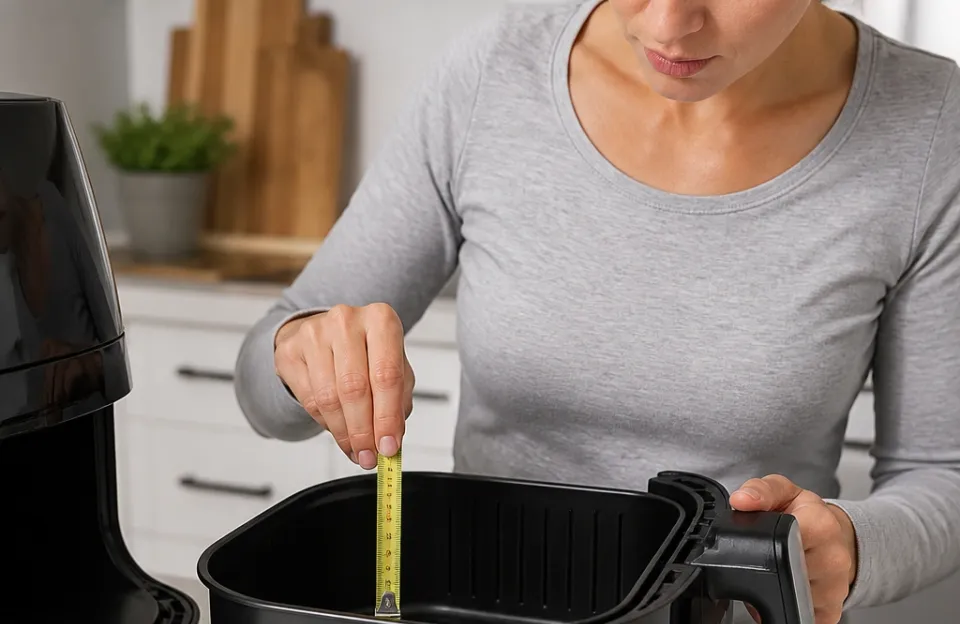
If your air fryer smells like burning, the most common culprits are leftover grease on the heating element, food debris stuck in the basket, or a factory coating curing during its first few uses. A faint smell during the first run is normal. A sharp, acrid smoke smell during regular cooking means something needs cleaning or adjusting right away.
This article covers why an air fryer smells like burning, how to identify the exact cause, and the steps to fix it. We will also look at when that smell points to a serious electrical problem rather than a dirty basket.
Why Your Air Fryer Smells Like Burning Plastic or Grease

An air fryer cooks by pushing very hot air around a small chamber using a high-speed fan. The heating coil sits directly above the food, often reaching 400°F or higher. Any substance touching that coil or sitting near the airflow path will heat up fast.
When oil, crumbs, or plastic get close enough, they burn.
The smell you notice depends entirely on what is burning. Old cooking oil produces a heavy, greasy smoke. Bread crumbs or batter drips create a sharper, toasted odor.
If the smell resembles melting plastic or chemicals, the issue might involve the appliance’s internal components or protective coatings. Identifying the specific scent is the fastest way to find the source.
Leftover Oil and Grease on the Heating Element
Grease buildup on the heating element is a primary cause of smoke and smells in air fryers. Every time you cook fatty foods, tiny oil droplets splatter upward. They hit the exposed heating coil and bake onto the metal.
When grease on the heating element reaches its smoke point, it produces visible smoke and acrid smells that can transfer to food. The smell is distinctively oily and unpleasant. Cooking items with a lot of fat, like crispy chicken wings, accelerates this buildup significantly.
If you rarely wipe down the top interior of the unit, the layer gets thicker with every meal. Eventually, it smokes even before the food inside starts cooking, and excessive grease buildup can pose a fire risk.
Food Debris Trapped in the Basket or Fan
Crumbs, bits of breading, and small pieces of vegetables fall through the basket grate during cooking. They land in the bottom drawer or get sucked up toward the fan assembly. Because the air circulates constantly, these small pieces bounce around and eventually touch hot surfaces.
Old grease and food particles that burn when reheated create smoke and unpleasant odors. Burnt flour or breadcrumbs smell dry and sharp. You might notice this specifically when cooking battered foods. Even if you wash the main basket, debris hides in the crevices where the basket meets the handle, or underneath the removable crisper plate.
Getting the timing right for starchy sides like perfectly cooked potatoes helps prevent them from breaking apart and leaving starchy dust behind. That dust burns easily on the next preheat cycle.
Factory Coating Curing During First Use
Running an air fryer empty before first use is intended to remove manufacturing residues and initial odors. During a first empty run, light smoke and a plastic or chemical smell are commonly described as expected and likely to dissipate quickly.
Check your own model’s manual for the recommended time and temperature, because these vary. Ventilating the area by opening windows or using ventilation fans helps clear initial odors.
If you just unboxed your unit and noticed a harsh odor, a short empty run in a well-ventilated room is the usual starting point. Persistent smoke, sparks, or a chemical smell that does not fade are different: stop using the appliance and contact the manufacturer.
Overcrowding the Basket Blocks Airflow
Air fryers rely on rapid air circulation. If you pack the basket too full, the air cannot move freely. The heating element stays hotter than intended because the moving air normally carries that heat away into the food.
Blocked airflow forces the internal temperature to spike unevenly.
When the air stalls, the food touching the top of the basket gets dangerously close to the heating coil. It scorches instead of roasting. This scorching produces a burnt smell even if the rest of the food remains undercooked.
Leaving space between pieces is necessary for proper browning, especially when figuring out the right duration for reheating leftover pizza slices.
Using Oils with a Low Smoke Point
Not all cooking oils handle high heat equally. Every oil has a smoke point, the temperature where it stops shimmering and starts breaking down into visible smoke. Using an oil unsuited to your cooking temperature is a common reason the interior ends up coated in sticky, smoking residue.
For most air fryer recipes cooked at an average of 375°F or below, canola, grapeseed, refined coconut and light olive oil are suggested as suitable options. Extra virgin olive oil, butter, and unrefined coconut oil are less refined and are better suited to lower-heat uses. Check your model’s manual and your recipe’s temperature before choosing.
Knowing how long delicate proteins take to finish, such as cooking salmon fillets evenly, helps you avoid over-oiling food to compensate for drying out.
Electrical Shorts or Melting Internal Wiring
A persistent burning plastic smell that does not go away after cleaning points to a hardware failure. Damaged internal wiring or a failing component can produce a sharp, chemical odor that is distinctly different from burning food or grease.
If you see sparks, hear buzzing, or notice the outer casing getting unusually hot, unplug the machine immediately. Do not try to cook with it. A damaged power cord or visible damage to the air fryer is a reason not to use it and to contact the manufacturer or retailer.
Check whether your exact model appears in the CPSC recalls and product safety warnings database. That database includes air fryers as a product category, and recall status can change, so search your model directly rather than relying on older lists. As one example of a specific warning, the CPSC urged consumers to stop using Kalorik MAXX Air Fryer Ovens with French Doors immediately over a burn-injury hazard from doors that can suddenly close, covering the MAXX and MAXX Advance models.
| Smell Type | Most Likely Cause | Next Action |
|---|---|---|
| Heavy, greasy smoke | Oil buildup on the heating coil | Unplug, cool fully, clean the heating area as your manual allows |
| Dry, sharp, toasted | Burnt crumbs or batter in the basket | Empty and wash the basket and crisper plate |
| Chemical or plastic (new unit) | Manufacturing residue burning off | Run an empty cycle per the manual, ventilate |
| Acrid, melting plastic (older unit) | Possible electrical fault | Stop using it and contact the manufacturer |
| Faint burning oil | Oil unsuited to the cooking temperature | Lower the temperature or switch to a refined oil |
How to Stop the Burning Smell and Clean the Heating Element
Fixing the smell requires removing whatever is burning. In most cases, a thorough cleaning solves the problem. Your model’s manual governs which parts are removable, which cleaning agents are approved, and whether accessories are dishwasher safe.
- Unplug the air fryer and let it cool completely before cleaning. Never attempt to clean the heating element while the unit is warm. The metal retains heat long after you turn it off.
- Remove the basket and crisper plate and wash them in warm, soapy water. If baked-on grease is stubborn, let them soak. Avoid abrasive pads that scratch the non-stick coating.
- Turn the main unit upside down, if your manual permits, to reach the heating coil on the ceiling of the cooking chamber. Once the unit is cold, the heating element can be wiped with a damp cloth. Follow your manual on any cleaning agent beyond water, and never submerge the main unit, because the electrical components can be damaged.
- Wipe the interior walls and the area around the fan. Grease splatters everywhere inside the chamber, and a buildup here restricts the fan and traps odors.
- Dry everything fully before reassembling. Moisture left on the heating element will steam and pop the next time you turn it on.
- Run an empty test cycle at the time and temperature your manual specifies. If the smell is gone, the cleaning worked. If a chemical or electrical smell returns, stop using the appliance and contact the manufacturer.
Regular maintenance prevents this issue from returning. Wiping the heating element once a week takes less than two minutes. Waiting until smoke pours out of the vents means you have let the buildup go too far.
Preventing Future Odors During Everyday Cooking
Cleaning fixes the immediate problem, but changing how you use the appliance stops the smell from coming back. Small adjustments to your routine keep the interior much cleaner.
Always pat your food dry before putting it in the basket. Excess surface moisture turns to steam, which pushes oil droplets upward toward the heating element faster. Dry food crisps better and splatters less.
This is especially true for marinated meats or wet vegetables.
Use parchment paper liners designed specifically for air fryers, and follow both the liner maker’s and your air fryer manual’s instructions. These catch dripping grease and falling crumbs before they hit the bottom of the drawer or splash back up. Make sure the liner does not cover the entire bottom, as air still needs to flow through the perforations.
Never put a paper liner in during the preheat cycle without food weighing it down. The fan can blow a loose liner up against the heating coil, where it may char or catch fire. If your manual does not address liners, leave them out.
Avoid aerosol cooking sprays. Commercial spray cans contain propellants like soy lecithin that can leave a sticky residue on non-stick surfaces. Over time, this residue builds up, resists normal washing, and burns on later cycles.
Buy a refillable oil mister and fill it with a refined oil suited to your cooking temperature.
Do not exceed the recommended temperature for your recipe. Pushing the dial to maximum heat for foods that only need 350°F causes unnecessary smoking. Higher heat vaporizes oils faster.
Match the temperature to the ingredient. Dense root vegetables require longer times at moderate heat, while thin cuts of meat need shorter bursts at higher temperatures. Understanding how long items like breakfast sausage links actually need prevents you from blasting them at maximum heat until they char.
Empty the drip tray or bottom drawer frequently. If you are cooking multiple batches of greasy food, pull the drawer out and dump the collected oil between batches. Grease dripping into electrical components can damage an air fryer, and letting oil pool at the bottom keeps it hot enough to smoke continuously.
Give the appliance the clearance its manual specifies. Exhaust vents need room to push hot air out; a unit pressed against a backsplash recirculates hot exhaust and stresses the electronics. If your manual does not state a distance, choose a spot with open space around the vents rather than a tight corner.
When a Burning Smell Means the Appliance Is Broken
Sometimes the smell has nothing to do with food or grease. If you have deep cleaned the unit, changed your cooking oil, and the sharp plastic smell persists, the air fryer likely has a mechanical failure.
Listen to the fan when you turn the machine on. A healthy air fryer hums steadily. If the fan rattles, grinds, or sounds much quieter than usual, it might be failing. A fan that stops moving air over the heating element lets internal temperatures climb, and plastic housing or wire insulation can begin to melt.
Check the power cord. Look for fraying, kinks, or discoloration near the plug or where the cord enters the base. A damaged cord is a reason to stop using the appliance and contact the manufacturer or retailer for a replacement. Do not tape it or repair it yourself.
Smell the exterior vents. Put your hand near the exhaust vent on the back or top while the unit runs. If the air coming out smells like burning electrical components rather than food, the motor or circuit board is overheating.
Unplug it immediately.
If your unit is under warranty, contact the manufacturer for a replacement rather than opening the outer casing. Internal electrical failures fall outside routine consumer maintenance, and repairs belong with the manufacturer or a qualified technician. Unplugging the appliance when it is not in use is also recommended for electrical cooking appliances generally.
Common Mistakes That Cause Smoking and Bad Odors
People often trigger burning smells without realizing they are doing anything wrong. Here are the most frequent errors.
- Using the wrong oil for the temperature. Extra virgin olive oil and unrefined oils burn at lower temperatures than refined oils suited to 375°F or above. Match the oil to the recipe.
- Skipping the initial empty run on a new unit. Putting food straight into a brand-new machine means your first meal may carry factory residue odors. Run it empty first, following the manual’s settings.
- Washing the basket in the dishwasher when the manual says hand wash only. Dishwasher safety varies by model, so check the manual before assuming a part is dishwasher safe.
- Placing the air fryer too close to a wall. The exhaust vent needs clearance, and the exact distance is model-specific. Check your manual rather than guessing.
- Leaving crumbs in the basket between uses. Even a quick session making flaky pastries or breaded bites leaves fine dust behind. Tap the basket out over the trash after every use so dust does not scorch during the next preheat.
- Ignoring a slightly off smell hoping it will go away. A faint burning odor is a warning that something is starting to carbonize. Addressing it immediately prevents a ruined heating element or a grease fire.
Keeping Your Kitchen Safe and Odor-Free
A burning smell from your air fryer is usually a maintenance issue, not a permanent defect. Grease collects on the heating coil, crumbs hide in the basket, and the wrong oil smokes at high temperatures. All of these problems have straightforward solutions that take just a few minutes.
Pay attention to the type of smell. Greasy smoke means clean the element. Dry, toasted smells mean empty the crumb tray. Chemical or plastic smells on a new unit mean run an empty cycle per the manual. A sharp chemical smell on an older unit means unplug it and contact the manufacturer.
Stay on top of wiping down the interior after cooking fatty meals, and unplug the appliance when it is not in use. Routine care keeps the air flowing properly, the food tasting clean, and the appliance running safely.