Air fryer cooking unevenly is usually caused by overcrowding the basket, blocking the fan with large pieces of food, or skipping the preheat step. The heating element sits at the top, and a fan pushes that hot air down and around the food. When anything interrupts that airflow, some pieces get blasted with heat while others stay cool.
Fixing the problem takes a few minutes of adjustment. You need to leave space between items, shake the basket halfway through, and match the temperature to what you are cooking. Once you understand how the air moves inside the machine, getting consistent browning on every side gets much easier.
This guide covers why your air fryer cooks unevenly and exactly how to fix it.
Why the hot air stops circulating properly
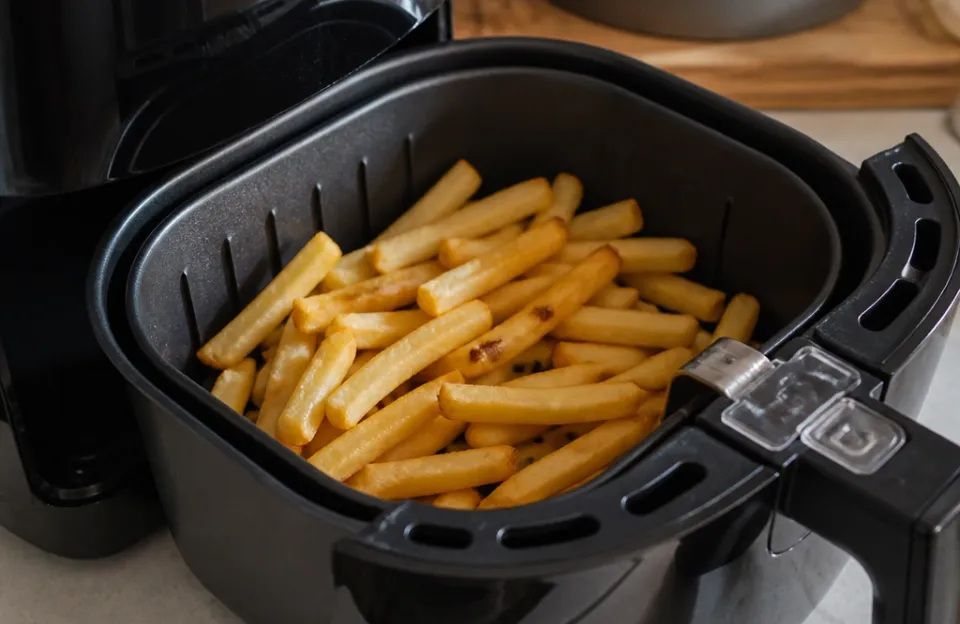
An air fryer works by moving superheated air rapidly around a small chamber. The heating coil sits directly above the food. A high-speed fan pulls air across that coil and forces it down through the perforated basket.
That air hits the bottom, sweeps back up the sides, and exits through the top again.
When you pack too much food into the basket, you block those channels. The air takes the path of least resistance. It flows over the top layer of food and skips the bottom entirely.
The pieces on top burn while the ones underneath steam in their own moisture.
Grease buildup causes the same issue over time. If old oil coats the mesh screen at the bottom or clogs the fan blades, the air slows down. Slower air means less even heat distribution.
Cleaning the basket and the interior walls after every use keeps the airflow strong.
The shape of the food matters just as much as the amount. A solid block of meatloaf forces air around its edges, leaving the center undercooked. Thin, flat items like bacon strips lay flush against the grate and let air pass freely.
Understanding these physical barriers explains why certain recipes fail while others succeed perfectly.
How to fix air fryer cooking unevenly
Solving this problem comes down to controlling three variables: space, movement, and heat. You don't need special tools. You just need to change how you load the basket and manage the timer.
- Leave gaps between every piece. Food needs breathing room. Arrange chicken drumsticks so they don't touch each other. If you have to stack them, you have too much food for one batch. Cook in two smaller batches instead.
- Preheat the empty basket. Turn the machine on for three to five minutes before adding food. Dropping cold ingredients into a cold basket forces the heating element to work overtime. The air temperature fluctuates wildly during those first few minutes, leading to patchy browning.
- Shake or flip at the halfway mark. Set a timer for half the total cook time. Pull the basket out and give it a firm shake. For larger items like pork chops or salmon fillets, use tongs to flip them over. This exposes the pale underside to the direct heat from the top element.
- Cut everything to the same size. A thick potato wedge takes longer to cook than a thin one. Uniform pieces finish at the exact same time. Use a knife to trim irregular chunks before tossing them in oil.
- Pat wet food dry. Moisture creates steam. Steam blocks radiant heat. Dry your chicken wings or vegetables with a paper towel before seasoning them. A dry surface crisps faster and more evenly.
- Lower the temperature slightly. If the outside burns before the inside cooks, drop the heat by 25 degrees Fahrenheit. Add a few extra minutes to the timer. This slower approach lets the hot air penetrate thicker foods without scorching the exterior.
Following these steps fixes the vast majority of browning issues. If you want deeper color on specific proteins, drying the skin thoroughly before cooking makes a massive difference in how heat transfers to the surface.
Adjusting the rack height for different foods
Many air fryers come with a removable rack or allow you to slide the basket into different grooves. The distance between the food and the heating element changes how fast the top browns.
Delicate items like fish fillets or zucchini slices benefit from a lower position. Moving them further from the coil prevents the tops from drying out and charring before the centers finish. Denser foods like thick-cut potatoes or frozen breaded chicken need that intense top-down heat.
Keep them on the upper rack setting.
If your model only has one fixed basket position, you can mimic this effect by adjusting the temperature. Lower the heat for delicate items and raise it for dense ones. You can also loosely tent aluminum foil over foods that brown too quickly, leaving the edges open so air still circulates.
Just make sure the foil is weighed down by the food so the fan doesn't blow it into the heating element.
Foods that cause the most trouble and how to handle them
Not all ingredients behave the same way in a convection environment. Some naturally resist even cooking because of their water content, fat distribution, or shape. Knowing which foods fight the process helps you adjust your technique before you start.
| Food Type | Common Uneven Cooking Issue | Specific Fix |
|---|---|---|
| French fries | Bottom layer stays soggy, top layer burns | Cut uniform sizes, shake basket every 5 minutes, avoid stacking |
| Chicken wings | Skin chars before meat reaches safe temp | Pat completely dry, cook at lower temp (375F) for longer |
| Salmon fillets | Edges overcook while center stays raw | Place skin-side down, lower rack position, flip once gently |
| Root vegetables | Hard centers with burnt exteriors | Toss lightly in oil, cut into half-inch cubes, single layer |
| Frozen snacks | Outside crispy, inside ice cold | Add 3-5 minutes to package directions, shake halfway |
| Bacon strips | Curling leaves uncooked spots | Lay flat without overlapping, press down gently if curling starts |
Potatoes are notoriously difficult because their density varies. When figuring out the right timing for potatoes, remember that smaller cuts always yield better heat penetration. A whole baked potato will almost always cook unevenly compared to diced cubes.
Chicken presents another challenge. Dark meat and white meat require different internal temperatures according to FDA food safety guidelines. If you mix thighs and breasts in the same basket, the breasts will dry out before the thighs finish.
Cook similar cuts together. When preparing poultry, paying attention to exact calorie counts and fat rendering often reveals whether the heat was distributed correctly, as uneven fat melting points to poor airflow.
For very fatty foods like sausages, the grease drips down and pools at the bottom. That pool of hot oil can splatter and cause localized burning on the underside of the food. Adding a tablespoon of water to the bottom drawer (underneath the basket, not touching the food) cools the dripping grease and prevents smoking, keeping the ambient temperature stable.
Getting the timing right for sausages prevents the casings from splitting and leaking fat too early.
Basket loading mistakes that ruin airflow
How you arrange food dictates how the air moves. Even if you follow the recipe's temperature and time perfectly, a badly loaded basket guarantees uneven results.
The most common mistake is treating the air fryer like a deep fryer. In a deep fryer, food is submerged in liquid heat. You can dump a bag of fries in, and the oil surrounds every surface instantly.
An air fryer uses gas. Gas needs pathways. Piling food into a mound creates a solid wall that deflects the air current.
Always aim for a single layer.
Overlapping slices is another frequent error. When reheating pizza, laying slices on top of each other traps moisture between them. The bottom slice gets soggy while the top one dries out.
Arranging them properly for reheating requires placing them side by side, even if it means doing two separate batches.
Using the wrong accessories can also choke the system. Parchment paper liners are popular for easy cleanup, but solid sheets block the holes in the basket floor. If you use liners, buy the perforated ones designed specifically for air circulation.
A solid sheet of parchment turns your appliance into a standard oven with poor ventilation.
Finally, pushing food too close to the walls restricts the return flow. The air travels down through the food, hits the bottom, and needs to travel up the outer edges to complete the cycle. Leave a quarter-inch gap between the food and the basket walls whenever possible.
Temperature settings and preheating habits
Relying solely on the temperature printed on a recipe card ignores the reality of your specific machine. Air fryers vary wildly in wattage and fan speed. A 1500-watt compact model behaves differently than an 1800-watt dual-basket unit.
Preheating is the most skipped step, and it causes the most inconsistent browning. When you put food into a cold unit, the heating element runs at maximum power for several minutes to reach the target temperature. During this ramp-up phase, the food closest to the element absorbs intense, unregulated heat.
The food further away barely warms up. Preheating stabilizes the environment before the food enters. Three minutes is usually enough for smaller units; five minutes for larger ovens.
Temperature selection requires thinking about thickness. High heat (400F and above) works for thin, quick-cooking items like french fries or bacon. Medium heat (350F to 375F) suits thicker proteins like chicken breasts or meatloaf.
Low heat (300F to 325F) is best for dehydrating or slowly roasting dense root vegetables.
If you notice the tops of your food turning dark brown while the insides remain raw, your temperature is too high. Drop it by 25 degrees and extend the cook time by a few minutes. This gentler approach allows the convective heat to reach the center without incinerating the surface.
Checking reliable guides for cooking specific proteins like salmon shows how lowering the heat slightly yields a much more uniform texture throughout the fillet.
Mechanical problems and maintenance fixes
Sometimes the issue isn't your technique. The machine itself might be failing. Wear and tear degrade performance over time, leading to hot spots and dead zones inside the basket.
Check the fan first. Unplug the unit, turn it upside down, and look at the fan blades near the heating element. Grease and dust accumulate here.
A heavy coating throws off the balance of the fan, slowing its rotation. Wipe the blades carefully with a damp cloth. Never submerge the top housing where the motor lives.
Inspect the heating coil. It should glow evenly when turned on. If one section remains dark while the rest glows red, the element is damaged.
A broken coil creates a distinct cold spot directly beneath it. Replacement elements are available for some models, but often a burnt-out coil means replacing the entire unit.
Look at the rubber feet on the bottom of the basket. These small bumpers keep the basket elevated slightly above the base, allowing air to sweep underneath. If they melt or fall off, the basket sits flush against the bottom.
This completely blocks the lower return airflow. Replacement silicone feet are cheap and fix this instantly.
Basket warping happens if you plunge a hot basket into cold water to clean it. The thermal shock bends the metal mesh. A warped basket doesn't sit level.
Oil pools on one side, and food slides into a corner, creating a dense pile that blocks air. Let the basket cool completely on the counter before washing it. Keeping your machine in good shape applies to any model, whether you use a compact countertop version or a larger multi-function oven.
Frequently asked questions
Why does my food burn on top but stay raw underneath?
The heating element sits directly above the basket. If the temperature is set too high, the radiant heat chars the top layer before the convective air has time to cook the center. Lower the temperature by 25 degrees Fahrenheit and increase the cooking time.
Flipping the food halfway through also exposes the raw underside to the direct heat source.
Do I really need to preheat my air fryer?
Yes. Skipping the preheat means your food enters a cold chamber. The machine then blasts maximum heat to catch up, causing erratic cooking and uneven browning.
Running the empty unit for three to five minutes stabilizes the internal temperature, giving your food a consistent environment from the very first second.
Can I stack food if I shake the basket frequently?
Stacking defeats the purpose of convection cooking. Shaking helps redistribute heat, but it cannot fix the fact that buried pieces are shielded from the airflow. Stacked food steams rather than roasts.
Always arrange items in a single layer with space between them. Cook in multiple batches if necessary.
Does wet batter work in an air fryer?
Wet batter drips through the basket holes before it can set, creating a mess and leaving the food unprotected. The fan also blows loose batter around the chamber. Stick to dry coatings like flour, breadcrumbs, or crushed cornflakes.
If you must use a wet batter, freeze the coated food for twenty minutes first so the exterior hardens slightly before it hits the heat.
Is a larger air fryer better for even cooking?
A larger capacity gives you more surface area to spread food out, which improves airflow. However, a massive unit filled with a tiny portion of food can also struggle, as the air has too much empty space to circulate efficiently. Match the machine size to your typical portion sizes.
A four-quart model handles most family meals without requiring excessive stacking.
Why do my frozen fries cook unevenly compared to fresh ones?
Frozen fries carry ice crystals that release moisture as they thaw. This sudden burst of steam lowers the local air temperature around the fries, causing them to steam rather than crisp. Fresh potatoes only contain their natural water content.
To fix frozen fries, spread them out wider than you would fresh ones and add two to three minutes to the cook time to drive off the excess moisture.
Getting consistent heat every time you cook
Fixing an air fryer that cooks unevenly comes down to respecting how the hot air moves. Give the food space. Keep the machine clean.
Match the temperature to the thickness of what you are cooking. Most browning issues disappear the moment you stop treating the basket like a dumping ground and start arranging the food deliberately. Pay attention to the fan noise.
If it sounds strained or rattling, check for grease buildup or a warped tray. Small maintenance habits prevent the slow decline in performance that catches most people off guard. Once you dial in the spacing and the shaking schedule, the results stay predictable batch after batch.