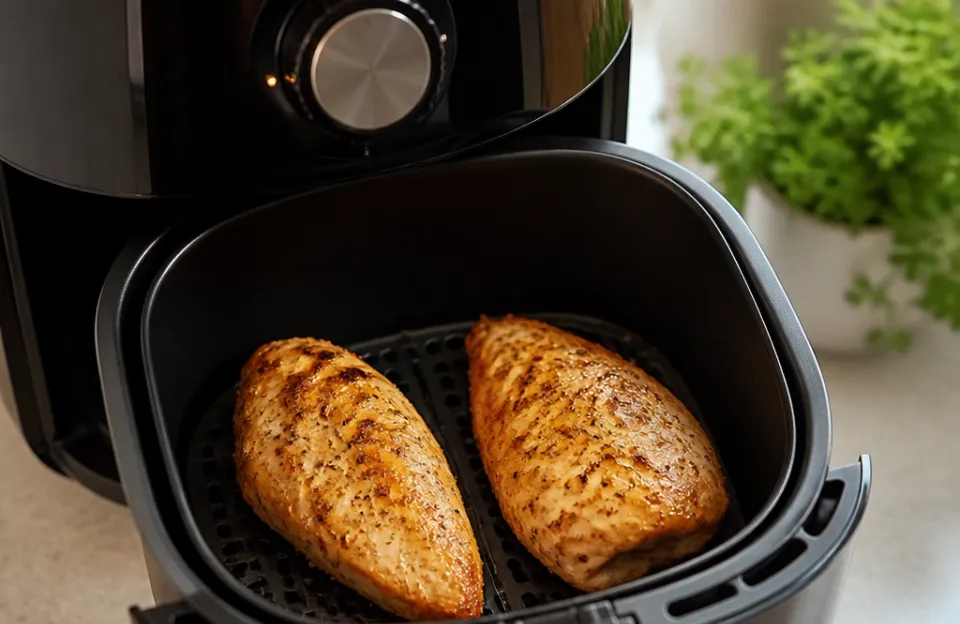
An air fryer is best when you want fast, crispy results with very little oil. A toaster oven wins when you need to toast bread, melt cheese on an open sandwich, or bake small batches of cookies. The choice between an air fryer vs toaster oven comes down to what you cook most often and how much counter space you have.
If your main goal is getting a crunchy exterior on chicken wings or fries in under twenty minutes, the air fryer does that job faster. If you want a single appliance that can broil a piece of fish, toast a bagel, and warm up leftovers without turning them soggy, a toaster oven handles all three. We will break down exactly how each one moves heat, where they overlap, and which specific meals favor one over the other.
How the heating method changes your food
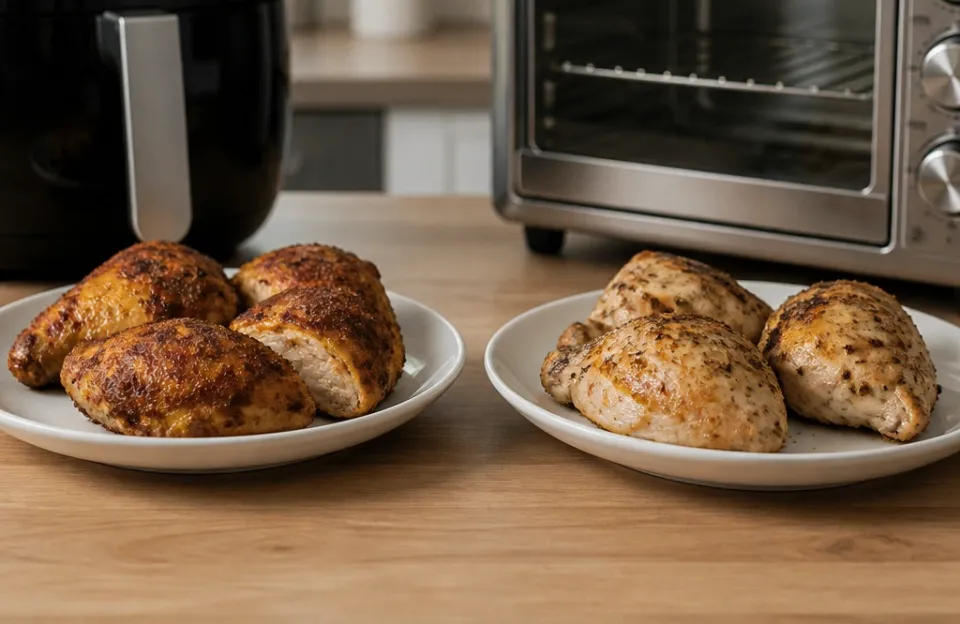
The biggest difference between these two appliances is how they move hot air around your dinner. An air fryer uses a compact cooking chamber and a powerful fan mounted directly above the heating element. That fan pushes air downward at high speed.
It circulates rapidly around the food sitting in a perforated basket. This intense airflow strips away the thin layer of moisture on the surface of the food very quickly. That rapid drying is what creates a crust.
You get a texture close to deep frying using only a tablespoon of oil or sometimes none at all.
A toaster oven works more like a traditional wall oven shrunk down to countertop size. It relies on heating elements placed along the top and bottom of the cavity. Many models include a fan for convection baking, but that fan is usually smaller and less aggressive than the one inside an air fryer.
The heat surrounds the food more gently. This slower, broader heat distribution is ideal for tasks that require even browning across a flat surface. Think of melting cheese evenly across a slice of bread or baking a small sheet of cookies so they rise uniformly.
Because the air fryer's fan is so strong, it can blow lightweight items around. A slice of parchment paper might fly up into the heating element if it isn't weighed down by food. Toaster ovens do not have this problem because their air movement is much calmer.
Understanding this mechanical difference explains why certain recipes succeed in one machine and fail in the other.
Speed and preheating differences
Air fryers are fast. Most models reach their target temperature in three to five minutes. Some smaller units barely need any preheating at all.
Once you drop your food into the basket, the concentrated heat starts working immediately. Cooking times are generally shorter than what you would see in a standard oven recipe. For example, figuring out how long potatoes take usually means shaving off several minutes compared to roasting them on a baking sheet.
Toaster ovens take longer to preheat. Because the interior cavity is larger, the heating elements need more time to warm the surrounding air. You can expect to wait five to ten minutes before the unit reaches 400 degrees Fahrenheit.
Once it is hot, cooking times are closer to traditional oven instructions. This makes a toaster oven better suited for meals where you have a bit more time or where slow, steady heat produces a better result, like baking a thick piece of salmon. Knowing the right timing for fish matters regardless of which appliance you choose, but the starting point differs.
| Attribute | Air Fryer | Toaster Oven |
|---|---|---|
| Preheat Time | 3 to 5 minutes | 5 to 10 minutes |
| Fan Strength | High velocity, concentrated | Low to moderate, broad |
| Primary Heating | Top element with heavy fan | Top and bottom elements |
| Best Speed For | Frozen foods, vegetables, wings | Baking, broiling, toasting |
| Energy Use Per Cycle | Generally lower due to short run time | Slightly higher due to longer run time |
Counter space and capacity limits
Size is a practical concern that often decides the air fryer vs toaster oven debate for people with small kitchens. Standard basket-style air fryers have a relatively small footprint. They go straight up rather than spreading out wide.
However, their usable cooking space is limited by the basket. You can usually fit enough chicken wings or fries for two people in a standard four to six quart model. If you try to stack too much food in the basket, the air cannot circulate.
The items touching the middle will steam instead of crisp. You end up having to cook in multiple batches.
Toaster ovens take up more horizontal space on your counter. They look like miniature traditional ovens. The advantage here is the flat rack layout.
You can spread food out in a single layer on a baking pan. Many toaster ovens can fit a nine inch pizza or four to six slices of bread side by side at once. Some larger models accommodate a whole small chicken.
If you regularly cook for three or more people, a toaster oven often lets you finish the meal in a single round. There are compact options available now, including some slim designs that save space, though those are technically air fryers built to mimic a smaller footprint.
When you measure your counter, remember to account for clearance. Both appliances vent hot air. An air fryer exhausts from the back or top, while a toaster oven radiates heat from its glass door and metal sides.
You need a few inches of breathing room around either device to prevent heat damage to nearby cabinets or walls.
Texture results for common meals
Crispiness is where the air fryer dominates. The rapid air technology was designed specifically to replicate the crunch of deep frying. When you cook something like chicken wings prepared ahead of time, the skin renders its fat quickly.
The high wind dries the surface, leaving behind a brittle, crunchy shell. Vegetables like broccoli or Brussels sprouts develop charred, blistered edges that taste roasted rather than baked. Even thick cuts of meat benefit.
Getting extra crunch on poultry requires very little effort beyond patting the skin dry before seasoning.
Toaster ovens produce a different kind of browning. Because the heat comes from both the top and bottom elements, you get excellent results on flat foods. Pizza reheats beautifully because the bottom element crisps the crust while the top element melts the cheese.
Bread toasts evenly. Casseroles form a nice golden layer on top without burning the edges too quickly.
If you try to make French fries in a toaster oven, they will roast. They will taste good. They will lack that distinct, almost shattered-glass crunch that an air fryer delivers.
Conversely, if you try to toast a slice of sourdough in a basket air fryer, the intense fan will likely dry it out completely before it achieves a proper golden brown color. Matching the appliance to the desired texture prevents a lot of kitchen frustration.
Cleaning up after dinner
Nobody likes scrubbing pans, and the cleanup process varies significantly between these two machines. Air fryers typically use a nonstick basket and a removable crumb tray or drip pan at the bottom. Because the food sits elevated in a perforated basket, grease drips down and away from the ingredients.
After cooking, you pull the basket out and wash it. Most modern baskets are dishwasher safe. The main annoyance is cleaning the heating element area at the top of the unit.
Grease splatters upward during cooking. Over time, that baked-on grease requires wiping down with a damp cloth while the unit is unplugged and cool.
Toaster ovens involve more parts. You have a wire rack, a baking pan, and a crumb tray at the very bottom. The interior walls are exposed to splatter.
Because the door is usually glass, you also have to clean baked-on grease off the window to maintain visibility. If you cook something fatty like bacon or sausage links, the grease pools on the flat bottom pan. You have to pour it off carefully while it is still liquid, or scrape it up once it solidifies.
Checking guides on cooking fatty meats properly helps minimize dangerous grease fires in either appliance, but the mess left behind is generally easier to manage in a removable air fryer basket.
Some newer appliances blur these lines. You can find multi-function countertop ovens that combine a toaster oven shape with a high-speed air fry fan. These hybrid models give you the flat racks of a toaster oven with the crisping power of an air fryer.
The tradeoff is that they are larger, heavier, and often more expensive than buying a dedicated single-purpose unit.
Power consumption and running costs
Both appliances use less electricity than heating up a full-sized wall oven. A standard electric oven draws roughly 2,400 to 5,000 watts depending on the model and temperature. Air fryers usually operate between 1,400 and 1,800 watts.
Toaster ovens range from 1,200 to 1,800 watts. On paper, their power draw is similar.
The real difference in energy cost comes from cooking time. Because an air fryer cooks food faster and requires almost no preheating, it runs for fewer total minutes per meal. If you are making a quick batch of frozen snacks, the air fryer might run for twelve minutes total.
The same food in a toaster oven might require five minutes of preheating plus eighteen minutes of cooking. According to the US Department of Energy, reducing the runtime of high-wattage kitchen appliances is one of the simplest ways to lower household electricity use. Over a year of daily cooking, the air fryer's shorter cycles add up to a slightly lower electric bill.
However, if you are baking something that requires forty minutes regardless of the appliance, the energy savings disappear. In those cases, the toaster oven's ability to hold more food at once might actually save energy compared to running two separate batches in a smaller air fryer.
Safety considerations on the countertop
Heat management is a factor worth thinking about, especially in homes with children. Air fryers keep most of their heat contained within the plastic or insulated metal housing. The outside gets warm, but rarely hot enough to cause an instant burn if brushed against briefly.
The exhaust vent blows out very hot air, so you must keep it pointed away from low-hanging cabinets or curtains.
Toaster ovens have glass doors and thin metal walls that get extremely hot during operation. Touching the outside while it is running will burn you. The glass door radiates significant heat into the surrounding kitchen.
You need to be more careful about placement and keeping kids away from the front of the unit. Always follow basic fire safety guidelines provided by organizations like the National Fire Protection Association regarding countertop appliance clearances and cord management. Never leave either appliance running unattended, particularly when cooking high-fat foods that can smoke or flare up.
Which one fits your cooking habits
Choosing between an air fryer vs toaster oven depends entirely on your weekly menu. Look at what you cooked last week. If your meals involved a lot of frozen appetizers, roasted vegetables, or quick proteins like chicken tenders, the air fryer aligns with your habits.
Its speed and texture results are hard to beat for those specific items. Brands like Ninja have built strong reputations specifically around perfecting this type of rapid air cooking.
If your week included toasted sandwiches, small batches of baked goods, reheating pizza slices, or broiling open-faced melts, the toaster oven is the better tool. It offers a wider range of traditional cooking methods in a single box. You sacrifice the extreme crunch of the air fryer, but you gain the flexibility to handle almost anything a standard oven does, just in smaller quantities.
For households that want maximum versatility without buying two separate machines, a convection toaster oven with a dedicated "air fry" setting is a reasonable compromise. Just be aware that these combo units rarely match the exact crispness of a dedicated basket air fryer, nor do they always toast bread as evenly as a pure toaster oven.
Frequently asked questions
Can I put aluminum foil in both appliances?
You can use aluminum foil in a toaster oven safely by laying it flat on the rack or wrapping food, as long as it never touches the heating elements. In an air fryer, foil is trickier. The powerful fan can lift loose foil into the heating coil, creating a fire hazard.
If you use foil in an air fryer, it must be securely weighed down by the food itself, and it should never cover the entire bottom of the basket, as blocking the airflow defeats the purpose of the machine.
Is an air fryer just a small convection oven?
Technically, an air fryer is a type of convection oven. Both use fans to circulate hot air. The difference is scale and intensity.
An air fryer has a much smaller cooking chamber and a significantly more powerful fan positioned very close to the food. This creates a concentrated vortex of heat that strips moisture away faster than a standard convection oven or a toaster oven with a convection setting.
Which appliance is better for reheating leftovers?
It depends on the leftover. Fried foods, roasted vegetables, and breaded meats reheat best in an air fryer because the circulating air restores the crispy texture that a microwave destroys. Soups, casseroles, pizzas, and items covered in sauce reheat better in a toaster oven, where the gentler, broader heat warms the dish through without drying out the top layer.
Do toaster ovens with an air fry button work as well?
They come close, but they rarely perform identically to a dedicated basket air fryer. The fan in a combo toaster oven is usually smaller, and the cooking cavity is larger, meaning the air velocity drops before it hits the food. You will get better browning than a standard bake setting, but you might miss the deep-fried level of crunch a standalone unit provides.
Which one is safer to leave plugged in?
Neither appliance should be left plugged in unattended if possible, but air fryers generally run cooler on their exterior housing. Toaster ovens retain residual heat on their metal and glass surfaces long after they are turned off. If counter space is tight and you must leave one plugged in near other items, the insulated exterior of an air fryer poses a slightly lower accidental burn risk.
Picking the right spot on your counter
Deciding between an air fryer vs toaster oven comes down to prioritizing speed and crunch versus flexibility and capacity. If you value getting dinner on the table in fifteen minutes with a texture that mimics deep frying, the air fryer earns its space. If you prefer a single appliance that can handle everything from morning toast to evening casseroles, the toaster oven is the more practical investment.
Many kitchens eventually find room for both, assigning the air fryer to proteins and vegetables while the toaster oven handles bread and baking. Evaluate your most frequent meals first, and let your actual grocery list dictate which machine you buy.