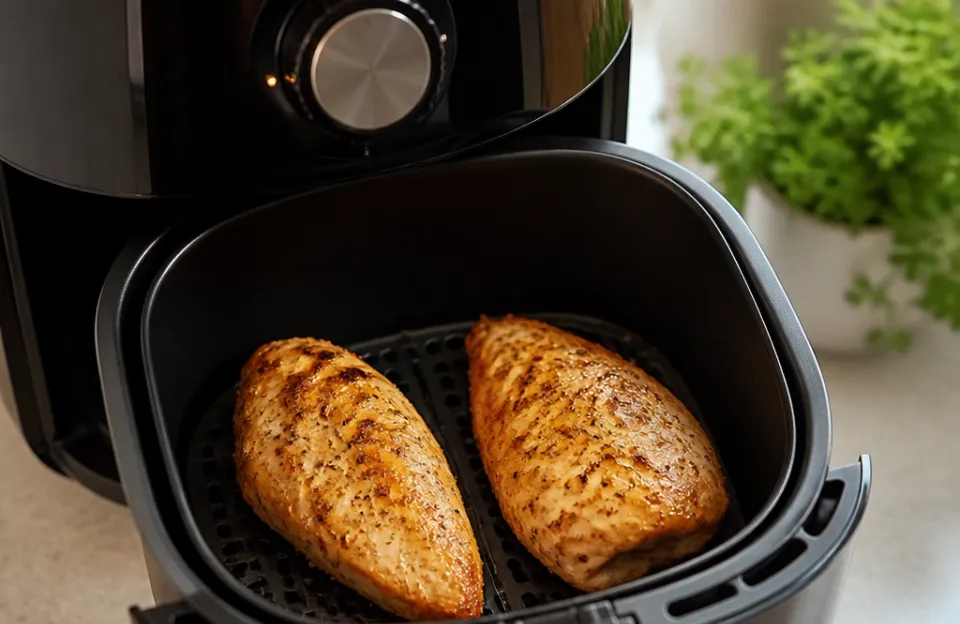
Most air fryers use between 1,400 and 1,800 watts of power. Compact models designed for one or two people often draw around 800 to 1,200 watts, while large dual-basket units can pull up to 2,400 watts. The exact number depends on the capacity and the heating technology inside the machine.
Understanding air fryer wattage matters before you buy one or plug it into an older kitchen outlet. A higher number means faster heat and crispier food, but it also means a bigger draw on your home's electrical system. This article breaks down what those numbers mean for your cooking, your electric bill, and your circuit breakers.
Why Air Fryer Wattage Dictates Cooking Speed

Wattage measures how much electrical energy the appliance converts into heat every second. An air fryer works by pushing hot air rapidly around the food using a heating element and a fan. More watts allow that element to get hotter faster and maintain high temperatures even when cold food enters the basket.
A 1,700-watt model reaches 400°F in about three minutes. A 1,000-watt compact unit might take six or seven minutes to hit the same target. That difference changes how food cooks.
Fast preheating seals the outside of chicken wings quickly, which is why timing matters so much when prepping wings for the week. Slower heat allows moisture to escape gradually, leading to drier results instead of a crispy crust.
The relationship between power and speed isn't perfectly linear. A 1,500-watt machine doesn't cook exactly twice as fast as a 750-watt one. Fan speed, basket shape, and airflow design also play major roles.
Still, the raw electrical draw sets the ceiling for how much thermal energy the device can produce.
How Heating Elements Use Electrical Power
Inside the top of the machine, a coiled metal element resists the flow of electricity. That resistance generates intense heat. The fan directly above or beside it forces that heat downward through the perforated basket.
Higher-wattage elements require thicker wire coils to handle the current without melting. They also need better insulation to protect the plastic outer shell from warping. This is why heavy-duty models feel physically heavier and bulkier than their low-power counterparts.
The engineering required to manage 1,800 watts safely takes up more space than managing 900 watts.
The Link Between Watts and Maximum Temperature
Most standard models max out at 400°F regardless of their power rating. The difference is how long they stay there. When you drop a pound of frozen french fries into a 1,500-watt basket, the internal temperature plummets.
A powerful heating element recovers that lost heat in seconds. A weaker one struggles to climb back up, leaving you with soggy fries. If you want properly browned potatoes, recovery time is everything.
Some premium models push past 400°F, reaching 450°F specifically because they have the wattage headroom to sustain it. Standard 1,400-watt units rarely attempt this, as the thermal stress would degrade the components too quickly.
Breaking Down Common Air Fryer Wattage Ranges
Manufacturers group their machines into size categories, and each category has a typical power range. Knowing these ranges helps you match the appliance to your kitchen setup and your household size.
| Capacity Category | Typical Basket Size | Common Wattage Range | Best Suited For |
|---|---|---|---|
| Mini / Compact | 1 to 2 quarts | 800W to 1,100W | Dorms, single servings, RVs |
| Standard | 3 to 5 quarts | 1,400W to 1,700W | Couples, small families |
| Large / XL | 6 to 8 quarts | 1,700W to 1,800W | Families of four or more |
| Dual-Basket / Oven | 8 to 12+ quarts | 1,800W to 2,400W | Large batches, full meals |
Compact models under 1,200 watts are popular for travel or dorm rooms where outlets share circuits with other devices. They cook fine for a single chicken breast or a handful of vegetables, but they lack the thermal mass to handle dense foods well.
Standard models in the 1,400 to 1,700-watt range make up the bulk of the market. They balance cooking performance with standard electrical safety limits. You can easily find a reliable mid-sized unit, like this popular Ninja model, that fits right into this sweet spot.
Dual-basket machines are the outliers. Because they house two separate heating zones, they essentially pack two appliances into one shell. Each zone might draw 900 watts, totaling 1,800 watts, or they might scale up to 2,400 watts combined.
These require careful attention to your kitchen's wiring.
What Lower-Wattage Models Sacrifice
Buying a smaller, less powerful unit saves counter space and money upfront. It also draws less electricity per hour of use. The trade-off shows up in texture.
Lower power means slower air circulation and gentler heat. Foods that rely on rapid surface dehydration, like bacon or breaded items, often turn out chewy rather than crisp.
If you only plan to reheat leftovers or roast soft vegetables, a 1,000-watt unit handles those tasks perfectly. But if you expect traditional deep-fried textures, you need the aggressive heat that comes with 1,500 watts or more.
High-Power Units and Kitchen Space
Large, high-wattage machines generate significant exhaust heat. The vent on the back pushes out air that can exceed 200°F. Placing a 1,800-watt unit flush against a wall or under low cabinets risks heat damage over time.
Manufacturers typically recommend leaving at least five inches of clearance behind the exhaust vent. Higher power means more heat expelled, requiring more breathing room on your countertop.
Does Air Fryer Wattage Impact Your Electric Bill
People often worry that a 1,800-watt appliance will spike their monthly utility costs. The math tells a different story. Electricity is billed in kilowatt-hours (kWh).
To find the cost, you divide the wattage by 1,000, multiply by the hours used, and multiply by your local electricity rate.
Running a 1,500-watt air fryer for 30 minutes uses 0.75 kWh. According to the U.S. Energy Information Administration, the average residential electricity price hovers around 16 cents per kWh.
That means a half-hour cooking session costs roughly 12 cents. Even if you cook with it every single day for a month, the total adds up to about $3.60.
Compare this to a conventional electric oven. A standard wall oven draws between 2,000 and 5,000 watts. Because it heats a massive cavity, it runs its elements frequently to maintain temperature.
Cooking a batch of chicken legs in a large oven for 45 minutes consumes significantly more energy than doing it in a compact chamber. When you are roasting dark meat pieces, the smaller heated volume finishes the job faster and cheaper.
Air fryers win on efficiency because they don't waste energy heating empty space. The high wattage sounds intimidating, but the short run times keep actual consumption very low.
Standby Power Consumption
Modern digital models with touchscreens and Wi-Fi connectivity draw a tiny amount of power even when turned off. This standby draw usually sits between 1 and 3 watts. Over a year, it amounts to pennies.
If you want to eliminate it entirely, unplugging the machine after use works, though it's rarely necessary for financial reasons.
Matching Power Ratings to Household Electrical Circuits
This is where air fryer wattage becomes a safety issue rather than just a cooking preference. In North America, standard kitchen outlets operate on 120-volt circuits. Most modern kitchens use 20-amp circuits for countertop receptacles, while older homes might still have 15-amp wiring.
To find out how many amps an appliance pulls, divide its wattage by the voltage. A 1,800-watt machine on a 120-volt circuit draws exactly 15 amps.
Here is the critical rule: the National Electrical Code recommends that continuous loads (devices running for three hours or more) shouldn't exceed 80% of a circuit's capacity. While cooking dinner rarely takes three hours, startup surges can momentarily spike the draw.
On a 15-amp circuit, the safe continuous limit is 12 amps (1,440 watts). Plugging a 1,700-watt appliance into a 15-amp circuit leaves almost no margin. If the refrigerator compressor kicks on simultaneously, the breaker will likely trip.
On a 20-amp circuit, the safe limit is 16 amps (1,920 watts). This comfortably handles most standard and large models. However, dual-basket units pulling 2,400 watts require dedicated circuits or 240-volt outlets, which are rare in standard US kitchens.
Some larger oven-style units, such as this multi-function option, push the upper limits of standard 120V wiring.
Older Homes and Shared Outlets
Houses built before the 1990s often have 15-amp circuits shared across multiple outlets in the kitchen. Plugging a high-power cooker into the same circuit as a microwave or toaster oven guarantees nuisance tripping. If your breaker flips every time you start cooking, check the amperage rating on the machine's sticker and compare it to your panel.
Using extension cords to reach a different outlet introduces fire risk. Thin, cheap cords cannot handle 15 amps of continuous current. They heat up, melt the insulation, and cause fires.
If you must use an extension cord, it needs to be rated for at least 15 amps (14-gauge wire) or ideally 20 amps (12-gauge wire), and kept as short as possible.
International Voltage Differences
In Europe, Asia, and many other regions, standard wall voltage is 220 to 240 volts. Because the voltage is doubled, the amperage draw for the same wattage is cut in half. A 1,800-watt unit in the UK draws only about 7.5 to 8 amps.
This makes high-powered cooking much easier to support on standard household wiring abroad compared to North America.
How Power Levels Change Texture and Browning
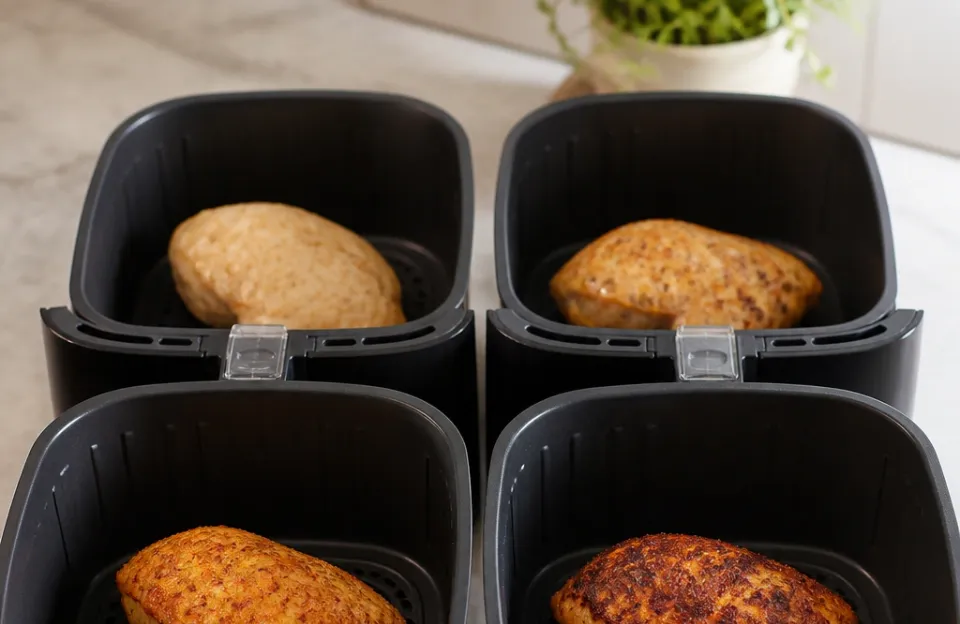
Different foods react differently to varying levels of thermal intensity. Wattage dictates how aggressively the Maillard reaction occurs on the surface of your food. This chemical process creates the brown color and savory flavor associated with roasted or fried items.
High-wattage units blast food with intense heat immediately. This is ideal for wet batters, thick coatings, or fatty meats where you need to render fat quickly before the interior overcooks. Getting that audible crunch on heavily coated items relies entirely on rapid surface drying.
Lower-wattage units apply heat gently. This works better for delicate items that burn easily. Baking a small cake, roasting garlic, or dehydrating fruit slices benefits from a machine that doesn't scorch the exterior before the center is done.
Adjusting Recipes for Different Machines
Most online recipes assume a standard 1,500 to 1,700-watt appliance. If you own a compact 1,000-watt model, you generally need to add 20% to 30% more cooking time. You might also need to lower the temperature slightly to prevent the outside from burning while waiting for the extra time to cook the inside.
Conversely, if you upgrade to a powerful 1,800-watt dual-zone unit, food will finish faster. Check your meals a few minutes earlier than the recipe suggests. Dense proteins, like a thick salmon fillet, respond noticeably to these power differences.
Fan speed also varies with power. Higher-wattage motors spin the fan faster, moving more air volume. This strips away the boundary layer of steam that naturally forms around cooking food.
Removing that steam layer is what makes the exterior crispy. A weak fan leaves the steam intact, resulting in a steamed texture rather than a fried one.
Misconceptions About Appliance Power Ratings
People frequently misunderstand what the number on the box actually means for their daily use. Clearing up these assumptions prevents both disappointment and unnecessary anxiety.
- Assuming higher watts always mean better food. Power helps, but poor airflow design ruins it. A badly engineered 1,800-watt machine will cook worse than a well-designed 1,400-watt one. Basket shape and vent placement matter just as much as raw electrical draw.
- Thinking the machine pulls maximum power constantly. The listed wattage is the peak draw when the heating element is fully active. Once the target temperature is reached, the thermostat cycles the element off and on. The actual average power consumption during a 20-minute cook cycle is significantly lower than the maximum rating.
- Believing low-wattage units are completely safe for any outlet. Even a 900-watt appliance can trip a breaker if plugged into a faulty circuit, a damaged outlet, or a power strip already overloaded with phone chargers and lamps.
- Confusing wattage with heat output in BTUs. While related, electrical watts measure input energy. How efficiently the machine converts that input into usable cooking heat depends on insulation and component quality. Two 1,500-watt models can perform differently based on build quality.
- Assuming all "1,500-watt" labels are identical. Manufacturing tolerances exist. A unit labeled 1,500 watts might actually test at 1,450 or 1,550. Furthermore, voltage drops in your home during peak hours can reduce the actual power delivered to the element.
Choosing the Right Specification for Your Needs
Deciding how much power you need comes down to three factors: what you cook, who you cook for, and what your kitchen wiring supports.
For college students, office desks, or recreational vehicles, stick to the 800 to 1,200-watt range. These fit into tight electrical constraints and handle single portions easily. They won't give you restaurant-level crispiness, but they reheat pizza and cook small snacks effectively.
For everyday family cooking, aim for 1,500 to 1,700 watts. This provides enough thermal punch to brown meats, crisp vegetables, and handle frozen foods without taking forever. Before buying, verify whether your kitchen counters are wired for 15-amp or 20-amp circuits.
If you have 15-amp circuits, try not to exceed 1,400 watts to leave headroom for normal electrical fluctuations.
If you regularly cook for four or more people, or you want to cook main dishes and sides simultaneously, look at 1,800-watt dual-basket setups. Just confirm your kitchen has 20-amp circuits available. Running a 2,400-watt oven-style unit requires checking with an electrician first.
Some slim-profile designs, like this compact 6-quart option, try to balance decent capacity with manageable power requirements for tighter spaces.
Always read the manufacturer's manual regarding electrical requirements. They specify minimum wire gauges and warn against using certain types of power strips. Ignoring these guidelines voids warranties and creates hazards.
Frequently Asked Questions
Can I run an air fryer and microwave on the same outlet?
Generally, no. Both appliances draw significant power. A microwave typically uses 1,000 to 1,500 watts, and an air fryer uses a similar amount.
Running both simultaneously on a standard 15-amp or even 20-amp circuit will almost certainly trip the breaker. Plug them into separate circuits whenever possible.
Does a higher wattage mean the appliance is dangerous?
Not inherently. Higher power simply means it generates more heat and draws more current. As long as your home's wiring meets code and matches the appliance's requirements, it operates safely.
The danger arises when users plug high-draw machines into undersized extension cords or overloaded, outdated circuits.
Will a 1,000-watt model cook frozen foods properly?
It will cook them, but the results differ from higher-powered units. Frozen foods release a lot of moisture as they thaw. A 1,000-watt element struggles to evaporate that moisture quickly, often resulting in soggy exteriors.
You may need to cook at lower temperatures for longer periods to dry them out adequately.
Do air fryers consume more electricity than deep fryers?
Electric deep fryers typically use 1,500 to 1,800 watts, which is identical to most air fryers. However, deep fryers must maintain oil temperature continuously for longer periods, whereas air fryers cook faster due to concentrated airflow. Overall, the electrical cost difference between the two is minimal, though air fryers save money by eliminating the need to purchase cooking oil.
Is it normal for the plug to get warm during use?
Slight warmth near the plug is common with high-draw appliances. However, if the plug becomes hot to the touch, smells like burning plastic, or shows discoloration, unplug it immediately. This indicates a loose connection, a failing outlet, or an undersized wire that cannot handle the current safely.
Does altitude affect how much power the machine needs?
Altitude doesn't change the electrical wattage the machine pulls from the wall. However, water boils at lower temperatures at high elevations, which alters cooking times and moisture evaporation rates. You may need to adjust your cooking times slightly, but the appliance itself operates at its rated power regardless of elevation.
Sorting Out Your Kitchen's Electrical Limits
Paying attention to air fryer wattage prevents blown fuses and ensures your food actually gets crispy. Check the sticker on the back of your current machine or the specs of the one you plan to buy. Then, look at your breaker panel to see if your kitchen outlets are rated for 15 or 20 amps.
Matching those two numbers correctly keeps your kitchen running smoothly and your meals turning out exactly as intended.