Yes, you can put water in an air fryer. A small amount of water placed at the bottom of the basket or drawer is safe and often helpful during cooking. You just need to keep it away from the heating element and the fan.
Adding a few tablespoons of water solves common problems like smoking grease and dry food. The exact amount matters. Too much water creates steam that ruins crispiness, and splashing liquid can damage the electrical components.
This article explains how much water to use, when adding liquid helps your food, and what mistakes to avoid so you don't damage your machine. We will also cover whether you can put water in an air fryer for specific tasks like reheating leftovers or catching bacon grease.
Why Adding Liquid to the Drawer Works
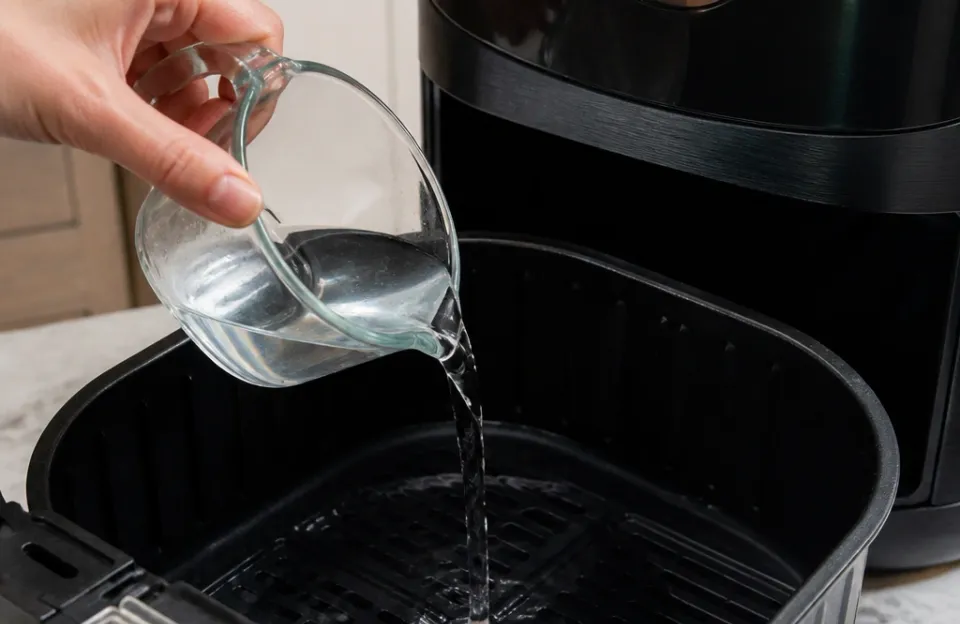
An air fryer cooks by blowing very hot air rapidly around your food. That fast-moving air dries out the surface of whatever you are cooking, which gives you a crispy texture. When you place a little water at the very bottom of the unit, the heat turns that liquid into a small amount of steam.
That steam mixes with the circulating hot air. It raises the humidity inside the cooking chamber just enough to keep certain foods from drying out completely. The moisture also catches tiny droplets of fat that fall from your food before they hit the bare metal base.
When grease hits a 400-degree metal surface, it smokes. Water cools those drips down instantly, stopping the smoke before it starts.
The heating element and the high-speed fan sit above the food basket in most standard models. As long as the water stays below the basket line, it never touches the electrical parts. You can read more about how these countertop appliances evolved over the years, but the basic airflow design has stayed consistent.
Keeping the water low and contained is the main rule.
How Much Water Prevents Smoking Grease
Two to three tablespoons of water is usually plenty for a standard-sized machine. If you have a larger model, you might go up to a quarter cup. Any more than that, and the excess liquid will boil too vigorously.
Heavy boiling produces thick steam clouds that make your food soggy rather than crispy.
Pour the water directly into the bottom drawer before you slide the perforated basket in. Do not pour it over the food. The basket keeps your ingredients elevated above the liquid pool.
As the fat renders out of your dinner, it drips through the holes and lands in the water instead of on the hot pan.
This trick works exceptionally well for fatty foods. If you are timing your strips of pork belly perfectly, that rendered fat will pool quickly. A splash of water underneath keeps the kitchen clear of smoke alarms going off.
Moisture Retention for Lean Meats and Vegetables
Lean proteins dry out fast under intense convection heat. Chicken breasts, pork chops, and white fish lose their internal moisture quickly when blasted with 400-degree air. A tablespoon of water at the bottom of the drawer introduces ambient humidity.
That extra moisture slows down the dehydration process on the outside while the inside finishes cooking.
Vegetables benefit from this too. Broccoli florets and zucchini slices tend to turn brittle if cooked completely dry. A little steam keeps the centers tender while the edges still get some color.
Getting the timing right for summer squash means balancing that exterior browning with a soft interior, and ambient moisture helps achieve both.
You only need a tiny amount. One tablespoon per pound of food is a reliable starting point. The goal is slight humidity, not a steam bath.
Situations Where Water Improves Your Results
Knowing you can add water is one thing. Knowing exactly when to do it makes the difference between a good meal and a ruined one. Certain recipes practically demand a little moisture at the base, while others require a completely dry environment.
Catching Drippings From High-Fat Proteins
Fatty meats are the number one reason people look up whether they can put water in an air fryer. Sausages, burgers, chicken thighs, and bacon all shed significant amounts of grease during cooking. Without intervention, that grease hits the hot base plate, burns, and fills the house with acrid smoke.
A shallow pool of water acts as a heat sink for those drippings. The fat floats on top of the water and cools down. Cleanup becomes significantly easier because the grease doesn't bake onto the nonstick coating.
You just dump the greasy water into a disposable container once it cools. Never pour hot grease-water down your kitchen drain, as it will solidify and clog your pipes.
If you are preparing a batch of drumettes for game day, expect a lot of rendered skin fat. Adding water beforehand saves you from scrubbing baked-on carbon later.
Reheating Leftovers Without Turning Them Into Rocks
Leftover pizza, roasted potatoes, and day-old bread turn into hard pucks when exposed to dry convection heat. The microwave makes them rubbery, and the oven takes too long. An air fryer is perfect for reheating, provided you introduce a tiny bit of moisture.
Sprinkle one teaspoon of water directly over the leftover food, or put a tablespoon in the bottom drawer. The gentle steam rehydrates the starches slightly while the hot air crisps the exterior back up. Pizza crust gets crunchy again without the cheese turning into leather.
Reheating requires lower temperatures than initial cooking. Drop your temperature setting by about 50 degrees compared to the original recipe. The added water prevents the lower heat from drying out the food during the longer warm-up time.
Baking Small Batches in the Basket
Some people use their air fryer to bake cookies, muffins, or small cakes using silicone molds or oven-safe ramekins. Baked goods rely on precise moisture levels. Convection fans blow air aggressively, which can crack the tops of cakes or make cookies spread too thin and dry out.
Placing a tablespoon of water in the outer drawer creates a slightly humid baking environment. This mimics the steam injection used in professional bakery ovens. The result is a softer crumb and a better rise.
Just keep the water level very low so it doesn't boil over and splash into your batter.
When You Must Keep the Machine Completely Dry
Water is useful, but it ruins specific textures. If your entire goal is maximum crunch, moisture is your enemy. Understanding when to leave the drawer bone-dry is just as important as knowing when to add liquid.
Achieving Maximum Crunch on Breaded Foods
Breading needs dry heat to set properly. Flour, egg wash, and panko crumbs rely on rapid dehydration to form a rigid, crispy shell. If you add water to the drawer while cooking breaded items, the resulting steam softens the crust before it has a chance to harden.
You end up with a gummy, pale coating that slides off the meat.
When you are working on getting the ultimate shatter on poultry skin, every drop of ambient moisture works against you. Pat the food dry with paper towels before seasoning, and leave the bottom drawer empty.
The same applies to french fries. Whether you are using fresh-cut potatoes or frozen bags, dry heat pulls surface moisture away rapidly, creating that satisfying snap. Steam prevents the Maillard reaction from completing efficiently.
Cooking Frozen Items Straight From the Bag
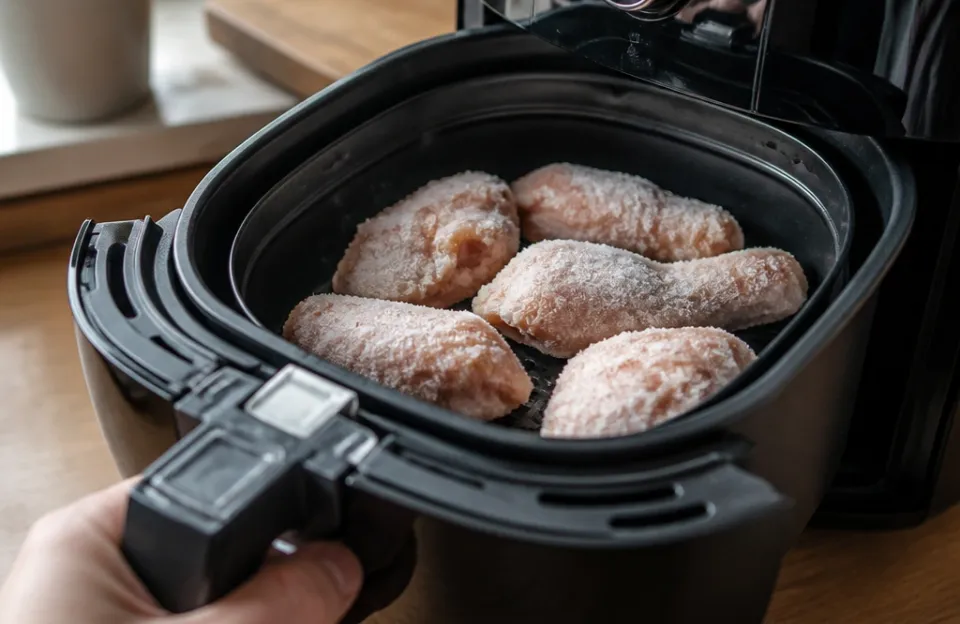
Frozen foods like tater tots, mozzarella sticks, and pre-breaded fish fillets already contain ice crystals. As they cook, that ice melts and releases its own water into the basket. Adding more water to the drawer creates an oversaturated environment.
The excess moisture pools under the basket, steaming the bottom of your food while the top tries to crisp up.
Always cook frozen convenience foods in a dry machine. Spread them out in a single layer so the melting ice evaporates quickly rather than pooling together. Shaking the basket halfway through exposes the wet bottoms to the direct airflow.
| Food Type | Add Water? | Amount | Reason |
|---|---|---|---|
| Bacon / Sausage | Yes | 2-3 tbsp | Catches grease, stops smoke |
| Chicken Breast | Yes | 1 tbsp | Prevents lean meat from drying out |
| Breaded Cutlets | No | None | Steam ruins the crispy coating |
| French Fries | No | None | Needs dry heat for browning |
| Leftover Pizza | Yes | 1 tsp on food | Rehydrates crust without making it soggy |
| Frozen Tots | No | None | Ice melt provides enough moisture |
Can You Put Water in an Air Fryer to Clean It?
People frequently ask if they can fill the basket with soapy water and run the machine to clean it, similar to a self-cleaning oven cycle. You cannot do this. Running an air fryer filled with liquid will destroy the appliance and potentially cause a fire or electrical shock.
The fan spins at high speeds. If there is a deep pool of water in the basket, the fan blades will whip that liquid upward directly into the heating coil and the motor housing. Water contacting a live electrical element causes short circuits.
Cleaning must always happen manually after the unit has cooled down completely. Remove the basket and the drawer. Wash them in the sink with warm soapy water or place them in the dishwasher if the manufacturer's manual explicitly states they are dishwasher safe.
Wipe the interior heating cavity with a damp cloth, being careful not to bend the heating coil.
For stubborn baked-on grease, soak the removable basket in hot water and dish soap for twenty minutes before scrubbing. A nylon brush removes stuck-on food without scratching the nonstick coating. Avoid steel wool or abrasive scouring pads.
Mistakes That Damage the Appliance
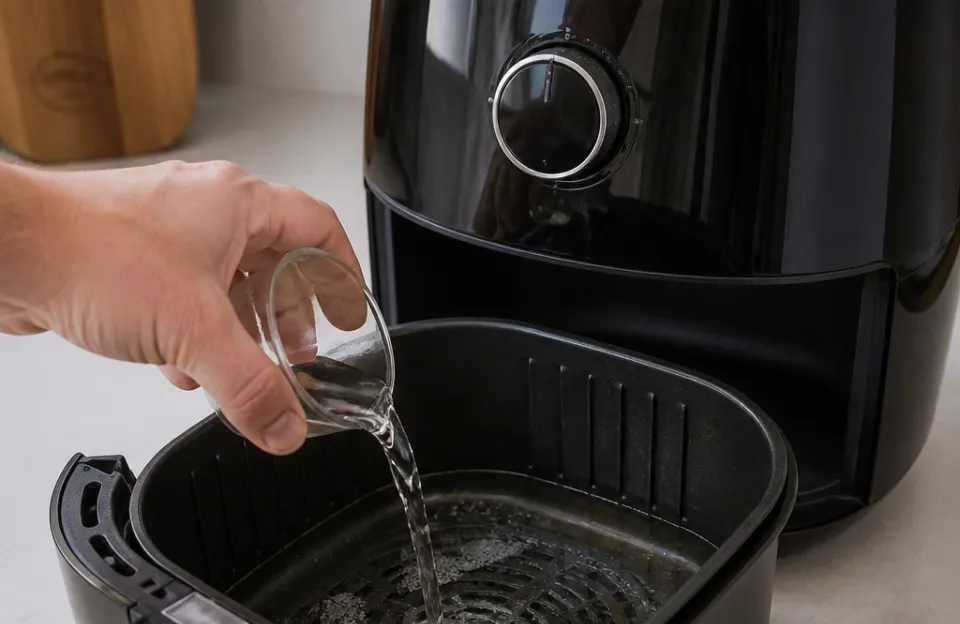
Even though adding a little water is safe, doing it incorrectly leads to broken machines or terrible meals. These errors are easy to avoid once you know what to look for.
Overfilling the bottom drawer. More water does not equal better results. If the liquid level rises high enough to touch the bottom of the perforated basket, your food sits in a puddle. It boils instead of roasting.
Stick to two or three tablespoons maximum.
Pouring water over the food mid-cook. Opening the drawer to dump cold water over hot food drops the internal temperature drastically. It also risks splashing liquid upward toward the heating element. Always add your water before you start the timer.
Using liquids other than water without caution. Some people try adding broth, wine, or marinades to the bottom drawer for flavor. Sugary liquids like teriyaki sauce or fruit juices burn rapidly at 400 degrees. They leave a sticky, carbonized mess on the base plate that is incredibly difficult to remove.
If you want to use broth, ensure it is low-sodium and sugar-free, and use even less than you would plain water.
Ignoring manufacturer guidelines. Every brand designs their units slightly differently. Some drawer-style models have a distinct fill line for liquid. Others, particularly older halogen oven styles or specific toaster-oven hybrids, may advise against any liquid at all.
Always check the user manual for your specific model. For instance, checking the specs on a popular multi-function unit shows how capacity changes the rules for liquid limits.
Splashing the heating coil. If you move the basket carelessly while there is water in the drawer, sloshing occurs. Keep movements slow and level when pulling the tray out to check on your food.
Safety Limits Set By Manufacturers
Appliance makers design air fryers to handle minor amounts of condensation and small intentional additions of liquid. However, they build these safety margins assuming the user follows basic instructions. The heating elements operate at temperatures between 300 and 400 degrees Fahrenheit.
Electrical components sitting inches above boiling water require strict boundaries.
According to general safety standards outlined by organizations like Underwriters Laboratories (UL), countertop cooking appliances must prevent liquid ingress into live electrical parts during normal operation. Normal operation includes the intentional addition of small amounts of cooking liquids to designated areas. It does not include submerging the unit or filling the cooking chamber past the basket line.
Brands like Ninja, Philips, and Cosori generally permit a few tablespoons of water in the bottom pan specifically to reduce smoking. They explicitly warn against filling the pan to the top. The distinction lies in where the water sits relative to the airflow path.
Water trapped safely beneath the basket evaporates slowly. Water introduced directly into the fan's intake path atomizes and sprays across the circuitry.
If you own a dual-zone model with two separate baskets, treat each side independently. Adding water to the left drawer does nothing for the right drawer, and overfilling one side can cause uneven heating or localized steam buildup that warps the plastic divider.
Frequently asked questions
Will putting water in the bottom ruin the heating element?
No, a few tablespoons at the bottom of the drawer will not ruin the heating element. The element sits above the food basket, far out of reach of a shallow water pool. Problems only occur if you overfill the drawer so much that boiling water splashes upward, or if you pour liquid directly onto the hot coil.
Can I use water to stop my air fryer from smoking?
Yes, this is the primary reason to add water. Two tablespoons poured into the bottom drawer before cooking fatty meats catches the dripping grease. The water prevents the fat from hitting the scorching hot metal base, which stops the smoke entirely.
Is it safe to steam vegetables by filling the basket with water?
No, you should never fill the actual cooking basket with water. Air fryers are convection ovens, not stovetop steamers. Filling the perforated basket allows water to drip directly into the electrical housing below.
Use a dedicated steamer or place a tiny amount of water in the bottom drawer for mild humidity instead.
Does adding water change the cooking time?
It rarely changes the total cooking time for most recipes. The small amount of water evaporates quickly and does not significantly lower the ambient temperature of the cooking chamber. However, if you accidentally add too much water, the excess steam will slow down the browning process, requiring you to cook the food longer to get a crispy exterior.
Can I put ice cubes in the drawer instead of liquid water?
You can, but it is less predictable. Ice cubes take time to melt, meaning the cooling effect happens gradually rather than immediately. By the time the ice melts and begins to steam, your food might already be done cooking.
Liquid water measured with a spoon gives you exact control over the moisture level from the first minute.
What happens if water touches the fan?
If water reaches the fan, it sprays outward at high speed. This forces liquid directly into the motor housing and the heating coil. This causes immediate short-circuiting, sparks, and potential permanent damage to the appliance.
Always keep liquid levels well below the lowest edge of the food basket to prevent splashing.
Before You Start Your Next Batch
You can absolutely put water in an air fryer, provided you respect the physical limits of the machine. A couple of tablespoons in the bottom drawer solves smoking issues and keeps lean proteins moist. Pouring cups of liquid into the basket destroys the appliance.
Measure carefully, keep the water below the basket line, and skip the liquid entirely when you want maximum crunch. Read the manual that came with your specific model, as drawer depths and heating element placements vary slightly between brands. Mastering this simple trick makes cooking with hot air significantly cleaner and more forgiving.