Sour or bitter espresso usually means your grind size is wrong, not that your beans are bad. Start with a medium-fine setting that feels like table salt and adjust based on how fast your shot pulls. Most home machines need a finer grind than the default factory setting to produce proper crema and balanced flavor.
Getting this right takes patience, but the payoff is huge. You will stop wasting expensive beans on undrinkable shots. This guide breaks down exactly what to look for, feel, and taste so you can fix your dial-in process today.
We focus on practical texture cues rather than confusing micron numbers since most home grinders lack precise digital readouts.
Texture Targets For Common Roast Levels
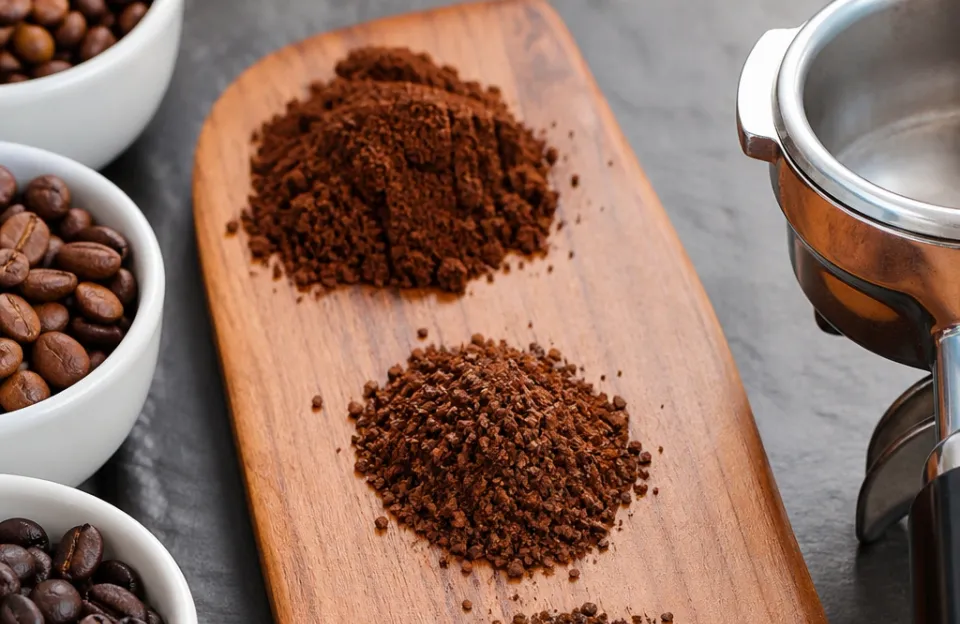
Grind size is not a single universal setting. Dark roasts are more brittle and porous than light roasts. They break apart easily and extract faster.
Using the same setting for both will ruin one of them. You must shift your baseline texture depending on what is in your hopper.
Dark roasts generally need a coarser setting. Aim for a texture closer to fine sand or powdered sugar. If you go too fine, the water channels through cracks and creates harsh, ashy bitterness.
The oils in dark beans also coat burrs faster, which can temporarily make the grind finer even if you did not change the dial. Wipe your burrs clean when switching roasts to reset this variable.
Light roasts are dense and hard. They resist extraction and often taste sour if ground too coarsely. You typically need to go finer than your dark roast setting.
Think of a texture between table salt and flour. The particles should clump slightly when pinched but still break apart easily. This increased surface area helps water penetrate the dense cell structure.
Medium roasts sit in the middle. Standard table salt is your best starting reference point here. The grains should be distinct but small.
This is where most "espresso" grinder settings land out of the box. Adjust up or down only after tasting your first shot at this baseline.
Humidity changes everything. Beans absorb moisture from the air on humid days. Wet beans grind differently and pack tighter in the basket.
You might need to coarsen your setting by one or two clicks during summer storms. Dry winter air does the opposite. Keep notes on weather patterns if you find yourself constantly chasing the perfect shot.
Reading Flow Rate And Extraction Time
Your stopwatch tells the truth about particle size. Visual flow confirms it. These two data points matter more than any number on a dial.
A standard double shot should yield about 36 grams of liquid in 25 to 30 seconds. This includes pre-infusion time if your machine has it.
Shots pulling under 20 seconds are too coarse. The water rushes through large gaps between particles. You get thin, pale crema and weak body.
The taste will be sour, salty, or lacking sweetness. Tighten your grind setting immediately. Make small adjustments.
One click can change flow time by five seconds or more.
Shots taking over 35 seconds are too fine. Water struggles to pass through compacted fines. Pressure builds excessively and causes channeling.
The stream may sputter, drip slowly, or come out unevenly from the spout. Taste is typically bitter, dry, or astringent. Coarsen the grind to open up flow paths.
Watch the stream color closely. Ideal espresso starts dark brown and transitions to a lighter tan or blonde near the end. If it stays dark black the entire pull, you are likely grinding too fine or dosing too high.
If it turns blonde within ten seconds, your grind is too coarse. Color shifts give real-time feedback before you even taste.
Blonding early does not always mean go finer. Sometimes it means your dose is too low for the basket size. Check your coffee weight before adjusting the grinder.
An 18-gram dose in a 20-gram basket leaves too much headspace. Water pools on top and extracts poorly regardless of grind size. Match your dose to your basket rating first.
Matching Grind To Machine Type
Not all espresso machines demand the same particle distribution. Understanding your types of espresso machines explained prevents endless frustration. Pressurized baskets forgive coarse grinds.
Non-pressurized baskets punish them. Know which one you have before touching the dial.
Pressurized baskets have a single tiny exit hole. They create artificial pressure mechanically. You can use pre-ground coffee or a coarser setting successfully.
The basket forces resistance regardless of particle size. Going too fine here actually chokes the machine because pressure cannot escape. Use a medium-coarse setting similar to drip coffee for these systems.
Non-pressurized baskets rely entirely on the coffee puck for resistance. They require true espresso fineness. There is no mechanical backup.
You must achieve uniform particle size to build nine bars of pressure naturally. Any boulders cause fast channels. Any fines cause clogs.
This is where quality burr grinders earn their keep.
Lever machines operate differently than pump machines. They use declining pressure profiles. Peak pressure hits early then drops.
This profile tolerates slightly finer grinds without choking. You can often grind finer on a lever than on a rotary pump machine. The decreasing pressure prevents over-extraction even with high surface area.
Experiment cautiously since lever feedback is purely tactile.
Super-automatic machines have internal calibration limits. Their built-in grinders rarely match standalone units. Factory settings tend toward coarse to prevent jams.
You may hit the finest adjustment and still pull fast shots. Accept this limitation or upgrade your grinder externally. Fighting the machine's safety parameters damages motors and wastes beans.
Grinder Mechanics That Dictate Consistency
Particle uniformity matters more than average size. Ten percent fines mixed with ninety percent boulders extracts terribly. Uniform particles extract evenly.
Blade grinders cannot achieve this. They chop randomly and create wide size distributions. Only burr grinders produce consistent espresso grounds.
Flat burrs shear beans between parallel plates. They create unimodal distributions with fewer fines. Flavor clarity improves significantly.
Sweetness and acidity separate cleanly. Flat burrs typically require more precise alignment. Misaligned flats produce worse results than well-aligned conicals.
Check manufacturer specs for tolerance ratings if buying new.
Conical burrs crush beans between angled surfaces. They produce bimodal distributions with more fines. Fines add body and traditional espresso texture.
Conicals are more forgiving of alignment errors. They handle darker roasts well without excessive bitterness. Many home favorites use conical designs for this reason.
Stepped adjustments suit beginners better than stepless ones here.
Retention plagues every grinder. Old grounds stick inside the chute and burr chamber. Your first shot uses stale coffee mixed with fresh.
Purge at least two grams before dosing. High-retention grinders need larger purges. Single-dose grinders minimize this issue but require weighing every input.
Decide whether convenience or freshness matters more for your routine.
Heat buildup alters grind size during long sessions. Friction warms metal burrs. Thermal expansion closes gaps slightly.
Shots pulled back-to-back get progressively finer. Commercial grinders have cooling fans. Home units do not.
Let your grinder rest between batches if making multiple drinks. Temperature stability equals particle stability.
Troubleshooting Sour Bitter And Weak Shots
Taste defects point directly to specific problems. Learn the language of your palate. Sourness indicates under-extraction.
Bitterness indicates over-extraction. Weakness indicates ratio or yield issues. Fix the root cause instead of guessing blindly.
Persistent sourness despite fine grinding suggests temperature problems. Water below 195°F fails to dissolve sugars and lipids. Raise brew temp before going finer.
Light roasts especially need heat. Some machines run cool by design. Preheat your portafilter and cup thoroughly.
Cold metal steals thermal energy from the brew water instantly.
Bitterness with fast flow means channeling. Water found an easy path and ignored the rest. The over-extracted channel tastes harsh while the bypassed coffee tastes sour.
You get both defects simultaneously. Improve puck prep before changing grind size. Distribute grounds evenly.
Tamp level and firm. WDT tools break up clumps that cause channels.
Weak flavor with correct timing points to low dose or high yield. You extracted properly but diluted the result. Increase coffee input by one gram.
Or reduce output by two grams. Strength and extraction are separate variables. Do not confuse thin body with under-extraction.
Measure both input and output weights every single time.
Astringency feels dry and papery on the tongue. It comes from tannins released late in extraction. This happens when fines migrate and block flow paths.
Channeling follows shortly after. Sift out ultra-fines if your grinder produces many. Or coarsen slightly and extend pre-infusion.
Gentle saturation reduces tannin mobilization.
Saltiness signals severe under-extraction. Acids extract first. Sugars come next.
Salty compounds appear in the gap between. Your shot ended before sweetness arrived. Extend yield or increase temperature.
Do not just grind finer. Saltiness often persists even at slow flows if heat is insufficient. Trust your tongue over the timer.
Maintenance Habits That Stabilize Results
Clean equipment performs predictably. Dirty equipment drifts constantly. Coffee oils oxidize and harden.
They alter burr spacing and choke screens. Weekly cleaning prevents flavor contamination and mechanical wear. Make maintenance part of your brewing ritual.
Backflush detergent weekly if your machine has a three-way valve. Blind baskets trap cleaning solution against the group head. Run cycles until water runs clear.
Soak shower screens monthly. Clogged holes cause uneven water distribution. No grind setting fixes bad dispersion.
Remove and scrub screens with cafiza or similar cleaners.
Burrs need deep cleaning quarterly. Disassemble according to manufacturer instructions. Brush away oily residue.
Inspect edges for dullness or chips. Dull burrs crush instead of cut. They generate heat and fines.
Replace worn burrs promptly. Sharp burrs maintain consistent particle geometry across thousands of doses.
Hopper beans age faster than bagged beans. Oxygen exposure degrades volatiles within hours. Fill hoppers only with what you will use that day.
Store excess in airtight containers away from light. Stale beans require finer grinding to compensate for lost CO2. Fresh beans need coarser settings.
Track bean age alongside grind adjustments.
Water hardness affects extraction chemistry. Soft water under-extracts. Hard water scales boilers and masks flavors.
Test your tap water monthly. Aim for 50-100 ppm total hardness. Use filtration or third-wave water packets if needed.
Mineral content changes how acids and sugars dissolve. Consistent water equals consistent dial-in.
Frequently Asked Questions About Espresso Grinding
Why does my grind setting change throughout the day?
Beans degas continuously after roasting. Fresh beans contain more CO2 which resists water penetration. As gas escapes over days, beans become denser and easier to extract.
You will naturally coarsen your setting as beans age. Humidity and temperature fluctuations also shift particle behavior hourly. Treat grind size as a daily variable, not a fixed number.
Can I use pre-ground coffee for espresso?
Pre-ground coffee stales within minutes of opening. Particle size is fixed and rarely matches your specific machine. You lose all ability to dial in extraction.
Pre-ground works only in pressurized baskets with limited expectations. Invest in even a budget burr grinder for meaningful improvement. Fresh grinding is non-negotiable for quality espresso.
How do I know when my burrs are worn out?
Worn burrs produce inconsistent particle sizes regardless of setting. Shots taste simultaneously sour and bitter. Adjustment dials feel loose or unresponsive.
Visible nicks or rounded edges confirm wear. Most home burrs last 500-1000 pounds of coffee. Track usage if possible.
Replacement restores clarity and consistency immediately.
Does resting time affect grind size requirements?
Yes. Beans need 5-14 days post-roast to stabilize. Too-fresh beans gush CO2 during extraction.
This creates foam that mimics crema but lacks flavor. Grind coarser initially to compensate for gas resistance. As beans rest, tighten gradually.
Peak flavor window varies by roast level. Dark roasts peak earlier than lights. Label bags with roast dates religiously.
Should I weigh beans before or after grinding?
Always weigh before grinding. Retention means output never equals input. Five grams stuck in the chute skews your ratio significantly.
Weighing after introduces guesswork about retained amount. Dose precisely into the grinder. Purge retention before each session.
Consistent input weight enables repeatable extraction. Ratio accuracy starts at the scale, not the basket.
What is WDT and why does it matter for grind size?
Weiss Distribution Technique uses thin needles to break up clumps. Clumps create density variations in the puck. Water exploits soft spots and avoids hard ones.
WDT homogenizes bed density before tamping. This allows slightly finer grinding without channeling. Skip WDT and you must grind coarser to avoid choke points.
It maximizes extraction uniformity especially with fluffy light roasts.
How does altitude impact espresso extraction?
Higher altitudes lower boiling points. Water at 5000 feet boils around 203°F versus 212°F at sea level. Lower temperatures reduce extraction efficiency.
Compensate by grinding finer or extending shot time. Pressure profiling machines help maintain solubility despite thermal loss. Altitude effects are measurable above 3000 feet.
Below that threshold, standard guidelines apply normally.
Can static electricity ruin my grind consistency?
Static causes grounds to cling to chutes and containers. Dosing becomes inaccurate. Clumping increases dramatically.
Humidify your workspace or mist beans lightly before grinding. RDT (Ross Droplet Technique) adds microscopic moisture to neutralize charge. One spray bottle spritz per dose suffices.
Avoid wetting burrs directly. Static worsens in dry climates and with plastic components.