Air fryer chicken wings become keto-friendly when you start with plain bone-in, skin-on wings and season them with zero-carb spices, oils and sauces. Uncoated wings are naturally low in carbohydrate, so the carbs come almost entirely from coatings, rubs and glazes. Pat the skin dry, cook the wings in a single layer at roughly 375 to 400°F until the skin crisps, and confirm doneness with a food thermometer reading 165°F in the thickest part.
This guide covers why wings suit a ketogenic diet, how the skin crisps without flour or starch, prep and food-safety steps, seasoning and sauce choices, starting cook times, and fixes for common texture and smoke problems.
Why Wings Fit a Ketogenic Diet So Naturally
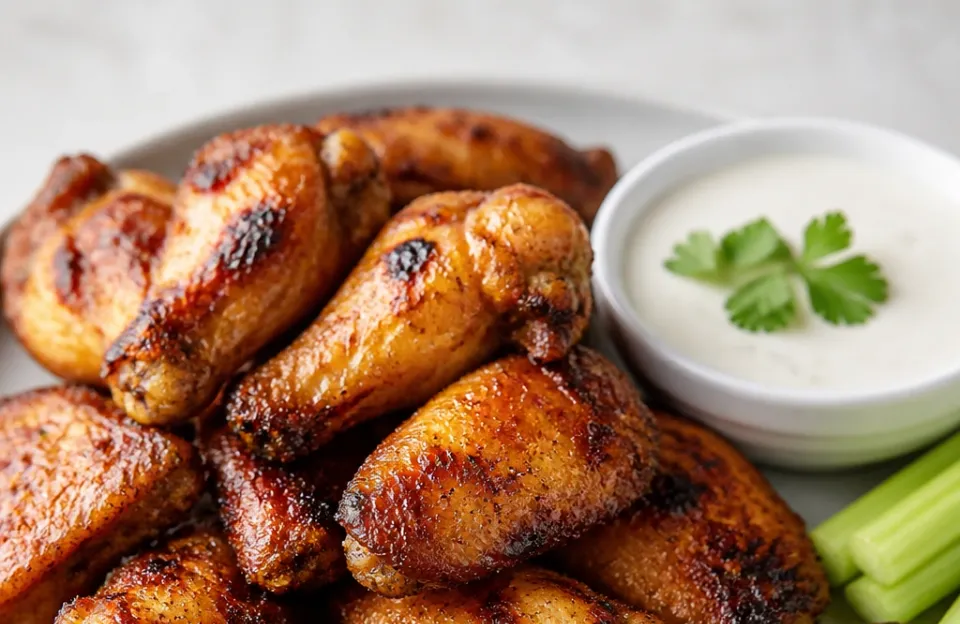
Chicken wings are mostly skin, fat and protein, with very little carbohydrate in their raw state. The exact macros vary by cut and trimming, so check a specific nutrition record or the label if you track closely. What matters most for keto is that the chicken itself is not the carb source.
The problem with traditional wings is the coating and the sauce. Restaurant deep-fried wings are often dusted in flour or cornstarch, and sweet glazes can add substantial sugar. Store-bought sauces often hide sugar and starch, so read the nutrition label before you toss the cooked wings.
Air frying removes the need for heavy breading to achieve crunch. An air fryer is essentially a countertop convection oven, and the rapid hot-air circulation helps the skin render and crisp.
How the Skin Crisps Without Flour or Starch
Crispy skin comes down to moisture removal and fat rendering. Raw chicken skin holds a lot of water, and wet skin placed into a hot basket steams before it browns. Patting the wings completely dry gives the heat a head start on browning instead of boiling off surface water.
Once the surface dries, the heat melts the fat beneath the skin. As that fat renders and drains, the skin tightens and blisters, producing the crunch people expect from fried wings. Constant air movement across each exposed surface prevents any single spot from staying damp.
Some recipes call for a light dusting of baking powder to speed browning. If you use it, check the label: some brands contain cornstarch as an anti-caking agent, which adds carbohydrate. A starch-free baking powder keeps the coating closer to zero-carb.
Tracking Macros When Eating Air Fryer Chicken Wings Keto Style
Weigh wings raw when you can, because cooking drives off water and changes the weight. Logging a cooked weight against a raw database entry overstates protein and fat.
Sauces change the math more than the chicken does. Butter, olive oil and coconut oil contain zero net carbs, while mayonnaise, mustard and hot sauce are low but not always zero. Use the per-100-gram comparisons below as a starting point and confirm the exact per-serving value on the brand label you buy.
| Condiment (approximate net carbs) | Net Carbs | Notes |
|---|---|---|
| Butter, olive oil, coconut oil | 0 g per 100 g | Keto-friendly fats |
| Mayonnaise | About 1 g per 100 g | Brand varies |
| Mustard, hot sauce | About 2 g per 100 g | Traditional Dijon about 2 g; some honey mustards 10 g or more |
| Soy sauce | About 4 g per 100 g | Small servings add little |
| Ketchup | About 26 g per 100 g | High sugar |
| Barbecue sauce | About 40 g per 100 g | High sugar |
If you want a fast temperature reading without cutting into a wing and losing juices, an optional quick-read kitchen probe can confirm doneness in seconds.
Prepping the Wings Before They Hit the Basket
Preparation largely determines whether your wings turn out crispy or soggy. Separate whole wings into flats and drumettes if they aren’t already cut, and discard the tips or save them for broth.
Wash your hands thoroughly after handling raw poultry, but skip rinsing the wings under the tap. Rinsing raw poultry splashes bacteria onto counters and nearby dishes, so go straight to drying instead.
Drying is the most important prep step. Lay the wings on paper towels and press more towels firmly on top. If you have time, leave them uncovered in the refrigerator for an hour or two so circulating cold air pulls more moisture from the skin. Drier skin crisps faster.
Keep raw and cooked wings on separate plates. Placing cooked food back on a plate that held raw poultry causes cross-contamination.
Choosing Fats and Oils That Keep Carbs at Zero
Tossing dry wings in a small amount of fat helps heat conduct and encourages even browning. Butter, olive oil and coconut oil all contain zero net carbs, so the choice comes down to flavor and how your air fryer handles heat.
Rendered animal fats such as tallow or lard also contain no carbohydrate and add deep flavor. Coconut oil works but adds a faint sweetness that can clash with savory buffalo seasoning.
Use only about one tablespoon of oil for two pounds of wings. Excess oil pools in the basket, smokes, and leaves the wings greasy instead of crisp. Toss the dried wings in a bowl until lightly coated, with no visible drips.
Dry Rubs and Seasonings Without Hidden Sugars
Store-bought spice blends often contain sugar, starch or anti-caking agents, so check the label or mix your own rub. A basic low-carb rub can include kosher salt, black pepper, garlic powder, onion powder, smoked paprika and cayenne.
Measure powdered aromatics with a light hand if you keep daily carbs very low. Garlic powder and similar seasonings carry small amounts of carbohydrate that add up across a heavy coating. When choosing condiments and blends, check for added sugar, honey, wine-based ingredients and total carbohydrate per serving.
Salting the wings about 30 minutes ahead gives the salt time to draw surface moisture out through osmosis. Wipe away any beaded liquid before the wings go into the basket.
Cooking Times and Temperatures for Maximum Crunch
Air fryers vary in wattage and basket size, so exact times differ between models. Air-fried foods generally cook in about 5 to 25 minutes at 350 to 400°F, but the safe internal temperature is always the same regardless of appliance. Treat the times below as starting points.
Preheat the air fryer, then cook at 380°F for the first 12 minutes to render the fat gently without scorching the exterior. Pull the basket out and shake it or flip each wing with tongs so the side resting on the grate also meets the airflow.
Raise the temperature to 400°F for the final 8 to 10 minutes to finish browning and build crunch. Total time usually lands between 20 and 25 minutes for standard drumettes and flats.
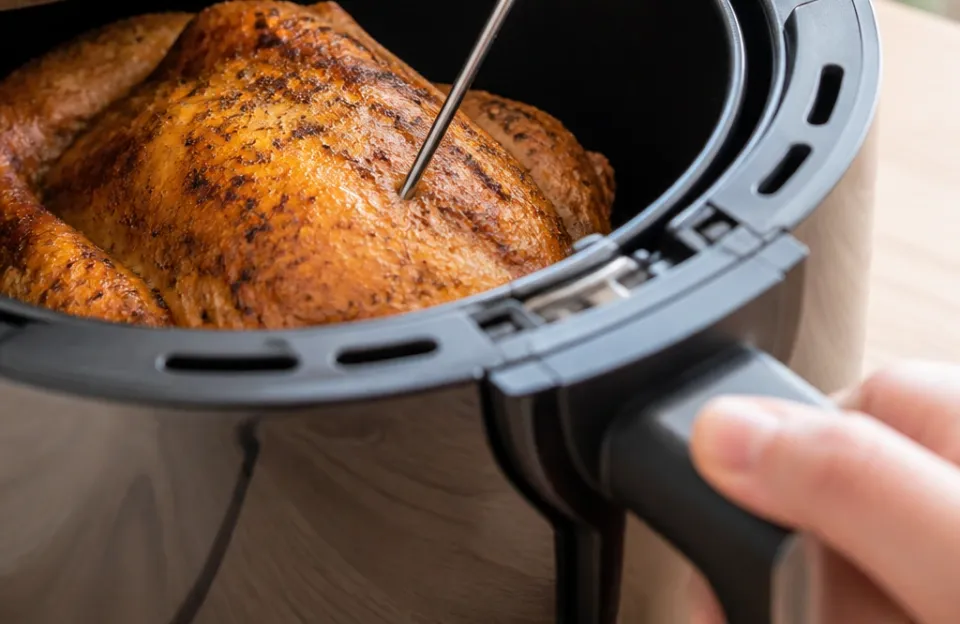
Poultry, including wings, must reach a safe minimum internal temperature of 165°F (73.9°C). Measure with a food thermometer before removing the wings from the heat source. Insert the probe into the thickest part of a drumette and avoid the bone, which conducts heat differently and can give a false high reading.
Don’t overcrowd the basket. Overcrowding prevents enough air circulation to cook food properly, and wings that touch or stack stay pale and steamed at the contact points. Cook in batches if needed; two pounds is a reasonable maximum for a standard 5-quart basket.
If you prefer monitoring without opening the basket repeatedly, an optional Bluetooth-enabled wireless thermometer lets you watch the temperature climb from outside the appliance.
Flats and drumettes differ in thickness, so start checking the thicker drumettes first and give them a few extra minutes if needed. Judge doneness by temperature, not by color or the clock.
Sauces and Dips That Won’t Break Ketosis
Sauce the wings after cooking. Wet sauce added before air frying burns and turns the skin gummy. Toss the fully cooked, crispy wings in a separate bowl right after they leave the basket so residual heat helps the sauce cling.
Classic buffalo sauce is vinegar-based hot sauce whisked into melted butter. Choose a hot sauce without added sugar. The butter adds fat that suits keto macros, and hot sauce carries only a small amount of carbohydrate.
Ranch and blue cheese dips are standard pairings, but store-bought versions sometimes contain modified food starch or sugar. Read labels closely. Homemade ranch with full-fat sour cream, mayonnaise, fresh herbs and garlic powder, or blue cheese crumbles mixed into mayonnaise with a splash of vinegar, keeps the carb count low and controlled.
Mustard, hot sauce, mayonnaise, salsa, pickles, buffalo sauce and certain barbecue sauces are common keto-friendly starting points, but always confirm the specific brand.
For Asian-inspired flavor, mix coconut aminos with sesame oil, grated ginger and a keto-friendly sweetener. Standard soy sauce is usable in small amounts, though it carries about 4 grams of net carbs per 100 grams.
What Happens When Things Go Wrong
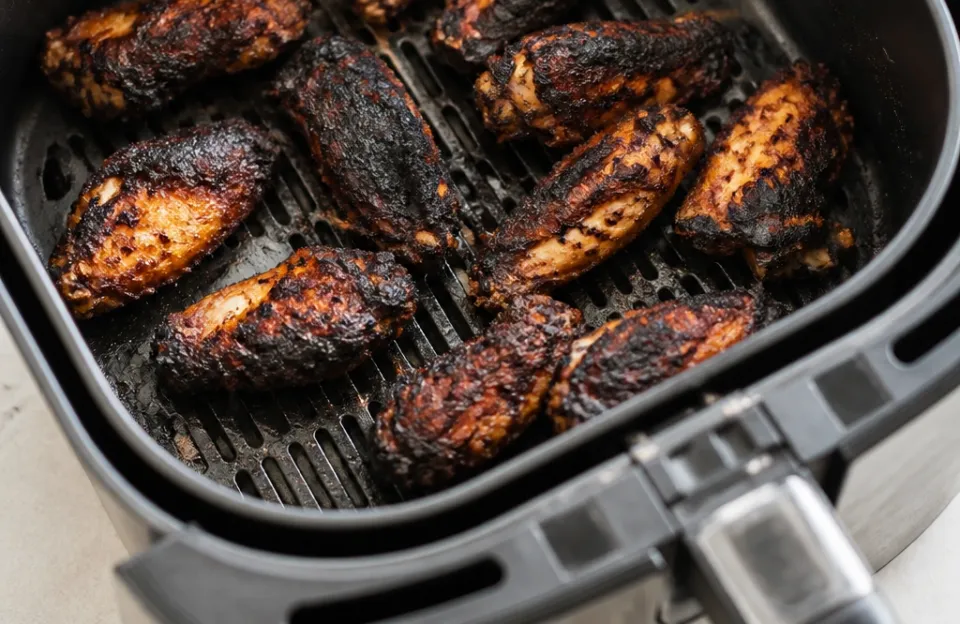
Even a simple recipe can fail if one variable shifts. Here are the most common issues and how to address them.
Smoke filling the kitchen. Wings release a lot of fat, which drips into the bottom drawer and can burn. Adding two to three tablespoons of water to the drip pan may help reduce smoke from burning grease, but not all air fryer models are designed for this. Check your manual before adding water. Empty and clean the drawer between batches.
Skin sticking to the grate. Lightly spray the grate with oil before loading the wings, or wait until the air fryer is fully preheated. Placing cold meat on a hot surface sears the proteins quickly and reduces sticking.
Rubbery texture despite long cook times. This usually traces back to moisture or overcrowding. Dry the skin more thoroughly and reduce batch size so air can circulate.
Burnt spices. Fine powders such as paprika and garlic powder scorch at high heat. Use the two-stage method, or add delicate spices during the last few minutes of cooking.
Uneven cooking. Drumettes are thicker than flats, so check them first and cook them a few minutes longer if needed. Keep pieces in a single layer so every surface meets the airflow.
Judging doneness by color. Chicken that has reached 165°F at the thickest point is safe to eat even if it still looks slightly pink. If the temperature is below 165°F, do not rely on color alone.
Keeping the appliance clean also prevents old grease from flavoring the next batch. For more no-breading methods and timing detail, see this guide to air fryer chicken wings without breading.
Edge Cases and Variations for Different Diets
Standard keto allows dairy, so butter-based buffalo sauce is fine. Strict carnivore approaches may skip plant-based spices entirely and cook the wings in tallow with coarse salt only.
People combining intermittent fasting with keto often eat wings in a condensed eating window. Wings are dense in fat and protein, so start with a moderate portion if you are newly fat-adapted.
Frozen wings work in an air fryer, but expect slightly less crunch than fresh because freezing and thawing release more water. If you use frozen wings, start them at a lower temperature to drive off ice melt, drain the liquid, pat them dry, then finish with the standard high-heat method. For a dedicated walkthrough, see crispy frozen chicken wings in the air fryer.
Bone-in versus boneless matters for carbs. Store-bought “boneless wings” are typically breaded breast-meat pieces, and the breading adds substantial carbohydrate. True keto wings should be bone-in, skin-on segments. The bone helps insulate the meat so it stays juicy while the skin crisps.
Some air fryer models include a dehydrate function. Running wings at a low temperature before turning up the heat can pull surface moisture off if you forgot to plan ahead, but treat it as a shortcut, not a substitute for thorough drying.
Frequently Asked Questions
Can I Use Baking Powder to Make Keto Air Fryer Wings Crispier?
Yes, provided the baking powder contains no cornstarch. Many brands use cornstarch to prevent clumping, which adds carbohydrate. Look for pure sodium bicarbonate or a starch-free blend, and toss a light, even coating with your dry rub.
How Many Carbs Are in a Typical Serving of Air Fryer Chicken Wings?
Plain, uncoated chicken wings cooked in an air fryer contain very little carbohydrate; for context on calories and macros, see this breakdown of air fryer chicken wings calories. The count rises only when you add sugary sauces, starchy coatings or heavy amounts of carb-containing dry spices, so calculate from your specific additions.
Is It Safe to Eat Chicken Wings If They Look Brown but Haven’t Reached 165°F?
No. Color is unreliable for poultry doneness, and browning can happen well before the interior reaches a safe temperature. Always verify with a food thermometer inserted into the thickest part of the meat, avoiding the bone.
Do I Need to Flip the Wings While They Cook?
Yes. Flipping or shaking the basket halfway through exposes all surfaces to the heating element and fan, preventing soft, steamed patches on the underside.
Can I Meal Prep These Wings for the Week?
Leftover air-fried food should be refrigerated within 2 hours. To restore crispness, reheat leftover wings in the air fryer at 375°F for a few minutes rather than in the microwave. Add sauce only after reheating.
Are Restaurant Air-Fried Wings Safe for a Keto Diet?
Restaurant wings can carry hidden carbs from starch coatings, thickeners or sweet sauces. Unless the restaurant provides a nutrition breakdown confirming no added sugars or starches, cooking them yourself gives you the most control.
Getting the Most Out of Your Next Batch
Keto air fryer chicken wings depend on controlling what touches the bird. The chicken itself already fits the diet. The variables are moisture, heat management and ingredient purity.
Dry the skin aggressively, render the fat at moderate heat, then finish with a burst of high heat. Check every spice blend and sauce label for hidden starches or sugars. Verify the internal temperature with a food thermometer rather than guessing by color. Once you dial in timing for your air fryer model, you can produce consistently crunchy, low-carb wings in under thirty minutes without a deep fryer or a macro compromise.