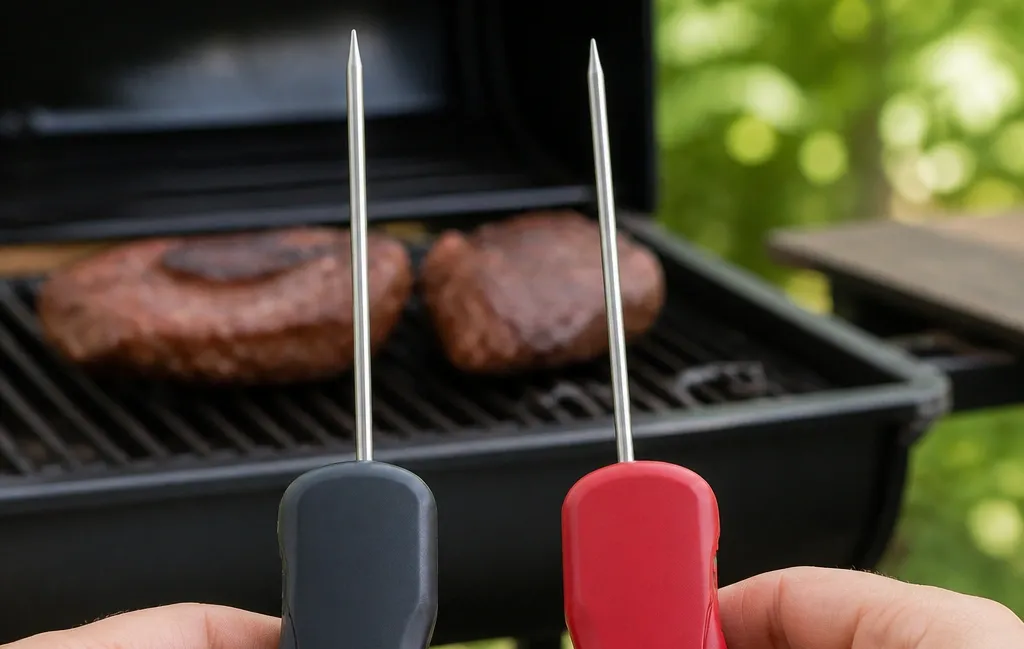
Choosing between the ThermoPro TP19 and the TP20 comes down to one fundamental question: do you want to actively check your food, or passively monitor it from another room? These two thermometers serve entirely different cooking styles. The TP19 is a rapid-response instant-read tool designed for quick checks over an open flame or stovetop. The TP20 is a dual-probe wireless system built for long smoking sessions and oven roasts where opening the lid ruins your heat retention.
In practice, neither thermometer replaces the other. A common mistake among home cooks is buying a leave-in probe when they actually need speed, or grabbing an instant-read when they really need an alarm to go off while they prep side dishes. If you primarily sear steaks, flip burgers, or roast chicken breasts, the TP19 is the superior investment. If you spend your weekends tending briskets or smoking pork shoulders, the TP20 is essential equipment. You can also read our guide on what are common thermometer calibration errors.
This guide breaks down the sensor technology, real-world durability, wireless range, and practical use cases for both models so you can buy the right tool for your specific kitchen setup.
Quick Comparison: ThermoPro TP19 vs TP20
| Feature | ThermoPro TP19 (Instant-Read) | ThermoPro TP20 (Wireless Remote) |
|---|---|---|
| Best For | Fast searing, everyday stovetop, quick grilling | Low-and-slow smoking, large roasts, oven monitoring |
| Probe Type | Folding thermocouple | Dual stainless steel leave-in probes with braided cables |
| Response Time | 2–3 seconds | 8–10 seconds |
| Accuracy Rating | ±0.9°F (±0.5°C) | ±1.8°F (±1.0°C) |
| Wireless Range | N/A (Handheld) | 300 feet (RF signal) |
| Water Resistance | IP65 rated (washable) | Not waterproof (transmitter/receiver) |
| Power Source | 1x AAA battery | 4x AAA batteries (2 per unit) |
| Typical Price | $25 – $35 | $50 – $60 |
Note: Prices fluctuate based on retailer promotions. Always verify current stock before purchasing.
ThermoPro TP19: Built for Speed and Active Grilling
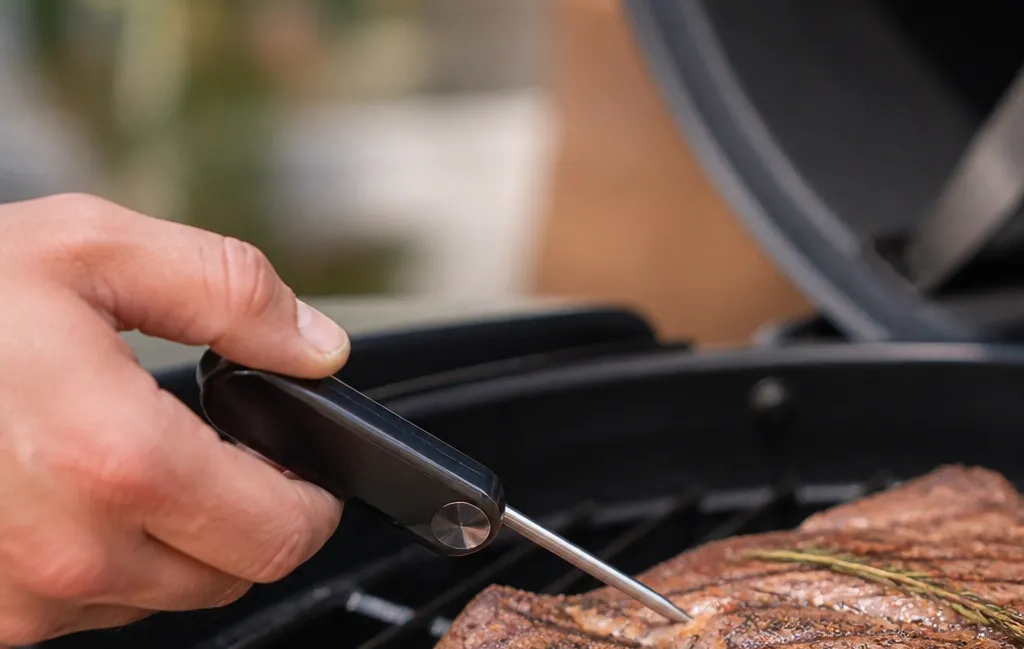
The ThermoPro TP19 is engineered for cooks who stand at the grill or stove and need immediate feedback. Its core advantage lies in the thermocouple sensor housed inside the folding probe. Unlike cheaper thermistor-based digital thermometers that slowly creep toward the final temperature, a thermocouple generates a voltage directly proportional to the temperature difference, allowing the display to lock onto a reading in roughly two to three seconds. You can also read our guide on meat thermometer app not connecting how to fix it.
This speed matters immensely when you are working over high heat. Every second the lid of your grill stays open, ambient temperatures drop rapidly. Getting in, getting a reliable number, and closing the lid preserves your cooking environment.
Key Features That Matter in Practice
- Motion-Sensing Wake and Sleep: Pick the thermometer up, and the screen turns on instantly. Set it down on the counter, and it goes to sleep. This feature alone extends the single AAA battery life by months compared to models requiring manual power toggling.
- IP65 Waterproof Rating: You can rinse the probe under running tap water to clean off grease without worrying about moisture fogging the LCD screen or shorting the internal circuitry. This makes cleanup significantly faster after handling raw poultry.
- Auto-Rotating Display: The numbers flip 180 degrees depending on how you hold it. Whether you are left-handed checking a pan from an awkward angle or holding it upside down over a deep stockpot, the readout remains legible.
- Magnetic Backing: A strong magnet built into the handle lets you stick it to the side of your grill cart, range hood, or refrigerator. In a busy kitchen, tools that don't get lost in drawers save time.
Where the TP19 Falls Short
The TP19 is strictly a spot-checking tool. You cannot leave it inside a closed oven or smoker; the plastic housing and internal electronics will melt. It also only reads one location at a time. If you are cooking multiple cuts of meat simultaneously, you have to manually check each one.
If you rely heavily on countertop appliances for weeknight dinners, pairing this fast probe with a reliable air fryer makes achieving perfectly cooked proteins effortless.
The TP19's folding design protects the thermocouple probe during storage.
ThermoPro TP20: The Standard for Smoking and Roasting
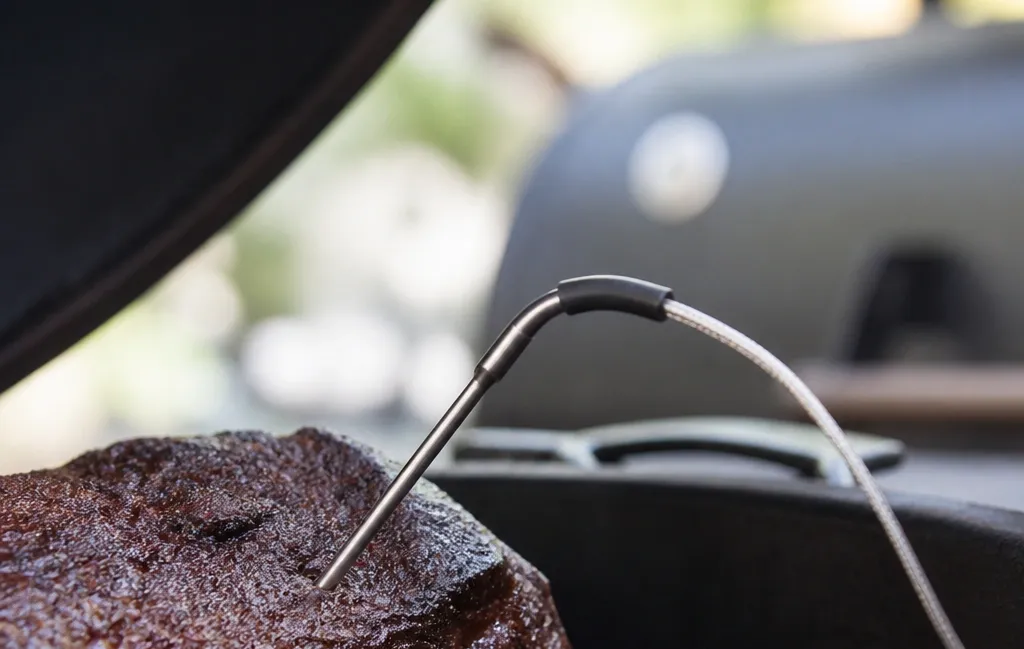
The ThermoPro TP20 solves a completely different problem. When you are smoking a twelve-pound packer brisket for fourteen hours, you cannot stand at the pit holding a thermometer. You need continuous data transmitted to a device you can carry around the house.
The TP20 system consists of a base transmitter that sits near your grill and a handheld receiver you keep in your pocket. Two separate stainless steel probes plug into the transmitter via high-heat braided cables.
Why Pitmasters Prefer Leave-In Systems
- True Hands-Free Monitoring: You set target temperatures for your meat and your pit, then walk away. The receiver alerts you when parameters are met.
- Dual-Probe Flexibility: Use one probe inserted into the thickest part of the meat to track internal progress, and clip the second probe to the grill grate to monitor ambient smoker temperature. Managing your fire is just as critical as tracking the meat, which is why understanding the differences between infrared and contact sensors helps you manage heat zones effectively.
- Dedicated RF Connection: The TP20 uses a 915 MHz radio frequency rather than Bluetooth or Wi-Fi. In practice, this means the signal punches through exterior brick walls, closed patio doors, and siding far more reliably than a smartphone app connection, maintaining stability up to 300 feet.
- Programmable Alarms: You can set exact target temperatures (e.g., alert me at 203°F for pulled pork) or establish a temperature range for your smoker (e.g., beep if the pit drops below 225°F or rises above 275°F).
The Trade-Offs of Wireless Probes
The primary drawback is response time. Because these probes are thicker and use thermistor technology designed for sustained heat exposure rather than rapid sampling, they take eight to ten seconds to register a change.
Additionally, the braided cables are durable but not invincible. A common failure point occurs when heavy grill lids pinch the wires against the metal rim. Over time, this crimping can damage the internal shielding. Furthermore, the junction where the metal probe meets the cable must never be submerged in water during cleaning, or the sensor will fail and display "LLL" or "HHH" error codes.
If you prefer modern smartphone connectivity over a dedicated RF receiver, exploring other wireless monitoring options might better suit your workflow.
The TP20 transmitter holds two probes, letting you monitor meat and ambient grill temps simultaneously.
Head-to-Head Performance Breakdown
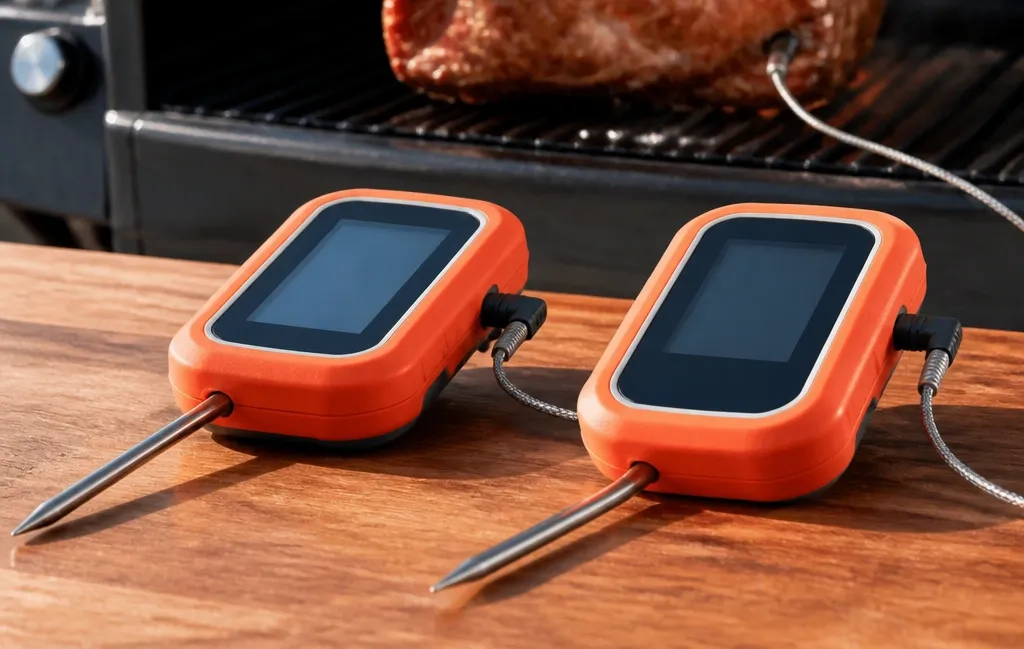
To determine which thermometer earns a spot in your drawer, we have to look past the marketing claims and evaluate how they perform across four critical categories.
Sensor Accuracy and Speed
The TP19 is objectively faster and slightly more precise. Rated at ±0.9°F accuracy, its thermocouple sensor locks onto temperatures almost instantly. The TP20 is rated at ±1.8°F accuracy.
Does this difference matter? For a medium-rare steak where the window between perfect and overcooked is only a few degrees, yes. For a pork shoulder being smoked to 203°F until the collagen renders, a one-degree variance is irrelevant. If absolute precision is your priority, ensuring you own a highly calibrated tool is the first step toward consistent results.
Durability and Maintenance
The TP19 wins the durability contest for daily abuse. Its IP65 rating means accidental drops into soapy sink water won't kill it. There are no external wires to burn, fray, or crimp.
The TP20 requires more careful maintenance. While the transmitter and receiver housings are sturdy, the probes themselves are consumable items. Exposure to extreme flare-ups or improper washing will eventually necessitate replacement probes. To ensure your readings remain trustworthy over years of use, periodically verifying your calibration prevents silent drift.
Ease of Use and Setup
Both thermometers avoid the frustration of complicated software. The TP19 requires zero setup—unfold the probe and it wakes up.
The TP20 is pre-paired out of the box. You insert the batteries, turn both units on, and they find each other automatically. Unlike smart thermometers that require firmware updates, account creation, or troubleshooting dropped Wi-Fi signals, the TP20’s dedicated RF system simply works. If you ever notice sluggish performance on either device, checking your battery status should be your first troubleshooting step.
Value for Money
At roughly half the price of the TP20, the TP19 offers exceptional value for everyday cooks. However, comparing their prices directly is slightly misleading because they are different classes of tools. The TP20 includes a transmitter, a receiver, and two probes, making its $50–$60 price tag very reasonable for a complete remote monitoring ecosystem.
How to Choose the Right Thermometer for Your Cooking Style
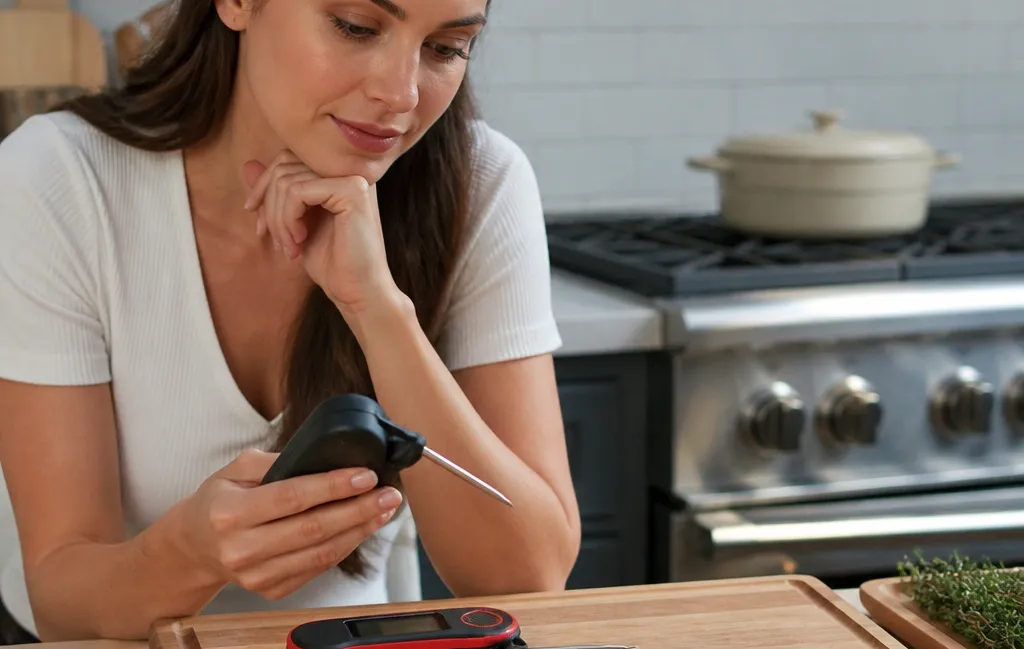
Your decision should be dictated entirely by what you cook most often. Buying the wrong type leads to frustration and wasted money.
Buy the ThermoPro TP19 If:
- You mostly cook quick meals like steaks, burgers, chicken breasts, or fish fillets.
- You use a standard gas grill, charcoal kettle, stovetop, or countertop appliances.
- You want a tool that is easy to wash and store.
- You prefer active cooking where you are standing near the heat source.
- You need a compact thermometer for camping, tailgating, or travel.
Buy the ThermoPro TP20 If:
- You own an offset smoker, pellet grill, kamado, or frequently roast large cuts in the oven.
- You cook whole turkeys, prime ribs, or pork butts that require hours of monitoring.
- You want to step away from the grill to socialize, prep sides, or watch the game without anxiety.
- You need to track ambient pit temperature alongside meat temperature.
When roasting large poultry, relying on visual cues is risky. Pairing a leave-in probe with safe internal temperature guidelines guarantees perfectly cooked birds every time.
The Hybrid Approach for Serious Cooks
Many experienced backyard pitmasters do not choose just one. They use the TP20 to track the general trajectory of a long smoke, monitoring the stall and ensuring the fire doesn't die overnight. Then, when the meat approaches its target temperature, they use the TP19 to spot-check multiple areas of the roast, probing for tenderness and ensuring there are no cold spots hiding near the bone. Owning both covers every possible scenario.
Food Safety Context: Why Precision Matters
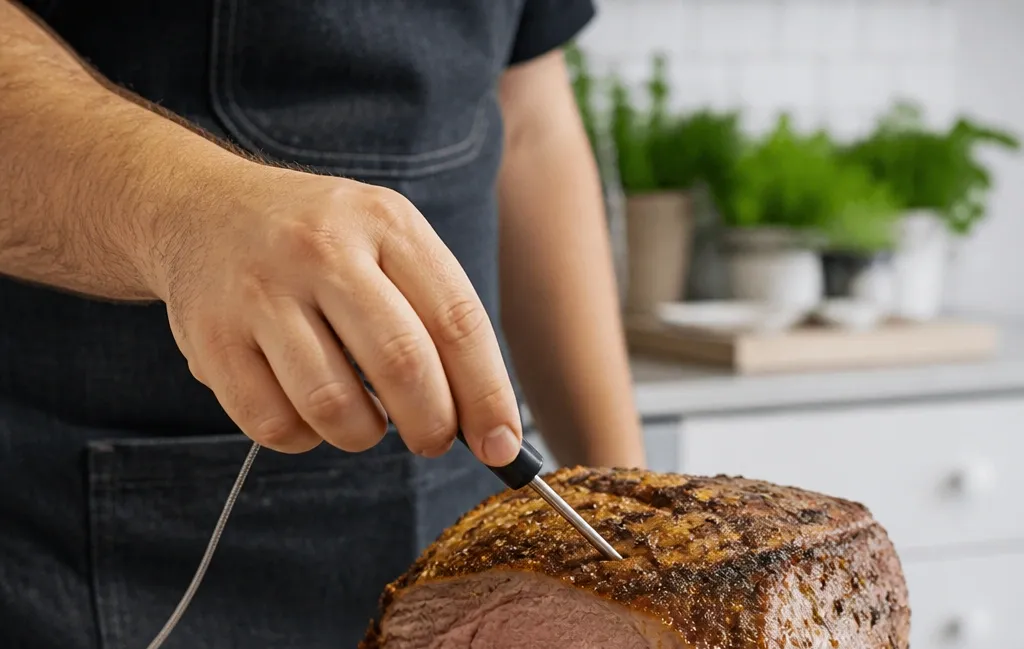
Using a reliable meat thermometer isn't just about culinary perfection; it is a critical food safety requirement. According to the USDA Food Safety and Inspection Service, color and texture are unreliable indicators of doneness. Poultry must reach a minimum internal temperature of 165°F, while whole cuts of beef, pork, and lamb require at least 145°F followed by a three-minute rest time.
The TP19’s rapid response allows you to verify these safe minimums quickly without overcooking the meat while waiting for a slow thermometer to climb. Conversely, the TP20 ensures thick, dense cuts like whole hams or stuffed turkeys reach those safe thresholds deep in the center without requiring you to repeatedly puncture the meat and release juices.
Frequently Asked Questions

Can I leave the ThermoPro TP19 inside the oven or smoker?
No. The TP19 is strictly an instant-read thermometer. Leaving it inside a closed oven, grill, or smoker will melt the plastic casing, destroy the LCD screen, and permanently ruin the internal electronics. Insert it, take your reading within ten seconds, and remove it immediately.
Is the ThermoPro TP20 truly wireless?
The communication between the base transmitter and the handheld receiver is completely wireless via radio frequency. However, the probes themselves are connected to the transmitter by physical stainless steel braided cables. If you require a system with absolutely no wires attached to the probe, you would need to look into true wireless systems like the ThermoPro TempSpike.
Which model is better for cooking a Thanksgiving turkey?
The TP20 is vastly superior for large poultry. Insert the probe into the deepest part of the thigh before placing the bird in the oven. This allows you to monitor the temperature rise continuously without opening the oven door, which causes massive heat loss and extends cooking time unpredictably.
How long do the batteries last in these thermometers?
The TP19 runs on a single AAA battery. Thanks to its motion-sensing auto-sleep function, one battery typically lasts several months of regular use. The TP20 requires four AAA batteries in total (two for the transmitter, two for the receiver). Because the TP20 remains powered on continuously during long smokes that can last 12 to 18 hours, you will replace these batteries more frequently, especially if you barbecue every weekend.
Are ThermoPro thermometers reliable long-term?
Based on extensive user feedback and spec analysis, they offer excellent reliability for their price bracket. Understanding brand reputation and build quality helps set realistic expectations for longevity compared to commercial-grade alternatives.
Can I use the TP20 probes in a deep fryer?
No. While the braided cables can withstand high ambient grill heat up to 716°F, submerging the probe-to-cable junction in boiling oil or water will cause liquid to seep into the sensor housing, resulting in permanent failure.
Final Verdict: Which Should You Buy?

The debate between the ThermoPro TP19 and TP20 isn't about which thermometer is objectively better; it is about which architecture fits your cooking style.
For the vast majority of home cooks who prepare weeknight dinners, sear steaks, and grill standard cuts of meat, the ThermoPro TP19 is the smarter purchase. It is faster, more accurate, easier to clean, and costs significantly less. It removes the guesswork from daily cooking in seconds. Grab the TP19 if you want immediate confidence every time you pull food off the heat.
However, if your passion involves smoking briskets, pulling pork, or roasting large holiday cuts where constant vigilance is required, the ThermoPro TP20 is non-negotiable equipment. Its stable RF connection, dual-probe capability, and programmable alarms transform stressful, all-day cooks into relaxed, manageable projects. Invest in the TP20 if you want to master low-and-slow barbecue without being chained to your smoker.