Choose a disposable-filter format when a verified contaminant claim is the deciding factor and you want a simple replacement routine. Choose a reusable system when sediment, grit or taste is the main problem and you will follow the manufacturer’s cleaning schedule. Neither type is automatically better, and neither substitutes for knowing what is actually in your water.
What “Reusable” Really Means
The word reusable hides two different designs, and the difference changes what you are buying.
A reusable housing is a durable body or cartridge shell that accepts replacement filter media. The housing may last years, but the filtration material inside is still a consumable. Pitchers, faucet mounts and under-sink systems often work this way.
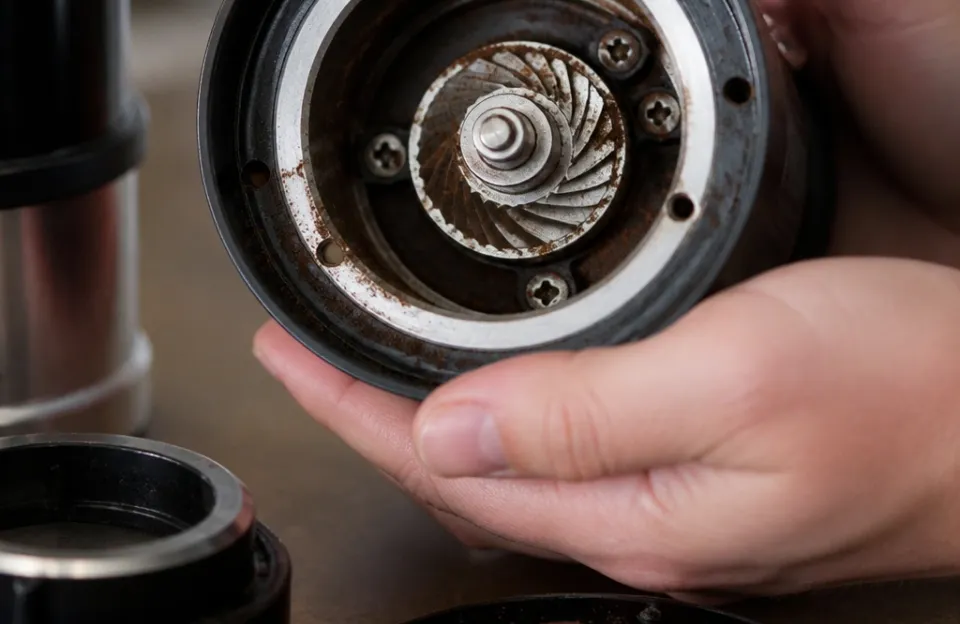
Reusable media is filter material you clean, backwash or regenerate instead of throwing away. Sediment screens, pleated elements and cleanable ceramic candles fall into this group. The material is designed to be restored, at least for a while, rather than discarded on a schedule.
Some systems combine both. A stainless gravity filter, for example, has a permanent housing and cleanable ceramic elements. Others, such as regenerable media tanks, reuse the housing but eventually replace the media itself.
That distinction matters because “reusable” describes durability, not performance. A filter being washable tells you nothing about which contaminants it removes. Certification and the model’s performance data sheet answer that question.
Start with Your Water Problem
Before comparing formats, identify what you want the filter to do. Most household purchases fall into one of four situations.
Sediment, grit or rust. Visible particles, cloudy water after heavy rain, or rust stains point to a mechanical problem. A reusable sediment filter or washable prefilter is a natural fit because it is designed to capture particles and be cleaned.
Taste and odor. Chlorine taste, mustiness or a flat flavor are aesthetic issues. Cartridges certified for taste and odor reduction address these, and some reusable carbon blocks do too.
A specific health contaminant. Lead, PFAS, nitrate, arsenic or cysts require a filter certified for that exact contaminant. You cannot assume a general “clean water” claim covers it, and you should not assume a reusable design is certified just because it looks substantial.
Hardness. Scale buildup in kettles, coffee makers and espresso machines is a mineral problem. Water softeners or ion-exchange cartridges handle it, and a standard carbon filter usually does not. If you are also keeping a brewer free of buildup, the scale issue deserves its own solution.
If you do not know what is in your water, find out first. Public water customers can read the annual quality report from their supplier; private well owners need testing.
Source Water Sets the Limits
Most certified household drinking-water filters are designed for treated municipal water unless the manufacturer specifically rates them otherwise. That assumption matters.
If you use a community water system, your supplier must deliver a Consumer Confidence Report to customers each year by July 1. The report lists the local drinking water source, regulated contaminants found, and potential health effects of contaminants detected in violation of an EPA health standard. If you did not receive one, call your water supplier or search using the EPA’s CCR lookup tool. The EPA’s consumer information page explains what each report covers and how to read it.
Private well owners carry a different burden. EPA rules that protect public drinking water systems do not apply to privately owned wells. Test your well water at least once a year for total coliform bacteria, nitrates, total dissolved solids and pH. Use a state-certified laboratory, and ask your health department to help interpret results and decide next steps. If results show harmful germs or chemicals, consider bottled water or another safe source and contact your local health or environmental department.
Microbiologically unsafe water is a separate category. Boiling kills or inactivates viruses, bacteria, protozoa and other pathogens by using heat to damage them, but boiling is an emergency measure, not a permanent household filtration strategy, and it does not remove dissolved chemicals. Do not treat a gravity ceramic filter as a substitute for a certified microbiological treatment system unless that exact model is certified for it.
How to Verify a Filter’s Claims
A certification mark is only meaningful when you match it to the exact model, the exact standard and the exact claim.
Certification is third-party verified testing of a specific product model against a defined ANSI standard protocol, not a manufacturer self-declaration. It is also standard-specific: each certification number covers only what that standard defines, and a product certified to one standard has not necessarily been tested under another.
Two standards come up most often in household shopping:
- NSF/ANSI 42 certifies reduction of substances affecting taste, odor or appearance, such as free chlorine, chloramine and particulate. It does not cover health contaminants like lead, arsenic, nitrates, bacteria, cysts, PFAS or VOCs.
- NSF/ANSI 53 certifies reduction of contaminants with documented health effects, and the specific contaminants and reduction claims are listed on the certification document rather than assumed from the standard number alone. Those claims can include lead, mercury, cadmium, asbestos, cyst reduction for Giardia and Cryptosporidium, and VOCs such as benzene and TCE.
This is why a filter described as certified to NSF 42 but not NSF 53 has not been tested for health contaminant reduction under NSF 53. The phrase “tested to NSF standards” is also not the same as certified.
Certification is not a guarantee of performance in all source water conditions, because performance varies with source water chemistry, temperature, flow rate and maintenance. Install the system as the manual specifies, change or clean the media on schedule, and check that the certification listing covers your model rather than a similar one in the same product line.
Comparison Table of Filter Formats
| Filter type | What gets reused | Best at handling | Main limitation |
|---|---|---|---|
| Disposable pitcher or faucet cartridge | Usually nothing beyond the appliance | Taste, odor, and select contaminants claimed by that cartridge | Frequent replacement and plastic waste |
| Reusable sediment filter | Mesh screen or pleated filter element | Sand, rust, grit, and visible particles | Does not usually remove dissolved contaminants |
| Cleanable ceramic filter | Ceramic filter element | Particles, plus microbes only where the specific model is certified for that use | Needs regular scrubbing and careful handling |
| Refillable or regenerable media system | Housing and sometimes media | Depends entirely on the media and system design | More upkeep and more room for user error |
| Under-sink cartridge system | Housing and fittings | Broad range of needs, based on cartridge type | Replacement cartridges remain part of ownership |
Use the table as a shortlist, not a verdict. The right row depends on your water test or CCR and on the certification printed for the model you are considering.
Disposable Cartridges Make Sense When the Claim Is Specific
Disposable formats win on verification and simplicity. A pitcher, faucet mount or under-sink cartridge with a current NSF/ANSI 53 listing for your contaminant gives you a defined claim and a defined replacement interval.
The trade-offs are ongoing purchases and plastic waste. Disposable carbon cartridges are generally not designed to be washed and reused, and washing a spent cartridge does not restore its rated capacity. The visible housing may look fine while the media inside is exhausted.
Faucet-mounted filters attach at the faucet outlet and usually require no under-sink connection, which suits kitchens where supply-line changes are prohibited, but faucet compatibility and countertop clearance must be checked.
Reusable Filters Are Strongest for Sediment and Routine Care
If your water carries grit, rust or sediment, a reusable mechanical filter is the sensible starting point. Screens, pleated elements and ceramic candles capture particles and can be cleaned, so the consumable cost and waste drop.
The catch is maintenance discipline. Cleanable media must be serviced on the schedule in the manual, and mishandling a ceramic element can crack it. Reusable media also has limits: a sediment filter is not a lead filter, and a carbon block’s capacity is still finite even when the housing survives.
For households worried about a specific health contaminant, look for a reusable-housing system whose replacement cartridge is certified for that contaminant, rather than assuming reusable media covers it.
The Real Cost Comparison Includes Time, Water and Habits
A fair comparison uses your own numbers, because cartridge prices and replacement intervals vary by model and are printed in the manual or on the packaging. Build the estimate in three steps.
- Find the rated capacity. Most manufacturers state a gallon or liter capacity per cartridge, or a replacement interval in months.
- Estimate household use. Count drinking, cooking and coffee water, not total tap use. A two-person household that mostly drinks tap water uses far less than a family filling pitchers and kettles daily.
- Divide annual gallons by rated capacity, then multiply by cartridge price. Add any prefilter or cleaning supplies.
Do the same for the reusable option: purchase price, plus replacement media and any cleaning or regeneration supplies, spread over the expected service life. Where a reusable system backwashes or rinses, add the water it consumes; that volume is model-specific and should be taken from the manual rather than assumed.
Two practical points follow. First, a cheap cartridge with a short interval can cost more per gallon than a pricier one with a long interval. Second, replacing a certified cartridge on time protects the performance you paid for, which is a cost of ownership, not an optional extra.
If you use a coffee maker or espresso machine, the filter’s effect on scale and taste will show up in your equipment too. Consistent dosing helps you judge flavor changes fairly, so keep your usual measurement routine when comparing filtered and unfiltered water.
Match the Filter to Your Kitchen
Space and plumbing decide as much as performance.
Pitchers need counter or fridge space and no installation. They suit renters and small households, with the trade-off of frequent refills and slower throughput.
Faucet mounts need a compatible faucet and clearance for the unit, but no under-sink work.
Countertop and gravity systems need counter space and manual filling, but no plumbing at all.
Under-sink systems offer the cleanest look and higher capacity. A no-drill under-sink filter can connect between the cold-water shutoff valve and the existing faucet, avoiding a new hole in the sink or countertop. No-drill does not always mean no installation work, though: you may still need to disconnect the faucet supply hose, install compatible fittings, route tubing and secure the filter inside the cabinet. Some systems stand on the cabinet floor while others need a screw-mounted bracket.
A dedicated filtered-water faucet avoids new drilling only when the sink already has an appropriately sized unused opening, such as one left by a soap dispenser or side sprayer. Before buying, confirm the cold-water shutoff valve works and has compatible connections, and check there is enough cabinet space for the filter, tubing and cartridge changes.
Renters should check the lease before any plumbing change, and anyone with an espresso machine should confirm how that machine takes in water before committing to an under-sink route.
Buying Mistakes to Avoid
Assuming reusable means certified. Washable media has no implied health claim. Check the model’s listing.
Washing and reusing disposable cartridges. Spent media is spent; cleaning the outside does not restore capacity.
Treating NSF/ANSI 42 as a health certification. It covers taste, odor and appearance, not lead, PFAS or microbes.
Buying for the wrong source water. A filter rated for treated municipal water is not a solution for microbiologically unsafe well water.
Skipping the maintenance schedule. Cleaning and replacement intervals are part of how the certified performance is achieved.
Ignoring fit. Measure the cabinet, check the faucet and read the installation requirements before ordering.
Closing Decision
Pick the maintenance routine you will actually keep, then match the certification to your water.
- Choose disposable if you have a specific contaminant concern, want a documented claim and prefer swapping a cartridge to scrubbing media. Verify the exact model against the standard that covers your contaminant.
- Choose reusable if sediment or grit is the main issue, waste reduction matters to you, and you will clean the element as directed. Do not expect it to handle dissolved contaminants it was never certified for.
- Consider the hybrid of a reusable sediment prefilter plus a certified disposable drinking-water cartridge if your water is dirty enough to clog cartridges quickly. It separates particle duty from certified treatment, at the cost of extra components and maintenance steps.
Whichever you choose, start with your CCR or a well test, and let the certification listing, not the label, make the final call.