PFAS-free air fryers use ceramic, stainless steel, or enamel coatings instead of traditional PTFE-based nonstick surfaces to prevent per- and polyfluoroalkyl substances from contacting your food. When shopping for one, you need to check the basket material, verify third-party testing claims, and understand that these coatings require slightly different care than standard nonstick finishes.
This guide covers exactly what PFAS chemicals are doing in kitchen appliances, which materials replace them safely, and how to read manufacturer labels without getting tricked by vague marketing language.
Why PFAS Chemicals End Up in Air Fryer Baskets
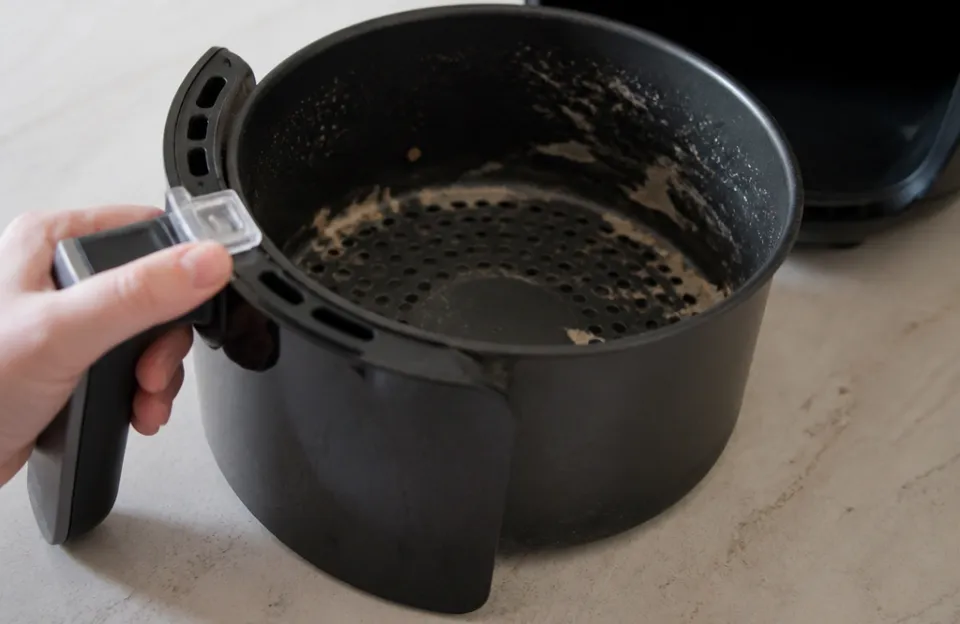
PFAS is a group of thousands of synthetic chemicals known for resisting heat, water, and grease. Manufacturers historically used PTFE (polytetrafluoroethylene) to coat air fryer baskets because it stops food from sticking at high temperatures. The problem is that PTFE belongs to the PFAS family.
When these coatings scratch or overheat, they can release particles or fumes into the cooking environment.
The U.S. Environmental Protection Agency has flagged certain PFAS compounds for their persistence in the human body and the environment. Because air fryers cook with rapid, circulating hot air, the basket surface takes constant thermal stress.
A scratched PTFE coating in a machine running at 400°F raises valid concerns for people trying to limit their household chemical exposure.
Choosing PFAS-free air fryers means selecting models where the cooking chamber and basket rely on naturally nonstick or alternative-coated materials. You trade the extreme slipperiness of PTFE for a surface that doesn't carry the same chemical baggage.
The difference between PTFE, PFOA, and PFAS labels
Marketing language around air fryer coatings gets confusing fast. PFOA (perfluorooctanoic acid) was a processing aid used to make PTFE. Most manufacturers phased out PFOA years ago due to regulatory pressure.
So when a box says "PFOA-free," it might still contain a PTFE coating, which is still a PFAS chemical.
To avoid PFAS entirely, you have to look past the PFOA claim. Read the fine print for phrases like "PTFE-free" or "PFAS-free." If the brand only mentions PFOA, assume the basket uses a standard fluoropolymer coating.
Materials Used in PFAS-Free Air Fryers
Manufacturers use three main materials to build non-toxic baskets and cooking chambers. Each behaves differently under heat and requires specific maintenance habits. Knowing how they work helps you pick the right one for your cooking style.
If you routinely prepare things like crispy batch-cooked poultry, the basket material directly affects how much oil you need and how easily the skin releases.
| Material | Heat Tolerance | Nonstick Level | Durability | Maintenance Needs |
|---|---|---|---|---|
| Ceramic Coating | Up to 500°F | Moderate | Prone to chipping if dropped | Hand wash only, soft sponges |
| Stainless Steel | Over 800°F | Low (requires oil) | Very high | Dishwasher safe, scrubbing allowed |
| Enameled Metal | Up to 500°F | Moderate to High | High if not struck hard | Hand wash recommended |
Ceramic-coated baskets
Ceramic coatings use a silica-based sol-gel process to create a smooth surface over an aluminum or steel base. They don't contain carbon-fluorine bonds, meaning they are completely outside the PFAS category. These coatings handle typical air frying temperatures well, usually staying stable up to 500°F.
The drawback is longevity. Ceramic coatings lose their nonstick properties faster than PTFE if you use aerosol cooking sprays. The propellants in those sprays leave a residue that bakes onto the ceramic, creating a sticky film that ruins the surface.
You also need to avoid metal utensils. Even a small scratch exposes the metal underneath, which can lead to uneven cooking or rust.
Uncoated stainless steel interiors
Some brands skip coatings entirely and build the basket or crisper plate from bare stainless steel. This is the most durable option available. Stainless steel won't chip, peel, or off-gas at any temperature an air fryer can reach.
It's also fully dishwasher safe.
The tradeoff is stickiness. Stainless steel doesn't repel food on its own. You have to toss your ingredients in a light layer of oil before cooking.
For foods with heavy batters or wet marinades, sticking is almost guaranteed unless you use a parchment liner. However, if you're just tossing root vegetables in oil to figure out the right roasting time, bare stainless steel works perfectly and lasts indefinitely.
Enameled and glass options
Porcelain enamel fuses glass particles to a metal base at extremely high heat. The result is a smooth, inert surface that resists sticking better than bare steel but lacks the fragility of ceramic sol-gel coatings. Enamel handles acidic foods well and doesn't react with tomatoes or citrus glazes.
Glass baskets are a newer entry. Brands like Ninja have introduced borosilicate glass air fryer vessels. Glass is inherently PFAS-free, completely inert, and lets you watch the food brown without opening the drawer.
Glass is heavier than metal baskets, though, and dropping it on a tile floor will break it. It also retains heat longer, which changes how you handle resting times. We looked at glass-basket designs recently and found the visibility factor genuinely helpful for preventing overcooked edges.
What to Look for When Shopping for PFAS-Free Air Fryers
Finding a truly safe model requires ignoring the bold text on the front of the box and reading the specifications sheet. Here are the concrete factors that separate a legitimate PFAS-free appliance from a greenwashed one.
Third-party testing certifications
A brand claiming "non-toxic" means nothing without proof. Look for testing marks from independent labs. Certifications like California Proposition 65 compliance show the product was tested for specific harmful chemicals.
Some European brands carry LFGB certification, which tests food-contact materials against strict German safety standards that exceed basic FDA requirements.
If a manufacturer states their ceramic coating is PFAS-free, check whether they name the testing laboratory or link to a certificate. Vague promises on an Amazon listing aren't enough. Reputable brands publish their material safety data or clearly state the exact coating chemistry.
Removable vs. fixed cooking chambers
Air fryers come in two main designs: basket-style (drawer pulls out) and oven-style (door opens like a toaster oven). Basket styles almost always use coated metals to keep food from welding to the mesh. Oven-style air fryers often use uncoated stainless steel interiors with wire racks.
If avoiding PFAS is your primary goal, oven-style air fryers give you more options. Bare stainless steel walls and removable wire racks eliminate the need for nonstick coatings entirely. Basket-style models can be PFAS-free, but you must verify the basket material carefully, as ceramic-coated baskets cost more to manufacture and cheaper brands sometimes cut corners.
Heating element placement and airflow
PFAS-free coatings behave differently under direct radiant heat. Ceramic coatings degrade faster if the heating element sits too close to the basket surface without adequate airflow buffering. Look for models where the heating coil is recessed or shielded by a baffle plate.
Good air circulation distributes heat evenly, preventing localized hot spots that burn out ceramic or enamel finishes prematurely.
This matters especially when cooking dense items. Getting the timing right on thick cuts requires steady, even heat. Hot spots cause food to stick aggressively to ceramic surfaces, forcing you to scrape harder and accelerating wear.
Warranty terms covering the coating
Standard air fryer warranties cover electrical components for one year. But the coating is usually classified as a "wear item" and excluded. If you buy a ceramic-coated PFAS-free model, check whether the warranty explicitly covers premature peeling or chipping under normal use.
A brand confident in its non-toxic coating will back it up. If the warranty document specifically excludes the basket surface after 30 days, expect to replace the basket frequently.
Maintaining Non-Toxic Coatings So They Last
Buying a PFAS-free air fryer is only half the task. Keeping the alternative coating intact requires changing a few deeply ingrained kitchen habits. Standard nonstick pans trained us to be lazy; ceramic and stainless steel demand a bit more attention.
Never use aerosol cooking spray. The lecithin and propellants build up a carbonized layer on ceramic that soap cannot remove. Use a pump mister filled with pure avocado or olive oil, or brush oil directly onto the food.
Wash the basket while it is still warm, never scalding hot. Plunging a hot ceramic basket into cold water causes thermal shock, which creates micro-fractures in the coating. Let it cool until you can touch it comfortably, then wash with warm water and a soft sponge.
Avoid abrasive scouring pads entirely.
For stainless steel baskets, soaking is your best friend. If proteins bake onto the bare metal, fill the basket with hot water and a drop of dish soap. Let it sit for twenty minutes.
The residue will lift without aggressive scrubbing. If you prefer using liners to protect the basket during messy cooks, we've covered safe baking methods where parchment prevents sticking without blocking the necessary airflow.
Common Misconceptions About PFAS-Free Air Fryers
People repeat a lot of bad advice about non-toxic cookware online. Clearing up these myths saves you money and frustration.
- "PFOA-free means PFAS-free." As explained earlier, PFOA is just one chemical used to make PTFE. A PFOA-free basket likely still contains PTFE, which is a PFAS substance. Always look for PTFE-free or PFAS-free specifically.
- "Ceramic coatings last forever." They don't. Even with perfect care, sol-gel ceramic coatings slowly lose their slickness over one to three years of regular use. They are safer, but they are consumable parts.
- "PFAS-free means you don't need oil." Only PTFE provides that extreme, zero-oil release. Ceramic helps, but you still need a light fat coating for most foods. Stainless steel absolutely requires oil or a liner to prevent sticking.
- "All nonstick alternatives are equal." Enamel, ceramic, and bare steel have vastly different heat tolerances, weights, and cleaning rules. Treating them interchangeably leads to ruined baskets.
- "Air fryers off-gas constantly." Intact PTFE coatings are generally stable below 500°F. The risk spikes when the coating is scratched or the machine malfunctions and overheats. PFAS-free options remove this specific failure mode entirely.
Frequently asked questions
Are all ceramic-coated air fryers completely free of PFAS?
Most genuine ceramic coatings use a silica-based formula that contains no PFAS chemicals. However, some budget manufacturers apply a thin ceramic layer over a traditional PTFE base to market the product as "ceramic." Check the specifications to confirm the coating is 100% sol-gel ceramic or explicitly labeled PTFE-free.
Do PFAS-free air fryers cook food differently than standard ones?
The cooking mechanism relies on a fan and a heating element, so the core process is identical. The difference lies in food release. Without PTFE, foods with high sugar content or wet batters stick more easily.
You may need to adjust your oil usage or rely on perforated parchment liners for delicate items.
Is stainless steel better than ceramic for avoiding toxic coatings?
Stainless steel is the safest bet because it has no coating to degrade, chip, or off-gas. It is virtually indestructible under normal kitchen conditions. The tradeoff is that food sticks to bare steel much more readily than to ceramic, requiring more active management with oils and preheating.
How do I know if my current air fryer contains PFAS?
Check the user manual or the manufacturer's website for the basket material. If it says "nonstick coating" without specifying ceramic, enamel, or PTFE-free status, it almost certainly uses a fluoropolymer. You can also contact the brand's customer service directly and ask if the coating contains PTFE.
Can I put a ceramic-coated PFAS-free basket in the dishwasher?
You shouldn't. Dishwasher detergents are highly alkaline and abrasive. The intense water jets and harsh chemicals strip the ceramic coating down rapidly, causing it to dull and lose its nonstick properties within weeks.
Hand washing with mild soap preserves the surface significantly longer.
Does the outer plastic housing of an air fryer contain PFAS?
Generally, no. PFAS chemicals are used for their nonstick and heat-resistant properties on cooking surfaces, not typically in exterior plastic housings. The concern centers entirely on the interior basket, crisper plate, and any surfaces directly exposed to heat and food.
Choosing the Right Surface for Your Kitchen
Picking between ceramic, stainless steel, and enamel comes down to how you actually cook. If you want maximum durability and don't mind tossing your vegetables in a little extra oil, bare stainless steel is the most reliable path. You'll never worry about a coating flaking off into your dinner.
If you prefer easy cleanup and mostly cook dry-rubbed meats or frozen foods, a high-quality ceramic coating gives you a good balance of convenience and safety. Just commit to hand washing and throwing away your aerosol cooking sprays.
Reading the fine print on PFAS-free air fryers takes a few extra minutes in the store or online. Look for explicit PTFE-free statements, check the warranty coverage on the basket itself, and match the material to your daily cooking habits. That upfront effort keeps unwanted chemicals out of your meals and stops you from replacing a degraded basket six months later.