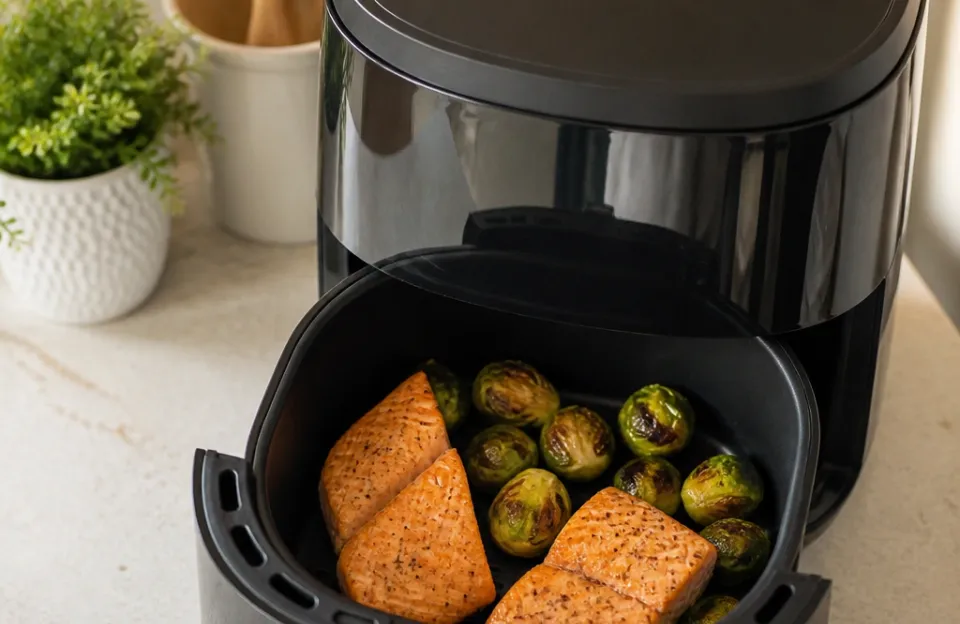
Cooking thawed salmon in an air fryer is one of the most reliable ways to get a crisp exterior and a tender, flaky interior without turning on your oven. For most standard salmon fillets, you should aim for 7 to 10 minutes at 400°F (200°C). Because air fryers circulate hot air with much higher efficiency than traditional convection or conventional ovens, the process is fast and requires very little active monitoring.
The exact timing often depends on the thickness of the fish, your specific air fryer model, and how you prefer your salmon cooked. Getting the texture right means focusing on internal temperature rather than just the clock.
The Factors That Influence Your Cooking Time
Cooking thawed salmon in an air fryer is rarely a one-size-fits-all calculation. While the 7 to 10-minute window is a safe baseline, several physical variables determine exactly how long your fillet needs to sit in the basket.
The most significant factor is thickness. A thin tail piece of salmon will reach the target temperature significantly faster than a thick, center-cut fillet. When you buy salmon at a grocery store or fish market, the height of the fish can vary wildly even within the same package.
You should always group fillets of similar thickness together in the air fryer basket to ensure they finish at the same time.
Your starting temperature also matters. If your salmon has been sitting on the counter for 15 minutes before going into the fryer, it will cook faster than a fillet pulled straight from the refrigerator. Even at 38°F, the temperature of the fish affects the total cook time by a minute or two.
Always keep your fish refrigerated until the moment you are ready to season and cook.
Finally, air circulation plays a role. If you crowd your air fryer basket, the air cannot move around the fish efficiently. This leads to uneven cooking where the top might look seared while the center remains raw.
Always leave at least an inch of space between fillets so the heat can penetrate all sides equally.
How to Determine When Salmon Is Finished
The most accurate way to judge if your fish is done is by checking the internal temperature. The U.S. Food and Drug Administration recommends an internal temperature of 145°F for finfish.
This is the temperature at which the protein is fully opaque and safely cooked.
To get this reading, insert a digital meat thermometer into the thickest part of the fillet. If you prefer your salmon slightly more translucent or "medium-rare" in the center, many cooks pull the fish at 130°F to 135°F and let it rest for three minutes. During that resting period, the residual heat will continue to cook the fish, bringing it closer to the final desired texture.
If you don't have a thermometer, use the fork test. Take a fork and gently press it into the thickest part of the salmon. If the flesh flakes easily along the natural white lines of the muscle, it is ready.
If the fish feels firm, rubbery, or refuses to separate, it needs another minute or two. If it feels mushy or resists flaking because it is still translucent, it is likely undercooked.
Setting Up Your Air Fryer for Success
Preparation is the key to getting a restaurant-quality sear on your salmon. Start by patting the fillets completely dry with paper towels. Moisture is the enemy of a good crust.
If the surface of the fish is wet, it will steam rather than brown, leading to a pale, unappetizing color.
Once the surface is dry, apply a light coating of oil. Avocado oil, olive oil, or even a light brush of melted butter works well. Seasoning should be simple; kosher salt and cracked black pepper are often enough, though a touch of garlic powder or smoked paprika can add depth.
Preheating the air fryer is another common point of debate. While many modern air fryers reach temperature in under three minutes, preheating ensures that the moment the cold fish hits the basket, the searing process begins. If you put cold salmon into a cold air fryer, you increase the risk of the fish sticking to the tray.
If your model doesn't have a specific preheat button, just run it empty at 400°F for three minutes. Once hot, place the salmon skin-side down on a piece of parchment paper or directly on the lightly oiled basket grate. Skin-side down is usually the best approach as it protects the delicate flesh from direct contact with the heating element or the grate.
Cooking Time and Temperature Reference Chart
The following guide provides a baseline for different thicknesses and levels of doneness. Use these as a starting point, but always verify with a thermometer for the best results.
| Fillet Thickness | Temp Setting | Cook Time (Est.) | Target Internal Temp |
|---|---|---|---|
| 1 inch (Thin) | 400°F | 7–8 minutes | 145°F |
| 1.5 inches (Medium) | 400°F | 9–10 minutes | 145°F |
| 2 inches (Thick) | 375°F | 12–14 minutes | 145°F |
| Medium-Rare Preference | 400°F | 6–7 minutes | 130°F–135°F |
The reason for lowering the temperature to 375°F for very thick cuts is to prevent the outside from drying out or burning before the middle of the fish has a chance to cook through. Thick fillets are prone to a "hot shell" effect, where the surface cooks rapidly while the center stays cold. Lowering the heat gives the thermal energy more time to migrate toward the center of the fillet.
Managing the Skin: To Leave It or Remove It?
Whether you cook the skin on or off is a matter of personal preference, but it does change how you should handle the air fryer basket. Cooking with the skin on acts as a barrier, protecting the bottom of the salmon from direct heat. It often makes the fish easier to lift out of the basket because the skin holds the structure of the fillet together.
If you enjoy crispy skin, ensure the skin is thoroughly patted dry and lightly brushed with oil. Place it directly on the basket grate, skin-side down, without parchment paper. The perforations in the air fryer basket allow the air to circulate underneath, which is necessary for the skin to crisp up properly.
If you use parchment paper, the skin will stay soft and somewhat soggy.
If you don't like skin, simply remove it with a sharp chef's knife before seasoning. When cooking skinless salmon, you must be more careful with handling. The flesh will stick to the metal grate much more easily than skin will.
In this case, a light brushing of the grate with oil or using a small piece of perforated parchment paper can save the fillet from falling apart when you try to lift it out.
How to Handle Frozen Salmon That Has Just Thawed
When salmon has been frozen and then thawed, the texture of the fish is slightly more delicate than fresh, never-frozen fish. The ice crystals that form during the freezing process can break down some of the cellular structure.
Because of this, you should avoid aggressive seasoning rubs that contain a high amount of salt an hour before cooking. Salt draws moisture out of the protein through osmosis. If you salt the salmon too far in advance, you will pull too much water to the surface, which will result in a mushy texture.
Instead, season the fish immediately before it goes into the air fryer.
Also, be gentle when moving thawed salmon. If it was frozen for a long time, it might be more prone to splitting. Use a wide spatula to transfer the fillets rather than tongs.
Tongs can pierce the flesh of the salmon, and because the muscle fibers are already slightly weakened from the thaw, they might break apart during the transfer.
Common Mistakes to Avoid
Cooking salmon is simple, but small errors can result in dry, flavorless fish. The most common mistake is overcooking. Because air fryers are so efficient, the difference between "perfectly cooked" and "dry" is often less than 60 seconds.
Always set your timer for the lower end of the recommended range and check the fish early.
Another issue is the misuse of foil or heavy liners. Some people line their air fryer baskets with large pieces of aluminum foil to make cleanup easier. If the foil covers too much of the bottom of the basket, you block the airflow.
The air fryer works by convection; if you disrupt the path of the air, the top of your salmon will cook, but the bottom will remain raw or undercooked. If you must use a liner, use perforated parchment paper designed specifically for air fryers.
Not resting the fish is a mistake that many home cooks make. When you take the salmon out of the air fryer, the internal juices are still concentrated in the center of the heat. If you cut into the fish immediately, those juices will run out onto your plate, leaving the fish dry.
Let the salmon rest on a cutting board or your serving plate for at least three to five minutes. This allows the juices to redistribute throughout the fillet, ensuring every bite is moist.
Troubleshooting Your Cooking Process
If you find that your salmon is cooking unevenly, look at how you are loading the basket. Air fryers are essentially high-velocity ovens. If you place a large fillet right in the middle, it might block the air from hitting other parts of the food.
If you are cooking multiple fillets, arrange them in a single layer with space between them. If you cannot fit them in a single layer, you are better off cooking in batches rather than stacking the fish.
If the salmon is browning too quickly, your temperature might be too high for the thickness of the fillet. If the edges are getting dark and crispy but the inside is still cold, reduce your heat to 375°F for the next batch. Conversely, if the salmon looks pale and dry at the end of the recommended time, your air fryer might run slightly cooler than the dial suggests.
Increase your temperature to 410°F or add one to two minutes to the cook time.
When using glazes or marinades, wait until the final two minutes of cooking to apply them. Sugar-based glazes, like those made with teriyaki, honey, or brown sugar, will burn very quickly in the high-heat environment of an air fryer. Brush the glaze on near the end so it caramelizes without turning black and bitter.
Cleaning and Maintenance for Better Results
A clean air fryer basket is essential for consistent results. If your basket has leftover grease from previous meals, that grease will smoke when it heats up, imparting a burnt flavor to your salmon. Before cooking, ensure the basket is clean.
The grate inside the basket is particularly important. If there is old carbonized food stuck to the grate, the salmon will stick to those spots. If you find your fish is sticking consistently, it may be time to deep-clean the grate with a degreasing dish soap or a soak in warm, soapy water.
Keeping the airflow vents of the air fryer clear of debris is also important. If the fan or the intake vents are clogged with dust or grease, the unit will not be able to circulate air at the speed necessary to cook the fish evenly.
When to Adjust for Different Types of Salmon
Not all salmon is the same. Atlantic salmon, which is often farm-raised, has a higher fat content than wild-caught Sockeye or King salmon. This extra fat makes it more forgiving; it is harder to dry out Atlantic salmon because the intramuscular fat acts as a buffer.
Wild salmon is leaner and more delicate. It can go from perfect to dry in a matter of seconds. If you are cooking wild-caught salmon, keep a very close eye on it.
Check the internal temperature a full minute or two before you would check a piece of farmed Atlantic salmon. Because wild salmon lacks that extra layer of fat, it also benefits more from a quick brush of oil or a small pat of butter on top before cooking.
Thickness also varies by species. Sockeye fillets are generally thinner and require less time. A thick center-cut of farmed Atlantic salmon can handle the full 10 minutes at 400°F without issue, whereas a piece of Sockeye might be overcooked at 8 minutes.
Always adjust your timing based on the appearance and the specific type of salmon you are working with.
Frequently Asked Questions
Is it safe to cook salmon from frozen in an air fryer?
You can cook salmon from frozen, but the results are generally inferior to thawing the fish first. When you cook from frozen, the outside of the fish often becomes overcooked or burnt before the interior has thawed and reached a safe temperature. It is always better to thaw the salmon in the refrigerator overnight.
If you are in a rush, you can place the vacuum-sealed fish in a bowl of cold water for 30 minutes, but it is best to cook it immediately after that.
Do I need to flip the salmon halfway through?
For most air fryer models, you do not need to flip the salmon. The air circulates around the top and sides of the basket, cooking the fish evenly. If you have an air fryer that has a bottom heating element, you might want to flip it once halfway through, but for the majority of countertop units, flipping often causes the fillet to break apart.
It is best to leave it undisturbed so it maintains its shape.
Can I put seasonings on the salmon before it goes in the air fryer?
Yes, but keep it simple. Dry seasonings like salt, pepper, garlic powder, onion powder, and dried herbs work perfectly. Avoid heavy, wet marinades until the last few minutes of cooking.
If you use a wet marinade for the entire duration, the excess moisture will steam the fish rather than allowing it to crisp, and any sugar in the marinade will likely burn due to the intense fan-driven heat.
How do I stop the salmon from sticking to the air fryer basket?
The best way to prevent sticking is to preheat the basket and ensure the grate is clean. If you are worried about sticking, lightly oil the grate with a high-smoke-point oil like avocado or grapeseed oil before adding the fish. You can also use perforated parchment paper liners specifically made for air fryers.
These liners have holes that allow the air to circulate, which is crucial for even cooking.
Can I cook other vegetables at the same time as the salmon?
You can, provided the vegetables have a similar cook time. Asparagus and zucchini slices cook very quickly and work well alongside salmon. Root vegetables like potatoes or carrots will take much longer to cook, so they will not be finished at the same time as the fish.
If you want to cook a full meal, start the denser vegetables first, then add the salmon to the basket once the vegetables are halfway done.
The Bottom Line
Cooking thawed salmon in an air fryer is a straightforward process that relies on heat, timing, and a bit of attention to detail. By aiming for a temperature of 400°F and a window of 7 to 10 minutes, you can achieve a consistent result. Remember that thickness dictates the time, and a digital thermometer is your best tool for ensuring safety and quality.
Whether you prefer your skin crispy or prefer to remove it entirely, the air fryer's ability to circulate hot air makes it one of the most effective tools in your kitchen for preparing fish. Keep your preparation simple, handle the fillets gently, and let the fish rest for a few minutes before serving to ensure the best possible texture.