For boneless pork chops about 1 inch thick, set your Ninja air fryer to 380°F to 400°F and cook for roughly 10 to 14 minutes, flipping halfway through. Thicker or bone-in chops need more time, and thin cutlets need less. The clock is only a starting point: the reliable doneness test is a food thermometer reading 145°F, followed by a three-minute rest.
That single rule resolves most of the confusion around air-fried pork. Times vary by thickness, bone, starting temperature, batch size and the specific Ninja model, so use the ranges below as a plan and the thermometer as the decision.
Why Thickness, Bone, and Model Change Cook Time
Air fryers cook by moving hot air quickly around the food, so the distance heat must travel to the center matters more than almost anything else. A 1-inch boneless chop and a 1½-inch bone-in chop cannot finish in the same window.
Bone-in chops also behave a little differently. The bone slows heat transfer through that section of meat, and it complicates thermometer placement because a probe touching bone can give a misleading reading. One recipe source puts the practical difference plainly: bone-in versus boneless does not change cook time dramatically on its own, but thickness shifts it slightly.
Ninja models differ in wattage, basket size and heating element design, and no verified model-by-model comparison was available for this guide. The practical takeaway is to expect your own air fryer to run somewhat faster or slower than the ranges below, especially in a large dual-basket unit cooking a small batch or a compact model packed full.
Thickness-Based Timing Reference
Use these as starting points at 400°F, then confirm with a thermometer. Treat them as one continuous scale rather than fixed rules, since a 1¼-inch chop sits between rows.
| Chop Type | Estimated Thickness | Starting Time at 400°F |
|---|---|---|
| Boneless | ½ inch | 8–10 minutes |
| Boneless | 1 inch | 11–13 minutes |
| Bone-in | 1 inch | 13–15 minutes |
| Bone-in, thick-cut | 1½ inches | 16–18 minutes |
Flip each chop about halfway through the estimated time. Begin checking with a thermometer a couple of minutes before the low end of the range, and add time in 1- to 2-minute increments if needed.
Safe Internal Temperature and Resting
Cook pork chops to 145°F as measured with a food thermometer, then let them rest for three minutes before carving or eating. FoodSafety.gov lists the same standard: 145°F (63°C) with a three-minute rest for pork steaks, roasts and chops.
This is a deliberate change from older advice. The USDA lowered the recommended safe cooking temperature for whole cuts of pork from 160°F to 145°F and added the three-minute rest, and it states that the new standard is just as safe as cooking to 160°F with no rest. During those three minutes, the meat’s temperature stays constant or continues to rise, which destroys harmful bacteria. Resting also lets the innermost parts and juices finish cooking safely.
Two things follow from that. First, a properly cooked chop at 145°F may still show a slight pink tinge in the center and be food-safe. Second, the 145°F rule applies to whole-muscle cuts only. Ground pork and pork sausage must reach 160°F, and stuffed pork chops or pork with filling must reach 165°F, with both the stuffing and the meat hitting that temperature. If you are cooking a stuffed chop, the 145°F figure does not apply.
How to Prepare Pork Chops for the Air Fryer
- Preheat the air fryer. Most recipes call for a preheated basket, and one source describes putting food into an already hot basket as best practice for browning. Preheat at your cooking temperature for about 3 to 5 minutes if your model requires it.
- Pat the chops dry. Surface moisture steams rather than browns, so dry chops with paper towels before seasoning.
- Oil lightly. A thin coat of oil helps seasoning adhere and supports browning. Brush or rub it on rather than spraying the basket heavily.
- Season. Salt, pepper, garlic powder and paprika work well. Apply seasoning to both sides.
- Arrange in a single layer. Place the chops in one layer with space between them, and avoid overcrowding so the air can circulate and the meat cooks evenly.
- Flip halfway. Turn the chops once at roughly the midpoint of the cook time to promote even heat distribution.
Checking Doneness with a Digital Meat Thermometer
Insert the probe into the thickest part of the chop, and keep it away from bone, fat and gristle, which can skew the reading. For chops, one source recommends inserting horizontally into the thickest part while avoiding the bone, since bone conducts heat and can produce a falsely high reading.
Always use a food thermometer rather than judging by color or time alone. Clean the thermometer with hot soapy water before and after each use. If you want extra confidence in your thermometer, test it in ice water and in boiling water before relying on it for pork.
Check the first chop at the early end of your time range, and check each chop individually if they vary in size. Pull them at 145°F, then rest for three minutes before slicing.
Common Mistakes and Troubleshooting
Overcrowding. Piling chops into the basket blocks airflow and produces uneven cooking, with browned edges and a raw center. Cook in batches if needed, and keep a single layer.
Smoke during cooking. White smoke usually comes from fat or grease heating up in the basket. Pour off excess fat between batches when cooking fatty meats, and clean the basket and crisper plate after every use so old grease does not burn. If you are batch cooking, empty excess grease and oil from the cooking pot between rounds to prevent burning grease and smoke.
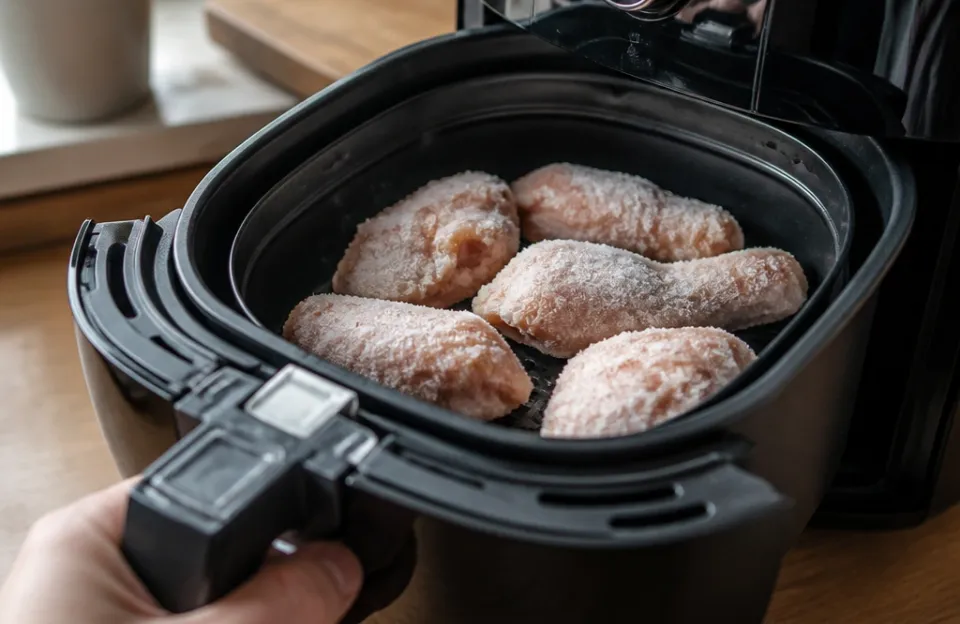
Frozen pork chops. You can cook chops from frozen, but timing is anecdotal rather than manufacturer-specified, so the thermometer matters even more. One blogger’s method cooks at 380°F for 5 minutes, then continues at 380°F for 13 to 15 minutes, checking for 145°F and resting about 5 minutes. Another approach uses a brief 300°F defrost, then pats the chops dry, seasons them, and finishes at 380°F until they reach 145°F. If frozen chops are stuck together, one source suggests cooking about 5 minutes first, then separating the pieces and seasoning. Whichever method you use, verify 145°F with a thermometer before serving.
Thin chops overcooking. Cutlets under ½ inch can pass 145°F in well under 8 minutes. Start checking early and expect carryover heat during the rest.
Adjusting for Different Ninja Models
Ninja air fryers range from compact single-basket units to larger dual-basket and Foodi models, and their wattage and basket geometry affect how quickly food browns. A small batch in a large basket may cook faster than a full basket in a compact model, because air circulates more freely around fewer pieces.
Rather than memorizing model-specific times, use the thickness table as your baseline and adjust after the first batch. If your chops brown too quickly on the outside, lower the temperature by 10°F to 20°F and extend the time slightly. If they brown too slowly, raise it modestly. Note the settings and time that worked, and use them as your new starting point for that model.
Cleaning the Air Fryer Basket After Cooking Pork
Let the basket cool, then pour off any collected fat before washing. Clean the basket and crisper plate after every use so old grease does not burn and create smoke the next time you cook. Emptying accumulated grease and oil between batches also helps prevent smoke when you are cooking several rounds.
Wash the basket and crisper plate with warm soapy water, and use a soft sponge rather than abrasive scrubbers on non-stick surfaces. Check your model’s manual for whether the basket and crisper plate are dishwasher-safe, since care instructions vary by model. For non-stick longevity, avoid metal utensils and stacked storage that can scratch the coating.
Frequently Asked Questions
Can I cook frozen pork chops in a Ninja air fryer? Yes, though quality is usually better starting from thawed meat. Published methods include 380°F for about 5 minutes followed by 13 to 15 minutes more, or a two-stage approach with a brief 300°F defrost and a finish at 380°F until 145°F. Always confirm 145°F with a thermometer and rest three minutes.
Is slightly pink pork safe to eat? Yes, if it reached 145°F and rested three minutes. Properly cooked chops may show a slight pink tinge in the center and still be food-safe. Color alone is not a reliable test; use a thermometer.
Do bone-in chops take longer than boneless? They often do at the same thickness, though one recipe source notes bone-in versus boneless does not affect cook time too much, while thickness shifts it slightly. The bone also affects where you place the thermometer.
What temperature should I set the air fryer to? Most recipes use 380°F to 400°F for standard chops. Use the thickness table above as a starting point and confirm doneness with a thermometer at 145°F.
Can I apply the 145°F rule to ground pork or stuffed chops? No. Ground pork and pork sausage need 160°F, and stuffed pork chops need 165°F with both the stuffing and the meat reaching that temperature.
How do I stop my air fryer from smoking when cooking pork? White smoke usually comes from fat or grease heating up in the basket. Pour off excess fat between batches and clean the basket and crisper plate after each use.
The Bottom Line
Set your Ninja air fryer to 400°F, start with 8 to 18 minutes depending on thickness and bone, flip halfway, and pull the chops when a thermometer reads 145°F. Rest three minutes, then serve. For related cook-time planning, see our guide on how long to cook tenderloins in an air fryer and our method for chicken thighs in a Ninja air fryer. For the official food-safety standard, consult the USDA recommended cooking temperatures and the FoodSafety.gov safe minimum internal temperature chart.