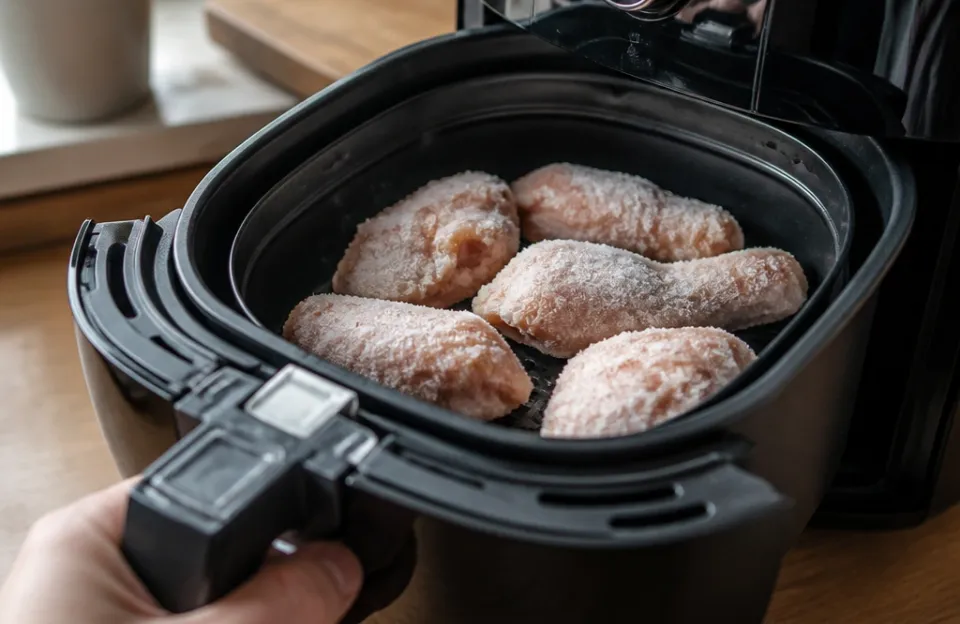
As a starting point, cook fresh (raw) french fries in an air fryer at about 400°F for roughly 16 to 22 minutes, shaking the basket partway through. Thinner cuts land at the shorter end and thicker cuts at the longer end. Air-fried foods generally require 5 to 25 minutes at 350°F to 400°F, and times vary by appliance size and power, so judge doneness by color and texture rather than the clock alone.
Fresh potatoes carry far more surface moisture than frozen fries, which were typically blanched or par-fried before freezing. That moisture has to cook off before the exterior can brown, so raw fries need thorough drying, a light oil coating and a little patience. Expect roughly 30 to 40 minutes total once soaking and drying are included, with the actual air-frying window landing inside that 16 to 22-minute range.
Why Fresh Potatoes Behave Differently from Frozen Fries
A frozen fry has already had much of its internal water removed and its starch structure set at the factory. A raw potato is a blank slate: wet, starchy and dense. If you send it into the basket with a damp surface, the circulating hot air steams the potato instead of crisping it, and you end up with limp, pale strips.
The fix is preparation, not a longer timer. Drying the surface, rinsing away excess starch and coating each piece lightly in oil gives the hot air something to work with. Air fryers are essentially countertop convection ovens that cook food faster and use less energy than full-size ovens, which is why a modest batch of fries can crisp in under 25 minutes.
Timing by Cut Thickness
Use the table below as a starting point, not a rule. Thickness, basket load and your machine’s wattage all shift the result, so check color and texture a few minutes before the earliest time listed. One extra handful of fries reduces convection efficiency by about 30 percent, so a crowded basket will always run longer.
| Fry Thickness | Estimated Cook Time | Heat Setting |
|---|---|---|
| Thin (matchstick, about 1/8 inch) | 12–16 minutes | 400°F |
| Standard (about 1/4 inch) | 16–20 minutes | 400°F |
| Thick (about 1/2 inch or wedges) | 20–26 minutes | 380°F–400°F |
Thin cuts can overshoot quickly, so start checking at the 10-minute mark. Thick wedges need the full window and often a few extra minutes, with a lower temperature to let the center cook through before the outside darkens.
Preparing Potatoes for Crisp Results
Order matters here. Skipping a step tends to show up as soggy fries later.
- Cut uniformly. Aim for strips of consistent thickness, roughly 1/4 to 1/2 inch for standard fries. Mixed sizes finish at different times, leaving you with burnt tips and raw centers in the same batch.
- Soak in cold water. Cover the cut fries with cold water for about 45 minutes. This rinses surface starch that can make fries gummy and block even browning. Soaking under 15 minutes leaves too much starch behind, while soaking beyond 2 hours can leach flavor and structure.
- Dry thoroughly. Drain, then pat the fries dry with towels and let them air-dry on a rack for 5 to 10 minutes. Surface moisture is the main cause of soggy results.
- Coat lightly in oil. Toss the dried fries with just enough high-smoke-point oil to give every piece a faint sheen. Excess oil pools in the basket and interferes with air circulation.
Hold the salt until after cooking. Salt draws moisture to the surface, which works against the crust you just built. Season with salt, pepper, garlic powder or paprika while the fries are still hot so the seasoning sticks to the residual oil.
Loading the Basket and Shaking for Even Cooking
Preheat the air fryer at 400°F for 2 to 3 minutes; a hot basket helps crispness from the first minute. Add the fries in a single layer where possible. A slight mound is acceptable, but a packed basket blocks the air circulation that does the cooking, so large batches should be split.
Set the timer for the lower end of your thickness range. Shake the basket vigorously at roughly the halfway point, and again every 5 minutes or so after that, so the bottom fries rotate to the top. If some pieces are clearly darker than others, move them with tongs.
Troubleshooting Soggy, Uneven, Burnt or Raw-Centered Fries
| Symptom | Likely Cause | What to Check | What to Do |
|---|---|---|---|
| Soggy, pale fries | Wet surface or overcrowded basket | Are the fries damp before oiling? Is the basket packed? | Dry longer, cook in smaller batches, extend time by 3–5 minutes |
| Uneven browning | Mixed cut sizes or no shaking | Are strips uniform? Has the basket been shaken? | Recut to consistent size, shake every 5 minutes |
| Burnt outside, raw center | Temperature too high for the thickness | Is the exterior dark while the center is firm? | Drop to 380°F and extend the time |
| Greasy, limp fries | Too much oil | Is oil pooling in the basket? | Use less oil and toss again before cooking |
If a thick wedge still tastes raw in the middle after the exterior looks done, lower the temperature and give it more time. Potato fries do not have a published safe internal temperature the way meat and poultry do, so texture and even cooking are your guides. A parboil before air frying is a common workaround for very thick cuts, though it adds a step.
Choosing the Right Potato
Starchy potatoes such as Russets are the usual choice for fries because they produce a fluffy interior and a crisp shell. Waxy varieties like Yukon Gold or Red Bliss have a creamier texture and tend to crisp less. Neither is wrong; pick based on whether you want a fluffy or creamy bite.
Making Ahead and Storing Cut Potatoes Safely
If you want to prep potatoes in advance, keep peeled and cut potatoes submerged in cold water in the refrigerator for up to 24 hours. Change the water if it turns cloudy. This is practical guidance rather than an official storage standard, so use your judgment and discard anything that smells off or looks slimy.
Once cooked, refrigerate leftovers within 2 hours; the danger zone sits between 40°F and 140°F. Refrigerated leftovers keep for 3 to 4 days or up to 3 to 4 months frozen. Reheat them in the air fryer at 375°F for a few minutes rather than the microwave, which will steam them soft.
Serving and Keeping Fries Crisp
Serve fries immediately, ideally on a wire rack or a paper-lined tray rather than a flat plate. A solid surface traps steam underneath and softens the base within minutes. If you are cooking in batches, keep finished fries warm in a 200°F oven on a rack while the rest cook.
For a related guide on another air fryer potato recipe, see how long to cook home fries in an air fryer.
Frequently Asked Questions
Should I Preheat the Air Fryer for Fresh French Fries?
Yes. A 2 to 3-minute preheat at 400°F helps the exterior start crisping right away, which matters more for high-moisture raw potatoes than for frozen fries.
Why Do My Homemade Fries Taste Like Raw Potatoes?
Usually the heat was too high, so the outside browned before the center cooked through. Lower the temperature to 380°F and extend the time, and make sure your cuts are uniform.
Can I Stack the Fries in the Basket?
A light pile is fine if you shake every 5 minutes, but a densely packed basket blocks air circulation and cooks unevenly. Split large batches.
Does the Type of Potato Matter?
Yes, for texture. Starchy Russets give a fluffy interior and crisper shell, while waxy potatoes stay creamier and brown less.
How Do I Keep Fries Crispy After Cooking?
Serve immediately on a wire rack. If you must hold them, keep them warm in a 200°F oven on a rack rather than covered on a plate.
Before You Go
Fresh french fries in the air fryer come down to preparation and observation. Soak, dry thoroughly, oil lightly, load the basket loosely and shake often. Start with 16 to 22 minutes at 400°F for standard cuts, adjust by thickness using the table above, and trust color and texture over any fixed timer. Salt them while hot and serve right away.