Cooking a burger patty in an air fryer is one of the fastest ways to get a juicy, charred result without firing up the outdoor grill or dealing with grease splatter on your stovetop. Generally, a standard one-inch thick beef patty takes about 8 to 12 minutes to cook at 375°F to 400°F. The exact time depends on how thick your burger is and how well-done you prefer your meat.
Understanding how the air fryer cooks burgers
An air fryer acts like a miniature convection oven. It uses a high-powered fan to blast hot air around the food, which helps mimic the crispy exterior you would typically get from a pan-sear or a charcoal grill. Because the air is circulating constantly, the heat transfer is very efficient.
This means your burger will likely cook faster in an air fryer than it would in a traditional oven.
When you place a patty into the basket, the hot air hits the surface immediately. This creates a crust while the inside cooks through. However, you have to be mindful of the moisture.
Because the fan is so powerful, it can dry out leaner cuts of meat if you cook them for too long. If you are using a very lean ground beef, you might want to pull the burger out a minute or two earlier than you would for a fattier 80/20 blend.
The ideal temperature and timing
Most people find that 375°F is the "sweet spot" for air frying burgers. At this temperature, you get a good sear on the outside without burning the edges before the middle is cooked. If you prefer a darker, crunchier crust, you can bump the heat up to 400°F, but you must reduce the time by at least a minute to avoid charring.
For a standard quarter-pound patty that is about 3/4 to 1 inch thick, follow these general guidelines based on your preferred doneness:
- Medium-rare: 7 to 8 minutes
- Medium: 9 to 10 minutes
- Well-done: 11 to 12 minutes
Keep in mind that these times are estimates. Air fryer models vary significantly in power and size. A smaller, compact air fryer often cooks faster than a larger oven-style unit because the heat source is closer to the food.
Always rely on a digital meat thermometer to be sure. The United States Department of Agriculture (USDA) recommends an internal temperature of 160°F for ground beef to ensure safety, as you can find in their official food safety guidance.
Preparing the patty for the basket
Before you even touch the air fryer, the prep work matters. If you are forming your own patties, make a small indentation in the center of each one with your thumb. This prevents the burger from puffing up into a ball while it cooks, keeping it flat and ensuring it cooks evenly from edge to center.
Seasoning is another factor. Because the air fryer moves air so quickly, some of your dry seasonings might blow off the surface of the meat. To prevent this, press the salt, pepper, or other dry rubs firmly into the patty.
You can also lightly brush the outside of the patty with a tiny bit of oil or a splash of Worcestershire sauce to help the seasoning stick.
Step-by-step: How to air fry a burger
- Preheat the air fryer: If your model has a preheat setting, use it. Set it to 375°F and let it run for 3 minutes. Even if your model does not have a button for this, running it empty for a few minutes gives you a better sear from the first second the meat hits the tray.
- Arrange the patties: Place your patties in the air fryer basket in a single layer. Don't crowd them. You need enough space for the air to flow around each patty. If they are touching, they will steam rather than sear.
- Set the time: Start with 8 minutes for a standard burger.
- Check for doneness: At the 6-minute mark, open the basket. If you want cheese on your burger, this is the time to add it. Place the slice on top of the patty and let it melt for the final 2 minutes.
- Test the internal temperature: Use a probe thermometer inserted into the thickest part of the burger. If it hasn't reached 160°F yet, add another 1 to 2 minutes of cook time.
- Rest the meat: Just like with any other cooking method, let your burgers rest on a plate for 2 or 3 minutes before eating. This allows the juices to redistribute throughout the patty.
Managing smoke and grease
One of the most common issues people face when cooking burgers in an air fryer is smoke. Since beef releases fat as it cooks, that fat can drip onto the bottom of the air fryer, hit the heating element, and start to smoke.
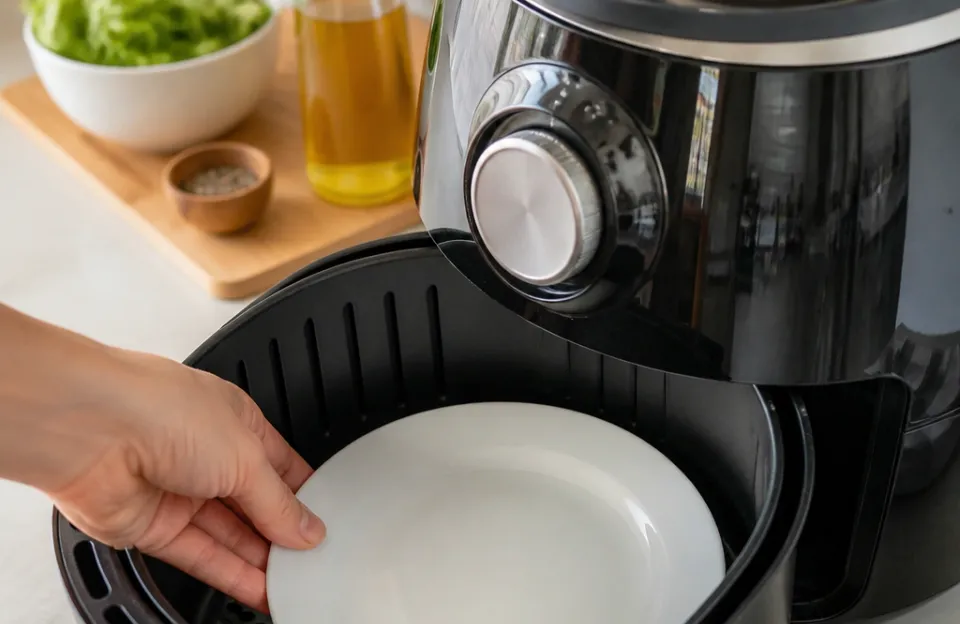
To stop this, try placing a slice of bread at the very bottom of the air fryer basket, underneath the rack or tray. The bread will soak up the grease and prevent it from sizzling and smoking. Alternatively, if your basket allows for it, you can put a small amount of water or a piece of parchment paper designed for air fryers at the base.
Just be careful with parchment paper; never put it in the air fryer without the weight of the food on top, or it can fly up into the heating element and cause a fire hazard.
Variations based on patty thickness and type
Not all burgers are created equal. A thick, pub-style burger needs a different approach than a thin, smash-style patty.
- Thin patties: If you are cooking thin, pre-formed patties, they will likely be done in 5 to 6 minutes. Because they have less mass, they can go from "perfect" to "dry" very quickly. Keep a close eye on them.
- Frozen patties: If you are cooking patties straight from the freezer, you don't need to thaw them. Simply add 2 to 3 minutes to the total cooking time. You might want to start them at a slightly lower temperature, perhaps 350°F, for the first few minutes to ensure the center thaws before the outside gets too dark.
- Turkey or veggie burgers: These often have less fat than beef. They tend to dry out faster. You may want to brush them with a bit more oil before cooking and pull them out a minute or two earlier than you would for beef.
Common mistakes to avoid
Cooking burgers in an air fryer is straightforward, but small errors often lead to poor results. Here are the most frequent pitfalls and how to avoid them.
- Overcrowding the basket: If the patties are stacked or touching, they won't brown properly. Work in batches if you are feeding more than two people.
- Ignoring the fat content: If you use extremely lean ground beef (like 95/5), your burger will likely be dry no matter how perfectly you time it. Aim for 80/20 ground beef, as the extra fat keeps the patty juicy during the high-heat blast.
- Skipping the thermometer: Guessing by the color of the meat is not a reliable safety standard. A digital meat thermometer is the only way to guarantee your burger is cooked to the correct safety level without cutting into it and losing all the juices.
- Adding sauce too early: If you are using a sugary BBQ sauce or a glaze, wait until the final minute of cooking. Sugary sauces will burn and turn bitter if they are in the air fryer for the full 10-minute cycle.
When to adjust your cooking strategy
There are a few scenarios where your standard cooking time won't apply. For instance, if you are cooking for a large group and your air fryer is small, you might end up with uneven cooking. If your unit is packed full, the air circulation is restricted.
In this case, you should plan to flip the patties halfway through the process to ensure both sides get equal exposure to the hot air.
Also, consider the altitude or the ambient temperature of your kitchen. If your kitchen is particularly cold or if you are at a very high elevation, cooking times can fluctuate. Again, this is where a thermometer becomes your most important tool.
It removes the guesswork that comes with "minutes per side" advice.
Frequently asked questions
Should I flip the burger while it's in the air fryer?
Flipping is not strictly necessary in an air fryer because the hot air circulates around the entire chamber. However, if your specific air fryer has a heating element only at the top, flipping the patty halfway through can help get a more consistent crust on both sides. If you choose to flip, do it carefully using a pair of silicone-tipped tongs to avoid scratching the basket coating.
Can I put frozen burger patties directly in the air fryer?
Yes, you can cook them directly from frozen. They will take slightly longer than fresh patties, usually about 12 to 14 minutes at 375°F. Make sure to separate them if they are stuck together, and season them once the surface has thawed slightly after the first 3 or 4 minutes of cooking.
Why is my air fryer smoking when I cook burgers?
The smoke usually happens when the rendered fat from the beef hits the heating element or the hot bottom of the unit. To fix this, place a slice of bread at the bottom of the drawer to absorb the drippings, or ensure you are cleaning the grease out of the basket between batches. If you are cooking a very fatty blend of beef, you might also notice more smoke than usual.
How do I know when the burger is actually done?
You cannot reliably tell by the color of the meat. The only accurate way to know if a burger is cooked safely is to use an instant-read meat thermometer. The probe should go into the center of the patty, and you should look for a reading of 160°F.
If you prefer your burgers cooked to a lower temperature, understand that this increases the risk of foodborne illness, as noted by the Centers for Disease Control and Prevention regarding ground meat handling.
Do I need to use oil on the burger patty?
You don't need to use oil if you are using a standard 80/20 ground beef blend, as the meat provides its own fat. However, if you are using a leaner meat like ground turkey or chicken, a light brush of oil on the outside can help prevent the patty from drying out and help the seasoning adhere to the meat.
The importance of the rest period
Many people skip the resting phase because they want to eat as soon as the timer dings. However, this is a mistake. When you take the burger out of the air fryer, the internal juices are still concentrated in the center and are very hot.
If you bite into it immediately, those juices will run out onto the plate. Letting the patty rest for 3 minutes allows the muscle fibers to relax and reabsorb the moisture. This results in a much better eating experience where every bite is flavorful and juicy rather than dry and crumbly.
When managing the timing for a full meal, account for this rest period. If you are serving the burger with toasted buns or side dishes, time your air frying so that the burgers finish just as the rest of the meal is ready. This allows them to rest for that essential window without going cold.
Air fryer safety and maintenance
Proper care of your air fryer helps it perform consistently. Over time, grease can build up in the vents or on the heating element. Always wipe down the inside of your air fryer after it has cooled completely.
If you notice a burnt smell or smoke every time you use it, check the heating element at the top for stuck-on food or grease splatter. Keeping the equipment clean ensures that the fan can circulate air as intended, which keeps your cooking times predictable and prevents the machine from working harder than it needs to.
If you are a frequent user of the air fryer for fatty foods, look into dishwasher-safe liners. These are often made of silicone and are designed to fit the basket. They catch the grease and are much easier to clean than scrubbing the base of the basket every time.
Just ensure any accessory you add is rated for the high temperatures of your air fryer.
Cooking a burger in the air fryer is a reliable, repeatable task once you know the basics. Start with the 8 to 12-minute window, use a thermometer to verify the temperature, and don't be afraid to adjust based on the specific thickness of your patties. By focusing on the internal temperature rather than just the clock, you will achieve consistent results every time you crave a burger.