To find the right faucet water filter adapter, you need two measurements: the thread diameter and whether your faucet has male threads on the outside of the spout or female threads inside the spout opening. Most U.S. faucets use one of four standard aerator sizes, all sharing a pitch of 27 threads per inch: Regular Male at 15/16″-27, Regular Female at 55/64″-27, Junior Male at 13/16″-27, and Junior Female at 3/4″-27. Match diameter and thread gender exactly, then confirm against your filter’s manual or spec sheet, because there is no single universal aerator size.
Male vs. Female Aerator Threads: How to Tell Which One Your Faucet Has
Look at the tip of your faucet spout where the aerator, the small screened fitting at the end, attaches. If the threads sit on the outside of that fitting or spout, you have male threads. If the threads are cut into the inside rim of the opening, you have female threads.
That single visual check decides half of your adapter match, because a male and female aerator of the same nominal size will never fit each other. The gender of the faucet also flips the gender of the part you need: a faucet with external male threads normally takes a female aerator, and a faucet with internal female threads normally takes a male aerator. If the aerator is recessed or hidden inside the spout, you may need a small plastic aerator key that came with the faucet to unscrew it; these cache-style aerators are common on designer faucets from brands like Moen, Delta, Kohler, and Grohe.
How to Measure Thread Diameter and Count Threads per Inch
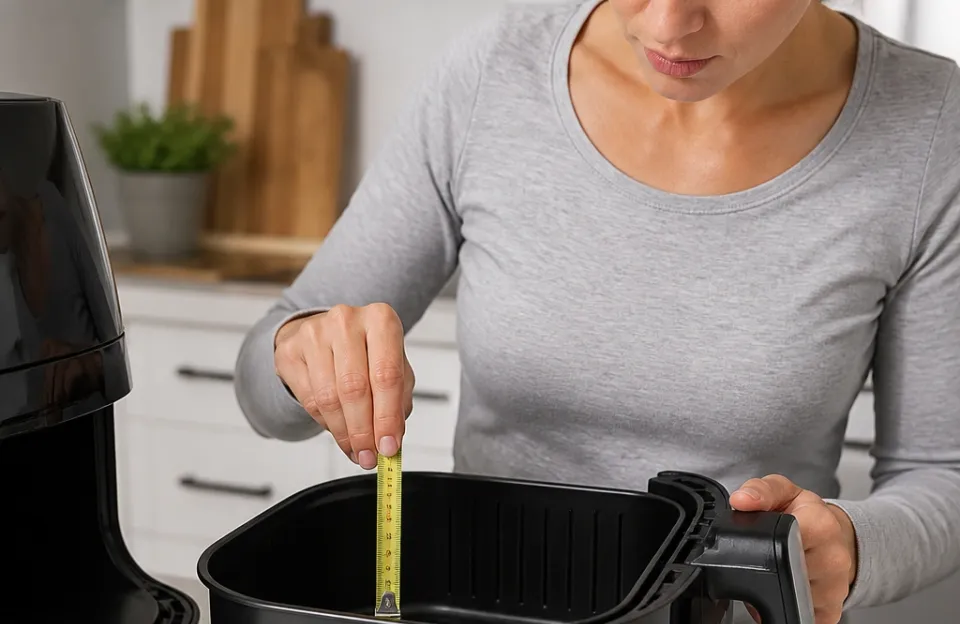
Once you know the gender, measure the diameter. For a male aerator, measure across the outside of the threads; for a female aerator, measure across the inside opening. A ruler gets you close, and a U.S. penny, at roughly 3/4 inch (19 mm) across, or a nickel, at roughly 13/16 inch (20.6 mm), can serve as a rough visual reference.
Thread pitch is your third check. In the U.S., the four standard aerator sizes all use 27 threads per inch, which is the industry standard for faucet aerators in the U.S. and Canada. You can count threads against a ruler if you are careful, but a ruler or coin can only narrow the search; it cannot prove thread pitch, sealing shape, or insert depth. If you want certainty before ordering, a cheap digital caliper makes the diameter reading exact. Treat the caliper reading as a diameter measurement only, and confirm pitch separately against the standard 27 TPI value.
Two aerators can look almost identical and still use different threads, so measuring the opening gives you a starting point, while the faucet drawing, original aerator, or replacement part number is often what confirms the fit.
Common U.S. Aerator Thread Sizes and How They Differ from Garden Hose and NPT Pipe Thread
| Thread size | Diameter | Pitch |
|---|---|---|
| Regular Male | 15/16″ | 27 TPI |
| Regular Female | 55/64″ | 27 TPI |
| Junior Male | 13/16″ | 27 TPI |
| Junior Female | 3/4″ | 27 TPI |
These four sizes cover most U.S. faucets, and all of them share the same 27 TPI pitch. In most modern U.S. kitchen faucets, the inside thread of the faucet is usually 55/64 inch × 27 TPI, and the exterior male thread is 15/16 inch × 27 TPI.
Kitchen faucets most often use the regular sizes, while bathroom lavatory faucets frequently use the smaller junior sizes, though exceptions exist. Specialty faucet brands also use metric designations for hidden aerators: Neoperl CACHÉ-style aerators come in Standard (M24 x 1), Junior (M21.5 x 1), Tiny Junior (M18.5 x 1), and Tom Thumb (M16.5 x 1).
Do not confuse any of these with garden hose or pipe threads. Garden Hose Thread is a straight, non-tapered thread with a nominal size of 3/4 inch and a pitch of 11.5 TPI, while 3/4 inch NPT pipe thread uses 14 TPI. The 11.5 TPI pitch is unique to GHT, and no NPT or UN thread shares it. A male NPT fitting will only partially engage a female GHT coupling, and the threads will cross immediately, causing galling and a guaranteed leak or fitting damage.
Matching Your Measurements to a Filter Adapter, Including Brand-Specific Collars
With your diameter, gender, and pitch in hand, compare against the adapter options your filter ships with. If one matches the diameter and gender of your spout, thread it on by hand. If none match, you need a separate adapter that bridges your spout size to the filter’s connection.
Brand-specific and proprietary collars complicate this because some filters use snap-on or push-fit collars rather than universal threaded adapters. There is no single universal aerator size, so the faucet model and replacement part number should be your starting point rather than a guess from diameter alone. Check the filter manual or spec sheet for the exact adapter it specifies rather than relying on a general size chart.
Pull-Down Sprayers, Commercial-Style Faucets, and Metric Threads: Your Options
Pull-down and pull-out sprayer faucets often leave no exposed aerator threads at all, because the spray head is a proprietary assembly. Those setups may require manufacturer-specific parts, and a standard screw-on adapter frequently will not work. The same applies to many commercial-style faucets, where the spray head uses its own connection rather than a standard aerator thread.
If your faucet falls into one of these categories, the practical routes generally involve manufacturer-specific parts or under-sink filtration rather than a standard screw-on adapter. Because the stored sources do not document specific diverter valve or under-sink tee solutions for these faucet types, confirm compatibility with the faucet and filter manufacturers before buying anything. A standard aerator adapter is unlikely to fit a proprietary spray head assembly.
Metric or European threads are a separate case. If your faucet uses a metric aerator, a standard U.S. size will not match it, so you will need a metric-to-imperial adapter. Verify the exact metric designation from your faucet documentation before ordering, since the stored options for metric aerator threads are less standardized than the U.S. four.
Brass, Stainless Steel, or Plastic: What the Material Choice Actually Changes
Adapter material affects cost, weight, and how the part handles heat and water chemistry. The stored sources do not provide comparative durability data for faucet adapters, so no material can be ranked as more durable on that evidence. What the sources do support is that the washer, not the thread engagement, makes the seal, and that forcing a part that almost fits can damage the spout. Choose a material based on how often you remove the adapter and on the filter manufacturer’s specified part, then confirm the threads match your spout’s diameter, gender, and pitch before installing.
Choose based on how often you remove the filter. If you swap cartridges frequently, a metal adapter is likely to tolerate that handling better. If the adapter stays installed and you only change the cartridge inside the filter housing, plastic is usually adequate. Whichever material you pick, check that the adapter’s threads match your spout’s diameter, gender, and pitch before installing.
The Washer Does the Sealing: Tightening Guidance and Why Teflon Tape Usually Backfires
The rubber washer or O-ring inside the adapter or filter connection is what stops the leak, not the threads themselves. Garden hose thread, which is a straight thread like most aerator threads, is a face-seal connection that uses a rubber or EPDM washer, not thread tape. Pipe thread fittings work the opposite way: they do not seal by using a washer, and instead seal between the male and female threads. For aerator and adapter connections specifically, the stored sources do not document the sealing mechanism in the same detail, so treat the washer as the part to inspect first and confirm the sealing arrangement against your filter’s installation instructions.
That distinction is why thread tape is generally not the right tool for straight aerator threads. The stored sources document that garden hose thread, a straight thread, seals with a washer rather than thread tape, and that pipe thread fittings seal between the threads instead. Applying that same logic to aerator threads is a reasonable inference, but the stored sources do not state it directly for aerators. If your filter’s instructions call for tape, follow them; otherwise rely on the washer and confirm the seating before adding anything to the threads.
For tightening, hand-tighten the adapter until the washer contacts the sealing surface, then stop. If it still drips, give it a small additional turn, no more than a fraction of a rotation, and check again. Stop as soon as the leak stops; the stored sources do not document a specific torque value or a specific failure mode from over-tightening faucet adapters, so treat “stop when the leak stops” as the practical limit rather than a measured specification. If the adapter will not thread on by hand, do not force it. Forcing a part that almost fits can turn a simple maintenance job into a damaged spout.
Verifying Fit Before You Commit, and What to Do If the Adapter Leaks
Before you order or install, run through this checklist:
- Confirm the gender by looking at whether threads sit outside or inside the spout.
- Measure the diameter across the outside of male threads or the inside of female threads.
- Confirm the pitch is 27 TPI for a standard U.S. aerator.
- Check the filter manual or spec sheet for the exact adapter the filter specifies.
- If the faucet is a pull-down, commercial-style, or metric model, confirm the manufacturer offers a compatible part before buying a standard adapter.
- If the adapter will not thread on by hand, stop and remeasure rather than forcing it.
If the adapter leaks after installation, remove it and inspect the washer for nicks, debris, or a poor seat. Reinstall with the washer correctly positioned, hand-tighten, and test. If it still leaks with a new washer and correct threading, recheck your measurements rather than adding tape or forcing it tighter.
If your aerator is stuck and will not unscrew, wrap a rubber band around it for grip or use pliers with a cloth wrapped around the metal so you do not scratch the finish. For more severe cases, a commercial descaling product may be necessary, and you should follow the manufacturer’s instructions and wear gloves.
Closing: from Measurement to Installed Adapter
Start by looking at your spout to identify male or female threads, then measure the diameter and confirm the 27 TPI pitch on a standard U.S. aerator. Match those three values against your filter’s specified adapter, and if your faucet is a pull-down, commercial-style, or metric model, verify compatibility with the manufacturer before buying anything. Install with the washer seated, hand-tighten, and stop as soon as the leak stops. If a part almost fits, do not force it; remeasure and confirm the size instead.