Some under sink water filters remove PFAS, but only when the exact model carries a verified PFAS reduction claim and the cartridge is replaced on schedule. A basic sediment filter or an ordinary carbon cartridge may improve taste while leaving PFAS in the water.
For PFAS, the claim on the label matters more than the filter style. A product that reduces chlorine or improves taste has not shown that it removes PFAS.
Do Under Sink Water Filters Remove PFAS?
Yes, some under sink water filters remove PFAS. The result depends on the filter design, the specific PFAS compounds, the water chemistry, and whether the cartridge is still within its rated service life.
PFAS means per- and polyfluoroalkyl substances. They are a large group of manufactured chemicals, and they persist in water rather than breaking down easily.
Under sink systems are a point-of-use option, which means they treat cold water at one faucet rather than every tap in the home. That is enough for drinking water and cooking water without filtering the whole house.
EPA found that the granular activated carbon, ion exchange, and reverse osmosis point-of-use systems it studied can greatly reduce PFAS levels. That does not mean every product in those categories is certified, so check the specific model claim.
A filter’s marketing language is not enough. Look for a performance claim that names PFAS or specific compounds such as PFOA and PFOS.
Which Filter Technology Works Best?
No single technology wins for every situation. Reverse osmosis can address a broad range of dissolved contaminants, while carbon and ion exchange systems depend heavily on capacity and contact time.
Activated Carbon Filters
Activated carbon traps many chemicals on its porous surface as water passes through the cartridge. Granular activated carbon is one form of this media, and EPA’s studied point-of-use systems using it can greatly reduce PFAS when the unit is maintained correctly.
Carbon filters have a limited capacity and need periodic replacement. Once the carbon becomes loaded, PFAS can pass through the cartridge, and a fast flow rate can shorten contact time.
Carbon systems use less water than reverse osmosis and usually take up less space. Their main limitation is that the PFAS claim is tied to a rated capacity, so the cartridge must be changed before that capacity is used up.
Reverse Osmosis Systems
Reverse osmosis sends water through a membrane that blocks many dissolved substances, and these systems are certified under NSF/ANSI 58 for reverse osmosis treatment. EPA found that the reverse osmosis point-of-use systems it studied can greatly reduce PFAS levels.
RO systems require changing filter cartridges and the RO membrane. They also waste about one gallon of water for every gallon treated, and they need more parts under the sink than a simple carbon cartridge.
Some RO systems need an air gap faucet or a drain connection. A plumber is a good choice if the sink cabinet is crowded, the drain must be modified, or the shutoff valve is old.
Sediment and Taste Filters
Sediment filters catch particles such as sand, rust, and silt. They do not remove dissolved PFAS.
Basic carbon cartridges may reduce chlorine and odors. That does not prove PFAS reduction, so treat a taste improvement as a comfort benefit rather than evidence the water is safer from PFAS.
Specialty Media
Some systems use specialty media, often in larger or more expensive units. Ion exchange is one of the point-of-use technologies EPA studied, and like carbon it has a limited capacity and requires periodic replacement.
Whatever the media, the certification claim and rated capacity determine whether you can rely on it for PFAS.
The Certification Label Matters More Than the Filter Style
For PFAS, shop by the tested claim rather than the number of filter stages. EPA recommends looking for NSF/ANSI 53 or NSF/ANSI 58 certification for PFAS reduction when buying a filter. NSF/ANSI 53 covers PFAS reduction claims for filtration products, and NSF/ANSI 58 covers reverse osmosis systems.
Third-party certification verifies the effectiveness of the filters and the accuracy of the contaminant reduction claims. The table below shows what each standard usually addresses and what to check.
| Standard | What it usually covers | What to check |
|---|---|---|
| NSF/ANSI 53 | Drinking water treatment units that reduce health-related contaminants | A specific PFAS reduction claim |
| NSF/ANSI 58 | Reverse osmosis drinking water treatment systems | A specific PFAS claim and the listed membrane system |
| NSF/ANSI 42 | Aesthetic issues such as chlorine taste and odor | This alone does not show PFAS removal |
A standard number alone does not prove PFAS reduction. The certification must name the exact product and the PFAS compounds covered. A filter may have data for PFOA and PFOS but not for every PFAS compound that appears on a water report.
Certification also does not mean the filter works forever. It means the product met a defined test under stated conditions, and certification is tied to a rated capacity. Test challenge concentrations run well above typical environmental levels, while real tap water carries competing organics that can affect performance.
Certification bodies with product listings include CSA Group, IAPMO R&T, NSF, UL, and WQA. Search the certifier’s directory, then compare the model number with the box and installation manual, because a claim for one model does not cover the whole brand. Consumers should check the certifier’s product listing to confirm a product treats the specific type of PFAS they want to remove.
One dated limit is worth knowing. As of April 2024, current PFAS filter certification standards did not yet indicate that a filter would remove PFAS down to the levels EPA set for its drinking water standard. Check whether certification criteria have been updated since then before you rely on a claim to meet a specific regulatory limit.
What Should You Check Before Installing a PFAS Filter?
Start with your water source. For public water, read the utility water quality report and any PFAS notices. Private well owners may need independent testing, because well water is not routinely monitored in the same way as public supplies.
If your water shows PFAS, EPA advises contacting your state environmental protection agency or health department and your local water utility to find out what actions they recommend.
Next, check the filter’s actual specifications:
- The named PFAS claim: Look for PFOA, PFOS, or PFAS reduction.
- The tested capacity: This tells you how much water the cartridge treated during testing.
- The rated flow: A very high flow rate may shorten contact time for carbon media.
- Replacement timing: Follow the earlier of the gallon limit or the time limit.
- Water pressure needs: RO systems often need adequate pressure to produce water at a reasonable rate.
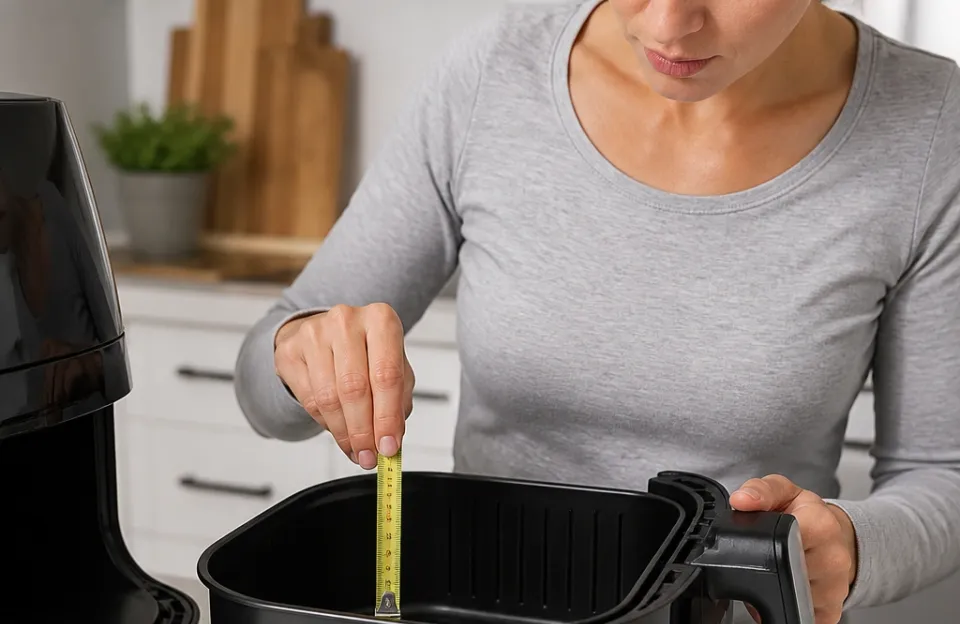
- Space under the sink: Measure the cabinet before ordering.
- Faucet and plumbing fit: Confirm whether the system uses a separate faucet, a tee connection, or an adapter.
A filter that fits physically may still be a poor choice if its replacement cartridges are hard to find. Before buying, check the cartridge name, replacement schedule, and whether the manufacturer publishes a performance sheet.
Can a PFAS Filter Treat All the Water in Your Home?
An under sink filter treats only the water routed through it. It usually supplies one dedicated faucet, though some systems connect to a refrigerator or ice maker.
That is often enough for drinking, cooking, coffee, tea, and ice. It does not treat water from the bathroom sink, shower, dishwasher, or an untreated refrigerator line.
A whole-house system may make sense when testing shows PFAS throughout a private water supply and you want treatment at several fixtures. Whole-house systems cost more and need careful sizing. A poorly sized system can create pressure problems or require frequent media changes.
For many households, point-of-use treatment is simpler, because it puts the filter where exposure from drinking and cooking is most direct. If you connect the system to a refrigerator, check the tubing and the refrigerator filter too. The added appliance filter may not have a PFAS claim.
How Often Should You Replace the Cartridge?
Replace the cartridge by the manufacturer’s gallon limit or time limit, whichever comes first. Do not wait for a bad taste, odor, or slow flow, because PFAS may pass through before you notice a change.
Filters are only effective if they are maintained according to the manufacturer’s instructions for how long their filters or membranes will last before they need to be replaced. Exhausted filter media will not keep performing like a new cartridge.
A cartridge can also become exhausted sooner than expected if your water contains high levels of organic matter or other substances that compete for space on the carbon. Sediment can clog the filter and reduce flow, even when the carbon still has capacity.
Write the installation date on the cartridge or cabinet wall. Keep the replacement part number in your household records. When you change it, follow the manufacturer’s instructions for flushing, because fresh carbon can release fine dust at first.
Clean hands and a clean work area matter during replacement. Avoid touching the inside of open tubing or leaving the cartridge housing wet and unassembled. If a housing leaks after replacement, shut off the supply, reseat the O-ring, and tighten the housing as directed. Don’t keep using a leaking filter.
Households that make many hot drinks may use more filtered water than expected. Filtered water used for coffee and cooking counts toward cartridge capacity.
Does Boiling Water Remove PFAS?
No. Boiling does not reliably remove PFAS. The chemicals stay in the water, and boiling can concentrate them as steam reduces the water volume.
Use a filter with a verified PFAS reduction claim instead of relying on boiling. Boiling remains useful for certain germs when public health officials advise it, but a boil water notice and a PFAS advisory address different problems.
Bottled water is not automatically PFAS-free either. If you use bottled water, check the source and any available testing information. A reusable under sink system can provide a more consistent supply, but only if its cartridge is maintained.
What Is the Biggest Mistake People Make?
The most common mistake is buying a filter based on the words “activated carbon” without checking the contaminant claim.
The second is treating NSF/ANSI 42 as proof of PFAS removal. NSF/ANSI 42 generally relates to taste and odor, and the certification must name the exact product and the PFAS compounds covered before it means anything for PFAS.
Another mistake is replacing the cartridge only when the flow becomes slow. A clogged cartridge is easy to notice, but exhausted carbon is not, and exhausted media will not keep performing like a new cartridge.
Finally, don’t assume a filter certified for one product family covers every replacement cartridge from that brand. Match the cartridge model and performance sheet. If you change to a generic replacement, you may lose the original PFAS claim.
What Do PFAS Drinking Water Rules Require Right Now?
The regulatory picture matters if you are waiting for your utility to act or comparing a filter claim against a legal limit. In May 2026, EPA proposed rules that would uphold the PFOA and PFOS drinking water standards while allowing eligible systems up to two additional years, until 2031, to comply. EPA also proposed rescinding Biden-era drinking water regulations for PFHxS, PFNA, HFDO-DA, and Hazard Index mixtures.
These were proposals, not final rules. The comment periods for each rule closed July 20, 2026. Check the current status before treating any limit as settled, and remember that a filter claim under NSF/ANSI 53 or 58 is not the same thing as proof that a filter meets a regulatory maximum contaminant level.
What Is the Safest Buying Decision?
If PFAS is the reason you’re shopping, choose an under sink system with a current, specific PFAS reduction claim under NSF/ANSI 53 or NSF/ANSI 58. Confirm the exact model, replacement schedule, capacity, and installation needs.
For simple drinking and cooking treatment, a certified carbon block or granular activated carbon system may be enough. Choose RO when you want the broader dissolved contaminant reduction and have room for the extra plumbing and water use. In both cases, cartridge replacement is part of the treatment system, not an optional maintenance task.
And if your water report shows PFAS, contact your state agency and water utility for local advice before you decide how much treatment you need.