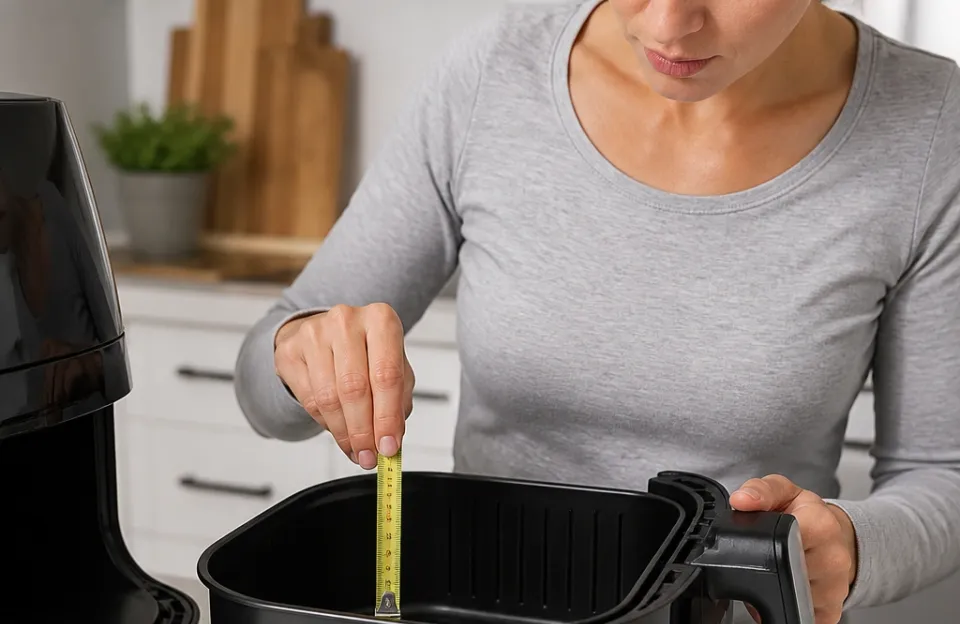
Black smoke from an air fryer usually means something solid is burning inside the cooking chamber. In most cases, that something is leftover grease, carbonized food residue, or a foreign object that has drifted onto the heating element. Less commonly, an electrical fault can produce dark smoke, and that possibility is more serious because it means the appliance should not be reused. The first response is to stop cooking and unplug the unit. Do not open the basket while the appliance is still hot. Once it has cooled completely, you can inspect the chamber, clean the accessible surfaces according to your manual, and decide whether the appliance is still safe to use.
Immediate Steps When You See Dark Smoke
Act in this order:
- Stop the cook cycle and unplug the air fryer. Pull the plug physically out of the outlet, not just switch it off at the display. Black smoke warrants stopping immediately and not using the unit again until you have identified the source.
- Keep the basket closed. Leave it shut while the appliance cools, and do not reach inside.
- Move the unit away from anything flammable if it is safe to do so. Do not grab a hot appliance with bare hands.
- Ventilate the kitchen. Open a window or turn on an extractor fan.
- Leave the area and call emergency services if an actual fire starts or the smoke rapidly worsens. Do not attempt to fight a growing fire yourself.
If you smell burning plastic, chemicals, or anything electrical, or if the smoke seems to come from the base, back, or cord area rather than from inside the basket, stop cooking and unplug the unit immediately. Do not continue troubleshooting a unit that smells like burning insulation.
Wait for the air fryer to cool completely before you open it or touch any internal surface. Surfaces that have just been running at cooking temperatures can burn you, so give the unit time to cool fully.
Why Your Air Fryer Is Producing Black Smoke
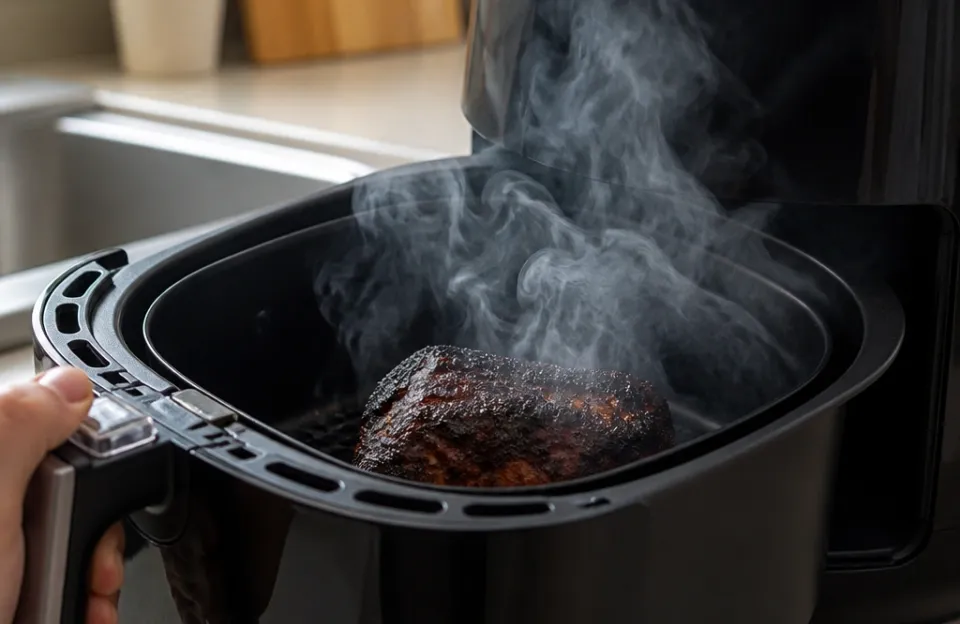
Black or dark smoke usually means something solid is burning, such as crumbs, sugar drips, paper edges, or thick residue. It indicates food actively burning inside, or, less commonly, an electrical issue.
Grease and food residue are common culprits. Fatty meats such as bacon, wings, sausages, and thighs, along with sugary sauces such as BBQ, honey glaze, and teriyaki, are frequent triggers of air fryer smoking. If you are cooking any of these, expect some grease to render out. The problem starts when that grease pools and then carbonizes on a hot surface.
What surprises many people is that the basket can look spotless while the chamber above it is coated in baked-on grease. Grease travels upward with the hot airflow and collects on the chamber roof, heater guard, and nearby surfaces, where it carbonizes and produces smoke and odor even when the basket is clean. Old crumbs or a sticky grease film under the crisper plate can burn later even when today’s food is not fatty.
Other causes include:
- Heavy cooking spray, which creates oil mist that smokes and leaves a sticky film that browns and smokes on high heat.
- A piece of food that fell behind the basket and is sitting against the element.
- Parchment, packaging, or a loose liner contacting the heat source.
A small haze of smoke can happen with fatty foods or leftover grease at high heat. Constant, thick smoke should be fixed before you continue cooking.
How to Tell a Cleanable Cause from an Electrical Fault
The location and smell of the smoke tell you most of what you need to know.
| Signal | Likely Cause | What to Do |
|---|---|---|
| Smoke from inside the basket or drawer, smells like cooking oil or bacon | Food drippings or residue | Cool, clean, retest |
| Smoke from inside, smells sharp or burnt-sweet | Crumbs or sugar burning | Cool, clean, retest |
| Smoke from the base, back, or cord area | Possible electrical fault | Stop and unplug immediately |
| Plastic, chemical, or electrical smell | Insulation or component burning | Stop, unplug, do not reuse |
Smoke rising from inside the basket or drawer points to food drippings or residue, while smoke that seems to come from the base, back, or control area is more concerning and warrants stopping and unplugging.
Stop using the appliance and unplug it if you see any of the following:
- The heating coil is loose or deformed.
- Insulation is damaged.
- Arcing marks are visible.
- Grease has entered an inaccessible electrical compartment.
- Cleaning liquid has reached the fan or controls.
Do not open the housing to investigate. Contact the manufacturer or a qualified repair service instead.
Do not run any test if you saw sparks, arcing, a damaged cord, a burnt ozone or chemical smell, or smoke from the base, back, or cord area. In those cases, stop and unplug the unit and contact the manufacturer or a qualified repair service.
If none of those signs are present, a supervised empty test run at a high temperature for 2 to 3 minutes can help separate a food or residue cause from a continuing appliance problem. If the smoke disappears, the issue was food drips, residue, or an accessory. If smoke continues, especially from the base area, the appliance needs professional attention. Only run this test if your manual allows it, and never use heat to dry suspected water inside electronics.
How to Clean the Heating Element Safely
Unplug the appliance, let it become completely cold, remove the drawer, and use a soft dry brush followed by a barely damp cloth on accessible interior surfaces. That is the safe core of the process.
Work through it like this:
- Unplug and cool completely. The plug must be physically removed from the outlet, not merely switched off at the display.
- Remove the drawer and any removable parts and wash them separately according to the manual.
- Brush loose debris from the chamber roof, heater guard, and around the element with a soft dry brush.
- Wipe accessible surfaces with a barely damp cloth.
- Let everything dry completely before reconnecting power.
Never pour or spray cleaner into the air fryer chamber, bend the heating coil, insert tools into the fan, or invert the unit unless the manual explicitly permits it. If the manual says the heating element area is not user-serviceable, limit cleaning to surfaces the manual identifies as accessible. If hard carbon remains on an inaccessible coil or guard and the appliance still smokes, use manufacturer service rather than scraping near live components.
Water is a specific hazard here. Never pour water near the heating element, fan, control panel, or any electrical parts. Some sources suggest adding a small amount of water to the bottom drawer to reduce smoke from fatty foods, but this is not universally recommended and should only be done if the model’s manual explicitly permits it; otherwise skip it. An air fryer is not designed to hold or boil large quantities of liquid.
If you own a multi-function glass unit, the same principles apply, but check that model’s manual for any specific cleaning restrictions before you touch the element area. For glass and nonstick interiors in general, stick to soft tools and minimal moisture.
When Black Smoke Means the Appliance Is Broken
If black smoke recurs after thorough cleaning, or if it is accompanied by sparks, popping, a burnt ozone smell, or a damaged cord, stop using the appliance. Contact the manufacturer or a qualified repair service.
A recall is another reason to stop immediately. Atekcity recalled about two million COSORI air fryers due to fire and burn hazards, and the firm received 205 reports of the air fryers catching fire, burning, melting, overheating, and smoking (CPSC recall alert). Separately, the CPSC warned consumers to stop using Kalorik MAXX Air Fryer Ovens with French Doors because the doors can suddenly close on consumers’ arms while the oven is on, causing burns (CPSC warning). The CPSC urges consumers to immediately dispose of those defective ovens following local hazardous waste disposal procedures.
Before you assume your unit is at fault, check the current recall listings from the Consumer Product Safety Commission against your model and serial number. Recalls are model-specific, and a recall on one air fryer does not mean every unit of that brand is affected.
Dealing with Lingering Smoke Odors in the Kitchen
After a confirmed grease or residue incident, the odor comes from the same carbonized material that caused the smoke. Removing it means cleaning the chamber above the basket, not just the basket itself.
Ventilate while you clean, and let the appliance dry completely before you store or use it again. Once it is clean and dry, a brief supervised test run with no food can reveal remaining odor, but heat should never be used to dry suspected water inside electronics. If odor persists after a thorough clean, the residue is likely in an area your manual identifies as not user-serviceable, and manufacturer service is the appropriate next step. Do not run this test if you previously saw sparks, arcing, a damaged cord, or smoke from the base, back, or cord area.
Adjusting Cooking Habits to Avoid Future Smoking
Most repeat smoke incidents come down to how you load and manage the basket.
- Trim excess fat from fatty cuts before cooking, and pour off rendered fat between batches. These steps are commonly recommended for reducing grease, but check your manual for model-specific guidance.
- Do not overfill the basket. Leaving space between pieces helps air circulate and keeps food away from the element.
- Go easy on cooking spray. Heavy spraying creates oil mist that smokes and leaves a film that browns on high heat.
- Clean after fatty meals, not just when the basket looks dirty. Grease on the chamber roof and heater guard is invisible from the basket but can smoke on the next high-heat cook.
- Watch sugar-based marinades. BBQ, honey glaze, and teriyaki are common triggers. Wipe drips from the drawer as they accumulate, and consider adding sticky glazes later in the cook.
If you regularly cook wings, bacon, or other high-fat foods, building a quick post-cook wipe into your routine helps limit the carbon buildup that can lead to smoke. Keeping the grill rack clean also helps reduce smoke and odors over time.
When to Discard the Food
If the smoke was brief and clearly caused by a small grease splatter, wiping down the basket and continuing is reasonable. The situation is different if thick black smoke filled the chamber because plastic, packaging, or a liner melted against the heat source.
Melted material in the air fryer, such as from a loose liner, packaging, or plastic contacting heat, means the appliance should not be used until damage and contamination are assessed. If food in the basket was exposed to fumes from burning plastic or electrical insulation, treat it with caution. The supplied evidence does not establish a universal disposal rule, and there is no reliable way to tell by sight or smell whether that food is safe, so discarding it is the cautious choice.
For an ordinary grease or crumb smoke event, the food itself is not contaminated by the smoke in the same way. Use your judgment on doneness and discard anything that burned onto the element.