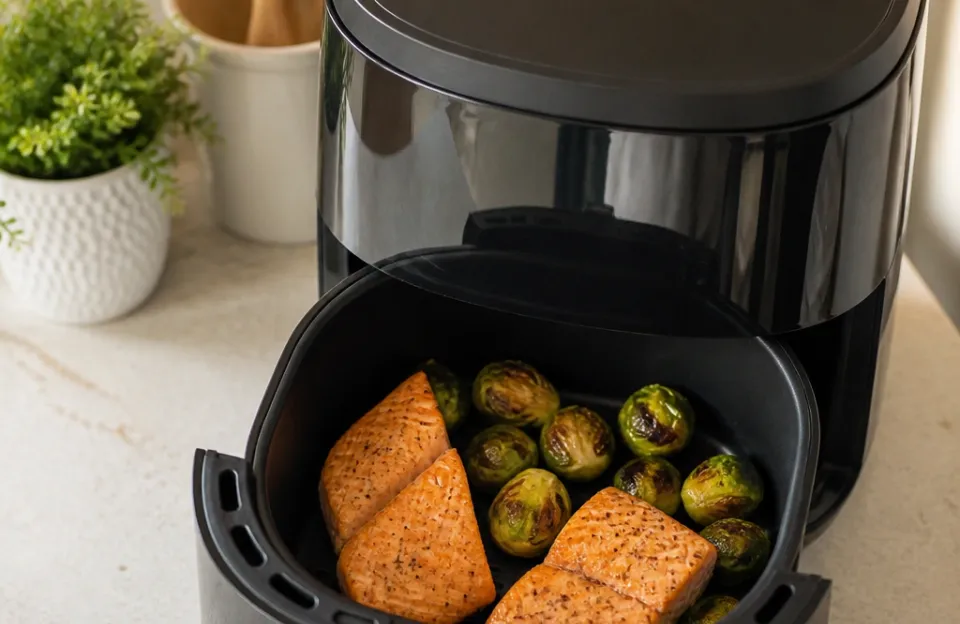
Air fryers with viewing windows solve the most annoying habit of countertop cooking. You stop opening the basket every three minutes to check if your food is burning. A clear glass or plastic panel built into the door or drawer lets you watch browning happen in real time while the heat stays locked inside.
These models work exactly like standard air fryers. They circulate hot air around food using a top-mounted fan and heating element. The only structural difference is the transparent panel on the front, usually paired with an interior light so you can actually see what's happening.
If you cook visually sensitive foods like baked goods or thick cuts of meat, air fryers with viewing windows remove the guesswork. This article covers how the window mechanism works, why it changes cooking behavior, what tradeoffs exist, and how to maintain the glass over time.
How the viewing window changes the cooking process
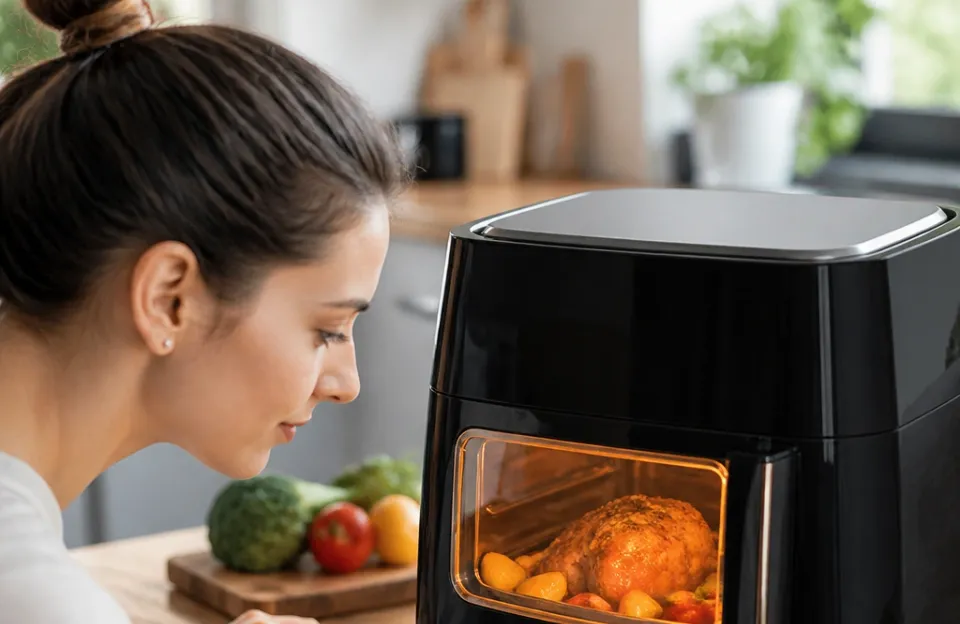
Standard air fryers rely entirely on timers and temperature dials. You set the machine and hope for the best. When you pull the drawer out to check progress, the internal temperature drops rapidly.
The heating element has to work harder to recover that lost heat once you push the basket back in. This constant cycle of opening, checking, and closing leads to uneven cooking, especially for delicate items.
Air fryers with viewing windows eliminate that cycle. You leave the drawer shut. The internal light turns on, either automatically when the machine starts or via a dedicated button.
You watch the surface of the food change color through the glass. This means the fan keeps pushing hot air at a steady rate without interruption. The thermal environment stays stable from the first minute to the last.
This stability matters most for foods that brown quickly. Getting extra crunchy skin on poultry requires sustained high heat. Opening the basket drops the ambient temperature by as much as 50 degrees Fahrenheit in seconds.
A window keeps that heat trapped against the food.
Manufacturers build these windows using tempered glass or heavy-duty, heat-resistant polycarbonate. Tempered glass handles temperatures well above 400°F without warping or cracking. Polycarbonate is lighter and less prone to shattering if dropped, but it can scratch more easily during cleaning.
Both materials are sealed with silicone gaskets to prevent hot air from leaking out around the edges of the panel.
Interior lighting makes the glass useful
A dark window is just a solid wall. Every functional model with a viewing panel includes an interior LED or halogen bulb. Without this light, the rapid air circulation creates shadows inside the basket, making it impossible to judge color changes through the glass.
The light placement varies by design. In drawer-style machines, the bulb usually sits near the top rear, angled down toward the basket. In oven-style air fryers with front-hinged doors, the light might be mounted on the ceiling or the side wall.
The goal is always to illuminate the food directly without shining into your eyes through the glass.
Some cheaper models skip the interior light to save money. They include the window, but you still have to open the door to see anything clearly unless your kitchen is extremely bright. Always verify that a specific model includes an internal light before buying.
A window without illumination defeats its own purpose.
Thermal retention and energy draw
Keeping the drawer closed saves electricity. When the internal temperature drops because you opened the basket, the thermostat signals the heating element to run at full power until the target temperature returns. Doing this five or six times during a single cooking session adds up.
By watching through the glass, the heating element cycles normally. It maintains the set temperature rather than constantly recovering from sudden drops. While the exact wattage savings per meal are small, the cumulative effect over months of daily use reduces wear on the heating coil.
This also means the exterior housing stays slightly cooler, since the machine isn't constantly surging to maximum output.
Air fryers with viewing windows vs standard closed baskets
Choosing between a visible cooking chamber and a traditional opaque one comes down to what you cook most often. Neither design is universally better. They serve different habits.
| Attribute | Models With Windows | Standard Closed Baskets |
|---|---|---|
| Heat Retention | High; drawer stays closed | Drops each time opened |
| Monitoring Method | Visual through glass | Manual timer guessing |
| Weight | Heavier due to glass | Lighter overall |
| Cleaning Needs | Glass requires wiping | No extra surfaces |
| Best For | Baking, thick meats, visual cooks | Quick reheating, simple fries |
| Price Range | Generally higher | Wider budget options |
If you mostly reheat leftovers or cook frozen snacks, a standard basket is fine. You set the timer and walk away. But if you cook raw proteins or bake, the visual feedback loop changes the outcome.
Knowing how long salmon needs under high heat is easier when you can see the flesh turn opaque through the glass rather than relying purely on a clock.
Standard baskets are also lighter. The glass panel and heavier door hinges add weight to the unit. If you move your appliance in and out of a cabinet daily, a lighter closed basket might be less frustrating to handle.
Drawer styles versus oven doors with glass panels
The market splits into two main physical designs for these appliances. Understanding the difference helps you pick the right footprint for your counter.
Front-pull drawers with glass inserts
This is the most common style. It looks like a traditional air fryer, but the front face of the drawer has a rectangular cutout filled with glass. You grab the handle and pull the entire basket toward you to load food.
The advantage here is familiarity. It takes up the same vertical space as a standard unit. The basket slides out completely, making it easy to toss vegetables or flip meat halfway through cooking.
The limitation is the viewing angle. Because the basket slides deep into the housing, you can only see the top layer of food. Items buried at the bottom remain hidden.
You still need to pull the drawer out to shake the basket or check lower layers. Also, grease tends to splatter upward during cooking, landing directly on the interior side of the glass where the heating element sits above it.
Flip-down oven doors
These models look like miniature toaster ovens. The front door hinges at the bottom and flips open. The entire door is usually made of double-paned glass.
Oven-style units give you a wider field of vision. You can see multiple racks at once if the model includes them. They are better suited for baking tasks, like cooking a two-pound loaf of meat where shape and rise matter.
However, they take up more horizontal counter space. When the door flips down, it extends outward, requiring clearance in front of the machine. The hinges also bear the weight of the glass door, which can wear out faster than a simple sliding track if handled roughly.
Does the glass affect airflow patterns?
Airflow is the core mechanic of any air fryer. The fan pushes heated air down the sides of the cooking chamber, across the bottom, and back up through the perforated basket. Introducing a flat glass surface into this circular path raises valid questions about turbulence.
In practice, manufacturers account for this. The glass panel is flush with the interior wall. It doesn't protrude into the air stream.
The aerodynamic profile remains largely unchanged compared to a solid metal wall.
Where issues arise is with condensation. As moisture evaporates from food, it hits the cooler glass surface and turns into steam droplets. If the glass fogs up heavily, visibility drops.
Higher-end models use double-pane glass with an air gap between the layers. This insulation keeps the interior pane closer to the cooking temperature, reducing condensation buildup significantly. Single-pane glass fogs much faster, especially when cooking high-moisture foods like fresh vegetables.
You might notice that food placed directly against the glass side of the basket browns slightly slower than food in the center. The glass absorbs and radiates heat differently than the metal walls. Rotating your food halfway through the cycle fixes this minor inconsistency.
Cleaning the viewing panel without scratching it
Grease vaporizes at high temperatures and settles on every interior surface. The glass window catches a heavy share of this residue. Over time, baked-on oil creates a brown film that blocks the interior light and ruins visibility.
Cleaning the glass requires care. Abrasive scrubbers that work fine on stainless steel will permanently scratch tempered glass or polycarbonate. Once scratched, the glass diffuses light, making it harder to see through even when clean.
- Wait for the unit to cool completely. Rapid temperature changes can stress tempered glass.
- Wipe the interior pane with a damp microfiber cloth and mild dish soap. Avoid harsh degreasers that might damage the silicone seals holding the glass in place.
- For baked-on grease, apply a paste of baking soda and water. Let it sit for ten minutes, then wipe gently.
- Dry the glass thoroughly before the next use. Water spots left behind will bake onto the surface during the next preheating cycle.
Exterior cleaning is simpler. A standard glass cleaner works fine on the outside pane. Just avoid spraying liquid directly into the seams where the glass meets the plastic housing.
Moisture trapped there can cause electrical shorts or mold growth over time. Proper maintenance keeps the appliance running safely, much like routine upkeep on any major kitchen tool.
What to watch for before buying one

Not all windows are built equally. Some manufacturers treat the glass panel as a marketing gimmick rather than a functional tool. There are specific details to check before spending money.
First, confirm the interior light exists and operates independently. Some models wire the light to the fan motor. If the fan pauses, the light goes out.
A dedicated switch or automatic sensor tied to the door position is far superior.
Second, check the size of the window relative to the basket. A tiny two-inch square of glass on a massive six-quart drawer is useless. The window should span at least half the width of the cooking chamber to provide meaningful visibility.
Third, consider the hinge durability on oven-door styles. Look for metal hinges rather than plastic ones. The repeated stress of a heavy glass door swinging open and closed will crack cheap plastic mounts within a year of daily use.
Finally, read user feedback specifically regarding fogging. If dozens of reviews mention that the glass clouds over immediately upon starting, the unit likely uses cheap single-pane construction without proper ventilation channels to clear the moisture.
Edge cases where a window doesn't help
While seeing your food cook is generally helpful, certain scenarios render the glass panel irrelevant.
High-smoke cooking is one. If you are searing fatty steaks or cooking bacon at high temperatures, the smoke generated fills the chamber instantly. Visibility drops to zero regardless of the window size or interior light brightness.
You'll still need to rely on timers and smell. Finding the right duration for fatty cuts becomes essential when smoke obscures the view.
Heavy batter coatings present another issue. Wet batters drip through the basket and splatter violently when they hit the heating element or the hot glass. This creates a mess that bakes onto the window mid-cycle.
By the time the food is done, the glass is opaque with burnt batter.
Small-capacity units also limit the benefit. In a compact two-quart basket, the food sits very close to the glass. Your viewing angle is restricted to whatever piece happens to be pressed against the front.
Larger capacity models, like multi-function oven styles, provide enough distance between the food and the glass to actually observe the whole batch.
Lastly, if you primarily use your machine for dehydrating fruits or slow-roasting nuts at low temperatures, browning isn't the primary visual cue. Texture changes are subtle and hard to spot through glass anyway.
Common mistakes people make with glass-panel models
- Using metal utensils inside the basket. Tongs or forks scrape the interior glass pane when loading or unloading food. Metal marks on tempered glass cannot be removed. Use silicone-tipped tools instead.
- Ignoring the seal condition. The silicone gasket holding the glass degrades over time from heat exposure. If you feel hot air escaping around the edges of the window, the seal is failing. Continuing to use it forces the heating element to run constantly, risking burnout.
- Spraying aerosol cooking oils directly near the glass. Aerosol propellants leave a sticky residue on glass that regular soap struggles to remove. Apply oil to the food itself, away from the appliance walls.
- Assuming the window replaces a thermometer. Seeing brown skin on poultry doesn't guarantee safe internal temperatures. Visual cues indicate surface Maillard reactions, not core doneness. Always verify meat safety according to FDA food safety guidelines using a probe thermometer.
- Washing the drawer while the glass is hot. Submerging a heated glass panel in cold sink water causes thermal shock. The glass can shatter instantly. Always let the unit reach room temperature before washing.
Frequently asked questions
Do air fryers with viewing windows lose more heat than solid ones?
No. The glass used in these appliances is an insulator. Double-paned models actually retain heat better than thin metal walls.
As long as the silicone seals are intact, no warm air escapes through the window. The heat loss associated with standard models comes from users physically opening the drawer, which the window prevents.
Can the glass window shatter during normal cooking?
It is highly unlikely under normal conditions. Manufacturers use tempered safety glass rated for temperatures far exceeding the maximum output of the heating element. Shattering typically only occurs from severe thermal shock, such as pouring cold water on a hot pane, or from direct physical impact like dropping the basket on a tile floor.
Does the interior light consume a lot of extra electricity?
The LED bulbs used in modern models draw negligible power. An interior light typically uses less than two watts. Running it for thirty minutes adds virtually nothing to your energy bill.
Older halogen bulbs draw slightly more, but the difference remains insignificant compared to the 1,500 watts consumed by the main heating coil.
Are replacement windows available if mine gets damaged?
For most major brands, yes. Replacement glass panels and silicone gaskets can be ordered directly from the manufacturer. However, replacing the glass yourself requires disassembling the door or drawer housing.
If the unit is under warranty, contact support first. Attempting a DIY repair on the glass seal often voids the warranty.
Why does my viewing window fog up immediately after starting?
Rapid fogging indicates a large temperature differential between the hot air inside and the cooler glass surface. This is common with single-pane windows. Cooking high-moisture foods accelerates it.
Wiping the exterior won't help, as the condensation forms on the inside. Preheating the unit for a few minutes before adding food allows the glass to warm up gradually, reducing initial fogging.
Is a viewing window necessary for basic frozen foods?
For frozen french fries or pre-breaded nuggets, a window provides minimal practical value. These foods have predictable cook times and uniform browning. Setting a timer based on package instructions works perfectly.
The window proves its worth mainly when cooking raw ingredients where visual cues dictate the exact moment to stop the heat.
Before you decide on a glass panel
Air fryers with viewing windows change how you interact with countertop cooking. They shift the process from blind timing to active observation. If you frequently adjust temperatures based on color, or if you hate the rush of pulling out a hot basket just to check progress, the glass panel earns its place on your counter.
Pay attention to the build quality. Double-pane glass, a dedicated interior light switch, and sturdy hinges separate a genuinely useful tool from a novelty. Keep the glass clean with soft cloths, avoid thermal shock, and remember that seeing browned skin doesn't replace checking internal temperatures.
Used correctly, the window keeps the heat locked in and gives you total control over the final result.