Choosing between a halogen oven and an air fryer comes down to three practical questions: how much counter space you have, what you cook most often, and whether you prioritize crispy textures or sheer volume. Both appliances promise faster cooking than a conventional oven, but they achieve it through fundamentally different heating technologies.
In practice, an air fryer uses intense convection—rapidly circulating superheated air—to mimic deep-frying results with little to no oil. A halogen oven relies on a powerful halogen bulb radiating intense heat downward, assisted by a fan to distribute that warmth around a large glass bowl. This difference in physics means they excel at entirely different tasks. An air fryer is generally the better fit for everyday crisping, quick meals, and easy cleanup. A halogen oven shines when you need to roast a whole bird on a tight budget without turning on your main oven. You can also read our guide on how to clean inside of toaster oven air fryer.
This guide breaks down exactly how each appliance works, compares their real-world performance across key categories, reviews top models for 2026, and helps you decide which one earns permanent space on your countertop.
How They Actually Work: The Technology Explained
Understanding the mechanics behind these appliances prevents buyer’s remorse. Marketing materials often blur the lines, calling both "air fryers" or "convection ovens," but the heating elements behave very differently.
Air Fryer Mechanics
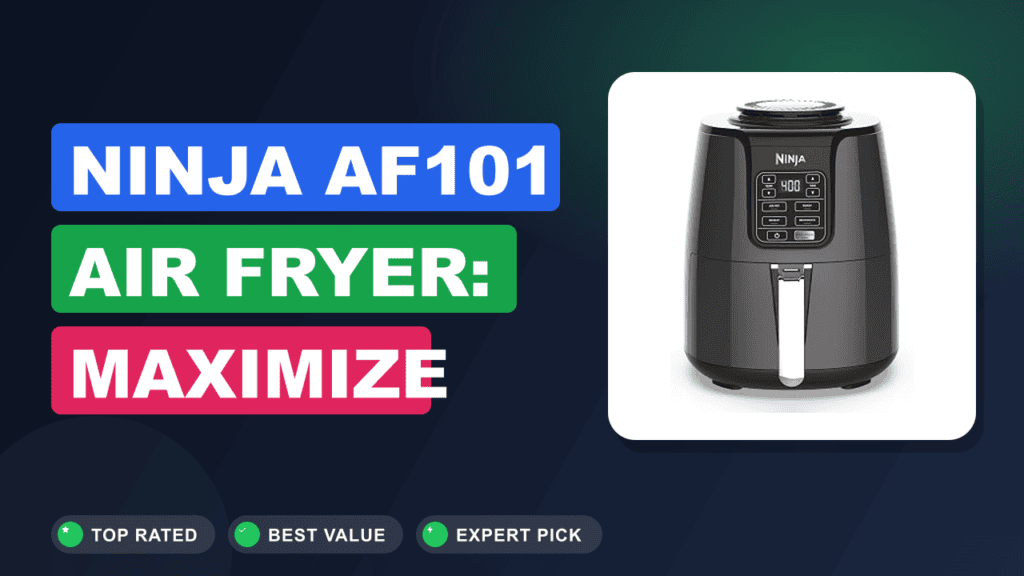
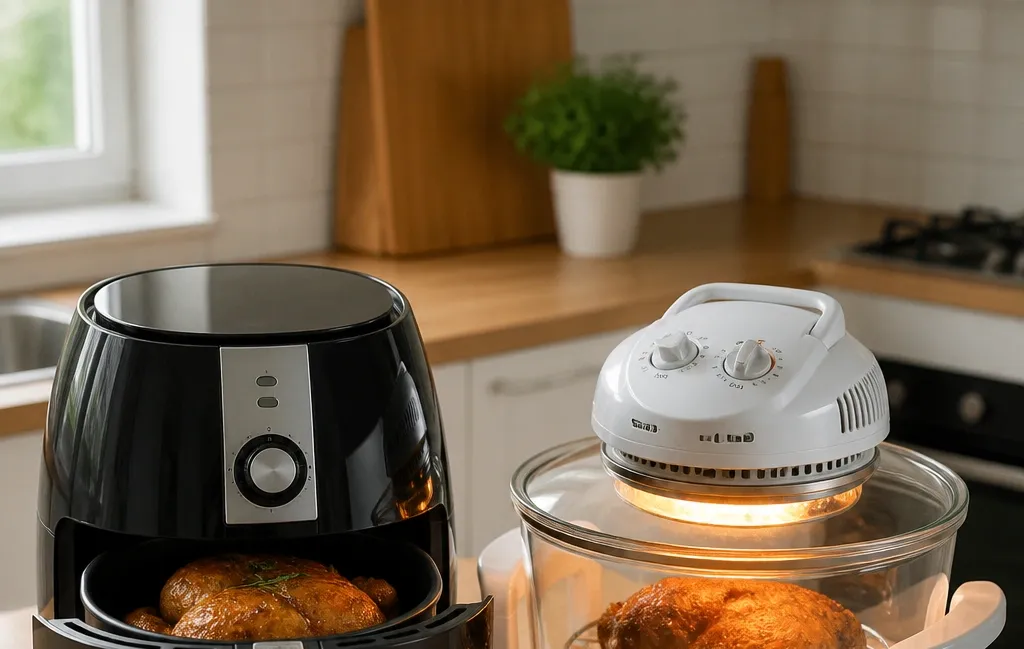
An air fryer is essentially a highly optimized, compact convection oven. It houses a coiled electric heating element near the top, paired with a high-speed fan directly above it. When turned on, the fan forces hot air downward and around the food at rapid speeds. The basket design is crucial here: perforated bottoms and elevated crisper plates ensure the air hits the food from all angles simultaneously. This constant bombardment of dry, superheated air triggers the Maillard reaction quickly, creating a crunchy exterior while keeping the interior moist.
Halogen Oven Mechanics
A halogen oven (often called a turbo broiler) uses a halogen lamp inside the lid to generate radiant heat. Unlike the hidden coils in an air fryer, this light source emits infrared radiation that directly heats the surface of the food, much like a traditional broiler. A built-in fan circulates the ambient hot air inside the large tempered glass bowl to prevent cold spots. Because the heat originates from a single point source at the top, food closest to the bulb browns fastest, which is why rotating items mid-cook is often necessary.
Head-to-Head Comparison: Air Fryer vs Halogen Oven
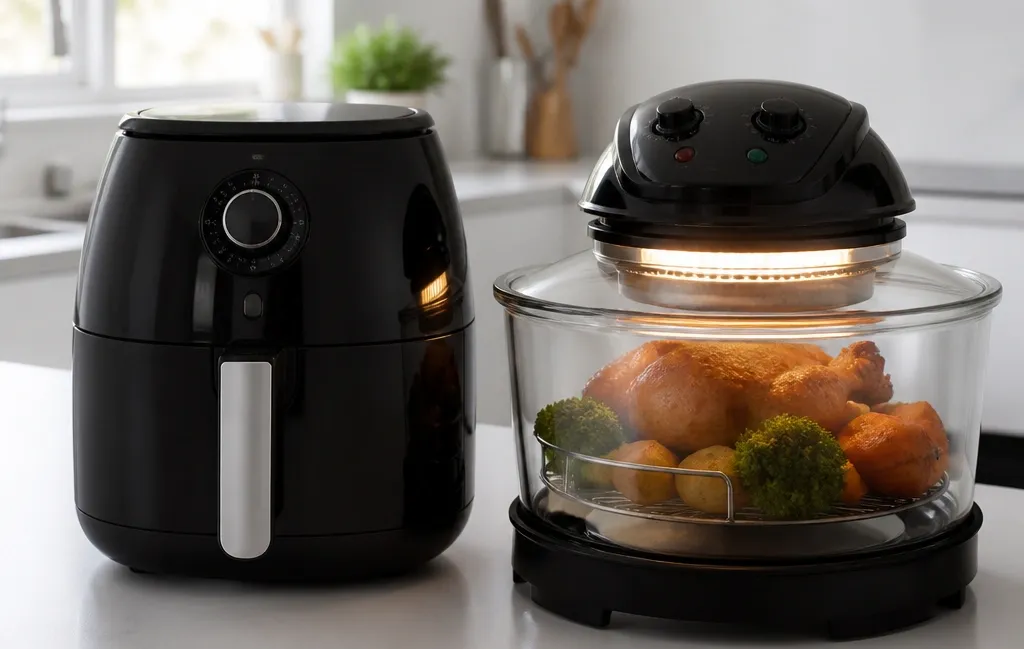
To make a confident decision, you need to compare them across the metrics that actually impact your daily routine.
| Feature | Air Fryer | Halogen Oven |
|---|---|---|
| Heating Method | Convection (element + high-speed fan) | Radiant (halogen bulb + fan) |
| Crisping Ability | Excellent; mimics deep frying closely | Good; better suited for roasting/baking |
| Preheat Time | 3–5 minutes (or none for some models) | Nearly instant (1–2 minutes) |
| Capacity Range | 2L (personal) to 12L+ (oven-style) | Typically 12L to 17L (with extender ring) |
| Visibility | Opaque baskets (unless windowed model) | Clear glass bowl allows full visibility |
| Cleaning Effort | Low; non-stick baskets are dishwasher safe | High; heavy glass bowl requires manual washing |
| Maintenance | Minimal; no bulbs to replace | Bulbs burn out and require replacement |
| Countertop Footprint | Compact to medium | Large and bulky |
| Typical Price Range | $50–$300+ / £40–£250+ | $50–$130 / £40–£100 |
Cooking Performance and Texture
If your primary goal is achieving a crunch—whether for frozen chips, chicken wings, or breaded fish—an air fryer is the undisputed winner. The concentrated airflow strips moisture from the surface rapidly. Halogen ovens can brown food well, but they tend to produce a roasted texture rather than a fried one. A common mistake is expecting a halogen oven to replicate the shatteringly crisp skin of air-fried chicken wings; it will cook them thoroughly, but the texture will be closer to traditional oven-roasted poultry.
Capacity and Space Requirements
Halogen ovens win on raw volume per dollar. A standard 12-liter glass bowl, combined with an extender ring, pushes capacity to 17 liters. You can easily fit a 5-pound whole chicken or a small turkey inside. However, that glass bowl demands significant counter space and cabinet height.
Air fryers range wildly in size. If you need larger batch capabilities without sacrificing the crisping power, exploring a reliable dual-basket setup allows you to cook proteins and sides simultaneously. Just remember to measure your available space carefully before buying, keeping in mind standard cabinet clearances so the appliance actually fits beneath your upper cupboards.
Energy Efficiency
Both appliances use significantly less electricity than preheating a full-sized wall oven. According to the U.S. Department of Energy, using smaller, targeted cooking appliances instead of conventional ovens is one of the most effective ways to reduce household energy consumption. Because air fryers cook smaller batches faster via intense convection, they often edge out halogen ovens in total wattage used per meal, though halogen ovens heat up almost instantly.
Cleaning and Maintenance
This is where user experiences diverge sharply. Air fryer baskets feature non-stick coatings that wipe clean easily or survive a trip through the dishwasher. Halogen ovens require you to lift and wash a heavy, fragile glass bowl. Over time, baked-on grease can cloud the glass. Furthermore, the halogen bulb has a finite lifespan. While replacements are usually inexpensive, sourcing the exact wattage and fitting for older or generic models can become frustrating.
Top Halogen Ovens Reviewed (2026 Guide)
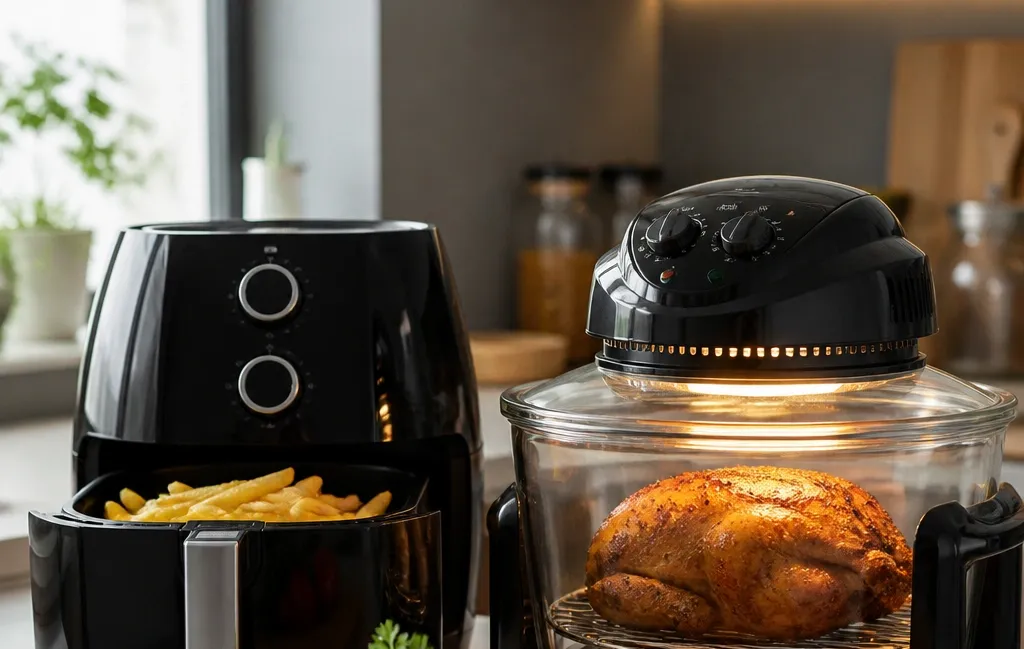
If you lean toward the halogen oven for its volume and budget-friendly price tag, these are the configurations that consistently perform best.
Generic 12L Halogen Oven with Extender Ring
This category covers widely available unbranded or lesser-known models that dominate the budget tier. They rely on simple analog dials and a basic halogen bulb.
- Best for: Roasting whole chickens or large cuts of meat on a strict budget.
- Price range: $50–$90 / £40–£70
- Pros: Extremely affordable entry point; the included extender ring boosts capacity to 17L; clear glass lets you monitor browning without lifting the heavy lid; zero preheat wait time.
- Cons: Analog dials lack precision; the glass bowl is cumbersome to wash; replacement bulbs for obscure brands can be difficult to source; heat distribution requires manual food rotation halfway through cooking.
In practice, these generic models are straightforward workhorses. You place your food on the lower rack, set the timer, and watch it cook. They are ideal if you primarily want a large, fast-heating vessel for Sunday roasts and do not care about digital presets.
Andrew James 17L Halogen Oven
The Andrew James model represents a step up in build quality within the halogen category. It typically ships with a higher-grade glass bowl, sturdier racks, and sometimes a self-cleaning function that uses water and detergent to loosen grease.
- Best for: Larger families needing dependable extra oven space.
- Price range: $80–$130 / £60–£100
- Pros: Generous 17L capacity right out of the box; includes useful accessories like tongs and multi-level racks; more robust hinges and lid construction than ultra-cheap alternatives.
- Cons: Still occupies a massive footprint on the counter; heavy bowl remains a cleaning chore; lacks the precise temperature control needed for delicate baking.
This model balances cost and consistent performance. The included racks allow you to elevate meats so fat drips away, improving the final texture. However, if you find yourself constantly battling uneven browning, you might prefer upgrading to a modern convection appliance.
Best Air Fryers for Every Kitchen Size

Air fryers have evolved rapidly. Choosing the right one depends heavily on your household size and whether you want a dedicated crisping tool or a multi-cooker hybrid.
Ninja Foodi Max XL 7-in-1
Ninja’s multi-cookers remain top-tier because they combine genuine pressure cooking with excellent air frying. The Max XL utilizes a dedicated crisping lid that drops down over the pot.
- Best for: Households wanting to consolidate multiple appliances into one footprint.
- Price range: $180–$300 / £150–£250
- Pros: Exceptional crisping power; true pressure cooking tenderizes tough cuts in minutes before the air fry lid finishes them; large 7.5L+ capacity handles family dinners easily; durable non-stick surfaces.
- Cons: Premium price point; heavy unit with two separate lids creates storage challenges; learning curve to master the transition between functions.
When you pressure-cook a pork shoulder and then immediately switch to the air crisp function, the result is fall-apart tender meat with a caramelized bark. If you are comparing premium brands, weighing the differences between competing popular models helps clarify which interface suits your workflow.
Cosori Pro II Air Fryer
The Cosori Pro II is a dedicated basket-style air fryer focused entirely on doing one thing perfectly. It strips away the bulk of multi-cookers to deliver consistent, even heat.
- Best for: Daily users who prioritize effortless crisping and simple cleanup.
- Price range: $120–$180 / £100–£150
- Pros: Highly intuitive digital display; excellent preset programs for common foods; shake reminders ensure even cooking; sleek, relatively quiet operation; square basket maximizes usable surface area compared to round designs.
- Cons: Lacks a viewing window; cannot handle liquids or soups like a multi-cooker; limited to air frying, roasting, and reheating.
For everyday tasks like reviving leftover pizza or cooking a quick batch of vegetables, the Cosori Pro II removes all friction. You select a preset, press start, and walk away. If you prefer seeing your food cook without opening the drawer, looking into a model with a clear window solves that specific annoyance.
Instant Pot Vortex Mini
Compact kitchens demand compact solutions. The Vortex Mini shrinks the core air frying technology down to roughly 2 quarts, making it perfect for dorms, RVs, or solo cooks.
- Best for: Individuals, couples, or secondary kitchens with severe space limits.
- Price range: $60–$100 / £50–£80
- Pros: Tiny footprint stores easily in a cupboard; heats up almost instantly due to low volume; simple interface; basket is dishwasher safe.
- Cons: Cannot fit more than two small chicken breasts at once; lighter build quality feels less premium; unsuitable for batch cooking or family meals.
Do not buy this expecting to roast a chicken. Buy it when you want two servings of crispy fries in ten minutes without taking up half your counter.
Practical Tips for Better Results
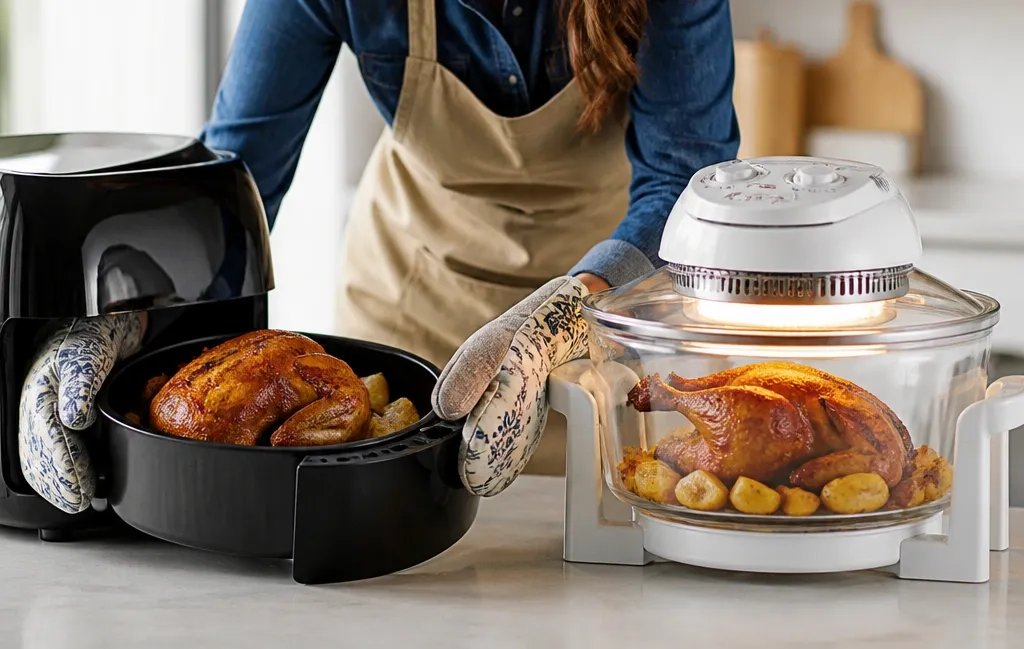
Regardless of which appliance you choose, technique matters more than hardware. A frequent error with both devices is overcrowding the cooking chamber. Air needs physical space to circulate; stacking food leads to steaming rather than crisping. Cook in batches if necessary.
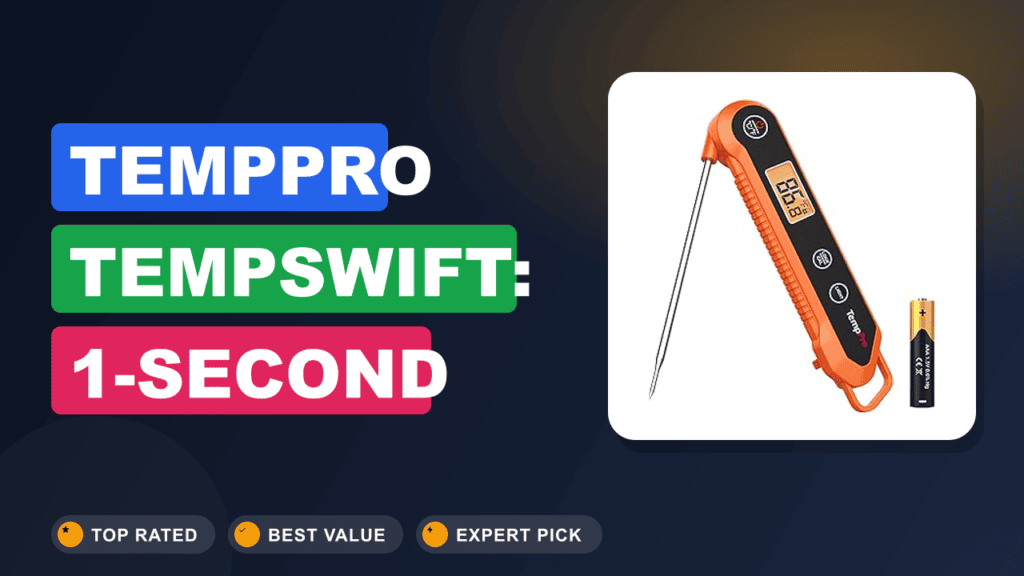
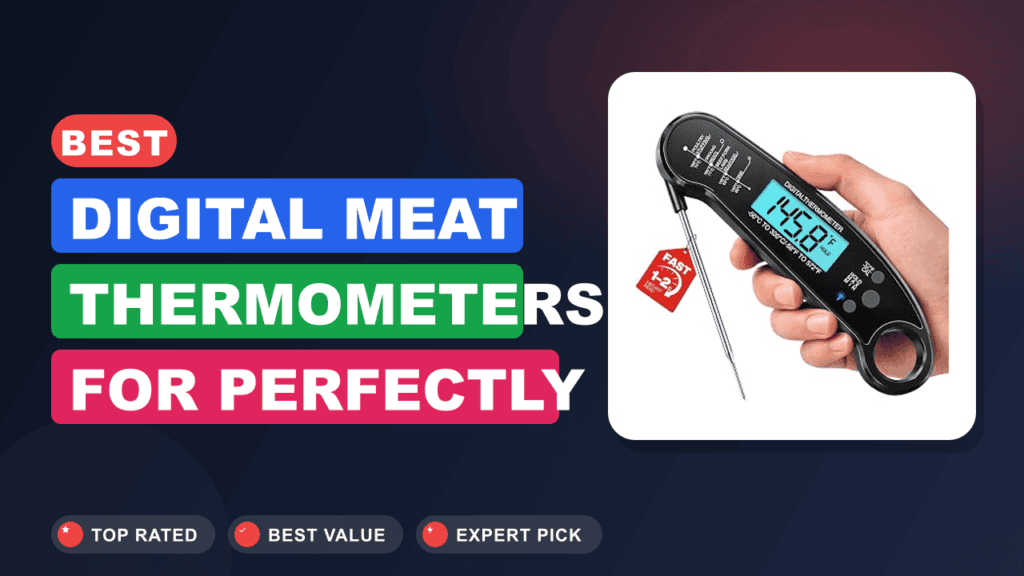
Furthermore, relying solely on built-in timers for thick cuts of meat is risky. Always verify doneness internally. Using a dependable wireless probe takes the guesswork out of cooking chicken or pork in either an air fryer or a halogen oven. If you notice your readings fluctuating wildly during a cook, it is worth investigating whether your sensor is giving false data due to placement or calibration issues. Proper internal monitoring ensures safety without drying out your food.
Which Appliance Should You Actually Buy?
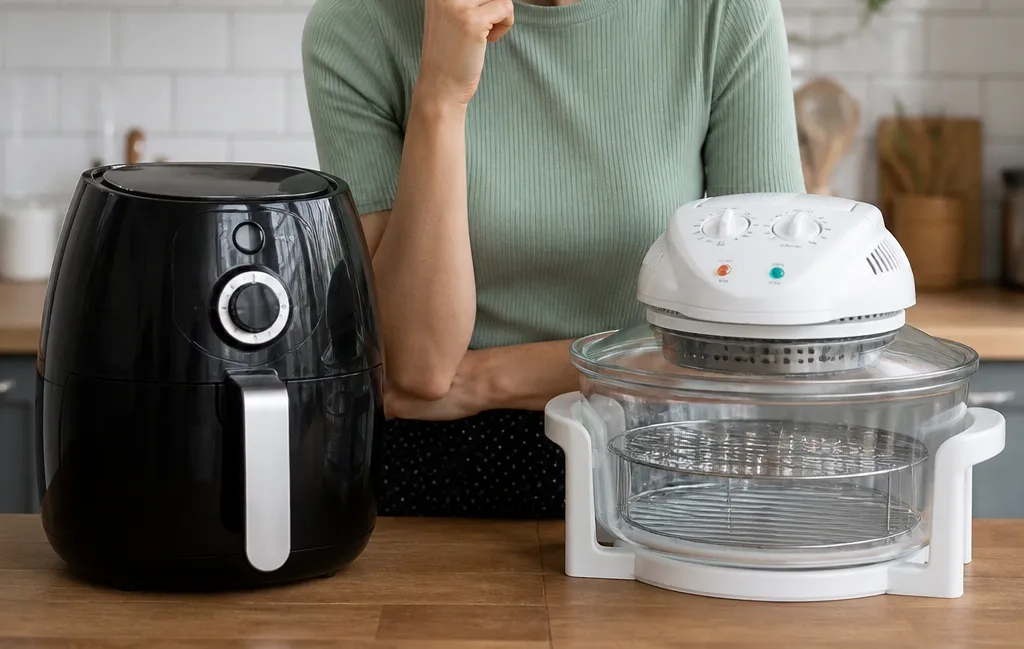
The decision ultimately rests on your kitchen constraints and culinary habits.
Choose a halogen oven if:
- You are on a strict budget under $100/£100.
- Your primary goal is roasting large, whole items like chickens or joints of meat.
- You love visually monitoring the cooking process through glass.
- You have ample counter space and do not mind washing a heavy bowl by hand.
Choose an air fryer if:
- You crave genuinely crispy, "fried" textures with minimal oil.
- You value fast, hassle-free cleanup via dishwasher-safe parts.
- You have limited counter space and need a compact footprint.
- You want precise digital temperature controls and automated presets.
For the vast majority of modern households in 2026, the air fryer provides a more refined, versatile, and convenient experience. The initial investment pays off daily through faster prep times and vastly superior texture on everyday foods. However, the halogen oven remains a highly capable, budget-friendly alternative for those who prioritize volume over crunch. Evaluate your weekly menu—if it leans heavily toward roasted dinners, the halogen serves you well; if it features snacks, wings, and quick sides, invest in the air fryer.
Frequently Asked Questions

Is a halogen oven still worth buying in 2026?
Yes, but only for specific needs. If your priority is maximizing cooking volume on a tight budget, a halogen oven delivers 17 liters of space for under $100. However, if you expect deep-fryer-level crispiness or effortless cleanup, modern air fryers have largely surpassed halogen technology in those areas.
Can an air fryer completely replace a halogen oven?
For most daily tasks, yes. Basket-style air fryers handle crisping, roasting vegetables, and reheating far better than halogen ovens. The only area where a standard air fryer falls short is accommodating extremely large items, like a whole turkey. If you need both high volume and crisping power, consider a large-capacity oven-style air fryer rather than a traditional halogen bowl.
Which appliance consumes less electricity?
Both consume significantly less energy than heating a full-sized conventional oven. Air fryers generally use slightly less total energy per meal because their intense, concentrated convection cooks food faster. Halogen ovens draw similar wattage but may run longer for dense items. In either case, switching from a wall oven to a countertop appliance noticeably reduces energy usage.
Why does my food cook unevenly in a halogen oven?
Halogen bulbs emit radiant heat from a single point at the top of the lid. Food placed directly underneath browns much faster than food on the edges. To fix this, you must manually rotate your dishes or flip meats halfway through the cooking cycle. Air fryers avoid this issue by using fans designed to bounce superheated air uniformly around the entire basket.
Do air fryers need preheating?
Many modern air fryers reach cooking temperature in under three minutes, and some manufacturers advise skipping preheating entirely for certain foods. However, adding frozen items to a fully preheated basket guarantees a better initial sear and crispier exterior. Always check your specific model's manual, as instructions vary between basket and oven-style designs.