When your countertop cooker stops heating or the nonstick coating starts flaking, you need to weigh your air fryer replacement options. You can buy a new basket-style unit, switch to a toaster oven model with convection, go back to a standard oven, or use a stovetop method. The right choice depends on your kitchen space, how often you cook, and what you usually make.
This guide breaks down each path so you can pick the one that fits your routine. We will look at buying another dedicated machine, moving to a multi-cooker, using equipment you already own, and knowing when it is time to walk away from rapid-air cooking entirely.
Why Your Current Machine Might Be Done
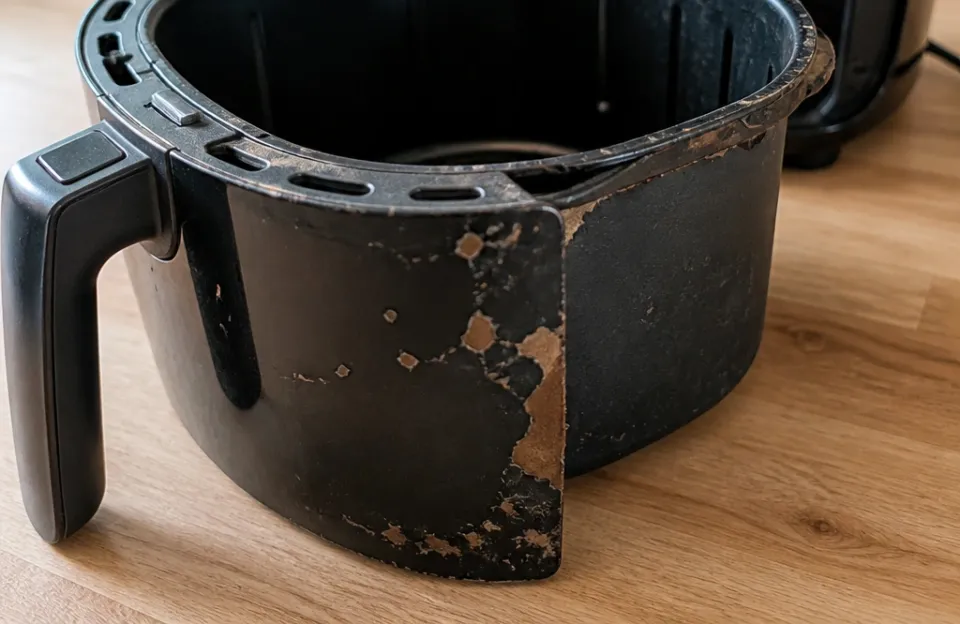
Air fryers have a limited lifespan. Most basket-style models last between two and five years with daily use. The heating element can burn out, the fan motor can fail, or the nonstick coating on the basket can peel off into your food.
Once the coating chips, the basket becomes hard to clean and potentially unsafe. That is usually the point where repair costs more than a new unit.
If your machine still turns on but takes twice as long to brown food, the heating element is likely degrading. A rattling noise means the fan bearings are worn out. These are mechanical failures that do not fix themselves.
At that stage, looking at air fryer replacement options is your only practical move.
You might also want to replace a working unit because your cooking habits changed. A 2-quart model works for one person, but a growing household needs a 6-quart basket or an oven-style machine. Upgrading for capacity is a common reason people shop for a new appliance.
If you have been timing meals carefully, like figuring out how long root vegetables take in a smaller basket, a larger machine changes those calculations entirely.
Buying Another Basket-Style Air Fryer
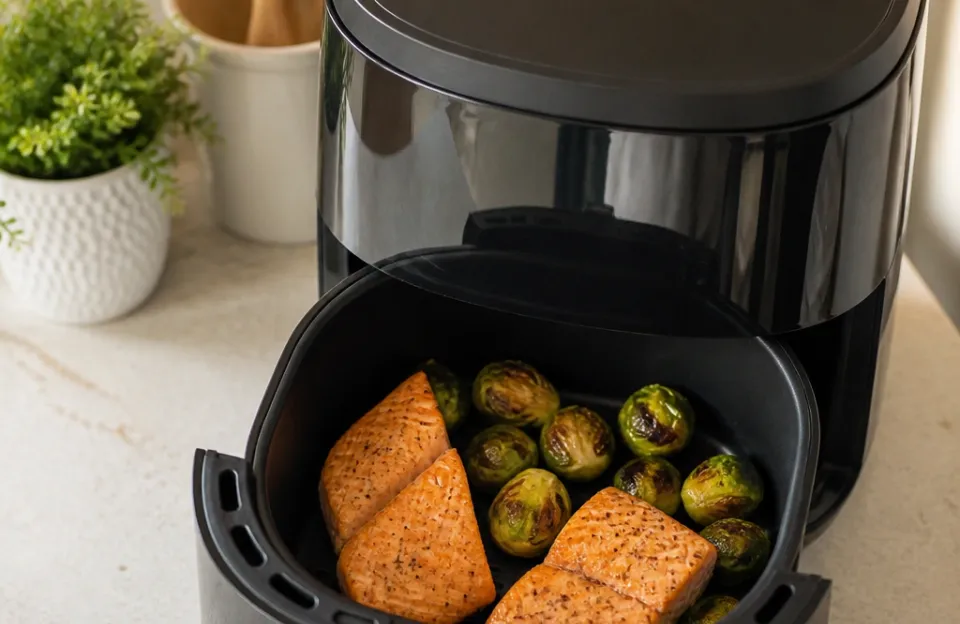
The most direct route is replacing your old unit with a new basket-style air fryer. These machines use a top-mounted heating element and a powerful fan to push hot air around the food. They heat up fast and crisp the outside of food quickly.
Basket models are ideal if you mostly cook frozen snacks, chicken pieces, or roasted vegetables. They take up less counter space than oven-style units. Cleaning is usually simple because you just pull out the basket and wash it.
The main limitation is capacity. Even large basket models struggle with bulky items. You cannot easily roast a whole chicken or bake a casserole in a round basket.
Food also needs space for the air to circulate. Overcrowding the basket leads to soggy results.
If you stick with this style, look for a model with a ceramic-coated basket rather than traditional PTFE nonstick. Ceramic coatings tend to last longer under high heat. Brands like Ninja and Cosori offer reliable basket models in various sizes.
For example, the Ninja AF101 handles everyday tasks well for small households. Always check the wattage. Higher wattage means faster preheating and better browning.
| Appliance Type | Average Capacity | Counter Footprint | Preheat Time | Best Used For |
|---|---|---|---|---|
| Basket Air Fryer | 2 to 6 quarts | Small | 2 to 3 minutes | Fries, wings, veggies |
| Toaster Oven Air Fryer | 10 to 30 liters | Large | 4 to 7 minutes | Whole chickens, baking, toast |
| Standard Convection Oven | 4 to 6 cubic feet | Built-in | 10 to 15 minutes | Large batches, roasting |
| Stovetop Pan | Varies by pan | None | 3 to 5 minutes | Searing, shallow frying |
Switching to an Air Fryer Toaster Oven Combo
If you are tired of having a single-use appliance on your counter, an air fryer toaster oven is one of the best air fryer replacement options available. These machines combine a traditional toaster oven with a convection fan strong enough to mimic rapid-air frying.
Combo units give you much more cooking space. You can fit a 12-inch pizza, six slices of bread, or a whole chicken inside. Many models include multiple racks, letting you cook two things at once.
This makes them great for families or anyone who meal preps.
The tradeoff is size and speed. Toaster ovens take up significant counter space. They also take slightly longer to preheat than a small basket unit.
Because the interior cavity is larger, the fan has to work harder to circulate the air. You might notice that fries come out slightly less crispy than they would in a dedicated basket model.
Look for models with digital controls and multiple heating elements. Units with both top and bottom quartz elements heat more evenly than those with a single metal rod. Cuisinart and Breville make popular combo units.
If you want something specific, reading up on a multi-function glass-door model can help you decide if visibility during cooking matters to you.
Using Your Full-Size Convection Oven
You already own an appliance that does exactly what an air fryer does. A full-size convection oven uses a fan to circulate hot air around the food. An air fryer is simply a small, highly concentrated convection oven.
If your countertop unit dies, your built-in oven can handle the workload.
To get air-fried results in a standard oven, you need the right setup. Place a wire cooling rack inside a rimmed baking sheet. Put the food on the rack.
This allows the hot air to hit the bottom of the food, preventing a soggy base. Set your oven to the convection setting and increase the temperature by about 25 degrees compared to a standard recipe.
This method is perfect for large batches. When you are preparing dinner for a crowd, trying to get salmon fillets perfectly cooked without overcrowding a tiny basket is frustrating. A half-sheet pan solves that problem immediately.
The downside is energy use and time. Heating a massive oven cavity to cook a single serving of french fries wastes electricity. It also heats up your kitchen, which is unpleasant in the summer.
Use your full-size oven for big jobs, and consider a smaller appliance for daily snacks.
Returning to Traditional Stovetop Methods
Before countertop appliances existed, people achieved crispy textures using pans, oil, and heat. Reverting to stovetop cooking is a valid option if you want to reduce electronic clutter in your kitchen.
A heavy cast-iron skillet retains heat exceptionally well. You can achieve a deep sear on meats and vegetables that rivals any rapid-air machine. Shallow frying in a quarter-inch of neutral oil gives you a crunch very similar to air frying, using far less oil than deep frying.
For things like bacon, a cold-start method in a skillet renders the fat slowly and leaves the strips perfectly crisp. You do not need a machine to figure out when the strips are done rendering. You just watch the pan.
Stovetop cooking requires more active attention. You have to flip the food, monitor the oil temperature, and deal with grease splatter. Cleanup involves scrubbing a heavy pan rather than tossing a basket into the dishwasher.
But the flavor you get from direct contact with hot metal is something a fan blowing hot air cannot replicate.
Multi-Cookers With Air Frying Lids
Pressure cookers changed home cooking a few years ago, and many brands now sell air frying lids that attach to the same pot. Devices like the Ninja Foodi or Instant Pot Duo Crisp let you pressure cook a piece of meat until tender, then swap the lid to crisp the exterior.
This approach saves space because you only store one base pot. The air frying function works similarly to a basket model, using a heating element and fan built into the specialized lid.
Multi-cookers are heavy and bulky. The air frying lid is often large and awkward to store when not in use. The capacity is also limited by the shape of the pressure cooking pot, which is deep and narrow rather than wide and shallow.
Wide baskets yield better browning because food sits in a single layer. In a deep pot, you have to stack food, which blocks airflow.
If you already own a compatible pressure cooker, buying the air fryer lid is a cheap way to test if you even miss your broken standalone unit. It might be the only purchase you need to make.
Knowing When to Skip the Countertop Appliance Entirely
Sometimes the best choice among air fryer replacement options is to buy nothing at all. If your previous machine spent most of its life sitting unplugged under a cabinet, replacing it just adds to the clutter.
Take inventory of what you actually used it for. If you only used it to reheat pizza or warm up leftovers, your regular oven or a skillet does that fine. If you bought it for a specific diet phase that has passed, you might not need the tool anymore.
Many people buy these appliances thinking they will change their cooking habits. When they realize that shaking a basket every five minutes is tedious, the machine gets abandoned. Before spending money again, honestly assess whether the convenience was real or just a novelty.
Safety Rules When Swapping Appliances
Whenever you introduce a new heating appliance to your kitchen, safety comes first. Check the electrical requirements. Most basket-style units draw between 1400 and 1800 watts.
Plugging a high-wattage appliance into an overloaded power strip is a fire hazard. Always plug directly into a wall outlet.
Keep the new machine away from walls and cabinets. The exhaust vent pushes out extremely hot air. Blocking this vent causes the internal components to overheat and fail prematurely.
Leave at least five inches of clearance on all sides.
If you switch to stovetop methods involving hot oil, keep a lid nearby to smother potential grease fires. Never use water on an oil fire. Familiarize yourself with basic kitchen fire safety through resources like the United States Fire Administration.
Knowing how to react prevents a minor cooking mishap from destroying your kitchen.
Also, register your new appliance with the manufacturer. If there is a defect or a recall, they will notify you directly. Unregistered products leave you relying on the news to catch safety alerts.
How to Dispose of the Broken Unit
Once you pick from your air fryer replacement options, you have to deal with the dead one. Do not throw it in your regular trash bin. Electronic waste contains materials that should not sit in a landfill.
Check your local municipal waste website for e-waste drop-off days. Many cities host quarterly events where you can hand over old appliances for proper recycling. Retailers that sell electronics sometimes have permanent collection bins near their entrances.
If the unit still partially works, consider donating it. Some community workshops repair small appliances and give them to families in need. Strip any personal accessories like silicone liners before handing it over.
Frequently asked questions
Can I use my microwave instead of buying a new air fryer?
Microwaves and air fryers do completely different things. A microwave excites water molecules to heat food from the inside out, which leaves surfaces soft and soggy. An air fryer uses dry, circulating heat to trigger the Maillard reaction, creating a browned, crispy exterior.
You cannot replicate air-fried texture in a standard microwave. Some newer microwaves have a convection mode built in, and those can work as a substitute.
Is it worth repairing a broken basket unit?
In most cases, no. The cost of replacement parts, shipping, and labor usually approaches the price of a brand-new entry-level model. If the issue is a blown thermal fuse and you are comfortable with basic electronics, a DIY fix costs a few dollars.
But if the heating element or control board is dead, buy a new machine.
Which option is better for cooking large batches of chicken wings?
A full-size convection oven with a wire rack setup is the best choice for large batches. Basket-style machines force you to cook wings in small groups to prevent overcrowding. Trying to cram too many pieces into a small drawer ruins the texture.
An oven lets you spread three or four pounds of wings across a sheet pan in a single layer, giving you consistent results without standing over the machine shaking a basket. Getting that crispy skin on drumettes relies heavily on spacing them out properly.
Do toaster oven combos use more electricity than basket models?
Yes, generally they do. A larger cavity requires more energy to reach and maintain the target temperature. A typical basket model runs around 1500 watts, while a large toaster oven combo might pull 1800 watts and run for a longer period to achieve the same level of browning.
However, if the combo unit replaces both your toaster and your air fryer, the overall footprint and total energy draw in your kitchen might decrease.
How do I choose between a ceramic basket and a stainless steel one?
Ceramic-coated baskets provide a nonstick surface that makes cleanup easy, but the coating will eventually wear down after a few years of heavy use. Stainless steel baskets last indefinitely and do not chip, but food sticks to them aggressively unless you use oil or parchment paper. If you prioritize easy washing and do not mind replacing the unit every few years, go with ceramic.
If you want longevity and do not mind scrubbing, choose stainless steel.
Deciding What Stays on Your Counter
Picking the right path comes down to your daily routine. If you love the speed and crunch of rapid-air cooking, grab a new basket model or a combo unit. If you realize you only used the old machine for reheating, save your money and use your oven.
There is no universal winner among air fryer replacement options. A family of five needs the volume of a toaster oven combo or a convection oven. A college student in a dorm needs a compact 2-quart basket.
Look at what you cooked most often in the old machine, measure your available counter space, and buy the tool that actually matches your life. If you end up going back to basics, mastering a heavy-duty meatloaf recipe in a standard oven might remind you why traditional cooking never really went away.