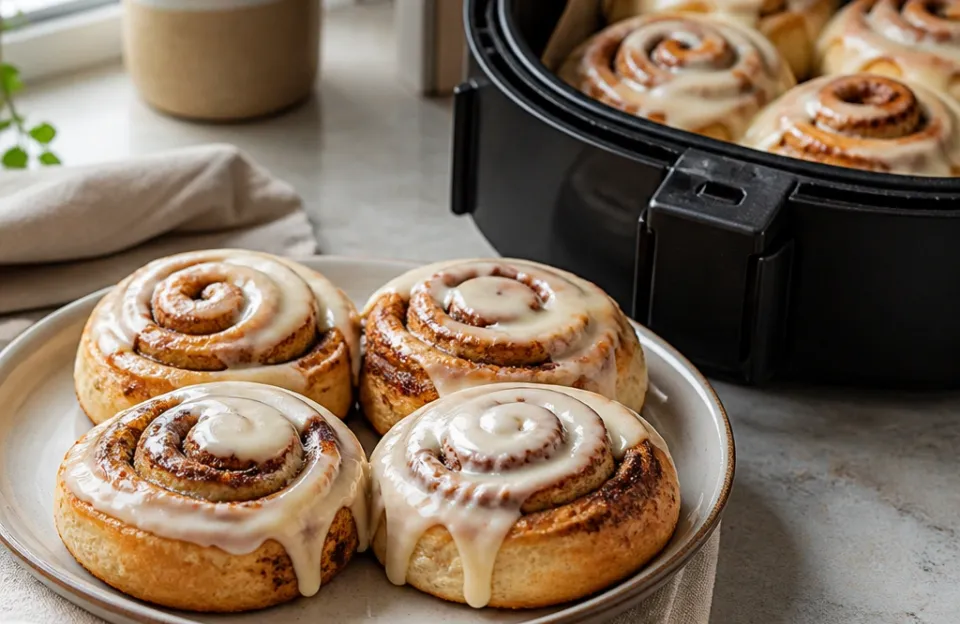
Air fryer cinnamon rolls cook in a fraction of the time an oven requires, and the result can be gooey in the center with lightly caramelized edges. The right temperature and time depend on your dough: refrigerated canned dough and homemade yeast dough behave differently, and every air fryer model runs a little hot or cool. This guide gives you starting points drawn from published recipe guides, doneness checks backed by food safety guidance, and fixes for the most common problems.
Quick Answer: Temperature and Time at a Glance
Air fryer foods generally require 5 to 25 minutes of cooking at 350°F to 400°F. Published recipe guides give cinnamon rolls a range of starting points rather than one universal setting. One guide suggests roughly 6 to 12 minutes for refrigerated canned dough, depending on brand, size and your air fryer model. Another suggests 8 to 12 minutes for homemade yeast dough and larger rolls, with a toothpick inserted in the center coming out clean or with minimal crumbs. A third offers a shorter starting window of 4 to 7 minutes at 170°C (338°F) for smaller portions. Because these guides differ, treat each figure as a starting point and adjust for your own appliance.
These ranges come from cooking blogs, not manufacturer manuals, so treat them as starting points. Always follow the package or recipe directions when available, since USDA advises consumers to do so to ensure food is safely cooked.
Why Air Fryer Cinnamon Rolls Cook Differently Than an Oven
Air fryers are essentially countertop convection ovens that cook food faster and consume less energy than larger ovens. A powerful fan circulates hot air directly over the food, which browns the outside quickly and shortens the total cook time. That same intensity is why cinnamon rolls can dry out or scorch on top if you walk away.
Overcrowding the basket prevents enough air circulation to properly cook the food, so a large batch may need to be cooked in batches rather than all at once. Give each roll breathing room and cook in rounds if necessary.
Preparing the Basket and Choosing Your Dough
Lightly oil the basket or the dough itself before cooking. Instead of aerosol spray, oiling the food or using a small amount of high-smoke-point oil on the basket is suggested, along with silicone-tipped tools and a soft sponge to avoid scratching the coating. The propellants in aerosol sprays can degrade nonstick surfaces over time, though specific air fryer manuals may differ in their guidance.
For dough, you have two main options. Refrigerated canned dough is the faster route, since it is already portioned and shaped. Homemade yeast dough takes longer because it needs mixing, kneading and rising, but it lets you control the size and filling. USDA advises refrigerating pastry dough according to package directions and keeping the refrigerator at a safe 40°F. Check your package for any brand-specific air fryer instructions before you start.
Setting the Right Temperature for Air Fryer Cinnamon Rolls
Start at 350°F for most doughs. This sits within the general air fryer range of 350°F to 400°F, and published cinnamon roll guides cluster at or below this level. Watch the tops and the filling as they cook, since sugar can darken quickly in a small, fast-moving air chamber.
If your rolls are browning too fast on top, drop to 330°F to 340°F and extend the time. A lower temperature gives thicker dough more time to cook through before the surface darkens. A quick-read thermometer helps you confirm the center without cutting into a roll.
Cooking Times Based on Size and Dough Type
Cooking times vary by dough type, roll size and your specific appliance. Here is a general comparison based on the retrieved guides.
| Dough Type | Suggested Temperature | Suggested Time | Notes |
|---|---|---|---|
| Refrigerated canned dough | 330°F to 360°F | 6 to 12 minutes | Depends on brand and size |
| Homemade yeast dough | 350°F | 8 to 12 minutes | Toothpick should come out clean or with minimal crumbs |
| Small or mini rolls | 338°F | 4 to 7 minutes | Starting point for smaller portions |
These figures come from published recipe guides, not from manufacturer manuals, and they vary between sources. Use them as a first attempt, then adjust based on how your own air fryer performs.
These ranges are starting points. Each air fryer will have varying cooking times due to the size and power of the appliance. Use a food thermometer to confirm the center is fully cooked, and check your package or recipe for any doneness guidance it provides.
How to Tell When They Are Done
Visual cues help, but a thermometer is more reliable. A toothpick inserted in the middle should come out clean or with minimal crumbs. The dough should look set and slightly golden rather than wet or gummy in the center.
The USDA safe minimum internal temperature chart does not list a specific temperature for cinnamon rolls or sweet yeast dough. It does list 160°F for eggs and 165°F for leftovers and casseroles, which are the closest applicable categories, but neither is a cinnamon-roll-specific doneness target. For dough made with raw flour and eggs, cooking is the only way to be sure the food is safe to eat. The FDA also notes that home heat treatment of raw flour may not effectively kill all bacteria and does not make it safe to eat raw. This means your air fryer needs to fully cook the dough, not just warm it. Follow your package or recipe directions for doneness, and if you are unsure whether the center is cooked, keep cooking until it is set rather than eating dough that is still wet or gummy.
Preventing Dry Edges and Burnt Filling
Dry edges usually come from too much heat or too little space. Avoid overcrowding the basket, since this prevents enough air circulation to properly cook the food. If your air fryer runs hot, lower the temperature by 10°F to 20°F and check a minute or two early. For more on safe handling of raw dough and cooking temperatures, see safe kitchen practices from the USDA.
To protect the filling, keep rolls in a single layer with the spiral facing up. Use a food thermometer to confirm the center has reached a safe temperature, since each air fryer will have varying cooking times due to the size and power of the appliance.
Adding Icing Without Making a Sticky Mess
Ice the rolls after they come out of the air fryer, not before. Icing added during cooking will melt, burn and create a sticky cleanup. Warm rolls absorb icing better, so let them rest for a minute or two, then drizzle or spread the icing while they are still hot. If your canned dough came with a frosting cup, warm it briefly in a bowl of hot water to make it pourable.
Troubleshooting: Raw Centers, Burnt Tops, Sticking and Flipping
Raw centers with browned tops. Lower the temperature to around 330°F and extend the cook time. If the tops are browning too fast, check your manual first to confirm foil is safe in your model, then tent a small piece loosely over the rolls so air can still circulate.
Burnt filling. The sugar and cinnamon filling burns before the dough cooks when the temperature is too high. Reduce the heat and move rolls further apart. Batch-cook rather than cramming the basket, since overcrowding prevents proper air circulation.
Sticking. Oil the food or use a small amount of high-smoke-point oil on the basket instead of aerosol spray, and use silicone-tipped tools and a soft sponge to avoid scratching the coating.
Flipping. Flipping is not usually necessary for cinnamon rolls, since you want the spiral to stay intact and the top to brown. If your model heats mainly from the bottom, check underneath gently after about 6 minutes to catch sticking early.
Safe Cleanup, Leftovers and Raw Dough Safety
Raw dough safety. Never taste raw flour, dough or batter, and do not let children play with raw dough. The FDA explains the risks in its guidance on handling flour safely. Flour is a raw food that may carry harmful bacteria such as Salmonella and pathogenic E. coli, and cooking is the only way to be sure foods made with flour and raw eggs are safe. Since 2009, outbreaks involving raw flour or raw flour-containing products have resulted in 168 known illnesses and 20 hospitalizations. After working with flour or raw dough and eggs, wash hands thoroughly with soap and running water, and clean utensils, bowls, pans, cutting boards and countertops with warm soapy water. USDA also recommends washing hands with soap and water for 20 seconds before and after preparing food, and cleaning and sanitizing surfaces before and after food preparation. Keep raw foods separate from ready-to-eat foods, and do not place cooked food on the same plate that held raw food.
Cleaning the basket. Let the basket cool, then wipe melted sugar and filling with a soft sponge and warm soapy water. Avoid metal scrubbers that can scratch the nonstick coating.
Leftovers. Leftover cooked food should be refrigerated within 2 hours to avoid the Danger Zone between 40°F and 140°F. When reheating, USDA lists a minimum internal temperature of 165°F for leftovers. No retrieved source addresses reheating cinnamon rolls specifically, so use a short, gentle reheat and watch them closely to avoid drying them out.
Scaling for Different Air Fryer Capacities
Smaller baskets cook best with fewer rolls. Batch-cook instead of crowding, since overcrowding prevents enough air circulation to properly cook the food. Keep finished rolls warm in a low oven or under a clean towel while the next batch cooks.
Getting Breakfast on the Table Faster
The fastest path to gooey air fryer cinnamon rolls is refrigerated canned dough, which published guides suggest cooking for roughly 6 to 12 minutes at 330°F to 360°F depending on brand and size. Homemade yeast dough typically needs a longer cook, with one guide suggesting 8 to 12 minutes. Either way, keep the basket uncrowded, follow your package or recipe directions when available, and confirm the center is fully cooked before serving, since cooking is the only way to be sure foods made with flour and raw eggs are safe.