A hot coffee grinder ruins your morning brew by burning delicate bean oils before water ever touches them. Most overheating comes from friction buildup during long grind sessions or dull burrs forcing the motor to work harder than necessary. You can fix this by grinding in short pulses, cleaning old grounds, and matching your grind size to the correct machine setting.
Heat damages flavor fast. Coffee beans contain volatile aromatic compounds that degrade above 140°F. Once those oils cook inside the chamber, no amount of fresh beans will save the taste.
The damage happens silently. You might not smell burning until the cup tastes flat, bitter, or oddly smoky. Preventing thermal buildup matters more than almost any other variable in home brewing.
Friction Sources Inside The Grind Chamber
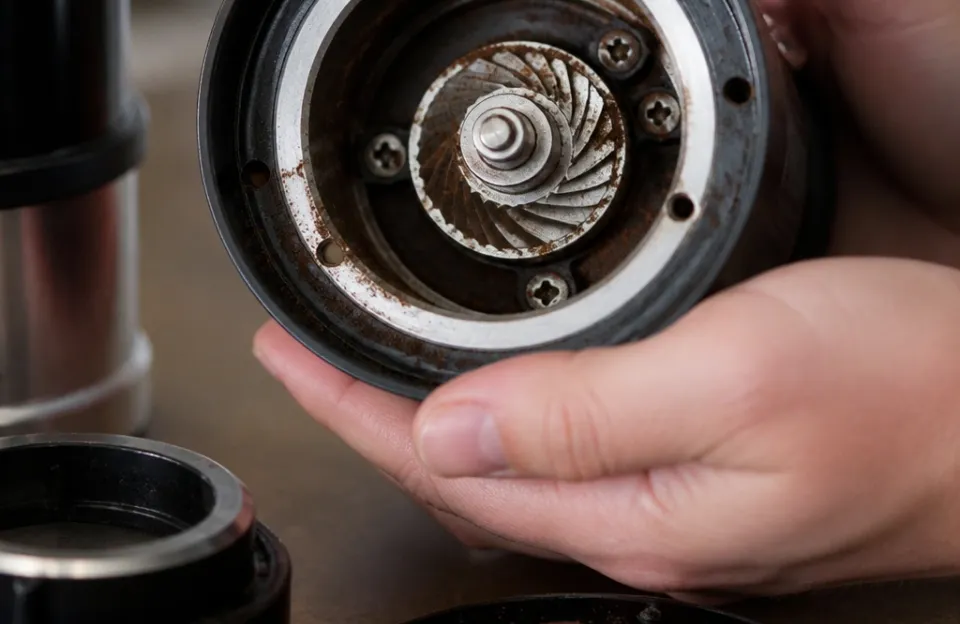
Metal burrs spinning at high speed create natural resistance. This resistance generates warmth as a byproduct of mechanical work. Small home motors lack the cooling systems found in commercial shop grinders.
They rely on passive airflow and brief run times to stay safe. When you push past their design limits, heat accumulates faster than it dissipates.
Fine settings increase contact surface area between burrs. More contact means more friction per rotation. Espresso fines require tight tolerances that strain consumer-grade motors.
Coarse French press settings generate less heat because beans pass through quickly with minimal resistance. Understanding this relationship helps you adjust expectations based on your preferred brew method.
Stale oil residue acts as an insulator. Old coffee gunk coats burr surfaces and traps thermal energy. Clean metal transfers heat away efficiently.
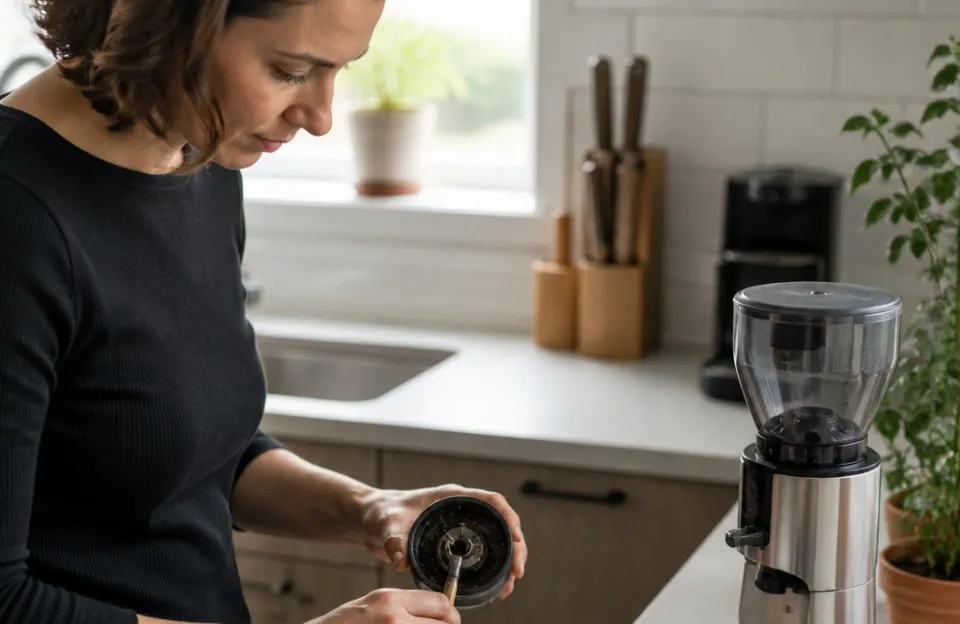
Caked-on debris holds warmth against sensitive components. Regular maintenance prevents this hidden heat trap from forming. A quick brush after each session keeps airflow paths open and metal surfaces exposed.
Bean density affects workload too. Light roasts are harder and denser than dark roasts. They demand more torque to fracture properly.
Dark roasts crumble easily but produce more fines that clog gaps. Both extremes challenge small motors differently. Medium roasts often strike the best balance for home equipment longevity.
Motor Strain And Electrical Warning Signs
Overheating motors emit distinct warning signals before failure. A rising pitch indicates increased electrical load. Slowing RPMs suggest the motor is losing power under stress.
Burning plastic smells mean insulation is melting. Any of these signs demand immediate shutdown. Continuing to run risks permanent damage to windings or circuit boards.
Thermal protection switches exist for safety. Many modern grinders include internal sensors that cut power when temperatures exceed safe limits. This prevents fires but interrupts your workflow.
Frequent tripping means you are consistently exceeding design parameters. Respect these cutoffs as valuable feedback rather than annoying interruptions. They tell you exactly where your usage pattern conflicts with hardware capabilities.
Voltage fluctuations compound heat issues. Low voltage forces motors to draw higher current to maintain speed. Higher current produces excess waste heat.
Older homes with shared circuits may deliver inconsistent power during peak hours. Plugging into a dedicated outlet helps stabilize performance. Avoid extension cords whenever possible since they add resistance and drop voltage further.
Duty cycle ratings define safe operating windows. Manufacturers specify how long a motor can run continuously before needing rest. Consumer models typically allow thirty seconds to one minute of active grinding.
Exceeding this window repeatedly degrades lubricants and weakens magnetic fields. Check your manual for exact specifications. Treat rated limits as absolute maximums, not suggested guidelines.
Burrs Wear Patterns That Create Excess Heat
Sharp burrs slice cleanly with minimal effort. Dull burrs crush and tear instead of cutting. Crushing requires significantly more force and generates far more heat.
Steel burrs typically last five to seven years with daily home use. Ceramic burrs last longer but chip more easily if dropped or exposed to stones. Inspect edges annually for rounding or chipping.
Alignment drift increases friction over time. Burrs must remain perfectly parallel to function correctly. Vibration from daily use slowly shifts mounting hardware.
Misaligned burrs rub against each other unevenly. This creates hot spots and accelerates wear. Professional realignment restores factory precision.
Home users can check alignment using marker tests or feeler gauges if comfortable with disassembly.
Replacement timing depends on volume and roast profile. Grinding two pounds weekly wears burrs faster than grinding half a pound. Light roasts dull edges quicker due to hardness.
Track total weight processed rather than calendar months. Manufacturer estimates assume average usage patterns. Your actual mileage varies based on personal habits and bean choices.
Upgrading burrs sometimes solves chronic heat problems. Aftermarket options offer improved geometry or coatings that reduce friction. Some third-party manufacturers design replacements specifically for popular home models.
Research compatibility carefully before purchasing. Improved cutting efficiency lowers motor load and extends overall lifespan. Better burrs often pay for themselves through saved beans and reduced repairs.
Pulse Grinding Technique For Thermal Control
Short bursts prevent heat accumulation better than continuous runs. Ten-second pulses allow brief cooling periods between cycles. Metal retains heat poorly compared to sustained operation.
Pausing lets ambient air carry away accumulated warmth. This simple habit dramatically reduces peak temperatures without sacrificing grind quality.
Batch size matters equally. Loading full hoppers overwhelms small motors. Process beans in smaller portions spread across multiple sessions.
Fifty grams per pulse works well for most home units. Larger batches extend run time beyond safe duty cycles. Smaller loads complete faster and leave recovery windows between attempts.
Patience here protects both flavor and equipment.
Consistency improves with pulsed technique too. Continuous grinding heats beans progressively throughout the session. Early grounds differ thermally from late grounds.
Pulsing maintains stable temperature across entire batch. Uniform particle temperature extracts evenly during brewing. Flavor clarity benefits directly from thermal stability during processing.
Listen to motor feedback during pulsing. Healthy motors sound steady and confident. Struggling motors bog down or change pitch mid-pulse.
Adjust duration based on auditory cues rather than fixed timers. Harder beans need shorter pulses. Softer beans tolerate slightly longer runs.
Your ears provide real-time data that preset buttons cannot match. Adapt technique to what the machine tells you in the moment.
Cleaning Routines That Restore Airflow And Cooling
Daily brushing removes loose particles before they harden. Use soft bristles designed for food equipment. Stiff wires scratch protective coatings and create new adhesion points.
Focus on burr faces, chute walls, and collection bins. Grounds trapped in crevices block ventilation paths. Clear passages allow heat to escape naturally during operation.
Weekly deep cleaning addresses stubborn buildup. Disassemble removable parts according to manual instructions. Wipe non-washable components with dry microfiber cloths.
Never submerge electric bases or sealed bearings. Moisture causes corrosion and electrical hazards. Dry reassembly ensures no residual dampness remains before next use.
Proper drying prevents mold growth alongside thermal management.
Monthly inspections catch developing problems early. Check seals for cracks or deformation. Verify screw tightness on burr mounts.
Examine wiring for fraying or discoloration. Lubricate moving joints only with food-safe grease approved by manufacturer. Petroleum-based products contaminate coffee and damage plastics.
Approved lubricants reduce friction without introducing off-flavors or chemical risks.
Avoid liquid cleaners unless explicitly permitted. Water promotes rust on steel burrs and swells wooden components. Specialized grinder tablets dissolve oils safely without moisture.
Rice or bread tricks introduce starch residues that worsen clogs over time. Stick to methods recommended in official documentation. Unapproved shortcuts often cause more harm than good regarding both hygiene and thermal performance.
Matching Grind Size To Equipment Specifications
Correct settings reduce unnecessary motor strain. Each brew method requires specific particle dimensions. Espresso demands fine powder around 200 microns.
Pour-over needs medium sand texture near 600 microns. French press uses coarse chunks exceeding 800 microns. Dialing in appropriate ranges prevents forcing mechanisms beyond intended tolerances.
Reference our guide on espresso machine types to understand why different brewers have such distinct requirements.
Adjustment dials control gap width between burrs. Tighter gaps produce finer particles but increase resistance. Looser gaps yield coarser output with less effort.
Find sweet spot where desired texture emerges without excessive noise or slowdown. Mark successful positions for repeatability. Guesswork wastes beans and stresses components unnecessarily.
Precise calibration saves both money and hardware longevity.
Stepped versus stepless adjustment affects heat generation differently. Stepped grinders lock into predefined positions that may not perfectly match ideal size. Stepless models allow infinite微调but require more skill to dial in accurately.
Neither type inherently runs hotter than the other. User technique determines thermal outcome regardless of mechanism style. Learn your specific adjustment system thoroughly before blaming hardware for heat issues.
Grinder age influences optimal settings too. Fresh burrs cut efficiently at standard positions. Worn burrs may need finer adjustments to achieve same particle size.
Compensating for wear increases friction temporarily until replacement occurs. Accept this trade-off as normal maintenance reality rather than defect. Planning burr swaps proactively avoids extended periods of compromised performance and elevated temperatures.
Environmental Factors Affecting Grinder Temperature
Ambient room temperature sets baseline thermal conditions. Hot kitchens start equipment closer to danger thresholds. Summer months without air conditioning challenge cooling capacity significantly.
Relocating grinder to cooler areas helps during warm seasons. Basements or pantries often stay several degrees below main cooking zones. Even modest reductions in starting temperature extend safe operating windows considerably.
Humidity levels alter bean behavior and heat retention. Moist beans clump together and resist flow. Clumping forces motors to work harder breaking up aggregates.
Dry beans shatter cleanly but create static electricity that attracts fines to chamber walls. Both extremes complicate thermal management. Store beans in airtight containers away from steam sources like dishwashers or kettles.
Stable humidity supports consistent grinding and predictable temperatures.
Counter material conducts heat differently. Granite and marble absorb warmth from appliance bases. Wood and laminate insulate and reflect heat back upward.
Metal counters transfer heat rapidly but also cool quickly once source stops. Consider placement relative to other heat-generating appliances. Positioning next to ovens or toasters adds external thermal load.
Isolating grinder from neighboring heat sources provides passive assistance during demanding sessions.
Ventilation space around unit enables convective cooling. Crowded corners trap warm air against housing. Leave minimum clearance specified in manual on all sides.
Elevated platforms improve airflow underneath base. Built-in cabinetry restricts breathing room unless specifically designed for appliance ventilation. Prioritize open positioning over aesthetic convenience when choosing permanent location.
Adequate spacing costs nothing but prevents costly overheating repairs later.
Recognizing Permanent Damage Versus Temporary Overheat
Temporary overheating resolves after cooldown period. Motors return to normal operation once internal temperature drops. Performance matches previous baseline without degradation.
No unusual noises or smells persist after recovery. These incidents serve as warnings rather than failures. Adjust habits to prevent recurrence while trusting equipment remains fundamentally sound.
Permanent damage manifests through lasting changes. Burnt odors linger despite thorough cleaning. Motor hums loudly even under light load.
Output becomes inconsistent regardless of setting adjustments. Tripped thermal fuses refuse to reset. These symptoms indicate irreversible component failure.
Repair costs often approach replacement value for consumer models. Prevention proves far cheaper than restoration after catastrophic thermal events.
Warranty coverage varies regarding heat-related claims. Manufacturing defects receive protection. User-induced overheating typically voids coverage.
Document maintenance routines and usage patterns before filing claims. Honest communication helps technicians diagnose root causes accurately. Attempting warranty service for abuse-damaged units wastes everyone's time.
Understand terms before purchase to avoid unpleasant surprises during stressful breakdown moments.
Professional assessment clarifies ambiguous situations. Authorized service centers possess diagnostic tools unavailable to consumers. They distinguish between fixable faults and terminal failures reliably.
Local repair shops specializing in small appliances offer second opinions affordably. Getting expert evaluation prevents premature disposal of salvageable equipment. It also confirms when replacement truly represents most economical path forward.
Trust trained judgment over hopeful guessing when facing uncertain outcomes.
Frequently Asked Questions About Grinder Heat
How long should I wait between grinding sessions?
Allow at least two minutes of rest after every thirty seconds of active grinding. This ratio gives motors adequate recovery time under typical home conditions. Longer breaks help during hot weather or when processing dense light roasts.
Touch housing gently to gauge residual warmth before restarting. Cool-to-touch surfaces indicate readiness for next batch.
Does freezing beans reduce grinder heat?
Frozen beans actually increase initial motor load due to extreme hardness. They fracture violently and create more fines that clog gaps. Room-temperature beans process more smoothly and predictably.
Freeze only for long-term storage, never for immediate grinding. Thaw completely in sealed container before use to prevent condensation damage. Temperature equilibrium matters more than cold shock for thermal management.
Can I modify my grinder to run cooler?
Aftermarket cooling fans exist but installation voids warranties and introduces safety risks. Electrical modifications risk fire or shock hazards without proper engineering. Software tweaks on smart grinders may optimize duty cycles legitimately.
Consult manufacturer support before attempting any alterations. Factory designs already represent balanced compromises between cost, size, and performance. Unauthorized changes rarely improve reliability and often worsen it.
Why does my grinder get hotter with certain beans?
Different origins and roasts possess varying densities and oil contents. Ethiopian naturals contain more sugars that caramelize and stick. Sumatran wet-hulled beans retain higher moisture that resists fracturing.
Italian dark roasts fracture easily but produce insulating fines. Rotate varieties gradually to identify personal troublemakers. Keep notes linking specific beans to observed thermal behavior.
Pattern recognition builds intuition that transcends generic advice.
Is occasional overheating harmful if it doesn't trip safety switch?
Repeated near-limit operation degrades components cumulatively even without triggering cutoffs. Lubricants break down faster under sustained elevated temperatures. Plastic housings warp subtly over months of marginal use.
Wire insulation embrittles prematurely from cyclic heating. Safety switches represent absolute emergency boundaries, not recommended operating zones. Staying comfortably below limits preserves longevity and flavor quality simultaneously.
Treat close calls as correction opportunities rather than acceptable norms.