Buying whole beans only to end up with a flat, bitter cup is a frustrating waste of good coffee. The fix comes down to picking the right grinder type for your daily brew method. Blade grinders chop beans unevenly for quick drip pots, while burr grinders crush them into exact sizes for rich espresso or smooth pour-overs.
Why Your Grinder Matters More Than The Beans
Fresh beans lose flavor fast after grinding. Oxygen hits the broken surfaces and steals the good oils. That is why grinding right before you brew changes everything.
But how you break those beans matters just as much.
A bad grind gives you mixed sizes. You get big chunks and fine dust in the same scoop. The hot water pulls too much from the dust and not enough from the chunks.
Your cup ends up sour and bitter at the same time. The right tool stops this from happening.
Different brew methods need different sizes. A French press needs thick, chunky grounds. Espresso needs fine powder.
If your tool can't hit that exact size, your coffee will taste off. Picking the right style saves your morning cup.
Blade Coffee Grinders For Quick Morning Cups
Blade models work like small food processors. A metal propeller spins very fast at the bottom of a plastic or steel cup. It chops the beans until you stop pressing the button.
You can find these for under twenty dollars almost anywhere.
They are small and light. Most weigh around one or two pounds. You can tuck one into a drawer next to your favorite brewing setup without losing counter space.
They plug into any normal wall outlet and run loud for about ten seconds.
The main problem is control. You can't pick a specific size. You just hold the button and guess.
Shake it while you press to mix the beans around. Even then, you will get dust and boulders in the same batch.
Heat is another issue. The fast blades create friction. Friction makes heat.
Heat cooks the bean oils before water ever touches them. This leaves a slightly burnt taste in lighter roasts. Keep your runs under fifteen seconds to limit this damage.
These work fine for standard drip pots or basic French presses. If you drink dark roasts with milk and sugar, you won't notice the flaws. Just don't expect them to handle fine espresso or strict pour-over recipes.
Flat Burr Grinders For Exact Brew Sizes
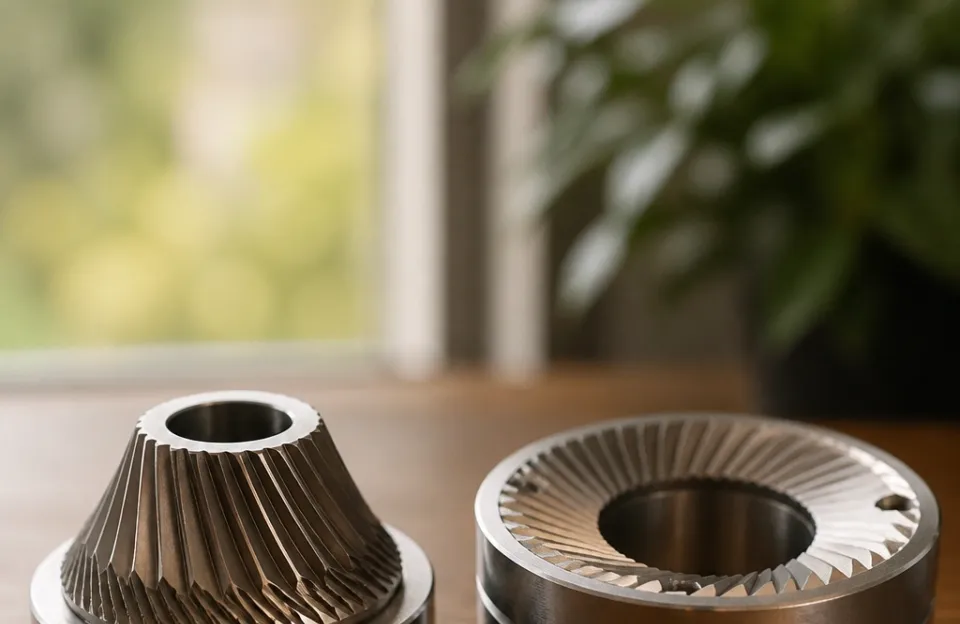
Flat burr models use two flat rings with sharp teeth. One ring stays still. The other spins.
You drop beans through the center hole. The teeth catch the beans and crush them outward.
You change the grind size by moving the rings closer together or further apart. Turn a dial or click a lever. The gap sets the exact size of every single piece.
This is why cafes use them.
The pieces come out uniform. Water flows through them evenly. You get a clean, sweet cup with no harsh bites.
According to the Specialty Coffee Association, uniform particle size is the top factor for proper extraction. Flat burrs do this better than anything else.
They do have downsides. They cost more. Entry-level home versions start around one hundred dollars.
Good ones cost three hundred or more. They also take up space. Expect a footprint of six by eight inches and a weight of five to ten pounds.
You won't hide these in a drawer.
They run louder than blade types but slower. The motor hums instead of screams. Some cheaper models hold onto old grounds inside the chute.
This means yesterday's stale bits might fall into today's fresh cup. You have to brush them out often.
Conical Burr Grinders For Quiet Home Kitchens
Conical burrs use a cone shape inside a hollow outer ring. The inner cone spins while the outer ring holds still. Gravity pulls the beans down through the teeth.
This shape lets the motor spin slower. Slower speeds mean less noise. If you share a kitchen with someone sleeping, a conical model keeps the peace.
It also builds less heat, which protects delicate bean flavors.
They are very forgiving. If your setting is slightly off, the cup still tastes good. Flat burrs demand perfect settings.
Conical burrs give you a wider sweet spot. This helps beginners who are still learning their preferred brew ratios.
Many home users prefer these for daily drip coffee, pour-overs, and French press. They struggle slightly with true Turkish coffee, which needs a super fine powder. But for most home brewers, they hit the mark perfectly.
Cleaning takes a bit of work. Grounds pack into the deep grooves of the cone. You need a stiff brush to sweep them out weekly.
Skipping this leads to rancid oil buildup over time.
Manual Hand Grinders For Travel And Silence
Hand grinders skip electricity entirely. You turn a crank on top. That crank spins a small burr set inside a metal or glass body.
The grounds fall into a catch jar at the bottom.
They are totally silent. You can grind beans in a hotel room or a tent without waking anyone. They weigh between half a pound and two pounds.
Toss one in a bag and forget about it.
Good ones use steel or ceramic burrs. Cheap ones use dull metal that smashes beans instead of cutting them. Spend at least forty dollars to get a decent burr set.
The cheap ones will frustrate you within a week.
The real drawback is effort. Grinding for one cup takes about a minute of hard cranking. Grinding for a full pot takes three or four minutes.
Your arm will feel it. If you brew for a family every morning, this gets old fast.
They shine for travel or single-cup routines. If you make one pour-over a day, the ritual feels nice. You control the speed and pressure.
Many coffee fans prefer this slow start to their morning.
Espresso Grinders Built For Fine Powder
Espresso needs a very specific grind. It must be fine like powdered sugar, but not dusty. It also needs tiny adjustments.
Moving the burrs a fraction of a millimeter changes how fast the water flows through the portafilter.
Standard burr grinders usually jump too far between settings. One click might be too coarse. The next click chokes the machine.
Dedicated espresso models offer "stepless" adjustment. You turn a dial smoothly without clicks. You stop exactly where you want.
These tools are heavy. Expect twelve to twenty pounds. They sit next to your espresso machine permanently.
They also cost more because the motors need high torque to crush beans into fine powder without stalling.
If you own a pump-driven espresso maker, a regular grinder will let you down. The shots will run too fast or clog completely. Pairing the right mill with your home espresso setup is the only way to get real crema.
Doser models push grounds into a bin. You pull a lever to drop them into the basket. Doserless models drop grounds straight into your portafilter.
Doserless wastes less coffee but makes a mess if you aren't careful.
Ceramic Burrs Versus Steel Burrs
Burr material changes how your coffee tastes and how long the tool lasts. You will see two choices: steel and ceramic. Both work well, but they act differently in daily use.
Steel burrs cut beans sharply. They give very even pieces. They spin faster and handle hard, light-roasted beans easily.
Over years of daily use, the sharp edges wear down. When they go dull, your grounds get uneven. You can replace them, but it costs money.
Ceramic burrs stay sharp much longer. They don't rust or dull quickly. They are great for dark, oily roasts because the oil doesn't stick to them as badly.
However, they are brittle. Drop a small stone or a hard pit into the hopper, and the ceramic can chip. Once chipped, the whole set is ruined.
Ceramic also creates more fines. Fines are tiny dust particles. In a French press, fines slip through the mesh and make your cup muddy.
In espresso, a few extra fines are fine. Match the material to your main brew method.
Most home users do best with steel. It handles everything well and cuts cleanly. Save ceramic for specific needs, like grinding very dark beans daily without cleaning often.
Matching The Grind Size To Your Brew Method
Owning the right tool only works if you know what size to aim for. Every brew method extracts flavor differently based on how long water touches the grounds. Short contact times need fine pieces.
Long contact times need large pieces.
Turkish coffee boils with the water. It needs powder so fine it feels like flour. Only specialized manual mills or top-tier electric ones can hit this size.
Standard home models usually fail here.
Espresso forces water through a tight puck in twenty-five seconds. It needs fine sand. Too coarse, and the water rushes through.
Too fine, and the pump stalls.
Pour-over cones take three to four minutes. They need medium-fine grains, like table salt. This lets water flow steadily without pooling at the top.
Drip machines spray water over a flat bed. Medium grounds, like beach sand, work best. The water passes through in about five minutes.
French presses steep for four minutes or more. They need coarse chunks, like sea salt. Fine pieces will slip past the metal filter and leave grit in your mug.
Cold brew sits in water for twelve hours. Extra coarse pieces prevent the long soak from turning bitter. Think rough chopped peppercorns.
Knowing these targets helps you adjust your dial. Start at the middle setting. Brew a cup.
Taste it. If it's sour, grind finer. If it's bitter, grind coarser.
Adjust one step at a time.
Cleaning And Upkeep For Longer Life
Coffee beans contain oils. Those oils coat everything they touch. Over weeks, the oil turns rancid.
Rancid oil smells like old crayons. It ruins fresh beans instantly.
Wipe the hopper out with a dry paper towel every few days. Don't use water near the motor or the burrs. Moisture causes rust on steel parts and clumps in your grounds.
Run grinder cleaning pellets through once a month. These look like pale beans. They absorb the trapped oils as they pass through the burrs.
Brush out the dust they leave behind. This simple habit adds years to the motor and keeps the flavor pure.
Check the burrs every six months. Take the top one out if your model allows it. Use a stiff dry brush to sweep the teeth.
Never use a wet cloth. Look for dull spots or chips. Worn burrs cause uneven extraction, meaning you'll chase bad flavors no matter how good your beans are.
If your model has a removable chute, wash just that plastic part in warm soapy water. Dry it completely before putting it back. Any leftover moisture will make the next batch of grounds stick to the walls.
Common Buyer Mistakes To Avoid
People often buy a blade model thinking all mills do the same job. They save thirty dollars upfront but spend hundreds on wasted premium beans. The uneven chop ruins expensive roasts.
Save up for a basic burr model instead.
Another mistake is buying an espresso-specific tool for drip coffee. Espresso models grind very fine. Dialing them back to a coarse French press setting often results in jammed burrs or wildly inconsistent chunks.
Buy a general-purpose burr model unless you strictly brew espresso.
Ignoring the counter footprint catches buyers off guard. A tall, heavy unit might not fit under low kitchen cabinets. Measure your shelf height before ordering.
Many tall hopper models require nine or ten inches of vertical clearance just to load the beans.
Skipping routine cleaning is the fastest way to kill flavor. Leaving oily residue inside the chamber guarantees tomorrow's cup will taste stale. Make brushing it out a weekly habit.
Finally, chasing brand names over burr quality leads to disappointment. A famous logo on a cheap blade spinner doesn't make it a burr mill. Read the spec sheet.
Look for the words "flat burr" or "conical burr" before you buy.
Choosing The Right Style For Your Kitchen
Your daily habits should drive this choice. If you rush out the door at six in the morning, a fast electric burr model saves time. Press a button, wait ten seconds, and brew.
If you love the quiet morning ritual, a hand crank fits your pace. It forces you to slow down. You feel the beans breaking apart.
It connects you to the process.
For households that drink both drip coffee and espresso, you face a tough choice. Switching between coarse and fine settings on one machine wastes beans. You have to purge the old grounds out first.
Many serious drinkers buy two separate units. One stays set for drip. The other stays set for espresso.
Think about your budget realistically. A solid entry-level conical burr model costs around eighty to one hundred dollars. It will last five years with basic care.
A blade model costs twenty dollars but ruins good beans daily. Do the math on your weekly coffee spending. The upgrade pays for itself in saved beans within a few months.
Match the tool to your favorite cup. Drink mostly French press? Prioritize models known for chunky, even coarse settings.
Drink mostly pour-over? Focus on units praised for medium-fine consistency. There is no single perfect option for every brew method.
Pick the one that serves your favorite mug best.