To descale a coffee maker, fill the water reservoir with equal parts white vinegar and water. Run a brew cycle, let it sit for 30 minutes, then run two to three cycles with fresh water to rinse. This removes mineral buildup that slows your machine and ruins the taste of your coffee.
Most people wait until their morning cup tastes bitter or the machine starts making strange noises. By then, calcium and lime have already coated the heating element and narrowed the internal tubes. Descaling is simple maintenance.
You do not need special skills. You just need the right solution and about an hour of time. The exact steps change slightly depending on whether you own a basic drip machine, a single-serve pod brewer, or a manual espresso setup.
If you are curious about how different brewers work, knowing your machine type helps you target the areas where scale hides.
Why Mineral Buildup Ruins Your Coffee
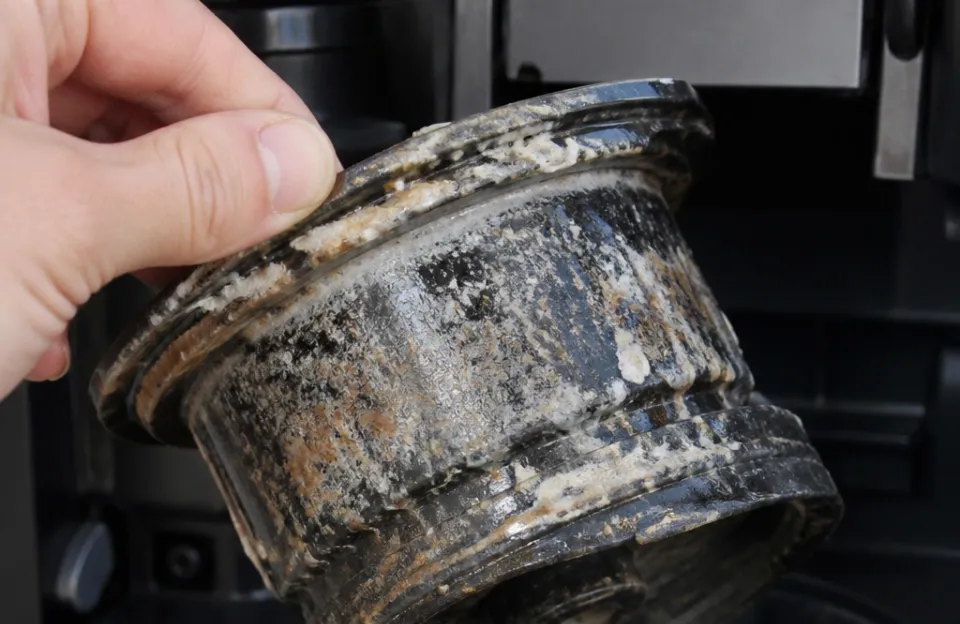
Tap water in most US homes contains dissolved minerals. Calcium and magnesium are the main ones. When water heats up inside your coffee maker, these minerals drop out of the liquid and stick to the metal and plastic surfaces.
Over weeks and months, they form a hard, chalky crust called limescale.
Scale acts like an insulator. It wraps around the heating element, forcing the machine to work harder and use more electricity to reach brewing temperature. A scaled-up heater cannot get the water hot enough.
Coffee needs water between 195 and 205 degrees Fahrenheit to extract flavor properly. Water that falls short of this range produces a flat, sour, or weak cup.
The buildup also narrows the water pathways. Your machine takes longer to brew a full pot. It might sputter, hiss, or stop halfway through a cycle.
In severe cases, the pump fails completely. According to the Environmental Protection Agency, water hardness varies widely across the United States, meaning some households face heavy scaling much faster than others. If your tap water leaves white spots on your dishes when it dries, your coffee maker is collecting those same spots on its internal parts.
Regular cleaning of the carafe and filter basket does not fix this problem. Soap and water only touch the outside parts. Descaling reaches the hidden tubes and heaters where the real damage happens.
How Often You Should Descale a Coffee Maker
A good baseline is to descale your machine every three to six months. But that rule ignores how often you brew and what kind of water you use. Frequency matters more than calendar dates.
If you make coffee every single day and use unfiltered tap water, aim for every two to three months. Hard water regions (common in the Southwest and Midwest) push that timeline closer to monthly. If you brew once or twice a week using filtered or bottled water, you can safely stretch it to every six months.
Watch for these signs that your machine needs attention right now:
- Brewing takes noticeably longer than usual.
- The coffee tastes metallic, bitter, or unusually weak.
- White flakes appear in your cup or the carafe.
- The machine makes loud gurgling or hissing sounds.
- The coffee is not as hot as it used to be.
- A built-in indicator light turns on (common on newer models).
Do not ignore these signals. Scale builds up slowly, but the damage to the heating element happens fast once the layer gets thick.
What You Need Before You Start
Gather everything before you begin so you do not have to pause mid-cycle.
Descaling agent: You have two main choices. White distilled vinegar is cheap and works well for standard drip machines. Commercial descaling solutions use stronger acids (like citric or sulfamic acid) that work faster and leave less odor behind.
They are better for expensive espresso machines or pod brewers.
Fresh water: You will need several cups to rinse the machine thoroughly after the acid cycle.
A clean cloth or sponge: For wiping down the exterior and the empty reservoir.
A large container: If your machine does not use a carafe, you need something to catch the hot liquid coming out of the brew head.
Patience: The process takes about an hour from start to finish, mostly waiting.
Never use bleach, baking soda, or harsh household cleaners inside the water reservoir. These chemicals damage rubber seals and leave toxic residues. Vinegar and commercial descalers are food-safe acids designed to dissolve minerals without harming the machine components.
Just like checking what materials are safe for other kitchen appliances, you should always verify that any cleaning product is approved for food-contact surfaces.
How to Descale a Standard Drip Coffee Maker
This method applies to classic automatic drip machines from brands like Mr. Coffee, Hamilton Beach, Cuisinart, and Ninja.
- Empty the machine. Remove any leftover coffee grounds, paper filters, and water from the reservoir. Take out the filter basket and wash it with warm soapy water.
- Mix the solution. Fill the water reservoir halfway with white distilled vinegar. Top it off with plain water. For a standard 12-cup machine, this usually means about 4 cups of vinegar and 4 cups of water. If you are using a commercial descaler, follow the mixing ratio printed on the bottle.
- Start a brew cycle. Place the empty carafe on the warming plate. Turn the machine on and let it run until half the mixture has brewed into the carafe.
- Pause and soak. Turn the machine off. Let the remaining vinegar solution sit inside the internal tubes and heating chamber for 30 to 60 minutes. This soaking period is what actually breaks down the hardened calcium. Do not skip it.
- Finish the cycle. Turn the machine back on and let the rest of the solution brew into the carafe. Once finished, dump the dirty liquid down the sink.
- Rinse thoroughly. Fill the reservoir completely with fresh, cold water. Run a full brew cycle. Dump the water. Repeat this fresh-water cycle at least two more times. If you still smell vinegar on the third rinse, run a fourth cycle. The smell must be completely gone before you brew coffee again.
- Wipe it down. Use a damp cloth to clean the exterior, the warming plate, and the inside of the empty reservoir.
Descaling Single-Serve Pod Machines
Pod brewers like Keurig and Nespresso have smaller internal pathways that clog very easily. You cannot use the same open-carafe method as a drip machine.
For most Keurig models, the manufacturer recommends their branded descaling solution, though white vinegar works if you follow the correct steps. Remove the water filter cartridge from the reservoir first, if your model has one. Vinegar and descaling acids will ruin the charcoal filter.
Fill the reservoir with the descaling solution or a mix of equal parts vinegar and water. Place a large ceramic mug (not a paper cup) on the drip tray. Run a brew cycle without inserting a pod.
Select the largest cup size available. Dump the mug into the sink. Repeat this until the "add water" light turns on.
Let the machine sit powered on for 30 minutes so the residual heat and acid continue working inside the needle and tubes. After waiting, remove the reservoir and wash it out with plain water. Refill it entirely with fresh water.
Run brew cycles without a pod until you have flushed at least 12 full mugs of water through the system. This high volume of rinsing is necessary because pod machines hold onto odors tightly.
Nespresso machines follow a similar logic but often have a dedicated "descaling mode" triggered by pressing specific button combinations. Check your user manual for the exact button sequence. Using the wrong sequence on a pressurized pod brewer can cause leaks.
Cleaning Espresso Machines and Manual Brewers
Espresso machines operate under high pressure. Scale buildup here does not just ruin flavor; it creates a safety hazard by blocking pressure release valves. If you maintain high-pressure kitchen tools regularly, you know that ignoring internal buildup leads to breakdowns.
For semi-automatic espresso machines (like Breville, Gaggia, or De'Longhi), use a commercial descaling powder or liquid rather than vinegar. Vinegar can degrade the heavy-duty rubber gaskets used in espresso boilers over time. Dissolve the descaler in warm water according to the package instructions.
Pour it into the water tank.
Run the solution through the group head by activating the brew switch. Let a few ounces flow out, then stop. Wait five minutes.
Run another few ounces. Stop again. This pulsing method lets the acid eat away at the scale inside the boiler and the narrow group head screen without flushing it all out too quickly.
Continue until the tank is empty. Rinse the tank, fill it with fresh water, and run at least two full tanks of water through the group head to clear the acid.
Do not forget the steam wand. Submerge the tip in a cup of the descaling solution and open the steam valve briefly to draw a small amount of liquid up into the wand. Wipe the outside immediately with a damp cloth.
For manual pour-over setups or French presses, scale is rarely an issue inside the brewer itself since there are no heating elements. However, if you use an electric gooseneck kettle to heat your water, that kettle needs descaling. Boil a mixture of two tablespoons of citric acid powder per liter of water inside the kettle.
Let it sit for 15 minutes, pour it out, and rinse twice.
Commercial Descaler vs White Vinegar
People argue about this constantly. Both work. They just work differently.
| Factor | White Distilled Vinegar | Commercial Descaler |
|---|---|---|
| Active Ingredient | Acetic acid (usually 5%) | Citric, sulfamic, or lactic acid |
| Cost | Under $3 per gallon | $8 to $15 per bottle |
| Speed | Slower, requires longer soaking | Faster, dissolves scale quickly |
| Odor | Strong, lingers if not rinsed well | Mild or odorless |
| Best For | Basic drip coffee makers | Espresso machines, pod brewers |
| Safety | Food safe, but can dry out older rubber seals | Formulated specifically for appliance metals and seals |
Vinegar is perfectly fine for a standard $30 drip machine. It is cheap and you probably already have it in your pantry. But if you spent hundreds of dollars on an espresso machine or a high-end pod brewer, buy the commercial descaler.
The specialized acids break down calcium faster and are gentler on the silicone gaskets and brass fittings found in expensive machines.
Check current price on Amazon: [AMAZON LINK]
If you use a commercial descaler, buy one labeled as food-safe and biodegradable. Some industrial descalers contain hydrochloric acid, which is far too aggressive for home coffee equipment and can pit the metal boiler. Always read the label to confirm it is meant for coffee makers.
Common Mistakes That Damage Your Machine
Skipping the rinse cycle is the most frequent error. People run the vinegar through, see the water running clear, and immediately brew coffee. The result is a sour, foul-tasting cup.
You must run plain water through the machine multiple times. Smell the steam coming off the last rinse cycle. If it smells sharp or acidic, keep rinsing.
Leaving the water filter in place is another mistake. Many modern drip machines and pod brewers have a small charcoal water filter inside the reservoir. Acid destroys activated charcoal.
It ruins the filter and releases trapped impurities back into your water. Always pull the filter out before adding any descaling solution. Replace it with a new one afterward.
Using apple cider vinegar, wine vinegar, or lemon juice instead of white distilled vinegar causes problems. Apple cider vinegar contains sugars and organic matter that caramelize on the heating element, creating a sticky mess worse than the original scale. Lemon juice has pulp that clogs tiny tubes.
Stick to clear, distilled white vinegar or a formulated product.
Running the descaling cycle while the machine is overheating is dangerous. If your machine has been running continuously, turn it off and let it cool down for 20 minutes before adding the acid solution. Thermal shock from cold vinegar hitting a superheated boiler can crack glass or metal components.
Finally, never mix vinegar and commercial descaler together. Mixing different acids does not create a stronger cleaner. It creates unpredictable chemical reactions that can release fumes or damage the plastic reservoir.
Pick one method and stick with it.
Preventing Future Scale Buildup
Descaling fixes the problem, but changing your water prevents it.
The easiest step is to use filtered water. A standard pitcher filter (like Brita or PUR) removes a significant amount of calcium and magnesium before the water ever enters your coffee maker. Do not use distilled water exclusively.
Coffee extraction requires some mineral content to pull flavors from the beans. Pure distilled water makes flat-tasting coffee and can actually cause certain sensors in smart coffee makers to malfunction because they rely on water conductivity to measure levels. Filtered tap water is the sweet spot.
Empty the reservoir every night. Leaving water sitting in the tank for days allows minerals to settle and start bonding to the plastic bottom. If you only brew one cup a day, only put enough water in the tank for that one cup.
Wipe the reservoir dry once a week. When you wash the removable tank, dry it completely with a towel before putting it back on the machine. Moisture left in dark, enclosed spaces encourages both mineral deposits and mold growth.
Keeping your entire countertop setup hygienic goes hand in hand with maintaining safe cooking habits across all your daily kitchen routines.
If you live in an area with extremely hard water, consider installing an under-sink water softening filter. It costs more upfront but protects every appliance connected to your water line, including your dishwasher, refrigerator, and coffee maker.
Frequently Asked Questions
Can I use baking soda to descale my coffee maker?
No. Baking soda is a base (alkaline), not an acid. Limescale is made of calcium carbonate, which requires an acid to dissolve it.
Baking soda is great for scrubbing stains out of a glass carafe, but it will not remove scale from the internal heating tubes.
Will descaling void my warranty?
No, as long as you follow the manufacturer's instructions. In fact, failing to descale is one of the most common reasons warranties are denied. If a machine breaks due to heavy scale buildup, the manufacturer will likely reject the claim.
Keep your descaling routine consistent to protect your investment.
My machine has a self-cleaning button. Is that the same as descaling?
Usually, no. On many machines, the "clean" cycle runs hot water through the system to flush out loose coffee oils and grounds. It does not use the acid required to dissolve hard mineral scale.
You still need to add vinegar or descaler and run a manual cycle unless the manual specifically states the self-clean function is designed for descaling with a solution.
Why does my coffee taste like vinegar even after rinsing?
You did not run enough fresh water through the system. The porous plastic and rubber seals inside the machine absorb acetic acid easily. Run at least three more full reservoirs of plain water through a brew cycle.
Adding a tablespoon of baking soda to the fresh water during one of the rinse cycles can help neutralize the lingering acid, but be sure to run one final plain water cycle after that.
Can I descale a coffee maker with CLR or Lime-A-Way?
Never use bathroom or household surface cleaners like CLR in a coffee maker. These products contain harsh chemicals, surfactants, and fragrances that are not food-safe. They will poison the water lines and leave toxic residue that you cannot rinse out.
Only use white vinegar or descalers explicitly labeled for coffee equipment.
Descaling takes less than an hour, but it adds years to the life of your coffee maker. Stick to a schedule based on your water hardness, use the right acid for your specific machine type, and never skip the final rinse cycles. Your morning coffee will taste exactly the way it should.
As an Amazon Associate, we earn from qualifying purchases.