A coffee maker is an electric appliance that heats water and passes it through ground coffee to extract flavor, aroma, and caffeine into a carafe or cup. Most standard drip models use a simple gravity-fed system where a heating element warms water in a reservoir, pushes steam up a tube, and lets hot water shower over grounds sitting in a filter basket. Understanding this basic mechanical loop helps you troubleshoot weak brews, choose the right machine for your counter, and maintain your equipment so it lasts for years rather than months.
The term covers a wide range of devices, but the underlying principle remains consistent across nearly all automatic brewers. They manage two variables that determine extraction quality: water temperature and contact time. When either variable drifts outside the ideal range, the resulting cup tastes sour, bitter, or flat.
Knowing how your specific machine controls these factors turns a confusing array of buttons and settings into predictable results.
The Core Components Inside Every Drip Machine
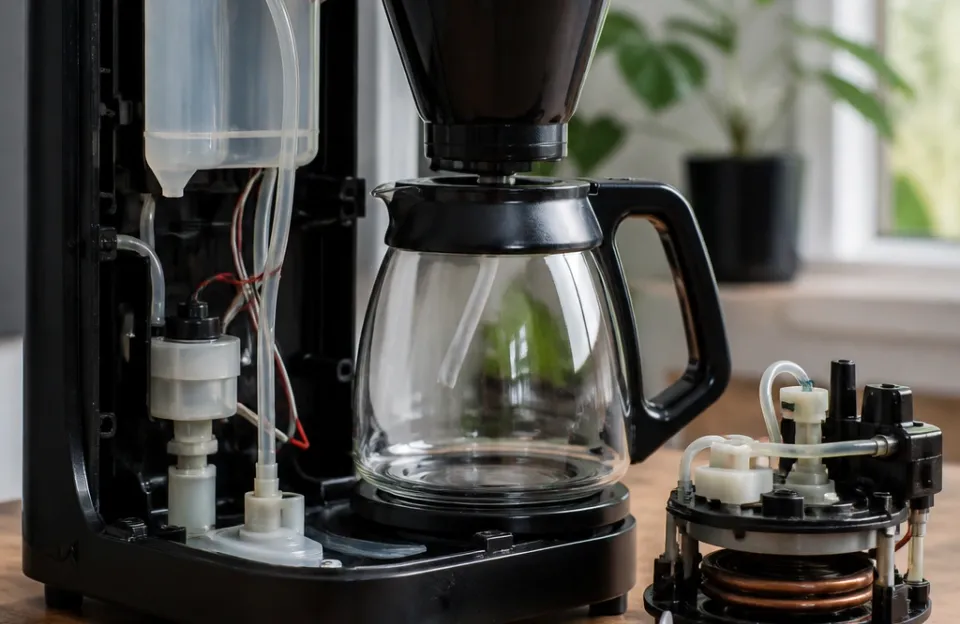
Open up any standard automatic drip coffee maker and you will find the same four essential parts working in sequence. The water reservoir holds cold water before brewing begins. A heating element, usually an aluminum block with an embedded resistive coil, sits at the base of the unit.
A one-way valve and internal tubing create a path for heated water to travel upward against gravity. Finally, a showerhead or spray arm distributes that water evenly across the coffee bed.
The heating element does double duty in most machines. It heats the water during the brew cycle and keeps the finished coffee warm on the hot plate afterward. This dual function means the warming plate and the brew heater are often the same component, just operating at different stages.
Machines with separate thermal carafes skip the warming stage entirely, which reduces energy use and prevents the cooked flavor that develops when coffee sits on direct heat.
Internal tubing materials matter more than most buyers realize. Food-grade silicone or stainless steel lines resist mineral buildup better than cheap plastic alternatives. If you have hard water, plastic tubes can develop scale deposits that restrict flow and lower brew temperature over time.
Checking the types of espresso machines explained page shows how pressurized systems handle similar plumbing challenges differently, though drip makers rely solely on thermal expansion rather than pumps.
How Thermal Siphoning Moves Water Without Pumps
Most basic drip coffee makers do not contain mechanical pumps. They move water using a phenomenon called thermal siphoning or bubble pumping. When the heating element activates, water in the aluminum tube directly above it boils and turns to steam.
Steam occupies roughly 1,600 times more volume than liquid water, creating pressure that forces the remaining hot water up the rise tube and out through the showerhead.
A small rubber or silicone flap valve at the bottom of the heating chamber ensures this flow goes only one direction. Cold water enters the heating tube from the reservoir when the valve opens downward, but the expanding steam pushes the check valve shut against the inlet port. This simple mechanical gate prevents backflow and directs all pressurized water toward the coffee grounds.
When the heating element cycles off briefly, the valve reopens and admits another slug of cold water to repeat the process.
This pulsing action explains why many affordable brewers produce water in intermittent bursts rather than a steady stream. The rhythm is normal and indicates the thermal siphon is functioning correctly. Machines that deliver continuous flow typically use a vibratory pump or a more sophisticated thermoblock system, both of which add cost and complexity.
For most home users, the passive bubble pump provides adequate performance without extra parts that can fail.
Temperature Control and Why It Matters for Extraction
Water temperature determines which compounds dissolve from your coffee grounds. The National Coffee Association recommends brewing between 195°F and 205°F for optimal extraction. Below 195°F, acids extract faster than sugars and oils, producing a sour and underdeveloped cup.
Above 205°F, bitter tannins and harsh compounds dominate the flavor profile. Maintaining this narrow band throughout the entire brew cycle is what separates good machines from disappointing ones.
Budget coffee makers often struggle with temperature stability because they use simple bimetal thermostats that cycle the heating element on and off based on fixed thresholds. You might see water entering the basket at 200°F initially, then dropping to 185°F midway through as the thermostat overshoots its target. Higher-end models use proportional-integral-derivative controllers or solid-state relays to modulate power continuously, holding temperature within a few degrees of the setpoint.
Some carry certification from the Specialty Coffee Association, which independently verifies that a model maintains proper brew temperature and saturation time.
Preheating matters too. Cold brew baskets and carafes absorb heat from the first water that contacts them, effectively lowering extraction temperature during the critical initial phase. Running a blank cycle with plain water before adding coffee brings all internal components up to temperature.
This thirty-second habit improves consistency more than almost any other free adjustment you can make.
Brew Time Saturation and Even Water Distribution
Contact time between water and coffee grounds should fall between four and six minutes for standard drip brewing. Too short and you get weak, tea-like coffee. Too long and overextraction creates bitterness.
The machine's flow rate, determined by tube diameter and heating power, sets this duration automatically. You cannot adjust it directly on most models, but grind size gives you indirect control. Finer grinds slow drainage and extend contact time; coarser grinds speed it up.
Even saturation is equally important. Water naturally seeks the path of least resistance through the coffee bed. If the showerhead dumps water in a single spot, that area overextracts while the edges remain dry and underextracted.
Good machines use multi-hole spray arms or cone-shaped distributors to cover the entire filter surface uniformly. Flat-bottom baskets generally promote more even extraction than cone baskets because the coffee bed depth is consistent across the whole area.
Bloom phases appear in some newer machines as a dedicated feature. The brewer releases just enough water to wet the grounds, pauses for thirty to sixty seconds to let carbon dioxide escape, then resumes full flow. This mimics manual pour-over technique and prevents channeling caused by trapped gas.
While not essential, blooming produces noticeably cleaner flavors with freshly roasted beans that still contain significant CO2.
Different Coffee Maker Types Beyond Standard Drip
Drip machines dominate US kitchens, but other designs solve different problems. Single-serve pod brewers prioritize convenience and speed over customization. They pierce sealed capsules and force hot water through pre-measured grounds under low pressure.
Cleanup takes seconds, but ongoing pod costs exceed bulk ground coffee by a factor of three to five, and environmental waste concerns persist despite recycling programs.
French presses use immersion brewing instead of percolation. Coarse grounds steep directly in hot water for four minutes before a metal mesh plunger separates them. This method retains natural oils that paper filters absorb, producing a heavier body and richer mouthfeel.
The trade-off is sediment in the cup and less clarity in flavor notes. Cleaning requires disassembly and occasional deep scrubbing to remove trapped oils.
Pour-over cones like the Hario V60 or Chemex give you complete manual control over every variable. You dictate water temperature, pour rate, agitation, and total brew time. Results depend entirely on your technique, making this approach rewarding for enthusiasts but frustrating for those who want push-button consistency.
Paper filters produce exceptionally clean cups, while reusable metal options allow more oils through.
Espresso machines operate in a completely different category. They force near-boiling water through finely ground, tightly packed coffee at nine bars of pressure, extracting concentrated shots in twenty-five to thirty seconds. Learning about types of espresso machines explained reveals the vast gap between semi-automatic, super-automatic, and lever-driven designs.
These appliances require significant investment and practice but produce drinks that drip makers simply cannot replicate.
Cold brew makers bypass heat entirely. Coarse grounds steep in room-temperature or refrigerated water for twelve to twenty-four hours, then get filtered out. The result is smooth, low-acid concentrate that dilutes well with milk or water.
Dedicated cold brew pitchers include built-in filters and measurement markings, though any large jar with a strainer works adequately. This method extracts different compounds than hot brewing, emphasizing chocolate and nutty notes while minimizing bitterness.
Choosing the Right Machine for Your Daily Routine
Your household's coffee habits should drive your purchase decision more than specifications alone. A single person who drinks one cup each morning has fundamentally different needs than a family of four consuming multiple pots daily. Capacity ratings assume six-ounce cups, not the twelve-to-sixteen-ounce mugs most Americans actually use.
A "twelve-cup" machine typically yields six to eight realistic servings.
Programmability helps early risers who want coffee ready upon waking. Look for models with auto-start timers and audible completion alerts. Some units include strength selectors that adjust brew time or water-to-coffee ratios digitally.
These presets work best when paired with consistent grind size and fresh beans. Changing variables randomly defeats the purpose of automation.
Thermal carafes deserve consideration if you sip slowly or entertain frequently. Glass carafes on hot plates degrade coffee quality after twenty minutes as continued heating breaks down aromatic compounds. Double-walled stainless steel vessels maintain serving temperature passively for hours without applying additional heat.
The downside is opacity; you cannot see remaining volume without lifting the lid. Many thermal models also lack external water level windows, requiring you to measure input manually.
Counter space and storage constraints eliminate certain form factors regardless of performance. Measure your available height clearance under cabinets before buying tall brewers with top-loading reservoirs. Side-access water tanks solve this problem in tight spaces.
Cord length varies significantly between models, and outlets near sinks may require extension cords that violate safety codes. Verify electrical requirements match your kitchen layout before committing.
Maintenance requirements differ substantially across price tiers. Machines with removable brew baskets, dishwasher-safe parts, and accessible descaling ports reduce daily friction. Sealed internal pathways that cannot be cleaned invite mold growth and mineral accumulation.
Check whether replacement filters, gaskets, and carafes remain available for older models. Discontinued accessories turn repairable appliances into disposable ones. Our guide on keeping appliances running smoothly covers compatibility principles that apply equally well to coffee maker parts sourcing.
Maintenance Descaling and Troubleshooting Common Issues
Mineral scale is the primary killer of coffee makers in areas with hard water. Calcium and magnesium deposits accumulate inside heating elements and tubing, reducing efficiency and eventually blocking flow entirely. Descale your machine every one to three months depending on local water hardness.
Use either commercial descaling solution or white vinegar diluted fifty-fifty with water. Run the solution through a full brew cycle without coffee, then flush with two cycles of fresh water to remove residual taste.
Weak or sour coffee usually indicates insufficient brew temperature or stale grounds. Verify your machine reaches proper temperature by measuring water at the showerhead with an instant-read thermometer during brewing. If readings fall below 195°F consistently, the heating element may be failing or scaled beyond recovery.
Freshly grinding whole beans immediately before brewing eliminates oxidation as a variable. Pre-ground coffee loses volatile aromatics within days of opening.
Bitter or astringent flavors point to overextraction. Check your grind size first; too fine causes excessive contact time even with correct water temperature. Clean the showerhead holes to ensure even distribution rather than concentrated streams that overextract localized areas.
Reduce brew strength settings if your machine offers them. Sometimes switching to a lighter roast solves perceived bitterness without adjusting equipment at all.
Leaking from the base often traces back to degraded silicone seals or cracked internal tubing. Inspect visible connections after unplugging and cooling the unit completely. Replacement gaskets cost a few dollars and restore watertight integrity.
Leaks appearing only during brewing suggest pressure-related failures in the check valve or rise tube assembly. Persistent leaks despite seal replacement indicate structural damage that warrants machine replacement rather than repair.
Slow brewing or incomplete cycles signal partial blockages. Mineral scale in the rise tube reduces flow rate progressively until the machine stalls. Aggressive descaling sometimes clears mild obstructions.
Severely clogged tubes may require physical cleaning with flexible brushes designed for coffee maker maintenance. Prevent recurrence by using filtered water or installing inline water softeners rated for appliance use.
Frequently Asked Questions About Coffee Makers
Can I use tap water in my coffee maker or should I filter it?
Tap water is safe for most machines if it meets EPA drinking standards, but high mineral content accelerates scale buildup and alters flavor. Carbon filtration removes chlorine and some metals without stripping beneficial minerals needed for proper extraction. Avoid distilled or reverse-osmosis water unless you remineralize it, as pure water extracts poorly and can damage certain heating elements.
How often should I replace paper filters versus permanent mesh filters?
Paper filters are single-use by design and should never be reused. Permanent gold-tone or stainless steel mesh filters last indefinitely with proper cleaning but require weekly soaking in detergent to remove trapped oils. Paper produces cleaner cups with less sediment; metal allows more body and oils through.
Choose based on texture preference rather than longevity alone.
Why does my new coffee maker produce plastic-tasting coffee?
New appliances often release volatile compounds from manufacturing residues and fresh plastics during initial uses. Run three to five water-only brew cycles before making drinkable coffee. Baking soda added to the first cleaning cycle neutralizes odors more effectively than vinegar alone.
If plastic taste persists beyond ten cycles, return the unit as defective rather than continuing to consume potentially unsafe water.
Does expensive equipment guarantee better tasting coffee?
Price correlates with temperature stability, build quality, and repairability, but bean freshness and grind consistency matter more than hardware cost. A $50 machine brewing freshly ground specialty beans outperforms a $300 machine using stale pre-ground supermarket coffee. Invest in a quality burr grinder before upgrading your brewer if budget forces prioritization.
Understanding what a coffee maker is and how it works transforms your relationship with morning rituals. You stop treating the appliance as a mysterious black box and start seeing it as a controllable tool with known limitations. Small adjustments based on mechanical reality yield bigger improvements than chasing marketing claims.
Your next cup will reflect intention rather than accident.
As an Amazon Associate, we earn from qualifying purchases.