An air fryer pizza pan is a small, round baking tray designed to fit inside an air fryer basket so you can cook personal pizzas with a crisp crust. These pans are usually made of metal, measure between 6 and 8 inches across, and sit directly in the path of the appliance's circulating hot air. If you want to make pizza at home without heating a full oven, this accessory handles the job.
This guide covers what these pans do, which materials hold up best, how sizing works across different appliance brands, and the practical steps for getting a good bake. You'll also find details on airflow, cleaning routines, and common mistakes that lead to soggy dough or burnt cheese.
Why a dedicated pan changes the air frying process
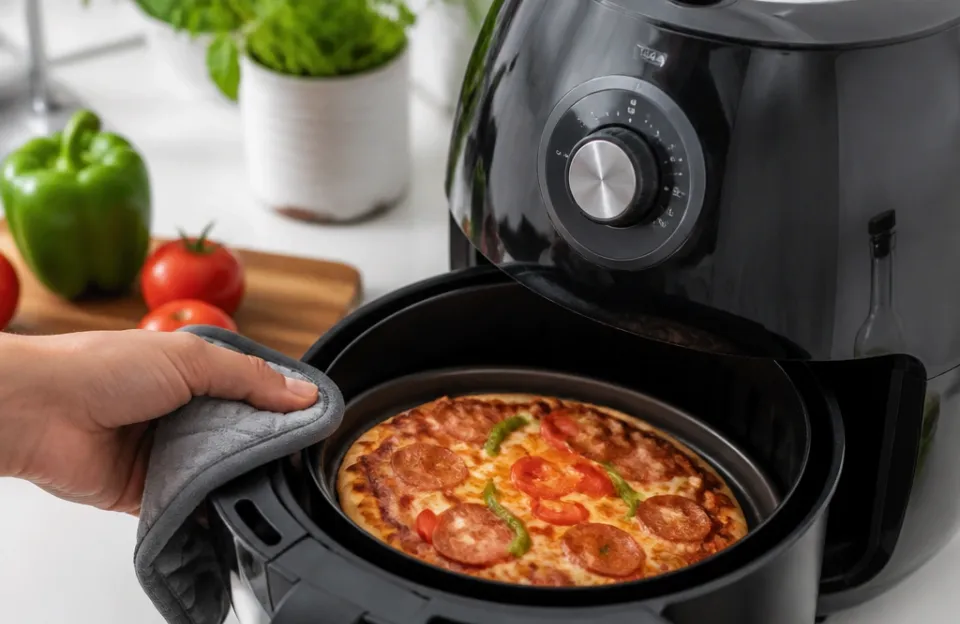
Cooking pizza dough directly on an air fryer rack or mesh basket causes problems. The dough sags through the gaps as it softens from the heat. Cheese drips onto the heating element.
Toppings fall into the bottom drawer and burn. A solid air fryer pizza pan stops all of this by giving the dough a flat, continuous surface to rest on while it bakes.
The pan also affects how heat reaches the food. Metal conducts thermal energy quickly. When you preheat the tray before sliding the dough onto it, the bottom of the crust starts cooking immediately.
This mimics the effect of a traditional pizza stone in a conventional oven, just on a much smaller scale. The rapid convection current inside the appliance finishes the top of the pizza at the same time, melting the cheese and crisping the edges.
Standard bakeware often doesn't fit. Air fryers have compact baskets with rounded corners or specific depth limits. A pan built for this environment matches those dimensions.
It leaves enough clearance around the edges for hot air to circulate properly. Without that clearance, the top of the pizza burns before the bottom sets.
Materials used for air fryer pizza pans
The material of your pan dictates how fast the crust browns, how heavy the tray feels, and how long it lasts under repeated high heat cycles. Most models fall into one of three categories.
Aluminum trays for quick heat transfer
Aluminum is the most common choice for these accessories. It heats up fast and distributes temperature evenly across the surface. This prevents hot spots where one side of the crust chars while the other stays pale.
Aluminum pans are also lightweight, making them easy to lift out of a hot basket with tongs.
Many aluminum pans come with a nonstick coating. This helps when you're working with sticky dough or heavy sauces. The downside is that coated aluminum requires gentle cleaning.
Metal utensils or abrasive scrubbers will scratch the surface. Once the coating chips, the exposed metal can react with acidic ingredients like tomato sauce, leaving a metallic taste and dark spots on the pan. Uncoated aluminum avoids the scratching issue but requires a light brushing of oil before each use to prevent sticking.
Stainless steel options for longevity
Stainless steel pans don't have coatings that wear off over time. They handle high temperatures without warping and won't react with acidic pizza toppings. If you cook frequently, stainless steel holds up better than coated aluminum over months of daily use.
The tradeoff is weight and heat response. Stainless steel takes slightly longer to reach peak temperature than aluminum. It's also heavier, which matters when you're trying to maneuver a loaded pan inside a small countertop appliance.
Food sticks more easily to bare stainless steel, so dusting the surface with cornmeal or using parchment paper becomes necessary for every bake.
Silicone molds for flexible removal
Silicone pizza pans are soft, flexible, and completely nonstick without any chemical coating. You can bend the pan to pop the finished pizza out without a spatula. They're dishwasher safe and very light.
However, silicone is a poor conductor of heat. A pizza cooked in a silicone mold will have a softer, paler bottom crust compared to one baked on metal. The material insulates the dough rather than transferring aggressive heat into it.
Silicone works fine if you prefer a softer crust or are reheating leftover slices, but it falls short for achieving a pizzeria-style crunch. For recipes that demand intense surface browning, like getting wings perfectly browned, metal remains the standard approach.
| Material | Heat Speed | Durability | Crust Texture | Cleaning Ease |
|---|---|---|---|---|
| Aluminum (coated) | Fast | Moderate | Very crispy | Wipe gently |
| Stainless Steel | Medium | High | Crispy | Needs soaking |
| Silicone | Slow | High | Soft/chewy | Dishwasher safe |
Sizing the pan to your specific machine
Buying a pan without measuring your air fryer basket first is the fastest way to waste money. The pan must fit inside the basket with room to spare on all sides.
Air fryers generally fall into two shapes: square baskets and round drawers. Square baskets typically range from 7×7 inches to 10×10 inches. Round drawers usually measure between 5 and 7 inches in diameter.
Your pizza pan needs to be at least half an inch smaller than the basket's interior width or diameter. That gap allows the fan to push hot air down the sides and under the food.
If the pan fits too tightly against the walls, the air stalls above the pizza. The cheese scorches while the dough underneath stays raw. Check the manufacturer's specifications for your exact model.
Many appliance brands sell their own branded pizza pans sized specifically for their baskets. Third-party pans work well too, provided you take a tape measure to your basket first.
Depth is another factor. Some air fryer pizza pans have raised edges, similar to a miniature deep-dish pan. Others are completely flat.
Raised edges keep sauce and grease contained, which is helpful if you load the pizza heavily. Flat pans maximize the usable surface area for the dough. Both styles need enough vertical clearance so they don't touch the heating element located at the top of the unit.
How the perforation pattern alters the crust
You'll notice some air fryer pizza pans are solid sheets of metal, while others have holes punched through the bottom. This design choice changes how the crust turns out.
Solid pans retain heat effectively. They give you a dense, chewy base with a uniform golden color. They also catch any oil or sauce that leaks out of the dough, keeping the bottom of your air fryer clean.
Solid pans are the safer bet for wet doughs or pizzas topped with fresh vegetables that release moisture during cooking.
Perforated pans allow the high-speed air to hit the bottom of the dough directly. This creates a significantly crispier, drier crust. The holes let steam escape downward instead of getting trapped under the pizza, which prevents sogginess.
The risk with perforated designs is that thin batters or very wet sauces can drip through the holes and smoke inside the appliance. Perforated pans work best with thicker doughs or when you use a light layer of sauce. If you're monitoring internal temperatures for proteins baked alongside your pizza, a reliable digital probe tool gives you precise readings without opening the basket constantly.
Baking dough correctly in a confined space
Making pizza in an air fryer follows a different rhythm than using a standard oven. The space is small, the heat source is close, and the fan is powerful.
Start by preparing your dough. Store-bought dough or homemade batches both work, but you need to stretch it to match your pan's exact size. Don't leave thick edges unless your pan has deep sides.
The intense top-down heat will burn a thick outer rim before the center cooks through. Roll or stretch the dough evenly.
Preheating the pan makes a measurable difference. Place the empty metal pan inside the air fryer and run it at 400°F for about three minutes. Use tongs to carefully remove the hot pan, lay your stretched dough on it, and add your toppings quickly.
Putting raw dough onto a hot surface immediately begins setting the gluten structure and crisping the bottom.
Keep toppings light. An air fryer cannot support the heavy loads a large oven can. Too much sauce makes the center collapse.
Too much cheese melts over the edge and hits the heating coil, causing smoke. A thin layer of sauce, a moderate amount of low-moisture mozzarella, and a few scattered toppings yield the best results. Fresh mozzarella releases too much water for this cooking method; stick to shredded, low-moisture varieties.
Temperature settings usually land between 375°F and 400°F. Cooking time ranges from 6 to 10 minutes depending on dough thickness. Check the pizza halfway through.
Because air fryer fans vary in power, one machine might brown the edges in five minutes while another takes eight. If the top is browning too fast, lower the temperature by 25 degrees for the remaining time. You can pair this quick meal with other fast-cooking items, like prepping wings ahead of time to build a complete spread without turning on the main oven.
Preventing warped metal and peeling surfaces
Air fryer pizza pans face extreme thermal shifts. Going from room temperature to 400°F in minutes puts stress on the metal. Over time, thin pans warp.
A warped pan no longer sits flat in the basket, causing uneven cooking and wobbling when you try to pull it out.
To prevent warping, avoid putting a hot pan directly under cold water. Let it cool completely on a heat-safe surface before washing it. Thermal shock bends thin aluminum and stainless steel alike.
Also, don't stack heavy pots on top of the pizza pan in your cabinets. Store it flat or hang it if it has a hole for hanging.
For coated pans, use only silicone or wooden tools to cut or lift the pizza. Metal pizza cutters will slice through the nonstick layer down to the bare aluminum. Once scratched, the coating degrades faster with each use.
If you prefer cutting directly on the pan, buy an uncoated stainless steel version or slide the pizza onto a wooden board first.
Cleaning baked-on cheese and carbonized flour
Pizza making is messy. Flour dust settles into corners, cheese bubbles over the rim, and oil splatters across the surface. Cleaning the pan properly keeps it functioning and prevents old grease from smoking during your next use.
Wait until the pan is cool enough to handle safely. Fill it with warm water and a drop of dish soap. Let it soak for 15 minutes.
This loosens hardened cheese and stuck dough. Wash it with a soft sponge. Avoid steel wool or harsh scouring pads, even on stainless steel, as they leave micro-scratches that encourage future sticking.
For stubborn, carbonized spots on uncoated metal, make a paste of baking soda and water. Apply it to the burnt areas, let it sit for half an hour, then scrub gently. Rinse thoroughly.
Never put coated aluminum pans in the dishwasher. The harsh detergents and prolonged heat degrade the nonstick finish rapidly. Hand washing takes less than two minutes and extends the life of the pan significantly.
Proper maintenance applies to all your countertop appliances; for instance, wiping down your infrared tools after use keeps their sensors accurate.
Situations where a standard plate works better
An air fryer pizza pan isn't always the right tool. There are scenarios where alternative methods produce better results or save you from buying another accessory.
If you're simply reheating a single slice of leftover pizza, you don't need the pan. Placing the slice directly on the air fryer rack or basket mesh works perfectly. The existing crust is already firm enough not to sag through the holes, and the direct airflow revives the crispness faster than heating it on a solid tray again.
If you want to make a pizza larger than 8 inches, an air fryer pizza pan won't help you. The physical limits of the appliance dictate your maximum size. For family-sized pies, a conventional oven with a baking steel or stone remains the correct equipment.
Trying to force a large dough into a small basket just folds the edges and ruins the shape.
Finally, if you primarily cook frozen mini pizzas, the cardboard tray they come on or the bare basket is usually sufficient. Frozen pizzas have rigid, pre-baked crusts that don't require a solid pan for structural support. Save the dedicated pan for when you're working with raw, fresh dough.
If you're tracking nutrition across your meals, knowing the caloric breakdown of sides helps balance the heavier nature of homemade pizza.
Common errors that ruin the final slice
People run into the same handful of issues when adapting pizza recipes for countertop air fryers. Recognizing them saves wasted ingredients.
- Overloading the toppings. Piling on thick meats, heavy vegetables, and extra cheese traps moisture. The top steams instead of roasting, and the center of the dough stays gummy. Keep layers thin and sparse.
- Skipping the preheat step. Putting raw dough into a cold pan inside a cold air fryer delays the crust formation. The dough absorbs the sauce before it has a chance to set, resulting in a soggy bottom layer.
- Using the wrong size pan. Buying a 9-inch pan for an 8-inch basket forces you to jam it in. This blocks the perimeter airflow entirely. The heating element blasts the top while the bottom stays pale. Measure the interior of your basket before purchasing anything.
- Ignoring the fan speed. Some advanced air fryers let you adjust the fan. Running the fan on maximum blows light toppings like pepperoni or shredded basil off the pizza. Medium speed provides enough circulation for browning without acting like a wind tunnel.
- Cutting the pizza inside the basket. Slashing through the crust with a knife or wheel while the pan is still inside the machine risks gouging the basket's nonstick coating beneath the pan. Always remove the pan to a cutting board first. Pairing your pizza night with a flavorful acidic dipping option on the side adds contrast without cluttering the pizza itself.
Frequently asked questions
Can I use regular parchment paper instead of buying a pan?
Parchment paper alone won't work for raw dough in an air fryer. The powerful fan will blow the loose paper up into the heating element, creating a fire hazard. You can place parchment paper inside a solid metal pizza pan to prevent sticking, but you must weigh it down with the dough immediately.
Pre-cut parchment rounds designed specifically for air fryers with perforations are safer, though they still lack the rigid heat conduction of a metal pan.
Do air fryer pizza pans fit inside toaster oven style air fryers?
It depends on the internal rack dimensions. Toaster oven style air fryers usually have wider, rectangular racks compared to basket models. A round 7-inch pizza pan will fit inside most toaster oven models, but it wastes the available space.
For these larger units, rectangular baking sheets or quarter-sheet pans often make more sense than a dedicated round pizza tray. Always check the interior clearance height, as toaster ovens have fixed rack positions.
Is it safe to use a pan with a nonstick coating at 400 degrees?
Most modern nonstick coatings are rated for temperatures up to 450°F or 500°F. Using the pan at 400°F falls within the safe operating range for standard PTFE-based coatings. However, never preheat an empty coated pan for extended periods beyond a few minutes.
An empty coated pan left running at high heat can exceed its thermal limit quickly, causing the coating to break down and release fumes. Always have food or dough on the pan shortly after preheating. The FDA regulates food contact surfaces and provides guidelines on safe cookware materials.
Will a pizza pan block too much air and stop my machine from working?
A correctly sized pan won't harm the appliance or stop the cooking process. As long as there is at least a half-inch gap between the edge of the pan and the walls of the basket, the air has a path to circulate. If you use a pan that touches all four walls simultaneously, the fan motor will strain against the blocked pressure, and the food won't cook evenly.
Size the pan appropriately and the machine operates normally.
How do I keep the dough from puffing up into a giant bubble?
Air fryer fans push air aggressively, and the rapid heat can cause trapped steam in the dough to expand violently, creating a large central bubble. Dock the dough before adding toppings. Use a fork to poke holes evenly across the stretched surface.
This gives steam an escape route. Par-baking the plain dough for two minutes before adding sauce also sets the structure and prevents massive bubbling.
Can I cook things other than pizza in this pan?
Yes. The pan functions as a miniature baking sheet. You can use it to roast a small batch of vegetables, bake cookies, toast garlic bread, or reheat casseroles.
The solid surface catches drips and contains messes that would otherwise fall through the basket grate. Just ensure whatever you cook fits below the heating element without touching it. Checking the USDA food safety standards for minimum internal temperatures is smart when adapting the pan for raw proteins.
Before you start baking
Choosing the right air fryer pizza pan comes down to measuring your basket, picking a material that matches your crust preference, and adjusting your dough technique for a smaller, hotter environment. Aluminum delivers the fastest crisp, stainless steel lasts the longest, and silicone offers easy cleanup at the cost of browning power. Keep your toppings light, preheat the metal surface, and leave room around the edges for the fan to do its job.
Once you dial in the timing for your specific machine, personal pizzas become one of the fastest meals you can make without turning on the main oven.