If your air fryer basket won't go in, the most common reason is food debris or hardened grease blocking the rails. A slightly misaligned crisper plate, an overfilled drawer, or a warped frame from high heat can also stop it from sliding shut. You don't need tools for most of these fixes.
A quick visual check and a thorough wipe-down usually solve the problem in under five minutes.
This guide walks through every reason an air fryer basket gets stuck outside the machine. It covers how to clear blockages on the tracks, reseat the internal rack, and figure out when a part needs replacing. If you're standing in your kitchen right now pushing against a stubborn drawer, start with the first section.
Why the Basket Stops Sliding Shut
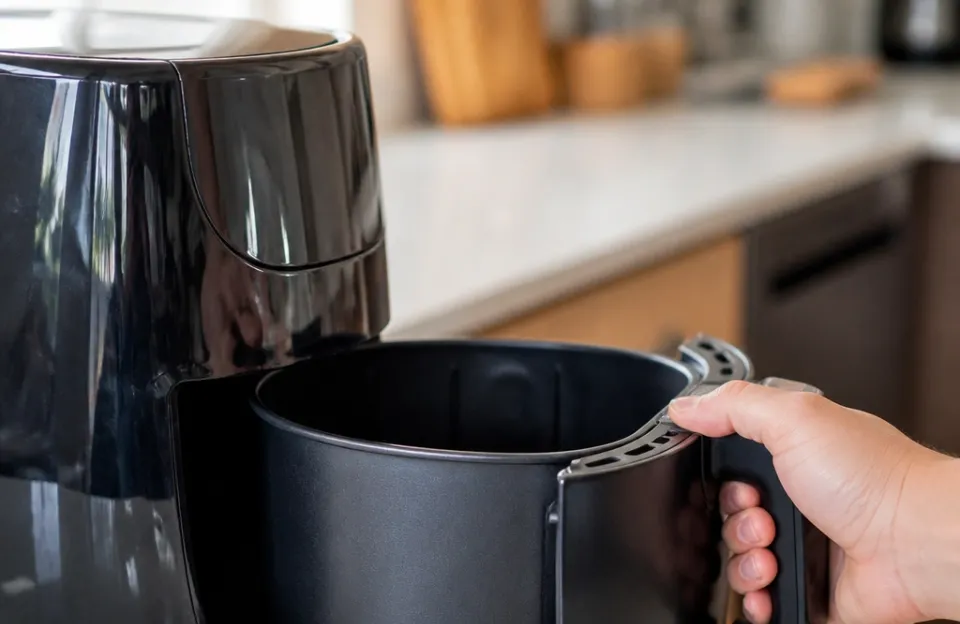
An air fryer relies on tight tolerances. The basket slides into the main housing on two parallel tracks or grooves. When the drawer seats fully, a latch clicks.
That closed seal keeps hot air circulating safely inside the cooking chamber. If anything interrupts that path, the basket stops short.
The interruption is almost always physical. Grease splatters during cooking. Over time, those splatters cool and harden into a sticky layer along the inner walls.
Even a millimeter of buildup changes the clearance between the basket and the housing. The drawer catches on that ridge and refuses to slide the rest of the way.
Sometimes the issue sits inside the basket itself. Most models have a removable crisper plate or wire rack at the bottom. This piece lifts out for washing.
If it doesn't drop back into its exact slot, it sits slightly raised. That extra height pushes the whole assembly up, scraping against the top of the housing opening. The friction stops the basket dead.
Overfilling the drawer causes a similar jam. Piling food above the maximum fill line means items press against the heating element guard or the upper interior wall. The basket physically cannot travel inward because the food blocks the path.
Hardened Grease Blocking the Side Rails
Grease buildup is the number one culprit when an air fryer basket won't go in. During normal use, fat renders off meats and splatters against the inner walls. Sugary marinades caramelize and stick.
If you wipe the machine out while it's warm, most of this comes off easily. If you wait until it cools, the residue hardens.
Run your finger along the grooves inside the main unit where the basket slides. You'll likely feel rough patches or thick ridges. These act as speed bumps.
The plastic or metal edge of the basket hits them and stops.
To fix this, unplug the machine and let it cool completely. Dampen a cloth with warm water and dish soap. Wipe down the inner tracks thoroughly.
For stubborn spots, hold the wet cloth against the grease for a minute to soften it before scrubbing. Avoid abrasive scouring pads on nonstick interiors. They scratch the coating, which leads to faster rust and more sticking later.
Once the tracks are smooth, dry them with a clean towel and try sliding the empty basket back in.
The Crisper Plate Sitting Too High
Most air fryers include a perforated plate that sits at the bottom of the basket. This rack elevates the food so hot air flows underneath. It usually rests on small rubber bumpers or fits into specific notches molded into the basket floor.
After washing, people often drop this plate back in without checking the alignment. If one corner misses its notch, the plate tilts upward. That tilt raises the overall profile of the basket by a fraction of an inch.
It doesn't sound like much, but the clearance inside the housing is minimal. The raised plate scrapes the ceiling of the cavity.
Pull the basket out and look at the bottom. Lift the crisper plate out entirely. Inspect the little silicone feet or plastic tabs.
Make sure none are missing or melted. Place the plate back in slowly. Press down gently on all four corners.
You should feel it settle flat. If it wobbles or rocks, something is preventing it from seating correctly. Remove it again and check for trapped crumbs or a bent tab.
When you prep crispy chicken wings for meal prep, it's tempting to just toss the rack in and load the meat. Taking three seconds to confirm the plate sits flush prevents jams mid-cook.
Warped Plastic From Excessive Heat
Air fryers run hot, typically between 300 and 400 degrees Fahrenheit. The materials used for the basket and housing are designed to handle this range. But accidents happen.
Leaving the machine running empty for too long, placing it too close to another heat source, or running it through a dishwasher cycle that exceeds its rated temperature limit can warp the plastic.
Warping is subtle. You might not see it by looking at the basket alone. But when you try to insert it, the shape no longer matches the rigid housing.
One side might bow outward, creating friction. The rails might twist slightly, causing the drawer to bind.
Hold the empty basket up to eye level. Look down the sides. They should be straight and parallel.
Compare it to the opening of the main unit. If the basket looks visibly distorted, it will not slide in smoothly. Warped parts generally cannot be bent back into shape safely.
The plastic loses its structural integrity once deformed by heat. You will need to order a replacement basket from the manufacturer. Check your model number, usually printed on a sticker on the back or bottom of the base, and search the brand's official parts page.
Clearing Debris From the Tracks and Housing
Before assuming a part is broken, rule out hidden debris. Small pieces of food fall through the crisper plate holes during cooking. They land in the very bottom of the outer housing, directly beneath where the basket sits.
Over several weeks, these crumbs accumulate. They mix with dripping oil and form a dense paste at the base of the tracks. When you push the basket in, its bottom edge hits this pile instead of resting flat.
Unplug the appliance. Turn the main unit upside down over a trash can. Give it a gentle shake.
You might hear loose bits fall out. Turn it upright and shine a flashlight into the cavity. Look specifically at the rear corners and the deepest part of the slide rails.
Use a soft brush, like a clean pastry brush or a dry toothbrush, to sweep out the bottom. Vacuum attachments work well here too. A narrow crevice tool pulls out caked-on crumbs that brushing misses.
Wipe the exposed areas with a damp cloth. Never submerge the main electrical housing in water. Keep moisture away from the heating coil visible at the top of the inner chamber.
If you notice heavy smoke or a burning smell during this process, you've found the problem. Burnt debris creates resistance and odors. Clearing it restores both function and safety.
The FDA regulates materials used in food contact appliances, meaning the coatings inside are safe for cooking but still require regular cleaning to prevent fire hazards from grease accumulation.
Keeping the tracks clean matters just as much when you time your potatoes for roasting. Starchy drips harden fast and cause the same sliding issues as rendered fat.
Fixing Alignment Issues With the Drawer
Sometimes the basket is clean, the plate is seated, and nothing is warped, yet it still binds halfway in. This points to a tracking alignment issue. The basket isn't entering the grooves at the correct angle.
This happens frequently after someone forces the drawer shut or drops it. The impact bends the thin metal lip that rides inside the plastic track.
Take the basket out. Look at the left and right edges near the back. You're looking for a slight lip or flange that sticks out horizontally.
This lip slides into the groove on the housing wall. If one side is bent downward or pushed inward, it won't enter the channel.
If the basket is metal, you can sometimes gently bend the lip back into position using pliers. Apply very light pressure. Metal fatigue makes it easy to snap the lip off entirely if you force it.
If the basket is plastic, do not attempt to bend it. It will crack.
Test the alignment by inserting the basket slowly. Don't push hard. Let it glide.
If it catches immediately, pull it out and adjust the angle. Try lifting the front handle slightly higher than usual as you push it back. Sometimes the tracks wear unevenly, and changing the entry angle bypasses the worn spot temporarily.
A proper fit is required for safe operation. If the drawer doesn't click shut, the safety switch inside the housing may prevent the unit from turning on. This is a deliberate design choice to keep the heating element from running while exposed.
What Happens When You Force the Air Fryer Basket In
Pushing hard against resistance feels satisfying in the moment, but it damages the machine. The tracks inside the housing are relatively thin. Forcing a misaligned basket acts as a wedge.
It spreads the tracks apart or snaps the retaining clips.
Once the internal guides break, the basket will never sit flush again. It will rattle during the fan cycle. Worse, it creates a gap where hot air escapes.
This lowers the cooking temperature and forces the heating element to run constantly, shortening its lifespan.
Forcing the drawer can also damage the safety interlock switch. This small component lives near the top or back of the cavity. It detects whether the basket is fully inserted.
If you shove the basket past a blockage, the impact can crack the switch housing or bend the actuator arm. The result is an air fryer that either won't turn on at all or, dangerously, turns on with the basket partially open.
If the basket won't go in, stop pushing. Pull it out. Diagnose the blockage.
Five minutes of troubleshooting saves you from buying a whole new appliance. And if you're trying to quickly warm leftover pizza for lunch, forcing the tray risks breaking the unit right when you need it most.
Checking for Broken Latches or Safety Switches
Modern air fryers have a mechanical latch or an electronic sensor that confirms the basket is locked in place. If this mechanism fails, the basket might physically slide in, but the machine behaves as though it's stuck or broken. Alternatively, a broken latch creates a physical barrier that stops the drawer from traveling the final half-inch.
Inspect the back of the basket and the corresponding area deep inside the housing. Look for a small plastic hook or a spring-loaded button. If the hook is snapped off, the basket has nothing to catch onto.
It might slide in loosely and fall out when you tilt the unit.
For electronic switches, listen for a faint click when you push the basket fully home. No click usually means the switch is depressed permanently, stuck in the open position, or physically broken.
You can test the switch by unplugging the unit and looking inside the cavity with a flashlight. Find the small pin or lever the basket pushes when it closes. Gently press it with your finger.
It should move smoothly and spring back. If it stays depressed or feels gritty, debris is jamming it. Clean around it carefully with a cotton swab dipped in rubbing alcohol.
If the switch is electrically dead, the appliance needs professional repair or replacement. Do not bypass the safety switch by taping it down. Running an air fryer with a disabled interlock exposes the high-wattage heating element and fast-spinning fan while the drawer is open.
This is a severe burn and fire risk.
| Problem Symptom | Likely Cause | Recommended Fix |
|---|---|---|
| Basket stops halfway in | Grease buildup on side rails | Wash tracks with warm soapy water |
| Basket scrapes the top | Crisper plate not seated flat | Remove plate, realign, press corners down |
| Drawer wobbles loosely | Bent track lip or worn rails | Gently realign metal lip; replace if plastic |
| Machine won't power on | Safety switch not engaged | Clear debris from switch pin; check alignment |
| Visible distortion on edges | Heat warping from misuse | Order replacement basket from manufacturer |
Preventing Future Jams After Cleaning
Fixing a stuck basket is only half the job. Keeping it sliding smoothly requires minor habit changes. The biggest shift is wiping the machine while it's still warm, not hours later.
After you finish cooking and unplug the unit, let it cool just enough to touch safely. While the residual heat is still present, take a damp paper towel and wipe the inner walls and tracks. Warm grease wipes away instantly.
Cold grease requires scrubbing. This single step prevents ninety percent of insertion issues.
Check the crisper plate every time you wash it. Silicone bumpers degrade over time. High heat and dishwashing detergent dry them out until they shrink or fall off.
Without those bumpers, the metal plate sits directly on the metal basket floor. It shifts during insertion and causes jams. Replacement bumpers are cheap and available online.
Swap them out as soon as one looks flattened or cracked.
Avoid using aerosol cooking sprays directly inside the basket. Many commercial sprays contain propellants and emulsifiers that leave a sticky residue worse than natural fats. This residue bakes onto the rails and becomes nearly impossible to remove without harsh chemicals that damage the nonstick coating.
Use an oil mister filled with pure olive or avocado oil instead, or brush the food directly.
Empty the crumb catcher or bottom drip tray after every few uses if your model has one. Not all air fryers have a dedicated removable tray beneath the basket. For those that don't, the weekly upside-down shake-out mentioned earlier keeps the deep tracks clear.
Routine maintenance protects the nonstick surfaces too. Scrubbing off baked-on grease eventually strips the coating, exposing bare metal. Bare metal rusts, and rust creates a rough texture that grabs the sliding basket.
Gentle cleaning preserves the slick surface that allows the drawer to glide.
When to Replace the Basket Entirely
Not every stuck basket can be fixed. You need to recognize when the part has reached the end of its usable life.
Deep scratches in the nonstick coating are a health and function concern. Flaking coating can end up in your food. Furthermore, the exposed metal beneath expands and contracts differently than the coated areas when heated, accelerating warping.
If the interior looks heavily scarred, replace the basket.
Cracks in the plastic frame are an immediate failure point. The frame bears the weight of the food and the stress of being pushed in and pulled out daily. A hairline crack near the handle or the rail lip will spread quickly under tension.
Don't wait for it to snap while holding hot food.
Rust on the metal mesh or the sliding rails indicates the protective layers are gone. Surface rust can sometimes be scrubbed off, but pitting remains. Those pits catch on the housing tracks.
If you see orange or brown scaling that doesn't wipe away, the metal is compromised.
Replacement baskets are sold separately by most major brands. You don't need to throw away the entire motorized base. Match the model number exactly.
Baskets from visually identical models often differ by a few millimeters in width or track placement. A "close enough" basket will recreate the exact jamming problem you started with.
If you regularly cook heavy items like a full two-pound meatloaf, the constant weight stresses the drawer rails faster than lighter foods. Inspect those rails monthly for bending.
Frequently asked questions
Why does my air fryer say the basket is open when it's pushed in?
This happens when the safety interlock switch isn't being pressed by the basket. Either the basket isn't sliding in far enough due to a blockage, or the switch itself is broken or jammed with grease. Clean the tracks first.
If it still won't register, inspect the switch mechanism deep inside the housing.
Can I use my air fryer if the basket doesn't click shut?
No. Operating an air fryer without the basket fully latched is dangerous. The heating element and fan are exposed.
Hot air escapes, which can melt nearby cabinets or cause burns. The machine's built-in safety switch usually prevents it from turning on anyway. Fix the alignment or replace the latch before cooking.
Does putting the air fryer basket in the dishwasher cause it to stick?
It can. Dishwashers use extremely hot water and harsh detergents. Over time, this combination degrades the silicone bumpers on the crisper plate and can warp thin plastic frames.
Hand washing the basket with warm soapy water extends its life and keeps the dimensions stable so it continues to fit the housing properly.
How often should I clean the slide tracks inside the air fryer?
Wipe the tracks lightly after every use while the unit is still warm. Do a deeper clean with a brush and soapy cloth once a month, or sooner if you cook highly fatty foods frequently. Consistent wiping prevents the hardened grease buildup that causes most insertion jams.
Will cooking spray make the basket harder to slide in?
Yes. Aerosol cooking sprays contain additives that leave a gummy residue when heated. This residue builds up on the side rails much faster than natural oils.
It creates friction that stops the basket from gliding. Switch to a pump-style oil mister or brush oil directly onto your food to keep the tracks clean.
Is a slightly bent basket frame safe to keep using?
A minor bend might allow the basket to slide in with some effort, but it puts uneven pressure on the housing tracks. Over time, it will widen the grooves in the main unit, eventually ruining the base. If the metal lip is bent, try to gently straighten it.
If the frame is severely warped, replace the basket before it damages the appliance body.
Getting the Drawer Gliding Smoothly Again
An air fryer basket won't go in for simple reasons. Grease hardens on the rails, the crisper plate shifts out of place, or food piles too high. None of these require a technician.
Unplug the machine, inspect the tracks with a flashlight, and clean out the debris. Reseat the bottom plate firmly. Stop forcing the drawer when you feel resistance.
Taking five minutes to diagnose the jam saves the internal tracks and the safety switch from permanent damage. Regular wiping while the unit is warm keeps the rails slick and the tolerances exact. Treat the basket gently, keep the tracks clean, and it will slide shut with a satisfying click every time you cook.
If you're exploring other countertop appliances, reading up on how long these machines have been around gives good context on how their designs have evolved to handle these exact mechanical quirks.