Choose analog if you want simple, tactile controls and you are happy to check food with a thermometer. Choose digital if you want exact numbers on a screen, stored presets and repeatable settings. Neither control type is proven more accurate across all models, so the specific air fryer matters more than the label on the panel.
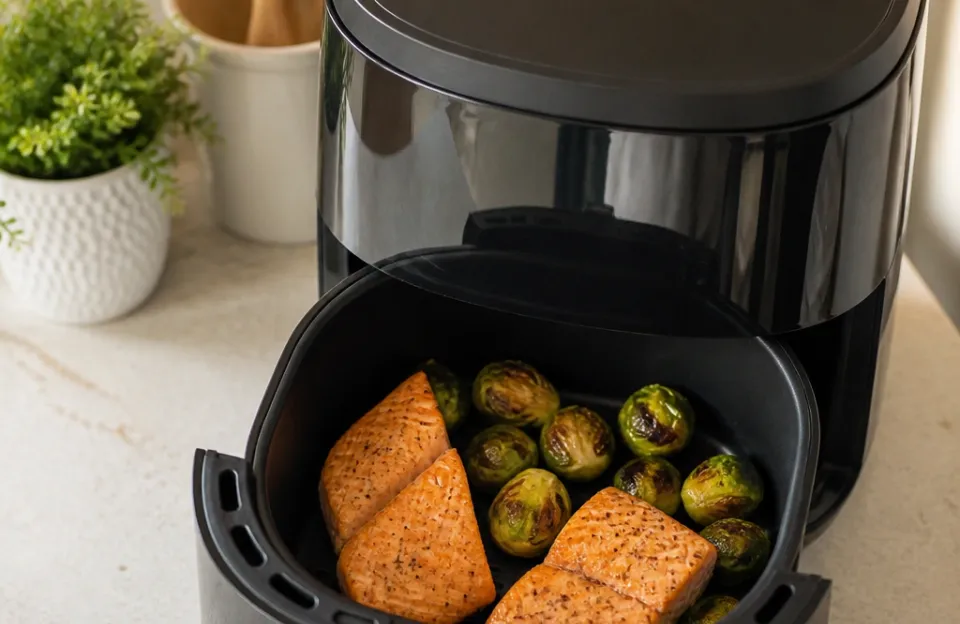
Whichever you pick, the cooking works the same way. Air fryers are essentially countertop convection ovens that cook food by circulating hot air. The dial or touchscreen only tells the heating element and fan what to do.
What Actually Differs: Controls vs Heating Hardware
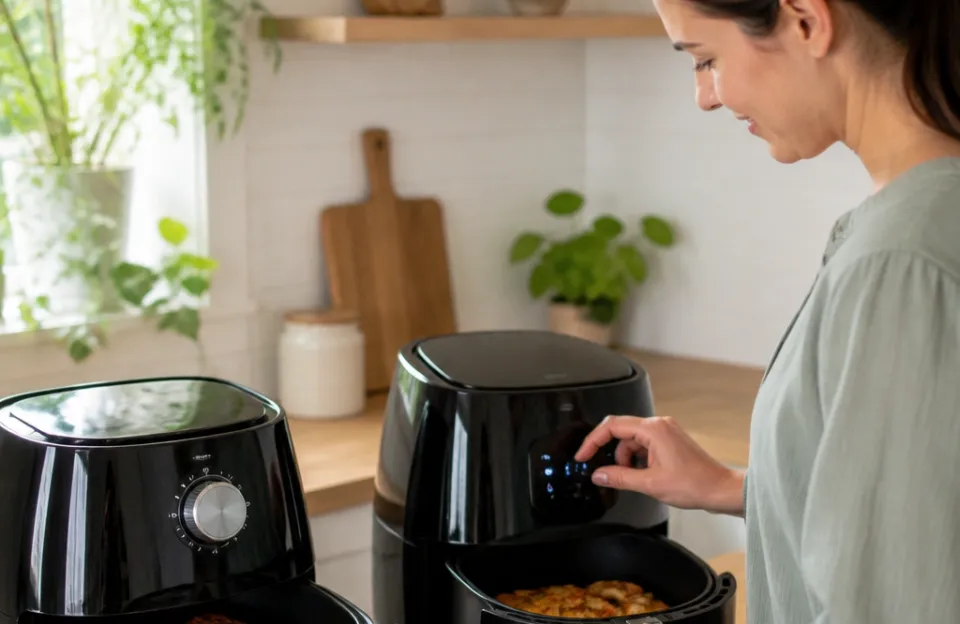
The control panel is the visible difference; the cooking hardware behind it is largely the same job. A heating element warms the air and a fan moves it around the basket. Wattage, cavity size and airflow shape results far more than whether you turned a knob or tapped glass.
That matters for shopping because premium prices often track screen size and preset count, not necessarily better cooking. When you compare two models, look past the interface to basket size, wattage and how the machine circulates air.
Temperature Control and Precision
This is where the two designs genuinely diverge, and where marketing claims deserve scrutiny.
What Independent Testing Shows
Campden BRI tested ten domestic air fryers ranging from 800W to 1800W, covering basket, halogen and paddle types. The measured gaps between the dial setting and the actual air temperature were substantial.
At a 160°C dial setting, actual air temperature ranged from 17°C too low to 8°C too high. At 180°C, results ranged from 20°C too low to 2°C too high. At 200°C, the tested units ran about 38°C to 39°C too low.
Those figures come from dial-controlled machines. The authors’ conclusion was not that air fryers are unsafe, but that performance varies too much for one set of on-pack cooking instructions to work across every model.
What This Means for Digital Models
Digital air fryers commonly use a display with buttons or a touchscreen to set time and temperature, and some include preset functions. Numeric entry lets you dial in a specific number rather than choosing the nearest printed mark on a dial.
What the available evidence does not establish is that digital control automatically produces tighter real-world temperature accuracy. A precise-looking number on a screen is a setting, not a measurement. For consequential cooking, verify doneness with a food thermometer regardless of interface.
Timers, Shutoff and Power-Loss Behavior
Mechanical dial timers and digital timers both count down and cut the heat, but they fail and reset differently. Exact timer drift figures and power-loss reset behavior vary by model, so check the manual for the machine you are considering rather than assuming either design behaves a certain way.
Two practical points hold across designs. First, a timer tells you when the set time has elapsed, not when food is safely cooked. Second, if your kitchen loses power mid-cook, confirm the machine’s state before assuming it resumed; do not rely on an unverified assumption about either control type.
Presets: Convenience or Stored Numbers?
Presets are stored time and temperature settings, nothing more. They do not sense food thickness, moisture or internal doneness. Whether they help depends on whether the stored numbers match how you cook.
They earn their place when you repeat the same dishes: prep batches of wings, time your salmon fillets, crisp chicken drumsticks, or check how long different cuts take all become faster when one button recalls your preferred settings. They mislead when a package instruction assumes a different machine; cooking times vary by appliance size and power even though safe internal temperatures do not.
A useful habit with any preset: run it once, check the result, and adjust. Digital models make saving that adjustment easier, but the judgment is still yours.
Cleaning the Control Panel After Greasy Meals
Grease travels. It settles on panels, around knobs and into the recesses where dials meet the casing.
Flat digital panels generally wipe clean more easily than raised knobs, which create edges where residue collects. Removable baskets and crisping plates are often dishwasher-safe on basket-style air fryers, though large baskets can be awkward in a dishwasher. The control housing itself is never a dishwasher item.
Whatever the panel type, unplug the machine first and wipe controls with a barely damp cloth rather than spraying cleaner directly at the electronics. For heavy residue after dishes like a seasoned meatloaf, clean the basket and cavity thoroughly and keep moisture away from the controls.
Durability, Repairs and Warranty
Control type shifts where failures are likely, not whether failures happen.
Analog machines depend on mechanical dials and timers. Digital machines add electronic control boards, and some baskets use push-button release handles that can wear over time. Viewing windows on some models can fog after extended use and are tricky to clean.
If a control fails, contact the manufacturer or an approved service provider rather than opening the casing yourself. Mains-powered appliances carry shock risk even when unplugged in some failure states, and DIY work can void your warranty. Check the warranty terms before purchase, since coverage and service policies vary by brand and region.
Electrical Safety and Certification Marks
Certification marks are worth checking on any countertop appliance, but they are not a guarantee of safety in everyday use.
Marks such as UL certification mark apply to specific products under specific standards, and different marks mean different things. A mark indicates the product was evaluated to a standard; it does not certify that your particular unit is defect-free or that it will never fail.
Practical checks before you buy: confirm the mark appears on the product or its cord tag, register the product so recall notices can reach you, and follow the manufacturer’s instructions on placement, clearance and cords. If a recall is announced for your model, stop using it and follow the official remedy.
Matching the Interface to Your Cooking Style
Control type is ultimately a fit question. These profiles describe typical priorities rather than tested rankings.
Analog suits you if you want fewer settings to learn, prefer physical controls you can operate by feel, and are comfortable checking food with a thermometer rather than trusting a number. Simplicity is the benefit; less built-in precision is the trade-off.
Digital suits you if you want to enter exact times and temperatures, like recalling saved settings for repeat dishes, and value features such as multiple cooking modes or wide temperature ranges. The trade-off is more electronics that can fail and a panel that needs careful cleaning.
If you are weighing specific machines, comparing a specific brand’s build quality can show how much of the price sits in the panel versus the cooking chamber, though you should confirm the details for each model rather than assuming variants share parts.
Household factors matter too. Physical knobs can be easier for some users to operate than touchscreens, and flat panels are simpler to wipe down. Consider who will actually use the machine most.
Final Decision Rule: Which One Should You Buy?
Decide in this order:
- Pick the machine, then the panel. Compare wattage, basket size and airflow first; the interface is secondary to how the appliance cooks.
- Choose analog if you want simple tactile operation and will verify doneness with a thermometer.
- Choose digital if exact numeric entry and saved presets match how you cook.
- Check certification, warranty and recall history for the specific model before paying.
Either way, cook to safe internal temperatures rather than to the timer, following the safe minimums published by the USDA Food Safety and Inspection Service for the meat you are cooking. Avoid overcrowding the basket, since poor air circulation prevents food from cooking properly. Refrigerate leftovers within two hours.