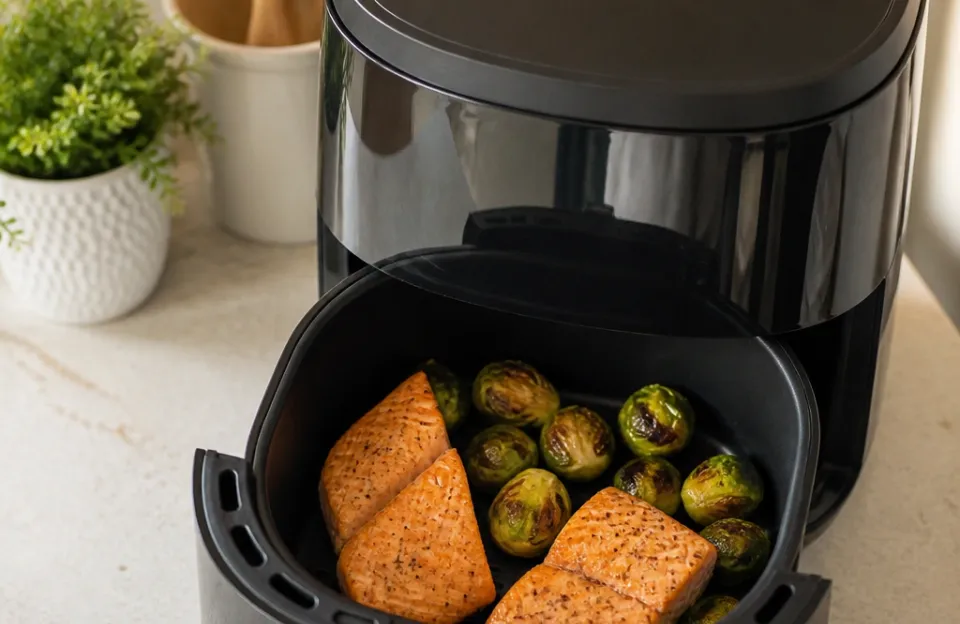
Air fryers with removable baskets separate the cooking drawer from the main heating unit. You pull the basket out, dump your food onto a plate, and wash the greasy parts in the sink or dishwasher without dragging the entire appliance to the faucet. That physical separation is the whole point.
If you cook regularly, air fryers with removable baskets save time on cleanup and reduce the risk of water damaging the electrical components inside the base. This article covers how the basket mechanism works, why it matters for daily cooking, what to look for when buying one, and how to keep the nonstick coating intact over time.
How the Drawer and Basket Mechanism Works
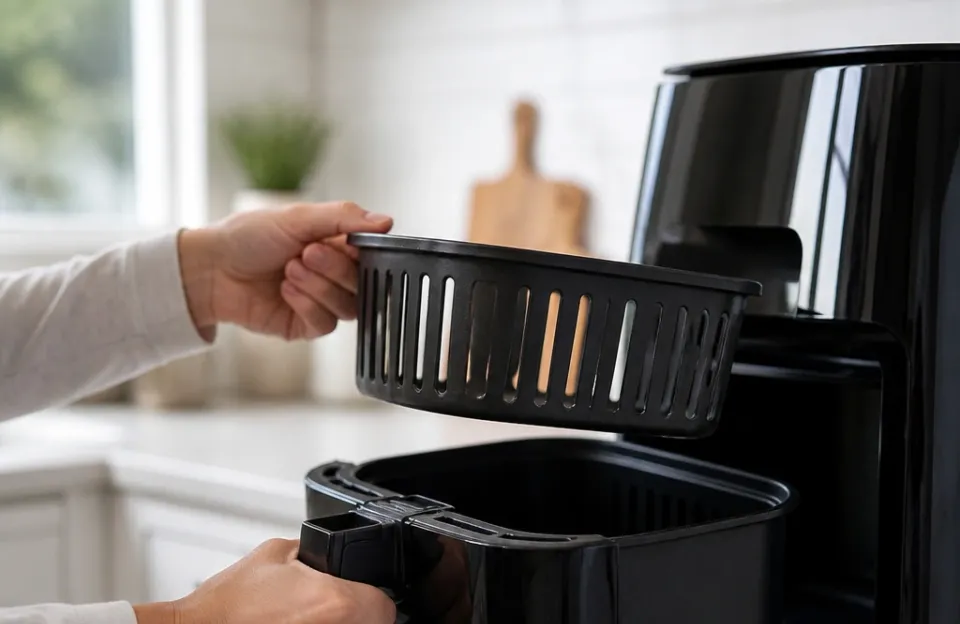
Most countertop models use a two-part system. The outer drawer slides into the machine's housing. Inside that drawer sits a perforated inner basket.
A release button on the handle disengages a latch, letting you lift the inner basket away from the outer drip tray.
The holes in the inner basket let hot air circulate underneath the food while fat and crumbs fall through to the solid outer drawer below. When you press the release button, you only carry the perforated tray holding your food. The heavy outer shell stays behind, or you can set it down separately.
Some older or cheaper designs skip the release button. Those require you to pull out the entire assembly, then tip the food out manually. The button-release design found on most modern air fryers with removable baskets prevents accidental spills and makes plating much easier.
Why separating the basket protects the heating element
The top section of the machine houses the fan and heating coil. Water and electricity don't mix. By detaching just the lower cooking chamber for washing, you keep the base unit completely dry.
Submerging an entire unit destroys the internal wiring. A detachable basket means you only wash the parts that touch grease and food. The main body just needs a quick wipe down with a damp cloth after it cools off.
Drawer-style versus flip-top lid designs
Drawer-style machines dominate the market right now. You pull the basket straight out toward you. Flip-top models open upward like a toaster oven.
Drawer models generally hold heat better during the cooking cycle because the seal is tighter. Opening a flip-top lid lets all the hot air escape at once. If you check your food frequently, a drawer style recovers its temperature faster.
I've written before about timing potato batches correctly so they brown evenly, and pulling a drawer out quickly to shake the pieces makes a big difference in the final texture.
Why Detachable Baskets Matter for Daily Cooking
Cleaning up after frying chicken wings or roasting vegetables usually involves scrubbing baked-on oil. With a fixed-basket design, you have to awkwardly angle the whole machine under the tap. A removable basket goes flat into the sink.
Dishwasher compatibility is another major factor. Most manufacturers coat these baskets with PTFE (polytetrafluoroethylene) or ceramic nonstick layers. The FDA regulates food-contact surfaces like these coatings through their food safety guidelines, confirming that intact PTFE is safe for standard cooking temperatures.
Hand washing extends the life of those coatings, but being able to place the basket on the top rack of a dishwasher saves effort on busy weeknights.
Storing the appliance gets simpler too. Some people take the basket out and nest it upside down inside the drawer to save vertical space in a cabinet. You can't do that with a single-piece unit.
Managing grease buildup between deep cleans
Fat drips through the perforations into the outer drawer. If you cook bacon or heavily marinated meats, that bottom tray catches a lot of liquid.
Because the basket lifts out, you can pour off excess grease from the outer drawer mid-cook if needed. Leaving a pool of hot oil sitting directly under your food causes smoking. Pulling the basket out to drain the drawer takes five seconds and keeps your kitchen smoke-free.
For fattier items, knowing how long bacon needs in the basket helps you plan when to pause and drain that excess grease safely.
Plating food without burning your hands
Trying to scoop hot fries out of a deep, fixed pot requires long tongs and careful maneuvering. Pressing the release button lets you invert the basket directly over a serving bowl. Gravity does the work.
This also prevents scratching the bottom of the pan with metal utensils. Scooping food out with a fork or spatula damages the nonstick surface over time. Dumping the basket avoids contact entirely.
Materials Used in Removable Fryer Baskets
The material dictates how long the basket lasts and how well food releases. Manufacturers typically use stamped steel, die-cast aluminum, or stainless steel wire mesh.
Stamped steel is the most common. It's lightweight, cheap to produce, and holds a nonstick coating well. Die-cast aluminum feels heavier and distributes heat slightly more evenly across the bottom surface.
Stainless steel mesh skips the chemical coating entirely, relying on bare metal.
| Material | Weight | Nonstick Coating | Typical Lifespan | Dishwasher Safe |
|---|---|---|---|---|
| Stamped Steel | Light | Yes (PTFE/Ceramic) | 2-4 years | Usually yes |
| Die-Cast Aluminum | Medium/Heavy | Yes (PTFE/Ceramic) | 3-5 years | Usually yes |
| Stainless Steel Mesh | Medium | No (Bare Metal) | 5+ years | Yes |
Ceramic versus traditional PTFE coatings
Traditional black nonstick uses PTFE. It provides excellent food release at normal cooking temperatures. Ceramic coatings are usually lighter in color, often white or gray.
They are marketed as free of PTFE and PFOA.
Ceramic coatings tend to lose their slickness faster than PTFE. with prolonged daily use, a ceramic basket might start sticking, whereas a good PTFE basket can last years if treated gently. Neither coating handles metal utensils well.
Bare stainless steel options
Some users prefer uncoated stainless steel baskets to avoid any concern about chemical coatings flaking off into food. These exist, though they are less common.
Food sticks to bare stainless steel unless you preheat the basket and apply oil. Cleaning requires soaking and scrubbing. If you prioritize longevity and zero coating degradation over easy food release, stainless steel is the path.
Just be prepared to spend more time washing it after making something sticky like flour-dusted chicken pieces.
Capacity and Shape Considerations
Basket size determines what fits inside. Capacities range from 2 quarts for single servings up to 8 or 10 quarts for large families. The shape matters just as much as the volume.
Round baskets fit neatly into cylindrical housings. Square or rectangular baskets maximize usable floor space. A 6-quart square basket holds more chicken breasts side-by-side than a 6-quart round one, where the curved edges waste room.
When evaluating air fryers with removable baskets, measure your counter space first. A larger capacity machine takes up significant real estate. If you only cook for one or two people, a massive 8-quart drawer wastes energy heating empty space.
On the other hand, picking the right capacity matters when you're trying to fit a full meatloaf inside without crowding the airflow.
Single basket versus dual zone setups
Dual zone machines contain two independent drawers. Each has its own removable basket, heating element, and fan. You can cook fish in one side and vegetables in the other at different temperatures.
Single basket models force you to cook sequentially or mix ingredients that share the same time and temperature requirements. Dual zones cost more and take up more counter space. For households cooking complete meals at once, the extra footprint pays off.
Clearance needed above and behind the unit
These appliances exhaust very hot air from vents, usually located on the back or top. You need at least five inches of clearance behind the machine and nothing flammable directly above it.
Pulling the basket out requires front clearance too. If you push the machine flush against a backsplash, you won't have room to fully extend the drawer and lift the basket out safely. Leave enough room on the counter to slide the drawer forward freely.
Keeping the Release Button Working Over Time
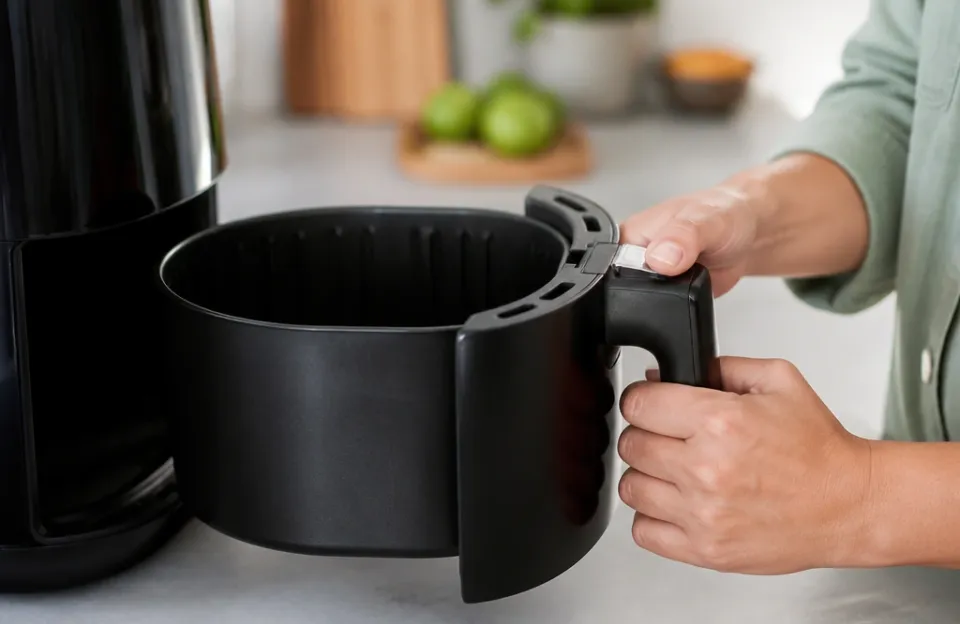
The mechanical latch is the weakest link on any detachable model. Grease splatters get into the button housing. Over time, that residue hardens and makes the button stick or fail to engage the hook.
Pressing the button accidentally while lifting the machine by the handle drops the outer drawer onto the floor. That's a burn hazard and a mess. Maintaining the latch mechanism prevents this.
Wipe around the button area after every use. Don't spray aerosol cleaners directly into the gap where the button sits. Liquid seeps inside and gums up the spring.
Use a slightly damp cloth instead.
Preventing the basket from jamming in the housing
Sometimes the inner basket warps slightly from high heat, or food debris falls into the track between the inner and outer pans. When this happens, the basket won't seat properly, and the machine might not turn on due to a safety microswitch.
Always check the rails before sliding the drawer shut. Wipe out loose crumbs. If the basket feels resistant going in, don't force it.
Pull it back out, check for obstructions, and try again. Forcing it bends the alignment tabs.
Replacing worn-out baskets
Nonstick coatings scratch eventually. Once the coating flakes off significantly, the bare metal underneath rusts or sticks terribly. Most major brands sell replacement baskets separately.
Buying a replacement basket costs a fraction of a new machine. Check if the manufacturer offers spare parts before purchasing a specific brand. Some budget models lack replacement availability, meaning a scratched basket forces you to buy an entirely new unit.
Checking our notes on specific popular models shows that having access to replacement parts is often what separates a good purchase from a frustrating one.
Safety Details Tied to Detachable Designs
The National Institute of Standards and Technology (NIST) publishes testing standards that appliance manufacturers follow for electrical safety and thermal limits. Air fryers with removable baskets must pass specific interlock tests.
Most units have a magnetic or mechanical switch that cuts power the second you pull the drawer out. This stops the fan and heater immediately so you aren't exposed to blowing hot air or moving blades. When you slide the drawer back in, the machine resumes automatically.
Avoiding burns during removal
The outer drawer gets extremely hot. The handle stays relatively cool, but the sides radiate heat. Always grip the designated handle.
Never grab the rim of the outer pan to steady it while pressing the release button.
Place the hot outer drawer on a trivet or wooden cutting board, never directly on a laminate countertop or plastic tablecloth. The residual heat melts plastics and scorches thin laminates.
Child safety locks and placement
The release button is easy for small children to press. If a child pulls the basket out mid-cycle, hot food spills. Keep the appliance pushed back on the counter where the handle doesn't hang over the edge.
Some newer models include a secondary lock or require a firm squeeze-and-push motion to release the basket. If you have toddlers in the house, look specifically for a stiffer release mechanism rather than a light-touch button.
Common Mistakes People Make With Removable Baskets
People ruin these baskets faster than necessary by ignoring basic care rules. The mistakes are predictable and easy to avoid.
- Using metal utensils inside the basket. Forks and metal tongs scrape the nonstick coating off in strips. Silicone or wooden tools prevent this.
- Spraying aerosol cooking sprays directly on the coating. Commercial aerosol sprays contain propellants like soy lecithin that bake onto the surface and create a sticky residue impossible to wash off. Pump oil sprayers or brushing oil on manually avoids this buildup.
- Washing a hot basket in cold water. Thermal shock warps thin stamped metal. Let the basket cool completely on the counter before putting it in the sink.
- Stacking heavy pots on top of the stored basket. Crushing the basket bends the rim, preventing it from latching into the outer drawer securely later.
- Ignoring the outer drip tray. People focus on cleaning the inner perforated basket and forget the solid outer drawer. Burnt grease pools there and smokes during the next preheat cycle.
If you routinely make things that leave heavy residue, like baking soda rubbed poultry skin, washing both parts thoroughly immediately after cooling becomes even more critical to prevent stubborn buildup.
Frequently Asked Questions
Can I put the removable basket in the dishwasher every day?
Most manufacturers say the basket is dishwasher safe, but daily cycles degrade the nonstick coating much faster than hand washing. The harsh detergents and high heat in dishwashers break down PTFE and ceramic layers over time. Wash it by hand with warm soapy water for daily use, and save the dishwasher for occasional deep cleans.
Why does my basket smell like burning plastic the first few times?
New heating elements and factory coatings release odors during initial use. Run the machine empty at its highest temperature for fifteen minutes in a well-ventilated room before cooking food. The smell dissipates after two or three cycles.
Are square baskets better than round ones for cooking?
Square baskets provide more usable flat surface area. Round baskets waste space near the curved edges where food tends to pile up unevenly. If you cook flat items like chicken breasts or fish fillets, a square or rectangular basket fits more pieces in a single layer without overlapping.
What happens if the release button breaks?
If the latch fails, the inner basket won't stay attached to the handle. You'll have to lift it out manually using silicone-tipped tongs or wait for it to cool and tip it out. Contact the manufacturer for a replacement basket assembly, as operating it with a broken latch risks dropping hot food.
Do I need to preheat the machine with the basket inside?
Yes. Preheating with an empty basket brings the metal up to temperature so food starts sizzling immediately upon contact. Putting food into a cold basket results in steaming rather than browning.
Slide the empty drawer in, set your temperature, and wait three to five minutes before adding ingredients.
Can I use parchment paper liners inside the basket?
You can, provided the paper is weighted down by food. Loose parchment flies up into the heating element and catches fire. Buy perforated liners designed specifically for air circulation.
Solid sheets block the airflow coming through the bottom holes, defeating the purpose of the convection design.
Before You Buy Your Next Machine
Choosing between air fryers with removable baskets comes down to how you balance convenience against durability. A button-release drawer makes daily cooking faster and safer. Pay attention to the coating type, the thickness of the metal, and whether the brand sells replacement parts.
Check the dimensions of the basket itself, not just the advertised quart capacity. A wide, shallow basket browns food better than a narrow, deep one where ingredients stack on top of each other. Read the manual regarding dishwasher safety before assuming the basket can handle daily machine washing.
Taking thirty seconds to hand wash the inner tray preserves the nonstick surface for years instead of months.