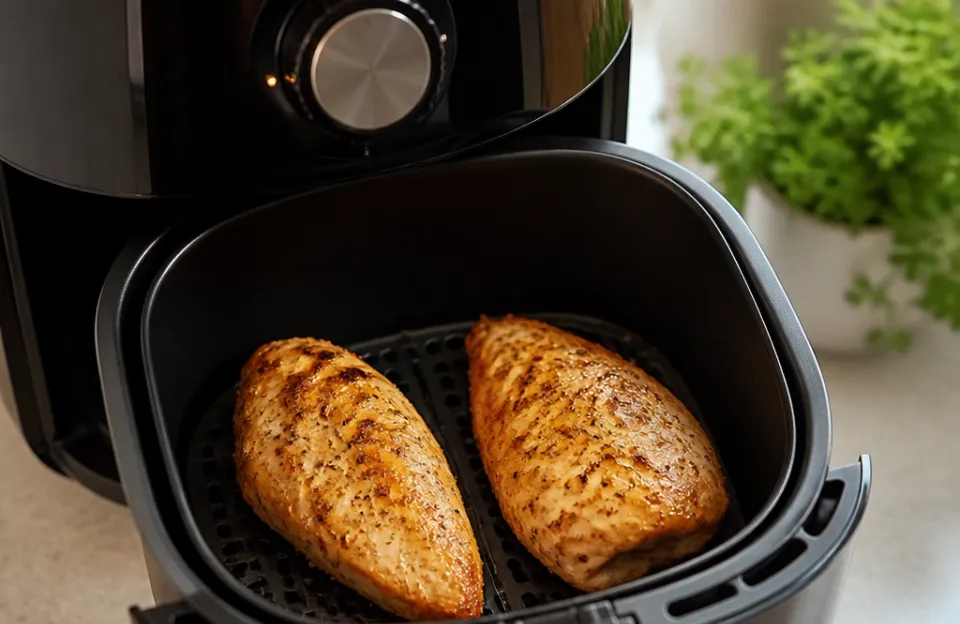
When you're figuring out air fryer dimensions: what to measure, you need three numbers for the appliance itself and three numbers for your kitchen space. For the machine, measure the total width, depth, and height including the handle, feet, and any protruding vents. For your kitchen, measure the available counter footprint, the vertical clearance under your cabinets, and the distance to the nearest grounded outlet.
Getting these measurements right prevents a frustrating return trip to the store. A unit that technically fits on the counter might still block a cabinet door or sit too close to a wall vent. This guide covers exactly where to place the tape measure, how much breathing room the exhaust needs, and why the basket capacity number on the box rarely matches the usable cooking space.
The Exact Exterior Measurements That Matter
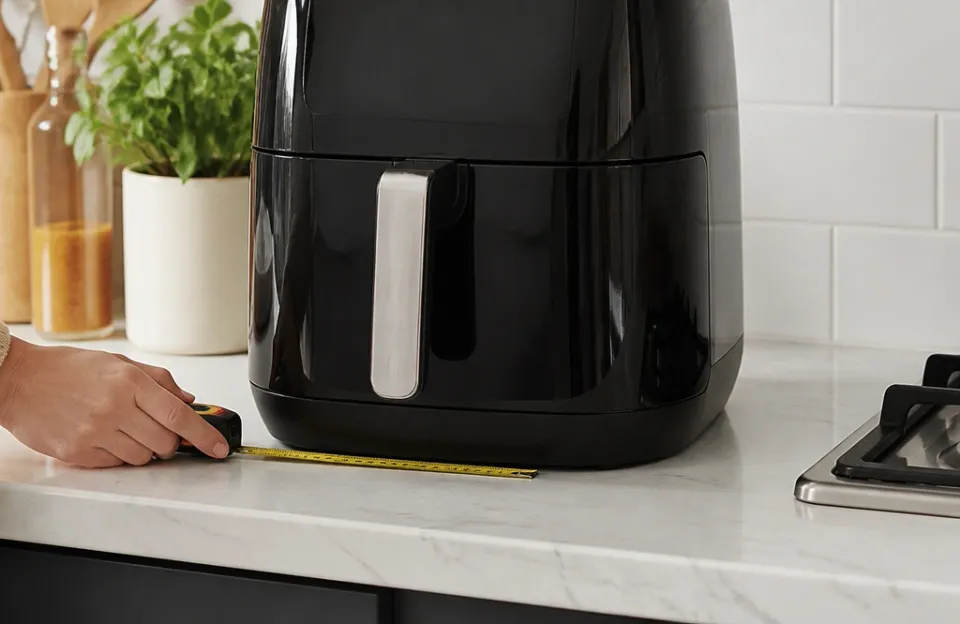
Manufacturers list product dimensions on the box, but those numbers often exclude the parts that stick out. If you rely solely on the printed specs, you might find the handle hits your backsplash or the power cord barely reaches the plug. Taking your own measurements is the only reliable method.
Start with the overall width. Measure from the furthest left point to the furthest right point. On most models, this means measuring across the main body.
Some oven-style units have side-mounted handles or dials that add an extra inch or two. Include those in your final number.
Depth is usually where people run into trouble. Measure from the very front of the control panel or handle to the absolute back of the housing. You also need to account for the power cord's exit point.
Most cords plug into the back or lower rear corner. If the cord exits straight back, you'll need to leave a gap between the machine and the wall so the plug doesn't bend sharply. A bent plug can overheat, which is a fire risk according to basic electrical safety standards outlined by the National Fire Protection Association.
Height requires two separate measurements. First, measure the resting height from the bottom of the feet to the highest point on top. Second, measure the operational height.
Basket-style machines require you to pull the drawer up and out. Oven-style models with a drop-down door need vertical space to swing open. If you plan to keep the appliance tucked under a cabinet while using it, that operational clearance dictates whether the setup works at all.
| Measurement Type | Where to Place the Tape | Why It Matters |
|---|---|---|
| Total Width | Outermost left edge to outermost right edge | Determines if it fits between other appliances or inside a cabinet cutout. |
| Total Depth | Front of handle/panel to back of housing plus plug | Prevents the unit from hanging off the counter edge or crushing the cord. |
| Resting Height | Bottom of feet to highest top point | Checks basic under-cabinet fit when stored. |
| Operational Height | Countertop to fully opened lid or door | Verifies you can actually open the machine in its intended spot. |
Measuring Your Counter Space and Cabinet Clearances
Knowing the appliance size is half the job. The other half is verifying your kitchen can accommodate it safely. Standard US base cabinets are 24 inches deep, and countertops usually extend about an inch past that, giving you roughly 25 inches of total depth.
Upper cabinets typically hang 18 inches above the countertop surface.
Measure the exact width of the clear counter space where you want the air fryer to live. Don't just measure the empty stretch. Account for the items permanently sitting next to it.
If a knife block sits to the left and a coffee maker sits to the right, measure the gap between them.
Next, check the vertical space. Hold your tape measure at the counter surface and extend it up to the underside of the upper cabinet. If you have 18 inches of clearance and the air fryer stands 15 inches tall, you have 3 inches of space left.
That sounds fine until you realize you need to lift the basket out. Pulling a hot basket through a tight gap increases the chance of spilling oil or burning your knuckles.
If you plan to store the unit inside a cabinet or pantry when not in use, measure the interior shelf depth. Cabinet interiors are often shallower than the exterior depth due to hinges, door thickness, and back panels. A model that fits perfectly on the counter might be an inch too deep to allow the pantry door to shut.
For anyone who cooks large batches regularly, knowing your exact counter boundaries helps you pick a machine big enough to prep chicken wings for the week without dominating your entire prep area.
Air Fryer Dimensions: What to Measure for Heat Exhaust Clearance
Air fryers work by circulating extremely hot air at high speeds. That air has to go somewhere once it cycles through the cooking chamber. Every model has an exhaust vent, usually located on the back or the top rear.
Blocking this vent causes the internal fan to work harder, reduces cooking performance, and creates a burn hazard for nearby surfaces.
Find the exhaust vent on the specific model you're considering. Measure the distance from that vent to the nearest obstruction when the unit is placed in its intended spot. Manufacturers generally recommend leaving at least 5 inches of open space behind the exhaust port.
Some larger, higher-wattage models require more.
Don't route the exhaust toward heat-sensitive materials. Plastic outlets, vinyl wallpaper, wooden spice racks, or curtains will warp, melt, or discolor over time if they take a constant blast of 400-degree air. If your only available counter space pushes the exhaust directly against a painted drywall surface, you might notice the paint bubbling after a few months of heavy use.
Top-venting models present a different challenge. If the hot air blows straight up, you absolutely cannot operate the machine directly under a low-hanging cabinet. The trapped heat damages the wood finish and creates a fire risk.
For top-venting units, the operational height measurement we discussed earlier becomes the most critical number in the whole process.
Proper ventilation also matters when you're running the machine long enough to cook potatoes all the way through. Dense root vegetables require extended run times, meaning the exhaust pushes hot air continuously for 20 minutes or more.
Basket Capacity vs. Usable Cooking Area
Capacity is listed in quarts or liters, but volume alone doesn't tell you if your food will fit. A 6-quart basket that is narrow and deep holds the same volume as a 6-quart basket that is wide and shallow. The shape determines what you can actually cook.
To understand the real cooking space, look at the interior floor dimensions of the basket. Measure the length and width of the flat bottom area where the food rests. This is your single-layer cooking footprint.
If you want to lay out six chicken thighs without overlapping them, you need a basket floor large enough to hold six thighs side-by-side. Stacking them blocks airflow and results in soggy, unevenly cooked meat.
Square baskets generally offer better usable surface area than round ones. A 5-quart square basket often fits more food in a single layer than a 6-quart cylindrical basket because there are no curved edges wasting space. When comparing two models with similar total volumes, the one with the wider, flatter basket floor usually gives you more practical room.
Oven-style air fryers use wire racks instead of pull-out baskets. Their dimensions are measured by the interior cavity width, depth, and the spacing between rack slots. Rack spacing tells you how tall your food can be.
If you want to roast a whole chicken or bake a small casserole dish, you need enough vertical clearance between the food and the upper heating element. Crowding the top element causes burning before the center cooks through.
Checking the basket shape is especially helpful if you frequently prepare salmon fillets, since fish needs to lay flat to crisp evenly without breaking apart during flipping.
Power Cord Length and Outlet Placement
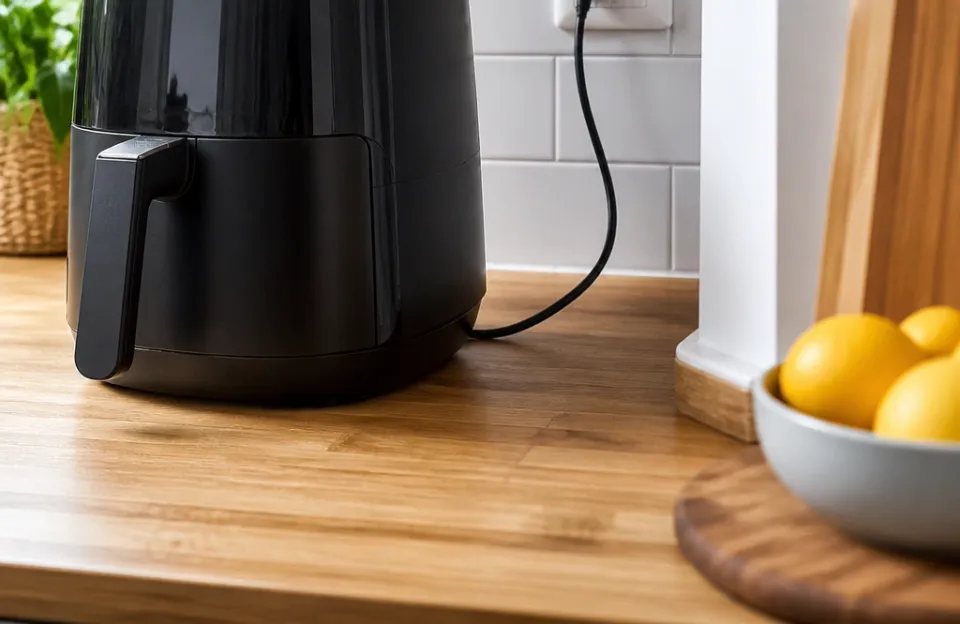
A detail people overlook until they unbox the machine is the power cord length. Air fryers draw significant wattage, usually between 1,400 and 1,800 watts for standard home models. Because of this high power draw, manufacturers intentionally keep the cords relatively short, often between 2.5 and 3 feet.
This design choice discourages users from plugging them into distant outlets via extension cords, which is a known fire hazard for high-wattage appliances.
Measure the distance from your planned counter spot to the nearest grounded wall outlet. If the outlet is 4 feet away and the cord is 30 inches long, the unit won't reach. You'll be forced to move it closer to the wall, potentially blocking the exhaust vent, or move it to a completely different counter.
Never use a standard, lightweight extension cord for an air fryer. If you absolutely must bridge a gap, you need a heavy-duty appliance cord rated for the specific amperage of the machine. Check the appliance's rating label (usually on the bottom or back) for the wattage or amp draw, and verify the cord matches or exceeds that rating.
However, plugging directly into a wall outlet is always the safest route.
Also note the position of the outlet relative to the exhaust vent. If your only outlet is directly behind where the hot air blasts out, the heat will degrade the plastic outlet cover over time. Plan your placement so the cord routes away from the heat path.
How Shape Changes Your Kitchen Layout
The physical silhouette of the machine dictates where it lives. There are three main shapes: basket-style cylinders, basket-style squares, and toaster-oven hybrids. Each demands a different spatial approach.
Basket-style cylinders are compact but tall. They fit well in corners or tight gaps between a microwave and a wall. Their footprint is small, but their height and the angle required to pull the drawer out mean they need open space in front of them.
You can't shove a cylindrical basket model flush against a backsplash if you don't have room to tilt the drawer upward slightly as you pull it forward.
Square basket models sit lower and wider. They slide under standard 18-inch upper cabinets more easily than tall cylinders. Their flat fronts align neatly with the edge of the counter, making them look less obtrusive.
However, their wider stance eats up more horizontal prep space.
Oven-style air fryers resemble traditional toaster ovens. They have the largest overall footprint and the widest doors. You need significant counter depth for these, as they often push right up against the 24-inch standard cabinet depth limit.
Their advantage is visibility; the front glass door lets you watch food brown without opening the chamber and losing heat. If you prefer a model that handles multiple tasks, looking into a multi-function glass design might change how you allocate your counter zones.
Some brands specifically engineer their housing to minimize the footprint. If your kitchen is exceptionally tight, researching a slim-profile build early in the process saves you from measuring spaces that standard boxes will never fit.
Mistakes People Make When Sizing an Appliance
Relying on the box numbers without grabbing a tape measure leads to most sizing failures. Printed dimensions are nominal, meaning they represent the main housing body and ignore the reality of handles, plugs, and feet.
Here are the most frequent errors:
- Measuring only the closed height. People check if the unit fits under the cabinet while closed, then realize they can't open the lid or remove the basket without hitting the wood above. Always measure the fully open state.
- Ignoring the plug depth. Adding zero inches for the power cord forces the plug to bend against the wall. Add at least 1.5 to 2 inches to your depth measurement to let the cord exit naturally.
- Assuming quart capacity equals physical size. A 4-quart brand A might be physically larger than a 5-quart brand B due to thick insulation or bulky external controls. Judge by exterior inches, not interior quarts.
- Placing the exhaust against a window blind. Vinyl blinds warp rapidly under sustained heat. Even if the counter space is perfect, a vent blowing directly onto window treatments ruins the blinds within weeks.
- Forgetting the weight. Large dual-basket or oven-style models weigh 15 to 25 pounds. If you plan to lift the unit in and out of a cabinet daily, the dimensions might fit, but the physical strain makes it impractical.
Taking five minutes to map out these variables prevents buying a machine that sits in its box because your kitchen geometry won't accept it.
Frequently Asked Questions
Do I need to measure the air fryer with the drawer pulled out?
Yes, you should measure the total depth with the basket fully extended. This tells you how much space you need in front of the unit to operate it safely. If your counter is on an island, ensure the open drawer doesn't hang over the edge where someone could bump it or where a child could pull it down.
Can I put my air fryer directly under a cabinet if it vents out the back?
You can, provided the top of the machine stays cool and the rear exhaust has at least 5 inches of open space to blow hot air away from the wall. However, if the unit vents from the top, placing it under a cabinet traps the heat. Top-venting models require open overhead space during operation.
Does the listed quart size include the space taken up by the crisper plate?
No. The listed capacity refers to the total volume of the empty basket cavity. Once you insert the crisper plate or perforated tray, your usable depth decreases by about half an inch to an inch.
This slightly reduces the maximum height of the food you can fit inside while still allowing the drawer to close.
Are oven-style air fryers deeper than basket models?
Generally, yes. Oven-style models need enough interior depth to accommodate a baking pan or wire rack while leaving room for the door to close and the heating elements to circulate air. Expect an oven-style footprint to consume 15 to 20 inches of counter depth, whereas compact basket models often stay under 14 inches deep.
Will a 1500-watt air fryer trip a standard kitchen breaker?
A 1500-watt appliance draws about 12.5 amps. Standard US kitchen circuits are 15 or 20 amps. Running the air fryer alone on a 15-amp circuit is fine.
But if you run it simultaneously with another high-draw device on the same circuit, like a microwave or coffee maker, you risk tripping the breaker. Check which outlets share a circuit before plugging in.
Getting the Fit Right Before You Buy
Measuring takes a few minutes and saves a lot of hassle. Grab your tape measure and record the width, depth, and height of your available counter space. Note where the outlet sits and which direction the wall faces.
Then compare those hard numbers against the true exterior dimensions of the models you're considering, remembering to add space for the plug and the exhaust vent.
Pay attention to the basket floor shape rather than just the quart count. A wide, flat bottom gives you better cooking results than a deep, narrow cylinder. Whether you're trying to figure out the timing for perfectly crisping bacon strips or roasting vegetables, having a machine that physically fits your kitchen layout makes the whole process easier.
Write your numbers down, bring them to the store or keep them open on your phone while shopping online, and trust the tape measure over the marketing copy.