A 3-quart air fryer is a compact countertop appliance that holds roughly three quarts of food, making it the standard size for one or two people. If you live alone, share a small apartment, or just want a dedicated machine for quick sides and snacks, this capacity hits the sweet spot. You get enough room to cook a single serving of fries, a couple of chicken breasts, or a batch of roasted vegetables without taking up your entire counter.
This buying guide covers what to look for when shopping for 3-quart air fryers. We'll walk through basket shapes, wattage, control types, and the specific tradeoffs you face at this smaller size. The goal is to help you pick a model that actually fits your kitchen and your cooking habits.
What Three Quarts Actually Holds in Practice
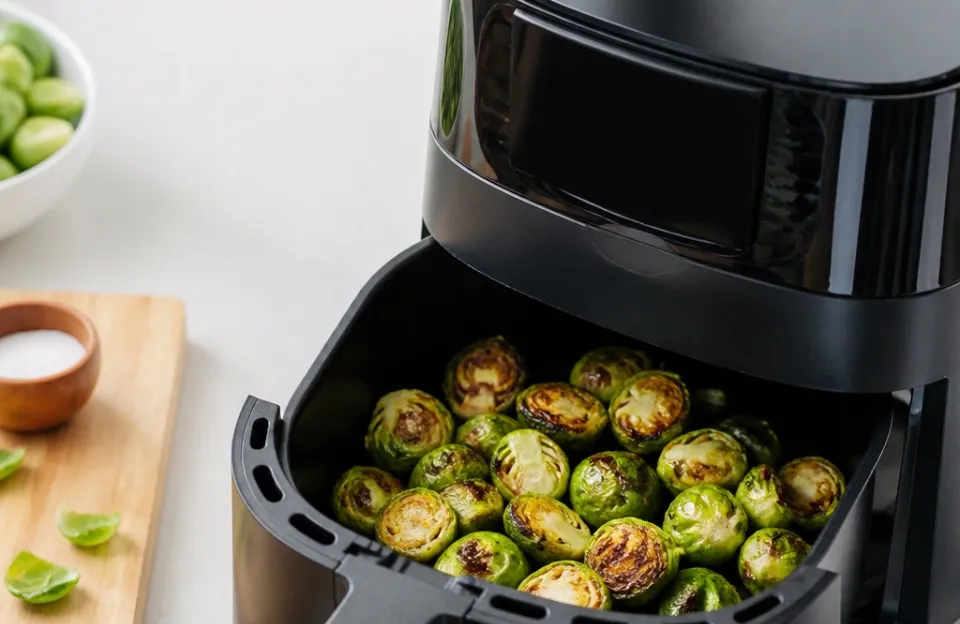
Capacity numbers on the box don't always translate clearly to real meals. A 3-quart basket gives you about 12 cups of volume. In practice, that means you can fit two average-sized chicken breasts side by side, or roughly half a bag of frozen french fries, or about a pound of broccoli florets.
You cannot fit a whole chicken or cook dinner for four people in a single batch. Overcrowding the basket blocks airflow, which leaves you with soggy food instead of a crispy finish.
This size works best for individuals, couples, or dorm rooms. It's also a good secondary appliance if you already own a full-sized oven and just want something faster for reheating leftovers or roasting a quick vegetable side. Knowing how long potatoes take in a smaller basket helps you plan meals around its actual limits rather than guessing.
If you regularly cook for three or more people, a 3-quart model will force you to cook in multiple batches. That defeats the speed advantage of air frying. Stick to this size only if your typical meal involves one or two portions.
Basket Shape Determines What You Can Cook
The physical shape of the cooking chamber matters more than the total quart count. Most 3-quart air fryers come in either a square basket or a round basket. Square baskets give you more usable surface area.
You can lay out chicken pieces or fish fillets flat without them overlapping. Round baskets push food toward the center, which often leads to stacking. Stacked food steams instead of crisping.
Square baskets also fit better into corner spaces on your counter. If you are comparing two models with the exact same wattage and price, pick the one with the square drawer. The difference in how much food you can spread out in a single layer is noticeable immediately.
Some round models use a rotating paddle inside the basket to stir the food automatically. These work fine for loose items like fries or diced potatoes. They fall short for breaded items or delicate proteins because the paddle scrapes off the coating.
For a 3-quart size, a standard pull-out drawer without a paddle is usually the safer bet.
Wattage and Heating Speed at This Size
Smaller air fryers generally use less power than their larger counterparts. A typical 3-quart model runs between 1,000 and 1,500 watts. Because the cooking chamber is small, even a 1,200-watt unit heats up fast.
You rarely need to preheat a 3-quart machine for more than two or three minutes, and many recipes skip preheating entirely.
Higher wattage doesn't automatically mean better cooking. A 1,500-watt 3-quart fryer might run hotter than you need for delicate items like baked goods or thin cuts of meat. Check if the model lets you adjust the temperature in small increments.
A dial that jumps from 350°F straight to 400°F gives you less control than digital buttons that move in 5-degree steps.
If you live in an older building or a dorm with strict electrical limits, check the amperage draw. A 1,500-watt appliance pulls about 12.5 amps on a standard 120-volt US outlet. Running it on the same circuit as a microwave or a space heater might trip your breaker.
Models closer to 1,000 watts are safer for shared circuits, though they take slightly longer to crisp heavy foods.
Digital Touchscreens Versus Manual Dials
You have two main choices for controls: manual dials or a digital interface. Manual dials use a mechanical timer knob and a temperature dial. They are simple, durable, and easy to use without reading a manual.
The downside is precision. Mechanical timers often tick loudly and can be off by a minute or two, which matters when you're cooking something thin like bacon or zucchini. Getting zucchini perfectly tender requires exact timing that a spring-loaded dial struggles to provide.
Digital touchscreens give you precise temperature settings and exact countdown timers. Many include preset buttons for common foods like fries, poultry, or fish. Presets are helpful if you're new to air frying, though experienced cooks usually prefer setting the time and temperature manually based on the specific recipe.
Digital screens also tend to be quieter since there's no ticking clock mechanism.
The tradeoff with digital screens is longevity. Touch panels can fail over time, especially if grease builds up around the edges of the screen. Dials rarely break.
If you cook heavily greased foods often and don't wipe down the machine after every use, manual dials might last longer.
Noise Levels in Small Kitchens
A 3-quart air fryer is often used in small apartments, dorms, or studio layouts where the kitchen shares space with the living or sleeping area. Fan noise becomes a real factor. All air fryers use a high-speed fan to circulate hot air, but cheaper models tend to vibrate more and produce a higher-pitched whine.
Look for reviews that specifically mention decibel levels or compare the noise to a microwave or a standard exhaust fan. Models rated around 60 to 65 decibels are normal. Anything pushing past 70 decibels will be loud enough to interrupt a conversation in the same room.
Heavier machines with rubber feet dampen vibrations better than lightweight plastic ones that rattle against the countertop.
Cleaning Requirements for Compact Baskets
Small baskets fill up with grease splatter quickly. If the nonstick coating is poor, scrubbing a 3-quart basket takes almost as much effort as cleaning a full-sized pan. Look for models where both the basket and the outer drawer are dishwasher safe.
Even if you prefer hand washing, a removable basket makes it much easier to clean under the heating element.
Pay attention to the type of nonstick coating used. Standard PTFE coatings work well initially but scratch easily if you use metal tongs. Ceramic coatings are harder and resist scratching better, though they can lose their slickness over time if exposed to aerosol cooking sprays.
Aerosol sprays contain propellants that degrade nonstick surfaces. Use a pump oil mister or brush oil directly onto the food instead.
The exterior matters too. Glossy black plastic shows fingerprints and dust immediately. Matte finishes or stainless steel exteriors hide smudges better and require less daily wiping.
Since a 3-quart model will likely live permanently on your counter due to its convenience, picking a finish that stays looking clean saves daily frustration.
Safety Standards and Build Quality
Air fryers generate intense heat in a very small footprint. The exterior of a 3-quart model can get dangerously hot if the insulation is thin. Look for units with cool-touch handles and double-walled construction.
The bottom of the appliance should have adequate ventilation gaps so it doesn't scorch your countertop. Always place the machine on a heat-resistant surface, leaving at least five inches of clearance behind the exhaust vent.
In the United States, any countertop cooking appliance should carry certification from a recognized testing laboratory. Checking for UL safety standards or ETL listing confirms the electrical components and housing materials meet baseline fire and shock prevention requirements. Uncertified imports sold on third-party marketplaces often skip these tests to keep prices low, introducing unnecessary risk into your kitchen.
Auto-shutoff is another safety requirement. The machine should turn itself off completely when the timer ends or when you pull the basket out mid-cycle. Some budget models only pause the fan when the drawer opens but leave the heating element active, which is a burn hazard.
Where 3-Quart Air Fryers Fall Short

Every appliance has limits, and a 3-quart air fryer has several you need to accept before buying. The most obvious is batch size. Cooking chicken drumsticks for meal prep in a 3-quart basket means doing three or four separate cycles to feed a family.
By the time the last batch finishes, the first one is cold.
Baking is also restricted. You can bake a couple of muffins or a single small cookie portion, but standard cake pans or loaf tins simply won't fit inside the drawer. If you plan to use your air fryer primarily for baking, you need a wider, shallower oven-style model rather than a deep basket design.
Finally, tall foods are a problem. The heating element sits close to the top of the food in a 3-quart basket. Thick items like stuffed peppers or tall pieces of meat will scrape the element or burn on top before the center cooks through.
You have to keep ingredients relatively flat and uniform in thickness.
Comparing Control Types and Power Draw
When narrowing down your options, comparing the core specifications side by side prevents buyer's remorse. The table below outlines how the two main control styles typically perform in a 3-quart capacity.
| Specification | Manual Dial Models | Digital Screen Models |
|---|---|---|
| Typical Wattage | 1,000 to 1,300 watts | 1,200 to 1,500 watts |
| Timer Precision | Approximate (1 to 2 min variance) | Exact (down to the minute) |
| Temperature Steps | Continuous dial (hard to repeat exactly) | 5 or 10 degree increments |
| Durability | High (fewer electronic parts) | Moderate (screen can fail) |
| Noise Level | Often louder (ticking timer) | Generally quieter |
| Price Range | Usually lower | Usually higher |
Wattage differences seem minor on paper, but a 1,500-watt digital model recovers heat faster when you open the drawer to shake the basket. That quicker recovery translates to better browning on foods like crispy chicken wings where maintaining consistent high heat is the difference between a crunchy skin and a chewy one.
Specific Brands Known for This Capacity
Several manufacturers consistently produce reliable 3-quart air fryers. Ninja is one of the most recognizable names in this space. Their entry-level models, such as those in the AF100 series, often sit right around the 4-quart mark, but they frequently release compact versions tailored for smaller kitchens.
Ninja tends to favor digital interfaces and ceramic-coated baskets, which hold up well against scratches. Reading up on specific Ninja models helps clarify which compact sizes they currently stock.
Bella and Chefman both make dedicated 3-quart and 3.5-quart models aimed squarely at budget-conscious buyers and dorm setups. Bella often uses simpler dial controls to keep costs down, while Chefman mixes both digital and manual options. Cuisinart leans slightly larger, but their compact toaster-oven hybrids sometimes offer a similar footprint if you want multi-function capability.
Dash is famous for ultra-compact appliances, and their 2-quart and 3-quart models are popular for single users. Dash units are lightweight and come in various colors, though they usually operate at lower wattages, meaning longer cook times for dense foods. Cosori also offers highly rated compact models with excellent digital presets and sturdy square baskets.
Matching the Appliance to Your Cooking Style
Buying the right 3-quart air fryer depends entirely on what you plan to put inside it. If your main goal is reheating leftovers, crisping up frozen appetizers, or cooking single servings of vegetables, almost any model with basic temperature control will work. You don't need advanced presets for reheating pizza or roasting cherry tomatoes.
If you want to cook raw proteins regularly, pay closer attention to the maximum temperature and the basket coating. Cooking bacon until it shatters generates heavy grease splatter. You need a basket that wipes clean instantly and a machine that reaches 400°F reliably.
Lower-end models that max out at 390°F struggle to render fat quickly enough, leaving you with limp strips instead of crisp ones.
For users who want to experiment beyond basic frying, look for models that include a dehydrate function. Dehydrating requires the machine to hold a very low temperature, usually around 100°F to 150°F, for several hours. Not all 3-quart models support this.
If making fruit chips or jerky appeals to you, verify the minimum temperature range on the spec sheet before purchasing.
Counter Space and Storage Realities
One of the primary reasons people buy 3-quart air fryers is to save space. However, "compact" is relative. Measure your available counter space before ordering.
A typical 3-quart basket model measures roughly 10 to 12 inches wide and 10 to 13 inches deep. You also need to account for the cord length and the required clearance behind the exhaust vent.
Some models feature a cord wrap underneath the base, which keeps things tidy if you store the appliance in a cabinet between uses. If you plan to leave it on the counter permanently, aesthetics matter more. Stainless steel accents blend better into modern kitchens than bright plastic housings.
Weight is another factor. A lighter machine is easier to move out of the way, but heavier machines stay planted during operation. If you frequently shake the basket to toss fries, a lightweight model might slide across a smooth countertop unless you hold the base down with your other hand.
Rubberized feet solve this issue on most mid-range models.
Frequently Asked Questions
Is a 3-quart air fryer big enough for two people?
Yes, for most standard meals. You can comfortably cook two chicken breasts, two salmon fillets, or a side dish of vegetables for two. If you are trying to cook a large main course with multiple components simultaneously, you will likely need to run two separate batches.
How many chicken wings fit in a 3-quart basket?
You can fit about six to eight standard-sized wings in a single layer without overcrowding. Stacking them higher prevents the hot air from circulating properly, resulting in uneven cooking. For a full party platter, you would need to cook in three or four batches, or step up to a larger model designed for extra crispy results.
Do I need to use oil in a 3-quart air fryer?
You don't need much, but a light coating helps. Tossing vegetables or potatoes in a teaspoon of oil before air frying improves browning and texture. Avoid using aerosol cooking sprays directly on the basket, as the chemical propellants damage the nonstick coating over time.
Use a pump spray bottle or rub oil on the food by hand.
Can I bake a cake in a 3-quart air fryer?
You can bake very small items like a couple of muffins or a single-serving lava cake using a small ramekin. Standard 8-inch or 9-inch cake pans will not fit inside a 3-quart drawer. If baking is your primary goal, consider an air fryer toaster oven style instead of a basket model.
Does a 3-quart model use less electricity than a regular oven?
Significantly less. A 3-quart air fryer typically draws between 1,000 and 1,500 watts and cooks food much faster than a conventional oven, which often draws 3,000 watts or more and requires a long preheat cycle. For small portions, the air fryer is far more energy efficient.
Why does my compact air fryer smell like burning plastic?
A slight odor during the first one or two uses is normal as factory residues burn off. Run the empty machine at 400°F for ten minutes in a well-ventilated area before cooking food. If the smell persists after several uses, check for melted packaging material stuck near the heating element or contact the manufacturer, as it could indicate a wiring fault.
Deciding on Your Compact Kitchen Setup
Picking out 3-quart air fryers comes down to balancing counter space, portion needs, and control preferences. If you cook solo or share meals with one other person, this capacity delivers fast results without heating up a full oven. Prioritize a square basket for better food layout, choose digital controls if you need exact temperatures, and verify the wattage fits your kitchen's electrical setup.
Once you know exactly what fits inside that 12-cup chamber, you can stop guessing and start cooking efficiently.