Yes, you can put a plate in an air fryer, provided the plate is oven-safe and fits without blocking airflow. Standard dinner plates are usually too large for most baskets, so you need a smaller dish that leaves room around the edges for hot air to circulate. Materials like tempered glass, ceramic, stainless steel, and silicone work well.
Plastic, melamine, and regular glass will melt, release chemicals, or shatter.
If you've ever wondered whether you can just drop your favorite dish into the basket to catch drips or reheat leftovers, the short answer is yes. The longer answer involves checking the material, measuring the fit, and understanding how air fryers cook food. Getting this wrong means a broken plate, ruined food, or a damaged appliance.
This guide covers which materials survive the heat, how to check if a dish fits properly, and what happens when airflow gets blocked.
Why Heat Resistance and Material Matter Inside the Basket
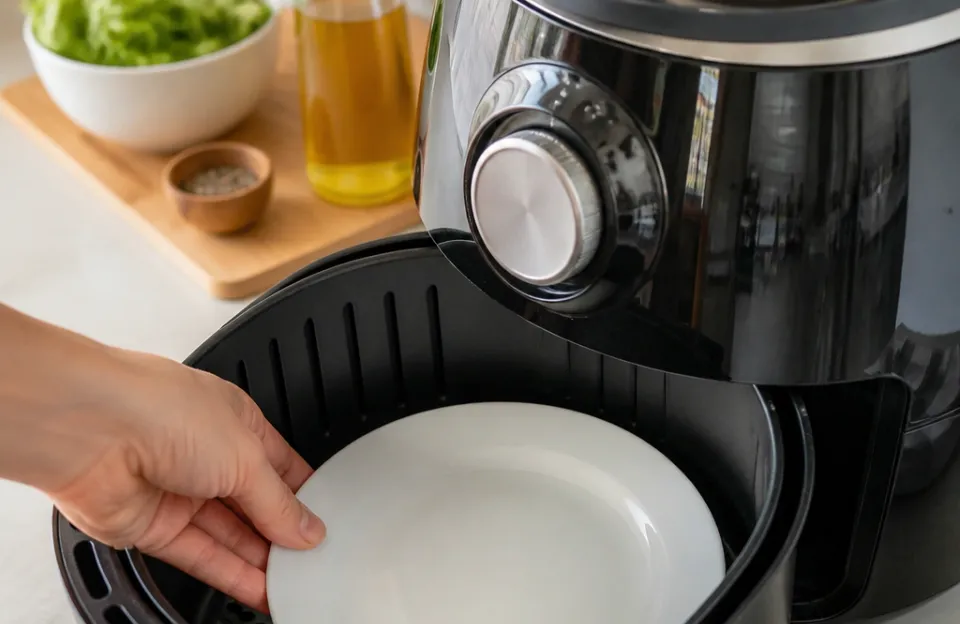
Air fryers cook by circulating extremely hot air at high speeds using a fan near the top heating element. Temperatures typically range from 300°F to 400°F. Any dish placed inside must withstand those temperatures without cracking, melting, or releasing toxic fumes.
The rapid movement of air also creates uneven pressure on objects, meaning thin or flawed materials can break under thermal stress.
A plate that works fine in a conventional oven might still fail in an air fryer if it sits too close to the heating coil. The concentrated heat directly above the basket is more intense than the ambient heat in a standard oven cavity. You always need to verify both the maximum temperature rating of the dish and its physical clearance from the top element.
Oven-Safe Labels Tell You What Survives High Heat
Look for an "oven-safe" stamp or symbol on the bottom of any dish before putting it in the machine. Manufacturers test oven-safe ceramics and glass to withstand sustained heat, usually up to 450°F or higher. If a plate lacks this marking, assume it cannot handle the environment.
Many decorative plates have painted glazes or metallic rims that degrade or spark at high temperatures.
Even with an oven-safe label, check the specific temperature limit. Some stoneware handles 400°F easily, while certain glass dishes max out at 350°F. When cooking items that require high heat, like getting extra crunch on wings, you need a plate rated well above your target temperature.
Thermal shock is another risk. Moving a cold ceramic dish straight into a preheated basket can cause it to crack instantly. Let the dish reach room temperature first.
How Airflow Changes When You Add Solid Dishes
An air fryer relies on moving air hitting every surface of the food. A solid plate blocks that air from reaching anything underneath it. Food sitting flat on a solid dish will steam on the bottom rather than crisp.
The top will brown, but the base stays soft and pale.
This changes how you should use plates. They work best for foods that don't need 360-degree crisping, like casseroles, reheated pasta, or baked dips. For foods that need all-around browning, you need a perforated dish or a wire rack raised off the bottom.
Blocking too much air also forces the fan to work harder, which can overheat the motor over time. Always leave at least half an inch of open space between the edge of the plate and the basket wall.
Which Plate Materials Can You Put in an Air Fryer Safely
Not every kitchen dish survives the rapid convection environment. The material determines whether the plate transfers heat safely, resists shattering, or melts into your food. Here is how common materials hold up.
Tempered Glass and Borosilicate Options
Borosilicate glass and tempered glass are safe choices. Brands like Pyrex manufacture borosilicate dishes designed for extreme temperature shifts. Regular soda-lime glass, used in cheap drinking glasses or decorative plates, will shatter.
If you own a model with a clear window or specialized containers, such as the glass components in certain designs, you already know borosilicate handles the heat well.
Always check the manufacturer's stated temperature ceiling. Even tempered glass has limits. Avoid placing glass plates directly under the heating element where radiant heat spikes highest.
Glass retains heat longer than metal, so food continues cooking after you pull the basket out. Use thick oven mitts, as the dish stays dangerously hot long after the cycle ends.
Ceramic and Stoneware Plates
Oven-safe ceramic and stoneware perform reliably. Thick walls distribute heat evenly, preventing hot spots that burn food. Glazed ceramics are easy to clean and resist absorbing oils.
Unglazed clay pots or terracotta can crack if they absorb moisture and then face sudden high heat.
Avoid plates with hand-painted designs, gold leaf trim, or glued-on decorations. The heat degrades these finishes quickly, potentially leaching lead or other heavy metals into your meal. Stick to plain, commercially manufactured oven-safe ceramics.
If you are baking something dense like timing a meatloaf perfectly, a thick stoneware dish holds the shape well without warping.
Metal Pans, Stainless Steel, and Aluminum
Metal conducts heat faster than glass or ceramic. Stainless steel plates, aluminum pans, and cast iron skillets are completely safe as long as they fit. Metal won't shatter, making it the safest option against physical breakage.
Thin aluminum foil pans work for single-use tasks, though they can blow around if the fan is strong and the pan is empty.
One drawback to metal is that it gets incredibly hot very fast. It also reacts with acidic foods. Cooking tomato sauce or citrus marinades in bare aluminum causes a metallic taste and pits the surface.
Stick to stainless steel or enameled metal for acidic ingredients. Dark-colored metal absorbs more heat and browns the bottom of food faster, while shiny metal reflects heat and slows down browning.
Silicone Bakeware and Flexible Mats
Food-grade silicone handles temperatures up to 450°F or 500°F without melting. Silicone plates, bowls, and mats are flexible, making them easy to wedge into tight baskets. They don't scratch non-stick coatings either.
Because silicone is a poor conductor of heat, food cooks slightly slower on a silicone plate compared to a metal one.
Silicone tends to be floppy when full of heavy food. Support the bottom when pulling it out, or place the silicone dish on a rigid tray first. Cheap silicone blends sometimes contain fillers that smoke at high temperatures.
Pinch the material; if white shows through the color at the pinch point, it contains fillers and shouldn't go in the machine.
| Material | Max Safe Temp (Typical) | Shatter Risk | Heat Conduction | Best Used For |
|---|---|---|---|---|
| Borosilicate Glass | 450°F | Low (if not shocked) | Slow, even | Baking, casseroles |
| Ceramic / Stoneware | 400°F – 500°F | Medium | Moderate | Roasting, reheating |
| Stainless Steel | 500°F+ | None | Fast | Searing, acidic foods |
| Aluminum | 400°F+ | None | Very Fast | Quick browning, disposable |
| Food-Grade Silicone | 450°F | None | Slow | Delicate items, liners |
| Melamine / Plastic | 160°F – 200°F | N/A (Melts) | Poor | Never use |
Measuring Your Dish Against the Basket Dimensions
The biggest practical hurdle is physical size. Most air fryer baskets are round or square, ranging from 2 quarts to 8 quarts. A standard 10-inch dinner plate won't fit inside a 3-quart basket.
Forcing a plate that touches the sides blocks the air channels built into the basket walls.
Measure the interior floor of your basket, not the top rim. The basket usually tapers inward toward the bottom. Your plate needs to be smaller than the narrowest point.
Leave at least half an inch of clearance on all sides. If your machine has a paddle mechanism or a rotating spit, the plate must sit below the path of those moving parts.
Leaving Enough Room Around the Edges for Circulation
Hot air enters from the top, pushes down, and flows back up through the outer edges of the basket. If a plate spans the entire width, it acts as a dam. The air pools above the food, burning the top while leaving the center raw.
The fan motor strains against the blocked path, which reduces the lifespan of the appliance.
Smaller plates are better. A 6-inch or 7-inch dish usually fits standard 4-quart models comfortably. Oval plates often fit rectangular baskets better than round ones.
If you are preparing vegetables that need precise timing, like getting zucchini perfectly tender, spreading them on a small plate with wide margins gives the air enough room to dry the surface instead of steaming it.
Height Restrictions Near the Heating Element
Height matters as much as width. The heating coil sits directly above the basket, usually protected by a mesh guard. Adding a plate plus a pile of food raises the total height.
If the food touches the heating element, it burns instantly, smokes heavily, and creates a fire hazard.
Measure the distance from the basket floor to the heating coil. Subtract the height of your plate. The remaining space is your maximum food height.
Keep food at least an inch below the top heating element. Tall items like stuffed peppers or rising dough need very shallow plates or no plate at all.
Foods That Cook Better on a Plate Versus Directly in the Basket
Placing a plate inside the basket changes the cooking dynamic. You lose bottom airflow, but you gain containment. Knowing when to use a dish prevents messes and improves texture for specific recipes.
Saucy Dishes and Liquid-Heavy Meals
Foods with heavy sauces, melted cheese, or liquid batters fall right through the wire grate of a standard basket. Teriyaki chicken, macaroni and cheese, or fruit cobblers need a solid vessel. A ceramic or glass plate catches the bubbling liquid, keeping the bottom of the basket clean.
Without a plate, sugar-heavy sauces drip onto the heating element or pool at the bottom, smoking and burning within minutes.
When cooking saucy items, stir halfway through if possible. The top layer exposed to the moving air will thicken and brown, while the bottom stays liquid. A solid dish traps steam, which helps melt cheese evenly without drying it out.
Reheating Leftovers Without Drying Them Out
Reheating pizza slices or fried chicken directly on the wire rack often dries the edges before the center gets warm. Placing leftovers on a plate, and optionally covering it loosely with foil, traps gentle heat. This mimics a mini-oven environment.
Moisture stays closer to the food.
This method works exceptionally well for dense proteins. If you're warming up thicker cuts, similar to checking salmon doneness, a plate prevents the delicate flesh from sticking to the basket grates and tearing apart when you try to flip it. Lower the temperature by 25°F compared to the original cooking temp to warm the food through gently.
Small Items That Fall Through the Grate
Diced vegetables, loose grains, or small shrimp slip through standard basket holes. A plate keeps everything contained. Perforated parchment paper liners do the same thing, but a reusable silicone or metal plate is sturdier and easier to wash.
Just remember that small items piled deep on a solid plate will steam rather than roast. Spread them in a single layer for the best results.
Materials That Will Melt, Shatter, or Release Toxins
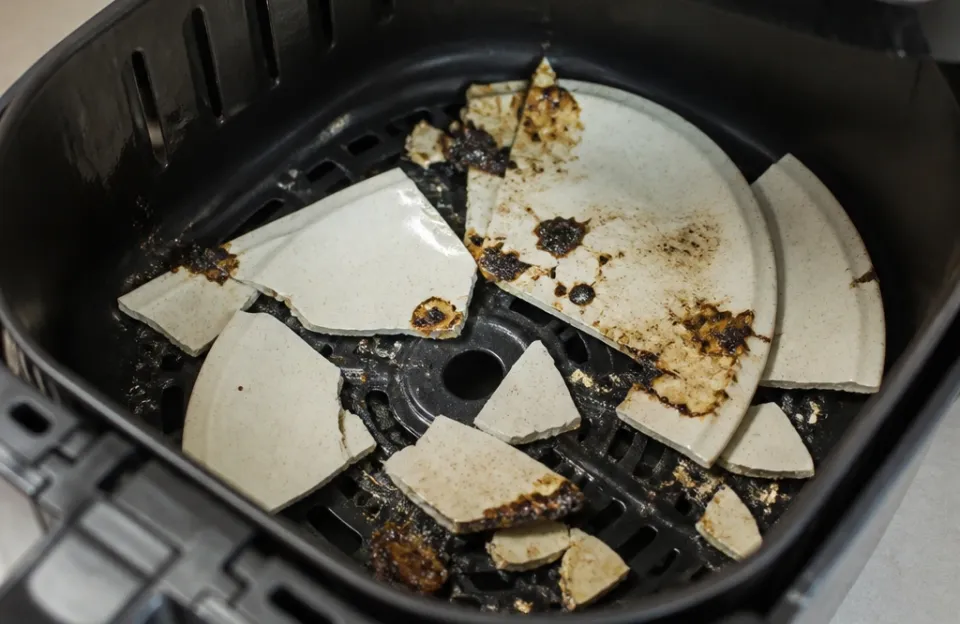
Knowing what fails is just as important as knowing what works. Putting the wrong material inside the chamber ruins the food, damages the non-stick coating, or creates dangerous fumes.
Why Melamine and Plastic Belong Outside the Kitchen Appliance
Melamine plates look like heavy ceramic but are made from a plastic resin. They handle warm food fine, but they warp, blister, and release formaldehyde gas when exposed to temperatures above 160°F. An air fryer operates far beyond that limit.
Never put melamine, acrylic, or standard Tupperware-style plastics inside. They will melt into a toxic puddle fused to your basket.
Even microwave-safe plastics aren't designed for dry, convective heat. Microwave radiation excites water molecules, while an air fryer blasts the surface with hot air. The two heating methods affect polymers entirely differently.
Stick exclusively to materials explicitly rated for conventional oven use.
Regular Glass and Decorative Dinnerware Risks
Standard drinking glasses, vintage plates, and decorative serving platters rarely carry oven-safe ratings. They contain microscopic air bubbles or uneven thicknesses. Rapid heating causes these weak points to expand at different rates, leading to explosive shattering.
Flying glass shards ruin the appliance and pose a severe injury risk.
Metallic paint, gold rims, and lead-based glazes on older ceramics react poorly to intense heat. The metals can arc if they get close enough to the element, similar to putting foil in a microwave. Modern commercial ceramics are generally safe, but thrift store finds or handmade pottery without proper kiln firing carry unpredictable risks.
Adjusting Temperature and Time When Using Solid Dishes
Adding a plate introduces thermal mass. The machine has to heat the dish itself before it effectively heats the food. This changes your timing.
Expect to add 2 to 5 minutes to your usual cooking time. Dense materials like stoneware take longer to warm up than thin aluminum. Preheating the machine with the empty plate inside helps, but handle the hot dish carefully when adding the food.
You may also need to lower the temperature slightly. Because the plate traps heat against the bottom of the food, the base cooks faster once the dish reaches temperature. Dropping the dial by 10°F to 25°F prevents burnt bottoms while allowing the top to finish browning.
If you are working with items that require exact timing, like crisping bacon evenly, testing a small batch first on the new plate saves you from burning the whole package.
Monitor the food visually during the last few minutes. Pull the basket out to check progress. The retained heat in a thick ceramic plate continues cooking the food even after the machine turns off, so remove items slightly earlier than you would if they were resting directly on the wire rack.
Common Mistakes People Make With Plates and Air Fryers
Putting a plate in the basket seems simple, but a few recurring errors cause most of the problems people run into.
- Using oversized dinner plates. Forcing a 10-inch plate into a small basket blocks all side ventilation, overheats the motor, and leaves food raw in the center.
- Skipping the oven-safe check. Assuming a plate is heat-resistant because it feels heavy leads to shattered glass or melted plastic ruining the non-stick coating.
- Ignoring vertical clearance. Piling food high on a plate pushes it into the top heating element, causing instant burning and heavy smoke.
- Placing cold glass into a hot basket. Taking a ceramic dish straight from the fridge and dropping it into a preheated machine causes thermal shock, cracking the dish immediately.
- Forgetting about cleanup. Sauces baked onto a textured ceramic plate inside the confined space of a basket are much harder to scrub than a flat baking sheet pulled from a standard oven.
Frequently Asked Questions
Can I use a paper plate in my air fryer?
No. Paper plates ignite at temperatures well below standard cooking settings. The intense, focused heat and the powerful fan blowing directly on the paper create a serious fire hazard.
Parchment paper designed specifically for high heat is safe if weighed down by food, but disposable paper dining plates belong in the trash, not the basket.
Will putting a plate inside damage the non-stick coating?
It can, if the plate slides around. Heavy ceramic or rough stoneware scraping against the basket floor scratches the non-stick surface. Place the dish down gently.
Using a silicone mat underneath the plate protects the basket coating from friction and makes sliding the dish out much easier.
Do I need to preheat the plate before adding food?
Preheating helps reduce overall cooking time because the machine doesn't waste energy warming up a cold, dense object. However, transferring raw food onto a scorching hot plate inside a small basket is difficult and risky. A safer approach is to start with a room-temperature plate and add a few extra minutes to the timer.
Can I cover the plate with aluminum foil?
Yes, you can tent aluminum foil loosely over a plate to prevent excessive browning or trap moisture. Secure the edges tightly so the fan doesn't rip the foil off and blow it into the heating element, which causes sparking and fires. Never line the entire bottom of the basket with foil, as it blocks essential airflow.
Is it safe to use a silicone plate for high-heat roasting?
Food-grade silicone rated for 450°F or higher is safe for roasting. Verify the manufacturer's temperature rating printed on the product. Silicone doesn't conduct heat efficiently, so the bottom of your food won't brown as deeply as it would on a metal pan.
It works best for baking or gentle roasting rather than hard searing.
Does the plate material change how my food tastes?
Metal conducts heat rapidly, creating a harder sear on the bottom of meats and vegetables. Glass and ceramic heat slowly and evenly, resulting in gentler cooking that retains more moisture. Silicone yields the softest base.
The material choice directly affects texture, especially for foods where a crispy bottom crust is desired.
Before You Start Cooking
You can absolutely put a plate in an air fryer as long as you respect the physics of the appliance. Check the oven-safe rating, measure the diameter against your specific basket, and leave breathing room for the fan to push hot air around the edges. Stick to tempered glass, heavy ceramics, stainless steel, or food-grade silicone.
Keep melamine, regular glass, and paper far away from the heating element. Once you match the right dish to the right food, you stop fighting the wire grate and start using the machine for a much wider range of meals.