An air fryer is a countertop convection oven that cooks food by circulating extremely hot air around it at high speed. A heating element warms the air, and a powerful fan pushes that heat over and through the food sitting in a perforated basket. This rapid movement of hot air triggers the Maillard reaction on the surface of your ingredients, creating a browned, crispy exterior with very little oil.
That is the direct answer to what an air fryer is and how an air fryer works.
If you have ever wondered why these machines took over kitchens so quickly, the reason comes down to physics and convenience. Understanding the mechanics behind the appliance explains why it handles everything from frozen snacks to raw proteins so well. This guide breaks down every part inside the machine, the science behind the browning process, the different shapes these appliances take, and the practical limits you need to know before cooking your first meal.
The Core Mechanics Inside Every Air Fryer
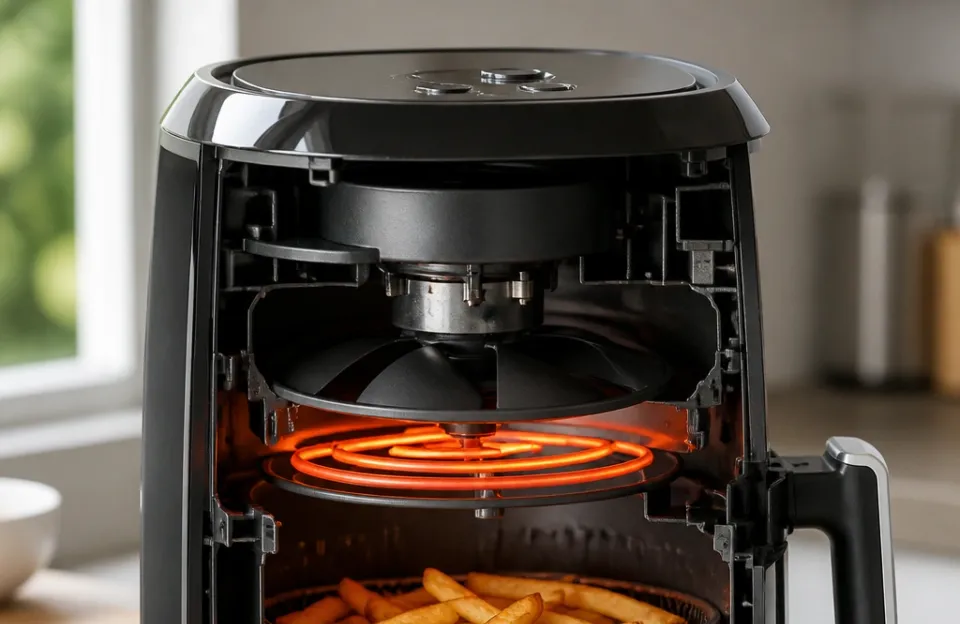
Every standard air fryer relies on four main parts working together. The housing is the outer shell that stays relatively cool while containing all the internal components. Inside that shell sits a heating element, usually an electric coil located directly above the cooking chamber.
Below or beside the heating element is a high-speed fan. Finally, there is the cooking chamber itself, which holds a perforated basket or tray where the food rests.
When you turn the machine on and set a temperature, electricity flows into the heating coil. The coil gets hot very fast, often reaching temperatures between 300 and 400 degrees Fahrenheit within a minute or two. Because the coil sits right above the food, the heat radiates downward immediately.
The fan then kicks in. It pulls the ambient air from inside the chamber, pushes it across the glowing heating element, and forces that superheated air back down over the food. The air hits the bottom of the chamber, flows up through the holes in the basket, and cycles back to the top.
This creates a continuous loop of intensely hot wind.
Why Rapid Air Movement Changes Cooking
Traditional ovens rely mostly on natural convection. Hot air rises, cool air sinks, and the food slowly absorbs heat from the surrounding environment. You can bake a potato in a standard oven, but the stillness of the air means moisture lingers on the surface of the food for a long time.
Forced convection changes the math entirely. By moving the air at high velocity, the fan strips away the thin layer of cool, moist air that naturally forms around food as it heats up. In thermodynamics, this boundary layer acts as insulation.
Removing it allows the hot air to make direct, constant contact with the surface of the chicken skin or the potato wedge.
This direct contact accelerates evaporation. Moisture leaves the surface of the food much faster than it would in a still oven. Once the surface dries out, the temperature of the food's exterior can rise above the boiling point of water (212°F).
That is when browning begins.
The Maillard Reaction Without Deep Frying
Browning in cooking happens primarily through the Maillard reaction. This is a chemical process where amino acids and reducing sugars in food react under high heat to create new flavor compounds and a brown color. It is the same reaction that gives a seared steak its crust or a baked loaf of bread its golden top.
Deep frying achieves this reaction incredibly fast because oil transfers heat about four times faster than air. Submerging food in 375°F oil instantly boils off surface moisture and browns the exterior. An air fryer uses rapidly moving hot air to mimic this effect.
While air is a less efficient conductor of heat than oil, the extreme speed of the airflow compensates by constantly delivering fresh thermal energy to the food's surface.
You only need a small amount of oil to get good results. Tossing vegetables or potatoes in one or two teaspoons of oil before putting them in the basket provides enough fat to conduct heat evenly across the surface and promote the Maillard reaction. If you are making crispy wings for meal prep, the natural fat rendering out of the chicken skin provides all the oil you need.
Breaking Down What Is an Air Fryer and How Does an Air Fryer Work
To fully grasp what an air fryer is and how does an air fryer work, you have to look at the specific design choices manufacturers make. The placement of the fan, the shape of the basket, and the exhaust vents all dictate how well the machine performs.
Most consumer models use a top-down airflow design. The heating coil and fan sit in the ceiling of the cooking chamber. The fan blows the heated air straight down onto the food.
The bottom of the cooking chamber is shaped like a flat surface or sometimes a starfish-like pattern with raised ridges. These ridges force the air to bounce back up through the perforations in the basket, ensuring the underside of the food gets cooked too.
The Role of the Perforated Basket
The basket is where a lot of cheap models fail and good models succeed. The holes in the basket allow the hot air to pass completely through the food pile rather than just blowing over the top of it.
If you pack the basket completely full, you block those holes. The air takes the path of least resistance and flows around the edges instead of through the center. This is why overcrowding leads to soggy food.
The steam escaping from the items in the middle gets trapped, raising the humidity inside the chamber and preventing the surface temperature from getting high enough to brown.
Spacing matters. When you cook something like salmon fillets, leaving room between the pieces allows the cyclonic air to hit every exposed surface.
Exhaust Vents and Pressure Management
As the fan moves air and the food releases steam, pressure builds inside the sealed chamber. Every air fryer has an exhaust vent, usually located at the back or top of the unit. This vent releases excess steam and pressure.
Releasing steam is critical. If the moisture stayed trapped inside, the cooking environment would shift from dry roasting to wet steaming. You would end up with boiled textures instead of roasted ones.
The exhaust vent keeps the interior environment dry enough for crisping while maintaining the high temperature needed for cooking.
Because of this exhaust, the back of an air fryer gets very hot during operation. You need several inches of clearance between the vent and your kitchen wall or cabinets to prevent heat damage.
The Different Shapes Air Fryers Take Today
The term "air fryer" covers a few distinct physical designs. They all use the same rapid air technology, but the form factor changes how much food you can cook and how evenly the heat distributes.
Basket-Style Models
This is the most common type. It looks like a coffee maker or a small egg-shaped pod. You pull out a drawer that contains a removable perforated basket.
The heating element and fan are hidden inside the main body, above the drawer.
Basket-style machines are excellent for small batches. Their compact size means the fan doesn't have to push air very far, resulting in intense, fast circulation. They preheat almost instantly.
However, their footprint is round or oval, which makes fitting large, flat items like a whole pizza or a wide piece of fish difficult.
These units are ideal for tossing foods halfway through cooking. Shaking the basket redistributes the fries or vegetables so every side gets exposure to the direct airflow.
Oven-Style and Toaster Oven Hybrids
Oven-style air fryers look like miniature traditional ovens or thick toaster ovens. They have a front door that drops down and wire racks that slide in horizontally. The fan and heating elements are usually mounted on the top or the back wall.
The advantage here is capacity and versatility. You can cook on multiple racks at once, though you will need to rotate the racks halfway through because the top rack blocks airflow to the bottom rack. Many of these models include separate settings for baking, broiling, toasting, and dehydrating.
The trade-off is preheat time and counter space. Because the interior cavity is larger, the fan has to move more air, and the heating element has to warm a bigger volume. They take longer to reach temperature than basket models.
| Attribute | Basket-Style | Oven-Style / Toaster Hybrid |
|---|---|---|
| Capacity | Usually 2 to 6 quarts | Often 10 to 30+ quarts |
| Preheat Speed | Very fast (1 to 3 minutes) | Slower (5 to 10 minutes) |
| Airflow Intensity | High, concentrated | Moderate, spread over larger area |
| Best For | Fries, wings, veggies, quick meals | Whole chickens, multiple racks, baking |
| Counter Footprint | Compact, vertical | Wide, horizontal |
| Visibility | Opaque, must open drawer to check | Glass door, easy to monitor |
Paddle-Type Fryers
A less common variation includes a rotating paddle inside the cooking bowl. The paddle slowly stirs the food while the hot air circulates. This removes the need to manually shake the basket halfway through cooking.
They work well for things like rice dishes or heavily sauced items, but the paddle can break apart delicate foods like breaded fish or soft pastries.
Oil Usage and the Science of Crispiness
One of the biggest questions people have when learning how an air fryer works is whether they actually need oil. The short answer is: it depends on the food.
If you are cooking something that already contains fat, like chicken thighs, pork belly, or pre-breaded frozen mozzarella sticks, you do not need to add any extra oil. The existing fat will render out, coat the surface, and facilitate the Maillard reaction. Getting the timing right for bacon allows the fat to render perfectly without pooling and smoking.
If you are cooking lean proteins or raw vegetables, adding a small amount of oil is necessary for proper browning. Without it, the surface will dry out and turn leathery or chalky rather than crispy. You don't need to submerge the food.
A light spray or tossing the ingredients in half a tablespoon of oil is enough.
Choosing the Right Cooking Fat
Because air fryers operate at high temperatures, the smoke point of your oil matters immensely. The smoke point is the temperature at which an oil stops shimmering and starts burning, releasing acrid smoke and bitter flavors.
Extra virgin olive oil has a low smoke point, usually around 325°F to 375°F. Since many air fryer recipes call for 380°F to 400°F, using extra virgin olive oil will fill your kitchen with smoke. Avocado oil, refined peanut oil, or light olive oil have smoke points well above 400°F, making them much safer choices for high-heat air frying.
If you use an aerosol cooking spray, check the ingredients. Some commercial sprays contain propellants or lecithin that can build up a sticky residue on the non-stick coating of your basket over time, eventually ruining the finish. Pump-action oil sprayers filled with your own oil are a safer alternative for the longevity of the machine.
Why Wet Batters Fail in Air Fryers
Understanding how an air fryer works also means understanding what it cannot do. Traditional deep frying involves dipping food into a wet batter (like flour, egg, and beer) and dropping it into hot oil. The oil instantly sets the batter into a solid crust before it can drip away.
In an air fryer, there is no liquid medium to set the batter. The high-speed fan will literally blow the wet batter off the food and splatter it all over the heating element and the walls of the chamber. It creates a massive mess and leaves your food naked.
If you want a coated texture, you have to use a dry breading method. Dredge the food in flour, dip it in egg wash, and then press it firmly into panko breadcrumbs or crushed cornflakes. The dry outer layer won't blow away, and the oil spray you apply to the top will help it crisp up.
Trying a light flour dredge on poultry yields a great crunch without the mess of a wet batter.
Comparing Air Frying to Traditional Cooking Methods
To really understand what an air fryer is, it helps to see how it stacks up against the appliances you already own.
Air Fryer vs. Deep Fryer
Deep frying submerges food completely in oil heated to 350°F or 375°F. Oil is a highly efficient heat transfer medium. It surrounds every microscopic crevice of the food simultaneously, resulting in instant, uniform crisping.
Air fryers use air, which is a poor conductor of heat compared to oil. To compensate, they use extreme velocity. The result is food that is roughly 80% similar in texture to deep-fried food, but with a fraction of the fat.
Deep-fried foods absorb oil during the cooking process. Air-fried foods only retain whatever oil you sprayed on them beforehand.
However, deep frying produces a specific type of shatteringly crisp crust that air frying struggles to replicate perfectly. Thick-cut French fries from a deep fryer will always have a slightly fluffier interior and crisper shell than those from an air fryer, simply because the oil penetrates and sets the starches differently.
Air Fryer vs. Convection Oven
This is where the marketing gets blurry. A convection oven also uses a fan to circulate hot air. So, is an air fryer just a small convection oven?
Technically, yes. But the scale changes the performance drastically.
A standard convection oven has a large cavity. The fan is relatively small compared to the volume of air it needs to move. The distance between the heating element and the food is significant.
An air fryer shrinks that cavity down to a few quarts. The fan is proportionally massive for the space. The heating element sits mere inches from the food.
This concentration of power means an air fryer moves air much faster and hotter than a full-sized convection oven. It doesn't need to preheat the massive metal walls of a large oven, so it saves time and energy for small portions.
If you are cooking dinner for six people, your full-sized convection oven is better. If you are making a snack or a side dish for two, the air fryer wins on speed and efficiency.
Air Fryer vs. Microwave
Microwaves and air fryers operate on completely different scientific principles. Microwaves emit electromagnetic radiation that excites water molecules inside the food, generating heat from the inside out. This is why microwaved food often turns out soggy or rubbery; the moisture is actively being pushed to the surface, and there is no dry heat to evaporate it or brown the exterior.
Air fryers cook from the outside in, using dry heat to evaporate surface moisture and trigger browning. You cannot crisp food in a microwave. You cannot quickly reheat a cup of soup in an air fryer.
They solve opposite problems.
Safety Considerations and Material Chemistry
When you bring a high-heat electrical appliance into your home, material safety becomes relevant.
Non-Stick Coatings and PTFE
Most air fryer baskets are coated with a non-stick material, typically PTFE (polytetrafluoroethylene), commonly known by the brand name Teflon. PTFE is stable and safe at normal cooking temperatures. However, if PTFE is heated above 500°F, it begins to degrade and release fumes that can cause flu-like symptoms in humans and are lethal to pet birds.
Standard air fryers max out at 400°F, keeping them well below the degradation threshold of PTFE. The risk arises if the machine malfunctions and the thermostat fails, allowing the heating element to run continuously. Buying models from reputable brands with proper thermal cutoffs minimizes this risk.
If you prefer to avoid PTFE entirely, some manufacturers offer baskets with ceramic non-stick coatings or bare stainless steel racks. Ceramic coatings are generally free of PTFE and PFOA, though they tend to lose their non-stick properties faster than PTFE if scrubbed with abrasive pads.
Acrylamide Formation
Acrylamide is a chemical compound that can form in starchy foods when they are cooked at high temperatures (above 248°F) through frying, roasting, or baking. It is the result of sugars and an amino acid called asparagine reacting together. The FDA monitors acrylamide levels in food because high amounts have been linked to cancer in animal studies, though the exact risk to humans from dietary sources is still studied.
Because air frying promotes heavy browning on starchy foods like potatoes, acrylamide formation is a valid consideration. According to research published by the FDA, you can reduce acrylamide by avoiding overcooking or heavily crisping starchy foods. Soaking raw potato slices in water for 15 to 30 minutes before air frying them removes some of the surface sugars, significantly lowering acrylamide production.
Electrical Load and Counter Space
Air fryers draw a lot of power. Most basket models pull between 1,400 and 1,800 watts. Plugging an air fryer into the same circuit as another high-draw appliance (like a microwave or a toaster oven) can trip your breaker.
They should be plugged directly into a wall outlet, not a cheap extension cord or a crowded power strip.
Additionally, the exterior of the machine gets hot. The exhaust vent shoots out air that can exceed 200°F. Keep the unit away from paper towels, curtains, and plastic utensil holders.
Practical Limits: Foods That Don't Belong in the Basket
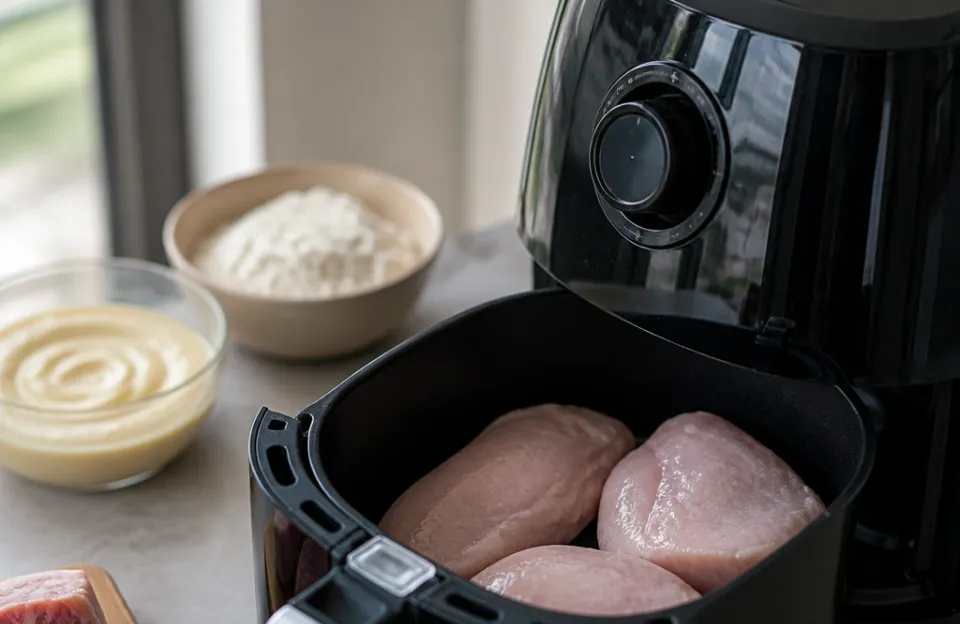
Knowing how an air fryer works also means knowing when to leave it unplugged. The rapid air technology is brilliant, but it has blind spots.
Leafy Greens and Lightweight Items
Spinach, kale chips, or loose herbs are so light that the high-speed fan will blow them around the chamber. They fly up into the heating element, where they burn instantly and start smoking. If you want to make kale chips, you have to weigh them down or use a specialized rack to hold them in place.
Cheese Without a Binder
Placing raw cheese directly into the basket results in a melted puddle that drips through the perforations and burns onto the bottom of the drawer. Cheese needs a vessel (like a tortilla for a quesadilla) or a breading to hold its shape until it sets.
Large Roasts and Whole Birds
While you can fit a small chicken into a 6-quart basket, large cuts of meat are problematic. The intense, direct heat from the top element will char the outside of a thick pork roast long before the center reaches a safe internal temperature. Air fryers excel at thin cuts, small pieces, and items where you want maximum surface area exposed to the heat.
If you are cooking thicker cuts, like figuring out the timing for a dense meatloaf, lower temperatures and longer times are required to prevent the outside from burning.
Popcorn
Raw popcorn kernels require a very specific, sustained high heat to pop, and they need to be submerged in oil or constantly agitated in a specialized pot. Dropping kernels into an air fryer basket usually results in scorched, unpopped kernels flying around the chamber.
Maintenance and Keeping the Heating Element Clean
An air fryer's performance degrades rapidly if it isn't cleaned properly. Grease splatters upward during cooking and coats the heating element and the fan blades hidden above the basket.
Over time, this baked-on grease carbonizes. It starts to smoke every time you turn the machine on, imparting a burnt flavor to your food. Worse, a thick layer of grease acts as an insulator on the heating coil, forcing the element to work harder and potentially shortening its lifespan.
After the unit cools completely, flip it upside down. Wipe the heating element gently with a damp cloth or a soft sponge. Do not use abrasive scouring pads, as scratching the metal can lead to rust or damage the protective coating.
If grease is stubborn, a paste of baking soda and water left on the coil for ten minutes will soften it enough to wipe away.
The basket and drawer should be washed after every use. While many are dishwasher safe, the harsh detergents and high heat of a dishwasher can wear down the non-stick coating prematurely. Hand washing with warm, soapy water and a soft sponge preserves the finish much longer.
Energy Consumption and Kitchen Heat Output
One practical benefit of understanding what an air fryer is relates to your utility bill and your comfort. Running a full-sized electric oven requires heating a massive steel box, the air inside it, and the racks. A typical electric oven draws between 2,000 and 5,000 watts.
An air fryer draws around 1,500 watts, but because the cavity is tiny, it runs for a fraction of the time. Cooking a batch of fries might take 40 minutes in a conventional oven but only 15 minutes in an air fryer. The total energy consumed per meal is significantly lower.
During summer months, running a full oven heats up the entire kitchen, forcing your air conditioning system to work harder. An air fryer contains most of its heat internally and exhausts a minimal amount into the room. This localized cooking keeps the ambient temperature of your home much more stable.
Air Fryer Settings Explained
Many modern units come with preset buttons labeled "Fries," "Chicken," "Fish," or "Bake." These presets are simply pre-programmed combinations of temperature and time.
Pressing the "Fries" button might automatically set the machine to 380°F for 20 minutes. Pressing "Chicken" might set it to 360°F for 25 minutes. These are starting points based on average portion sizes.
Relying solely on presets often leads to overcooked or undercooked food because the machine doesn't know if you put in half a pound of fries or two pounds. Learning to manually set the time and temperature based on the specific food you are cooking yields much better results. For instance, dialing in the exact minutes for perfectly cooked zucchini spears prevents them from turning to mush.
Some advanced models include dual-zone baskets. These machines have two separate drawers, each with its own heating element and fan. You can cook a protein at 400°F in one drawer and vegetables at 350°F in the other, and the machine will sync the timers so both finish at the exact same moment.
Troubleshooting Uneven Cooking
If your food comes out browned on top but pale on the bottom, the airflow is being blocked. This usually happens for three reasons.
First, the basket is overloaded. Food piled too high prevents the air from reaching the bottom layers. Cook in smaller batches.
Second, you forgot to flip or shake the food. Even with the best fan design, the top of the food receives the most direct, intense heat from the element. Flipping items halfway through the cook time exposes the bottom surfaces to the primary heat source.
Third, the food is resting flat against the bottom of a solid pan insert. If your air fryer came with a solid baking pan accessory instead of a mesh basket, the air cannot circulate underneath the food. Elevating the food on a wire rack inside the pan solves this issue.
If you notice white smoke pouring out of the exhaust vent while cooking fatty foods like sausages or burgers, the dripping fat is hitting the hot base of the drawer and burning. Pouring a tablespoon of water into the bottom of the drawer (underneath the basket) before cooking catches the grease and prevents it from reaching its smoke point. Just ensure the water level is low enough that it doesn't touch the bottom of the food basket.
Frequently asked questions
Can you put aluminum foil or parchment paper in an air fryer?
Yes, you can use both, but they must be weighed down by the food. If you place a loose sheet of parchment paper or foil in the basket during preheating, the fan will suck it up into the heating element, causing it to burn or catch fire. Always ensure the paper or foil covers only the bottom of the basket and leaves the sides open so air can still circulate vertically.
Never cover the entire basket edge-to-edge, as this blocks the necessary airflow.
Do air fryers use radiation to cook food?
No. Air fryers use thermal radiation from the heating coil and forced convection from the fan. They do not use microwave radiation or ionizing radiation.
The heating element generates infrared heat, exactly like the broiler in your oven or the coils in a toaster. The fan then distributes that heat mechanically.
Why does my air fryer smell like burning plastic the first time I use it?
Manufacturers apply a protective coating to the heating element and internal metals to prevent rust during shipping and storage. When you run the machine for the first time, this factory coating burns off, producing a chemical or plastic-like odor. This is normal.
Run the empty air fryer at 400°F for 15 to 20 minutes in a well-ventilated area or outdoors before cooking your first meal to burn off this residue.
Is food cooked in an air fryer actually healthier?
It is healthier than deep-fried food because it significantly reduces the total fat and calorie content by eliminating the oil bath. However, it is not inherently healthier than steaming, boiling, or roasting in a standard oven. The health value depends entirely on the ingredients you put inside it.
Air frying heavily processed frozen foods still results in a meal high in sodium and preservatives.
Can I open the basket while the air fryer is running?
Yes. Opening the drawer automatically pauses the fan and the heating element in almost all modern models. You can pull the basket out, shake the contents or flip your food, and slide it back in.
The machine will resume cooking at the previous temperature and timer setting. Leaving the drawer open for extended periods lets the heat escape, requiring the element to work harder to recover the temperature once closed.
How close to the wall should I place my air fryer?
Leave at least five inches of clearance behind the exhaust vent and on all sides of the machine. The air exiting the back vent is extremely hot and can warp laminate countertops, discolor painted walls, or melt nearby plastic items. Never push an operating air fryer flush against a backsplash or under a low-hanging cabinet.
Knowing When to Rely on Rapid Air
Grasping what an air fryer is and how does an air fryer work removes the mystery from the appliance. It is a compact, high-powered convection heater designed to strip moisture from the surface of food rapidly. By concentrating a heating element and a powerful fan into a small space, it forces the Maillard reaction to happen faster and with less fat than traditional methods.
The machine excels at reheating leftovers without making them soggy, crisping up root vegetables, and cooking small portions of protein efficiently. It struggles with wet batters, lightweight greens, and massive roasts. Respecting those boundaries ensures you get the most out of the technology.
Whether you are using a basic basket model or a multi-rack oven hybrid, the underlying physics remain exactly the same. Mastering the airflow, managing your oil application, and keeping the heating element clean will consistently yield the best possible results from your countertop cooker.