Weighing food is the single fastest way to fix a broken calorie deficit. Eyeballing portions fails because human brains are terrible at estimating volume, and volume changes wildly depending on how you pack a cup. Learning how to weigh meat, rice, pasta & produce for calorie tracking removes the guesswork entirely.
You put the food on a scale, read the number, log it, and move on with your day.
This process takes less than five minutes per meal once you build the habit. You need a digital kitchen scale that measures in grams, your food, and a tracking app. The rest of this guide covers exactly when to weigh things raw versus cooked, how to handle water-heavy foods like rice and pasta, and what to do with irregular items like bone-in chicken or bunches of bananas.
Why Grams Beat Cups Every Time
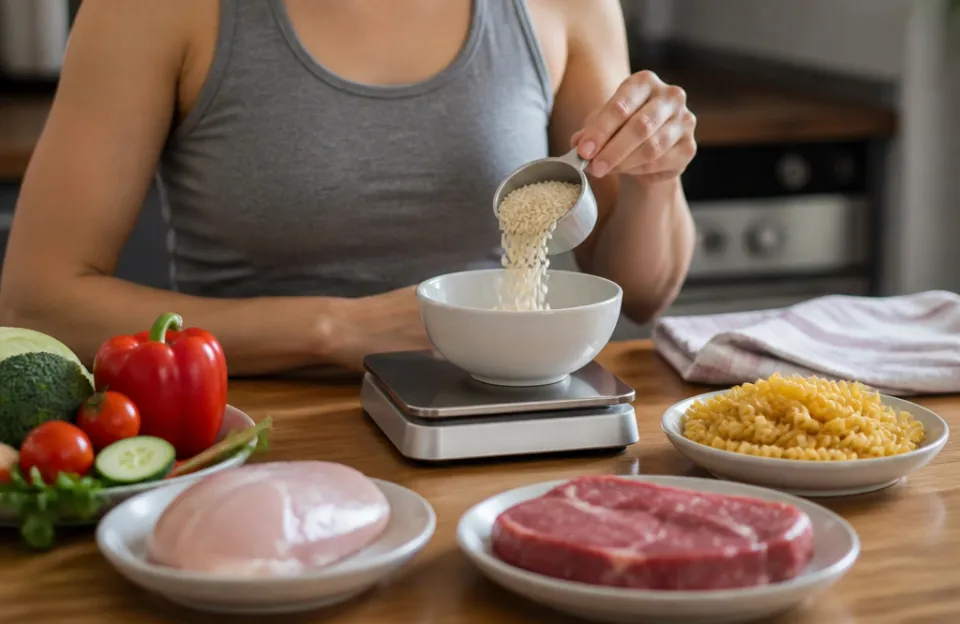
A standard measuring cup holds different amounts of food depending on who scoops it. One person might pack brown rice down tight. Another leaves it fluffy.
That difference easily swings a serving by 50 to 100 calories. A digital scale ignores packing density. Fifty grams of dry penne is fifty grams of dry penne, no matter how it sits in the bowl.
Calorie databases rely on specific weights. When an app lists nutrition facts for a food, those numbers tie directly to a gram weight defined by the USDA. If you measure by volume, you force the app to guess your portion size.
Weighing in grams gives you the exact baseline the database uses. This applies whether you are tracking macros for muscle gain or counting calories to lose weight.
Scales also catch hidden calories faster. Pouring cooking oil into a pan usually adds more fat than people realize. Placing the oil bottle on the scale before and after pouring tells you exactly how much you used.
Volume measurements miss these small additions constantly.
| Measurement Method | Accuracy Level | Speed | Best Used For |
|---|---|---|---|
| Digital Scale (Grams) | High | Fast | Meat, grains, oils, baking |
| Measuring Cups | Low to Medium | Slow | Liquids only |
| Visual Estimation | Very Low | Instant | Restaurants, travel |
Setting Up Your Kitchen Scale Correctly
Place the scale on a hard, flat surface. Tile or wood counters work perfectly. Soft surfaces like silicone mats or folded towels compress under weight, giving you false readings.
Turn the scale on and wait for it to hit zero before adding anything.
Use the tare function constantly. Tare resets the display to zero while keeping the current weight on the platform. Put your empty bowl on the scale.
Press tare. Add your chicken breast. The screen shows only the weight of the chicken.
Need to add olive oil to the same bowl? Press tare again. Pour the oil.
The screen now displays just the oil's weight. This lets you prep entire meals in one container without doing mental math.
Always switch the unit to grams rather than ounces. Ounces use decimals that round up or down, creating tiny errors that compound over a week. Grams are whole numbers.
Tracking apps prefer grams because their databases store entries in metric units. If you already track your daily intake using a reliable digital reader for cooking temperatures, switching to grams for food weight follows the same logic of precision.
Weighing Raw Versus Cooked Meat
Meat loses water during cooking. A raw chicken breast shrinks by roughly 25 percent of its starting weight after grilling or baking. Fat renders out too.
Because the water and fat leave the meat, the remaining cooked piece packs more protein and calories per gram than the raw version did.
Log meat raw whenever possible. Nutrition labels on grocery store packaging list values for the raw state. Tracking apps default to raw entries for most uncooked proteins.
Weigh your steak, chicken thigh, or ground beef before it hits the pan. Enter that number into your app. This avoids the confusion of calculating moisture loss later.
Sometimes you have to weigh cooked meat. Meal prepping in bulk or eating at a buffet means the food is already cooked. If you weigh a cooked chicken breast, search your app specifically for "chicken breast, cooked, roasted." Do not use the raw entry.
The cooked entry accounts for the lost water and concentrated nutrients. If you frequently cook large roasts, pairing your scale work with a dual-sensor setup helps you pull the meat at the exact moment it finishes, preventing extra moisture loss from overcooking.
Bone-in cuts require a quick subtraction step. Weigh the raw piece with the bone. Cook it.
Eat the meat. Weigh the leftover bare bone. Subtract the bone weight from the starting weight to find out how much actual meat you consumed.
Alternatively, buy boneless cuts if you want to skip this math.
Ground meat behaves slightly differently. A pound of 80/20 ground beef loses significant fat when browned and drained. If you drain the grease, you consume fewer calories than the raw package suggests.
Some trackers adjust for this automatically, but weighing the raw meat before draining remains the standard method unless you strictly follow a cooked-entry database.
Handling Rice, Pasta, and Dry Grains
Rice and pasta absorb massive amounts of water. One hundred grams of dry white rice turns into roughly 300 grams of cooked rice. The calories stay exactly the same.
Water has zero calories. The weight triples, but the energy content does not change.
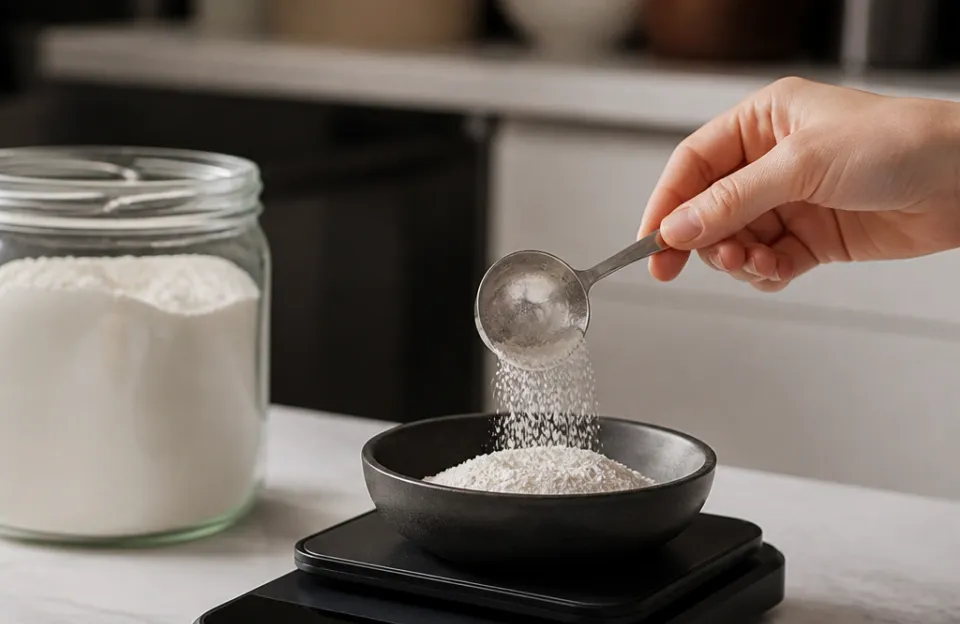
Always weigh grains dry. Scoop the uncooked rice or dry pasta onto the scale. Log that number.
Boil it, steam it, or bake it however you prefer. If you try to weigh cooked rice, you have to guess how much of that weight is water and how much is grain. Different cooking methods yield different hydration levels.
A pot of rice left on the stove longer dries out slightly, changing the cooked weight without changing the calories. Dry weight eliminates this variable completely.
Pasta shapes trap water differently. Macaroni holds less water between pieces than spaghetti does. This makes cooked pasta weights highly inconsistent.
Stick to dry weights for every noodle shape. If you buy fresh pasta from the refrigerated section, check the label. Fresh pasta contains moisture already, so its nutrition facts apply to the product as sold, which is technically raw but hydrated.
Oats follow the same rule. Rolled oats weighed dry give you an accurate calorie count. Once soaked overnight or boiled into porridge, the weight jumps based on how much milk or water you added.
Weigh the dry oats first. Then add your liquid separately if you track those calories too. People who spend time keeping their appliances spotless often prep these grains in batches, making the dry-weigh method even faster since you can portion everything out at once.
Quinoa, farro, and barley all expand similarly to rice. Treat them identically on the scale. Measure dry, log dry, cook freely.
Fruits, Vegetables, and Irregular Produce
Produce introduces peels, cores, stems, and pits. You only digest the edible portion, so you should only weigh the edible portion. Logging a whole banana including the peel inflates your tracked weight artificially.
Weigh produce after prepping it. Peel the banana, then place the fruit on the scale. Core the apple before weighing it.
Shuck the corn and discard the husk. This ensures the gram weight matches the "edible portion" entries found in standard nutrition databases.
Some items blur the line. Berries usually get eaten whole, minus the tiny green stem on strawberries. Wash them, pat them dry, remove the stems, and weigh.
Leafy greens like spinach shrink dramatically when cooked. If you eat a raw salad, weigh the raw leaves. If you sauté spinach, weigh it raw before tossing it in the pan.
The cooked weight drops because water evaporates, but the calories came from the raw pile you started with.
Mixed vegetables present a minor challenge. A bag of frozen stir-fry mix contains broccoli, carrots, snap peas, and water ice. Weigh the frozen mixture directly.
The nutrition label on the bag accounts for the average ratio of vegetables. Thawing it first causes water to drip away, potentially concentrating the vegetable weight. Frozen straight from the bag to the scale to the pan is the easiest workflow.
Avocados vary wildly in pit size. Cut it open, remove the pit, scoop out the flesh, and weigh just the green part. The skin and pit contribute nothing to your calorie intake.
Tracking Oils, Sauces, and Condiments
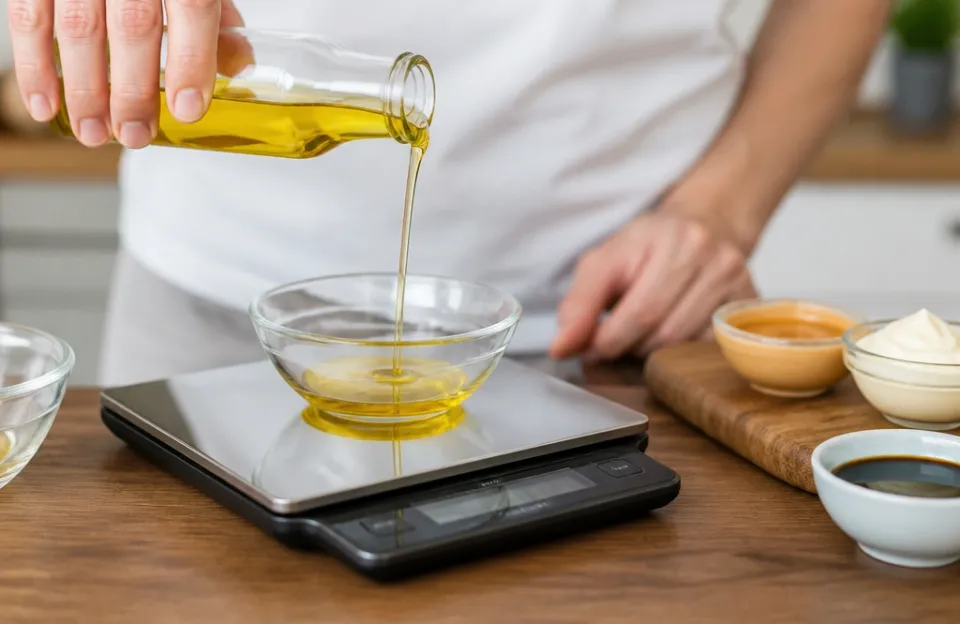
Cooking fats are calorie-dense. One tablespoon of olive oil carries around 120 calories. Pouring blindly from the bottle often results in two or three tablespoons hitting the pan without you noticing.
Weigh oils directly in the pan or bowl using the tare function. Place your empty skillet on the scale. Tare it to zero.
Pour the oil until you hit your target grams. Fifteen grams of olive oil equals roughly one tablespoon. Logging by weight prevents the slow calorie creep that stalls fat loss progress.
Sauces and dressings contain water, sugar, fat, and salt in varying ratios. Ketchup, barbecue sauce, and soy sauce all have specific calorie counts per gram. Squeeze or pour them onto your tared plate or bowl.
Even a heavy hand with peanut butter adds up fast. Dip your knife, spread it on the bread, but if you want total accuracy, weigh the jar before and after spreading. The difference is exactly what you ate.
Marinades complicate things slightly. If you soak chicken in a sauce and discard the excess, you did not eat all the sauce. Estimate the absorbed amount or weigh the chicken before and after marinating to see how much liquid it retained.
Most people simply log the raw chicken and a conservative estimate of the marinade ingredients.
Calorie Shifts During Cooking Methods
How you cook food alters its final weight and sometimes its calorie density. Understanding these shifts keeps your tracking honest.
Baking and grilling drive off moisture. Roasted vegetables weigh significantly less than raw ones because water evaporates in the oven. The carbohydrates and fibers remain.
Always log the raw starting weight for roasted vegetables to capture the true calorie load.
Frying adds calories. Breading a chicken cutlet and deep-frying it introduces flour, egg wash, and absorbed oil. To track fried food accurately, weigh each component separately before assembly.
Weigh the raw chicken, the flour, the egg, and the oil. Or, weigh the finished fried piece and use a specific "fried chicken" database entry, though separate ingredient logging is more precise.
Boiling leaches some nutrients into the water but mostly just hydrates the food. Potatoes boiled in water gain weight. Again, weighing the raw potato before dropping it in the pot solves the problem instantly.
If you cook large batches of stew or chili, weigh all raw ingredients going into the pot. Sum their calories. After cooking, weigh the entire finished pot.
Divide the total calories by the total cooked weight to find the calories per gram of the stew. Ladle out your portion, weigh it, and multiply by your per-gram calorie number. This batch-calculation method works beautifully for soups where individual ingredient separation is impossible after simmering.
Knowing the safe internal temperature of your proteins, such as following a proper pork temp chart, matters just as much here as the scale weight, ensuring safety alongside accuracy.
Common Mistakes That Wreck Your Numbers
People stumble on a few specific habits when they start weighing food. Catching these early saves weeks of frustration.
Forgetting to tare the plate is the most frequent error. You end up logging the weight of your ceramic dinnerware alongside your chicken breast. Always zero out the container first.
Using fluid ounces instead of weight ounces trips up beginners. Fluid ounces measure volume. Weight ounces measure mass.
They are only identical for pure water. Olive oil weighs less per fluid ounce than honey does. Switch your scale to grams and ignore volume markings entirely.
Logging cooked weight under a raw entry inflates your perceived intake. If you weigh 150 grams of cooked chicken but log it as "chicken breast, raw," the app thinks you ate a larger raw piece that would have yielded even more cooked meat. Match the state of the food to the correct database entry.
Skipping the scale on weekends derails weekday progress. Restaurant meals are hard to weigh, but home-cooked weekend breakfasts are not. Consistency across all seven days provides reliable data.
If you struggle with maintaining equipment accuracy in general, checking that your tools are built to last helps prevent hardware drift from skewing your numbers over time.
Trusting visual estimates after a month of weighing is tempting. You think you know what 200 grams of rice looks like. You probably don't.
Portions look different in various bowls. Keep using the scale. It takes two seconds and guarantees accuracy.
Frequently Asked Questions
Should I weigh my food before or after cooking?
Weigh food before cooking whenever possible. Raw weights align perfectly with the nutrition labels on packaging and the default entries in tracking apps. Cooking changes water content and fat levels, altering the weight without proportionally changing the calories.
If you must weigh cooked food, select the specific cooked entry in your tracking database.
Does freezing meat change its weight for tracking?
Freezing adds ice crystals, which increases the weight slightly. Thawing releases some of that water as purge liquid in the package. For the highest accuracy, weigh meat after it thaws completely and you drain any excess liquid.
However, the calorie difference between frozen and thawed weight is negligible for most daily tracking purposes.
How do I track mixed dishes like casseroles?
Weigh every raw ingredient individually before combining them. Add up the total calories for the entire recipe. Once baked, weigh the finished casserole dish contents.
Divide the total calories by the total cooked grams to find the calorie density per gram. Scoop your serving, weigh it, and multiply by that density number.
Is a cheap kitchen scale accurate enough for calorie tracking?
Most affordable digital scales read accurately to one gram, which is plenty for food tracking. You do not need laboratory precision. Ensure the scale sits on a hard counter and calibrates to zero properly.
If the numbers jump around or fail to return to zero, replace it. Reliable tracking depends on consistent readings rather than expensive hardware.
Do I need to weigh spices and herbs?
Dried spices and fresh herbs contain almost zero calories in the amounts typically used for cooking. A teaspoon of cinnamon or a handful of basil will not impact your daily total. Skip weighing them unless you consume them in unusually large quantities or strictly track micronutrients.
Getting the Weights Right
Tracking calories through a food scale removes the anxiety of guessing. You stop wondering if your portion was too big or too small. The numbers sit right there on the display.
Weighing meat, grains, and produce raw keeps your data aligned with official nutrition databases. Using the tare button speeds up the entire process so you spend more time eating and less time doing math. Stick to grams, weigh before heat touches the food, and log consistently.
The scale handles the precision while you focus on the results.